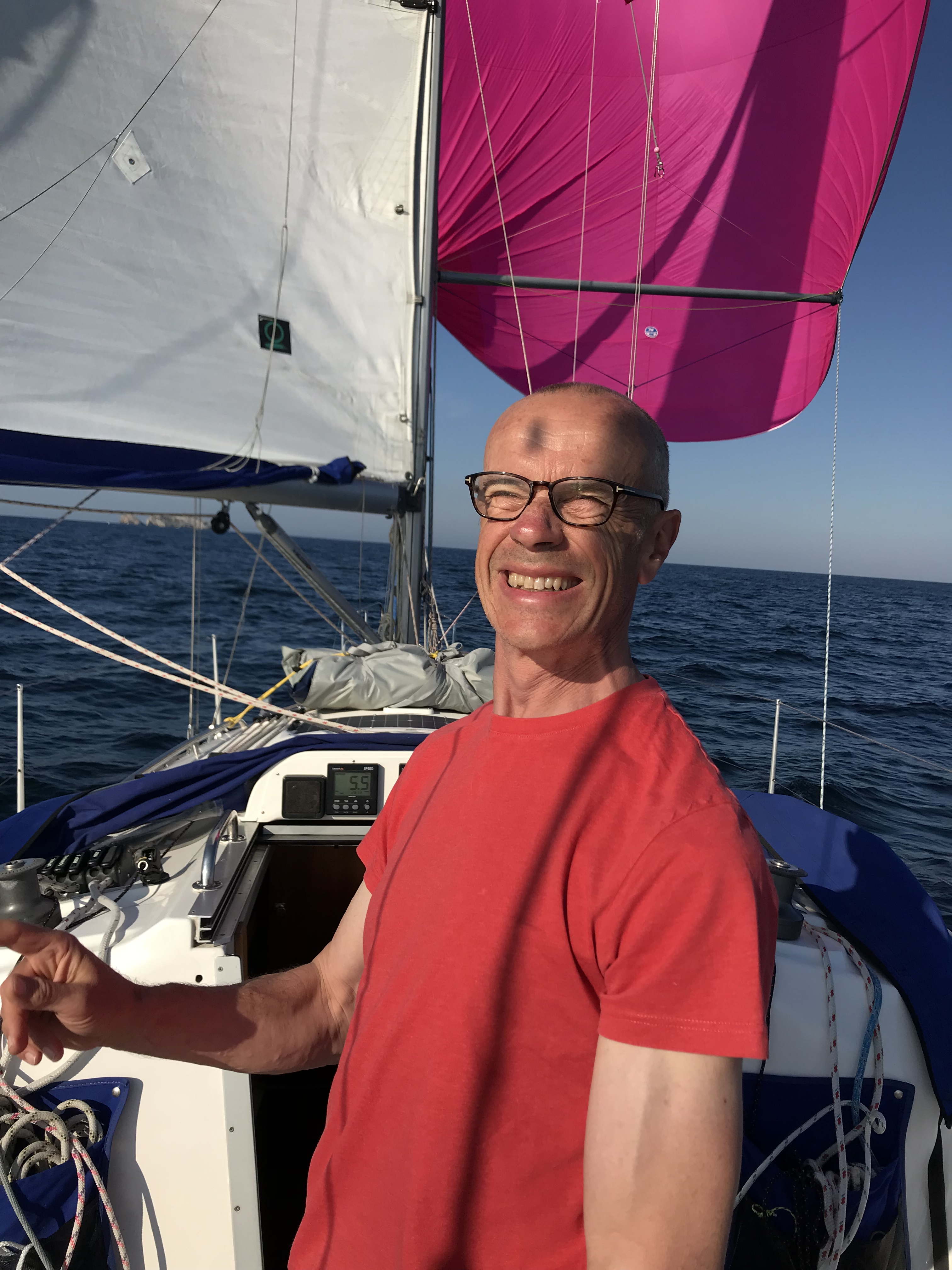
In which we finally get to reveal the blog’s own award winners and some rather niche stats…
It does feel very odd to be returning to the blog in the middle of the bleak midwinter, but there is an awards deadline coming up so I have to knock the thing into shape just in case lightning decides to strike twice. I know, it sounds greedy to be thinking about awards rather than pure literary endeavour, but you’ve got to be in it to win it. To think that I might have set off on this little adventure without a hint of competitiveness…
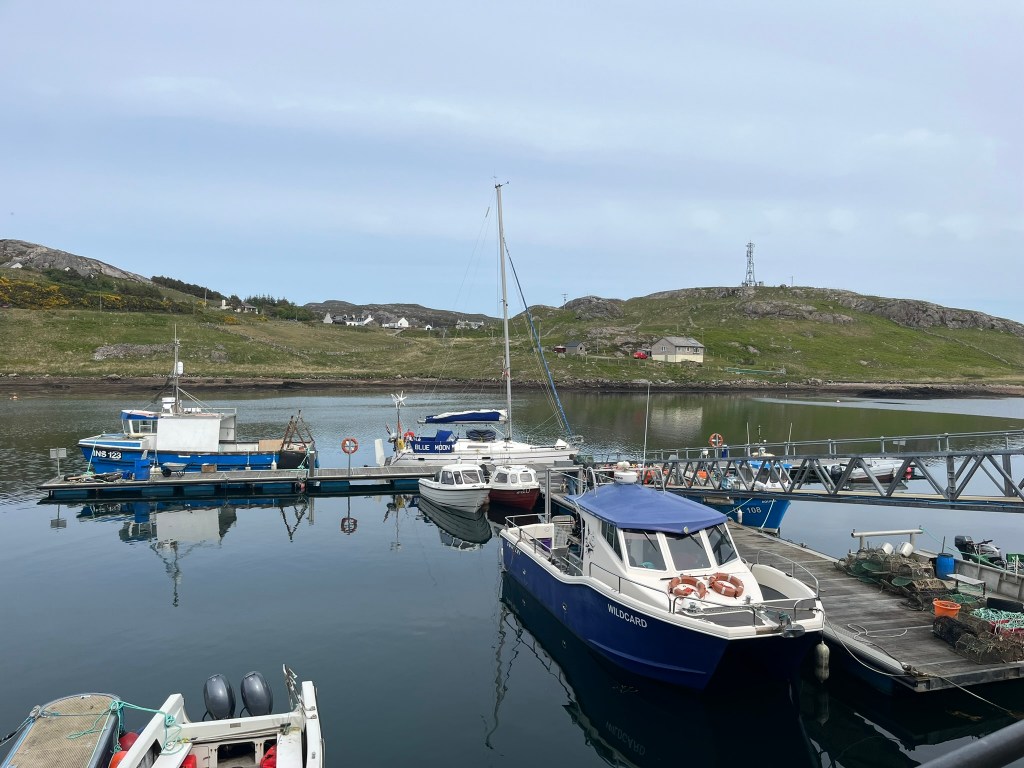
It also feels very odd to have a phone not stuffed with photos of Blue Moon or places she’s just visited. This is the most recent one, taken two months ago:
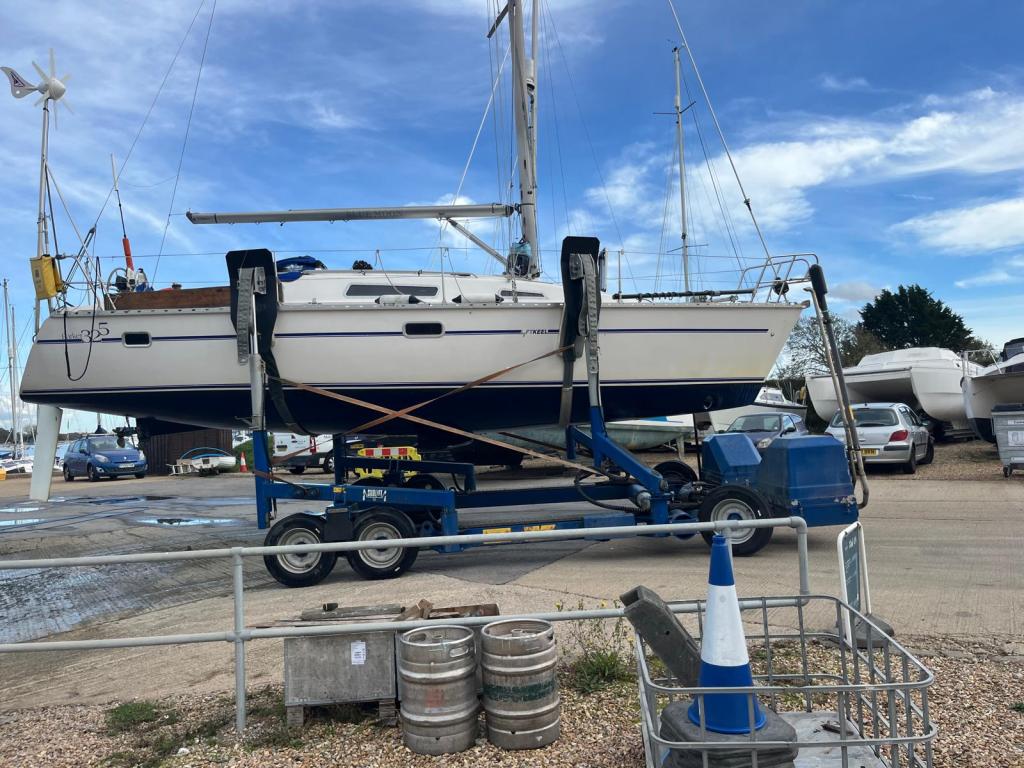
I have to admit I was so pleased to get the boat on the cradle and the mast down that I didn’t even bother to take a photo to celebrate. Instead I concentrated on getting all the stuff out of the inside – somehow I had fitted three and a half car-and-roofbox-loads of kit into the inside of the poor boat, who will float a good few centimetres higher next year unless, of course, I put it all back (and how will I manage without a hot water bottle or an iron? The answer surely is to head south and wear shorts).
But I have promised my readership, and myself, to wrap things up by the end of the year so here are some reflections on the bits I enjoyed the most (and least) and some statistics that might interest a particularly geeky sailor contemplating a similar jaunt and wondering what to expect.
Let’s start with some stats and observations, and I’ll be guided here by the questions people have asked the most. The obvious one is ‘what was the best bit?’ which really is impossible to answer, but I’ll have a go later on.
The second most common question, rather surprisingly, is ‘what was the scariest bit?‘ This is almost harder to answer as I have to say with all honesty that I wasn’t really scared at any point. There are two obvious points of potential scaredness – one being when the boat started filling up with water (Crisis? What crisis?), but she was only filling up very slowly and we never felt out of control of the situation, and the other, which I only alluded to very briefly, being just around Muckle Flugga when Raymond very nearly executed a boat-flattening Chinese Gybe (non-sailors, AI says: ‘a dangerous, uncontrolled gybe where a sailing boat heels excessively to windward, causing it to bear away, flip onto its side (or even almost capsize), with the boom in the air and the spinnaker pole in the water, often caused by sudden wind shifts, squalls, or poor sail control, especially with a spinnaker, and is also known as a “death roll“ ‘), but he didn’t and the moment of scaredness was one of those that only come later when I had things back under control. Being whisked through the Corryvreckan and the Pentland Firth at 12 knots, whilst a bit scary, were both less scary than I expected, so don’t count, whereas a half hour spent doing one knot against the eight knot tidal race in Jack Sound was only scary for the first five minutes (An unfortunate miscalculation): once I’d realised I wasn’t going to drown it was actually very funny, in a sado-masochistic kind of way. We did get knocked down twice, but being a dinghy/small keelboat sailor I fail to find any knockdown that doesn’t result in either capsizing or instantly sinking the least bit scary, which perhaps cements more experienced readers’ suspicions that I shouldn’t really be let out on my own, if at all, in a 10 metre yacht.
There were a few moments, or should I say hours, of gloom and despondency, amongst which the low points have to be an afternoon contemplating shipwreck on the Doom Bar (Crossing the Bar of Doom), a night feeling damp and bashed about in Watermouth Cove (Bugger Bristol) and any time spent in Holyhead, although I have now spent enough time in Holyhead to appreciate that it has plenty of appeal what with it being the only place on Anglesey to have a railway station which isn’t a request stop and a supermarket you’ve heard of to make up for what it lacks in everything else. Even Whitehaven was bearable for two days given that I spent most of one asleep and most of the other indoors writing a blog. I wouldn’t risk it again though.
No, the prize for most gloomy and despondent moment has to go, rather fabulously, to Margate Sands, and specifically the discovery that having sailed 6,581 of my 6,683 miles in comfort, I had finally found the hole that let the water into my bedroom (A Feisty Final Furlong) off the North Kent Coast, where I grew up.
Which brings me neatly on to the stats section. When I say I ‘sailed’ 6,683 miles that is not strictly true. I covered 6,683 miles but only sailed 3,013 of them. Yes, I motored slightly over half the time, which is a shameful stat best left to the last page of the blog. Generally speaking I only put the engine on when the speed under sail goes below 5 knots, and then not when I’m not in a hurry, which accounts for the less than impressive average speed over the entire trip of 4.3 knots. These apparently disappointing figures are partly explained by my cowardly strategy of not putting to sea when the wind is forecast to blow over 25 knots, and often not even then, which whilst it might appear cowardly does at least explain the lack of truly scary moments. Perhaps I should stand a little taller and call it ‘seamanlike’: I am a dinghy sailor in a relatively small boat.
Another sad set of stats relates to where I spent the nights. I’m pleased to say that I only spent two nights in hotels, and both of these were because of train schedules rather than because I had fallen out of love with the boat (both were sufficiently cheap to make the boat feel like a suite at The Savoy), which will confound the surprisingly large number of people who ask “and where do you sleep at night? In hotels?”. No, the sadness is the discovery that in spite of setting out to explore far-flung and empty corners of the coast, I only spent 64 of the 368 nights on board at anchor. There are two mitigating circumstances to take into account: first, I discovered quite early on that, much as I loved anchoring in complete wildernesses, it was more fun to go ashore and explore the hamlets and villages and see a little of what life is like in these remote places; and second, whilst it was perfectly possible to anchor off most of these villages, many of them provided visitors’ moorings and where they did I always used them.
This is a topic of debate in cruising circles: the more traditional Scottish cruiser moans about the spread of visitors’ moorings the way a Hampstead resident decries the unstoppable rise of Gail’s. They sneer that modern sailors can’t anchor and that moorings attract people from The Solent. To which I answer (from The Solent) that these moorings are laid and maintained at some expense by the local communities and/or development agencies precisely to stimulate the local economy by attracting visitors and allowing more boats to visit the village because moorings take up less space than anchored boats; consequently I think it’s right to use the moorings even though I could anchor just as easily, and stump up the not unreasonable £20 or so to contribute towards their maintenance.
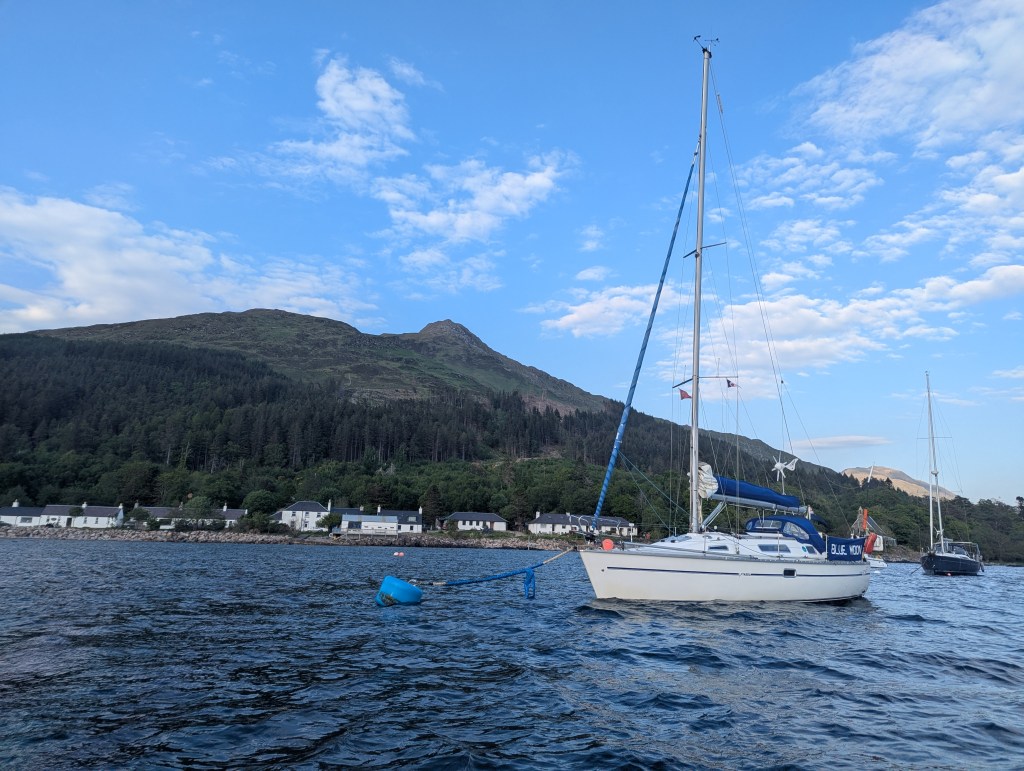
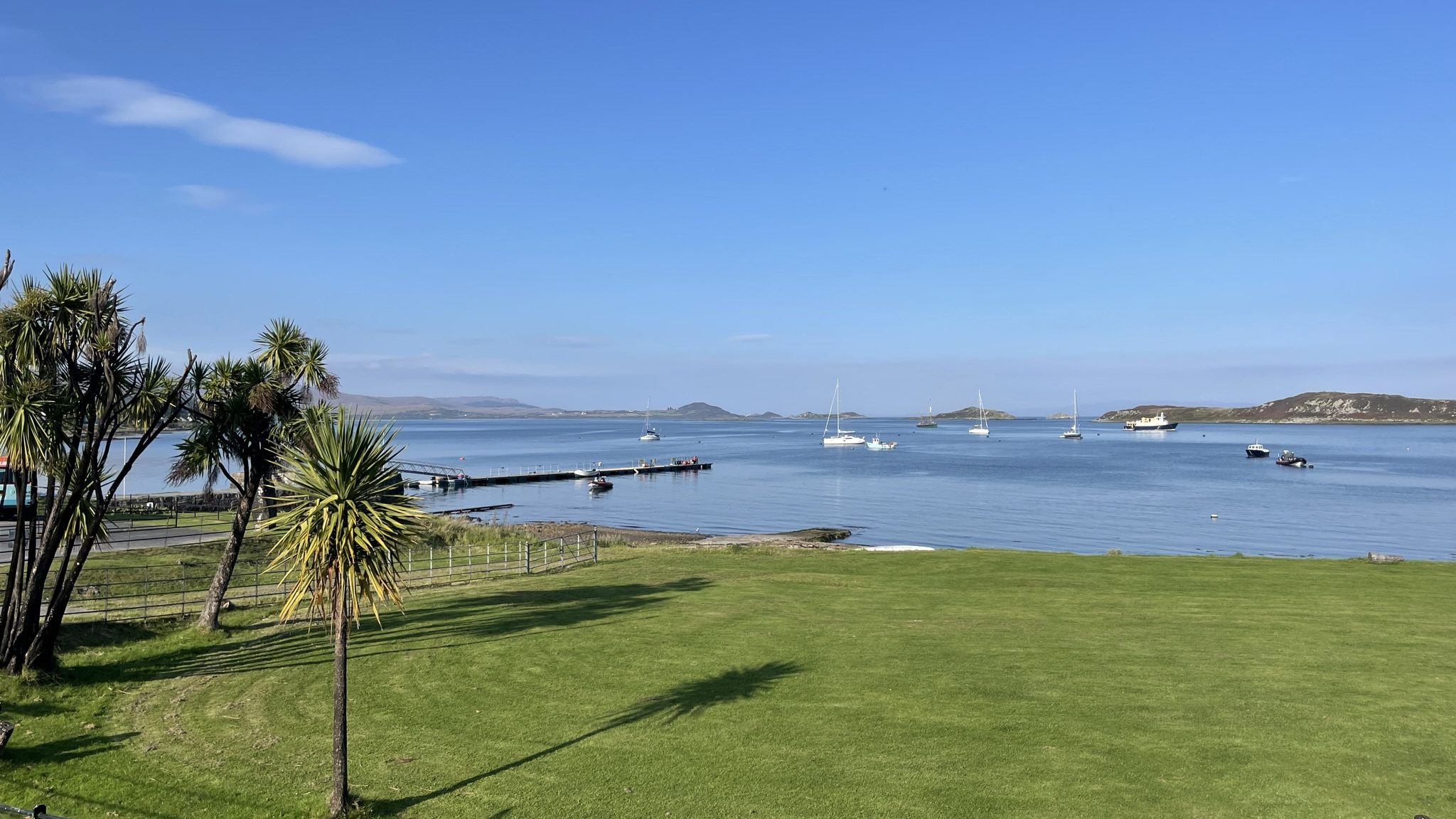
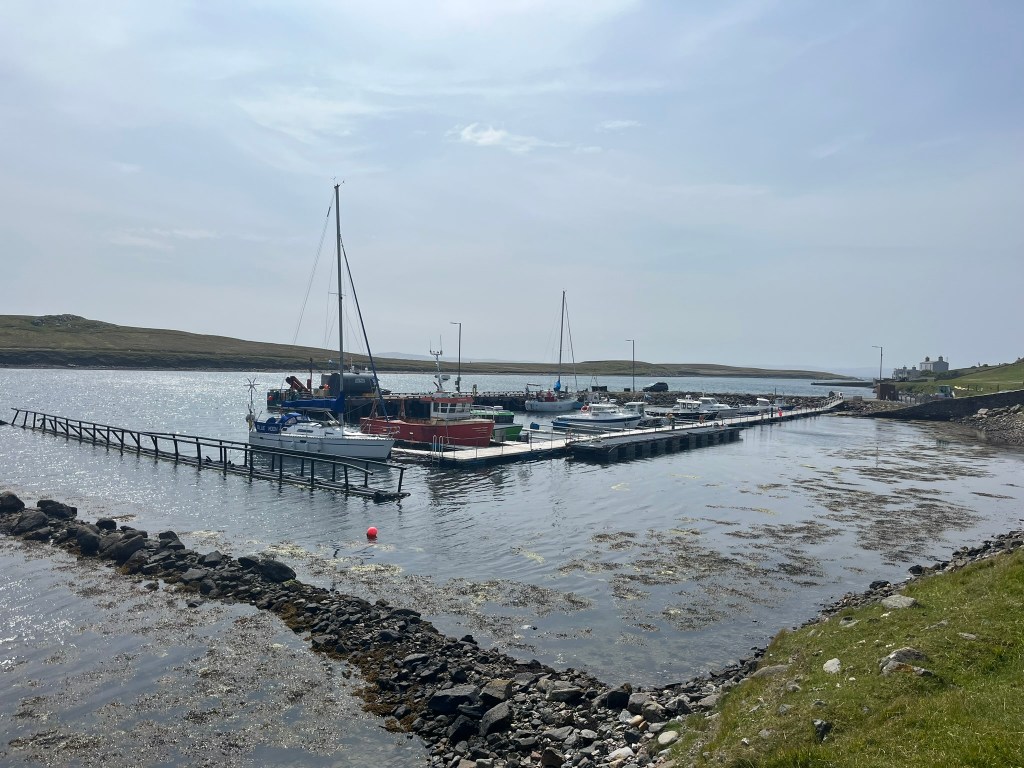
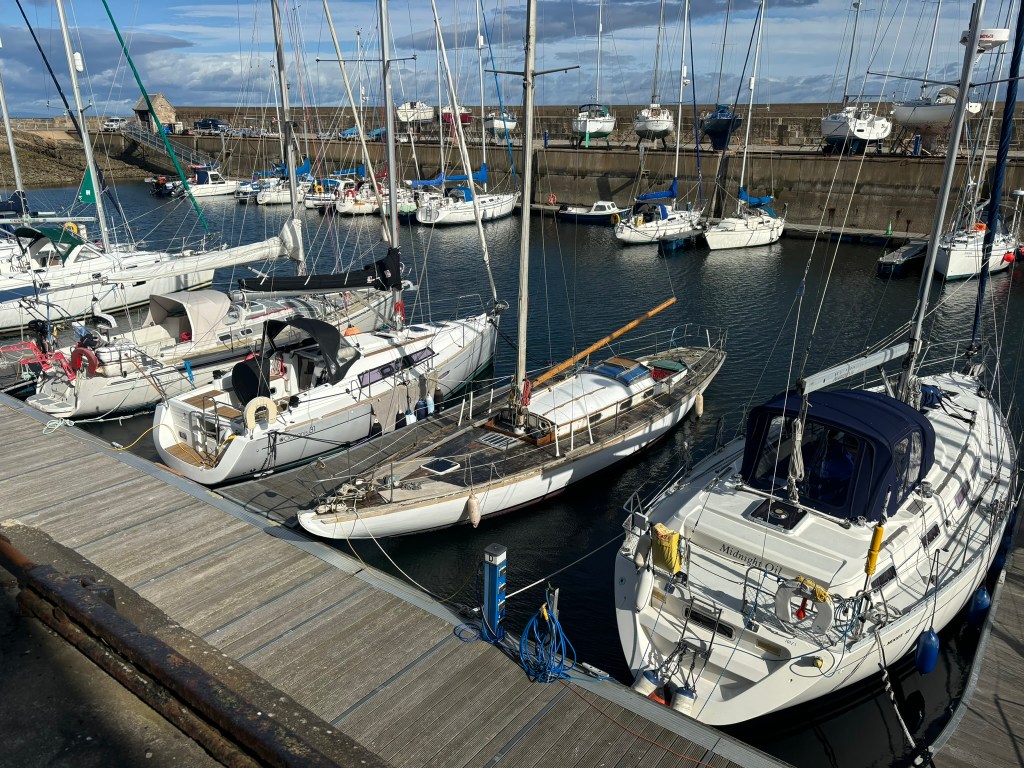
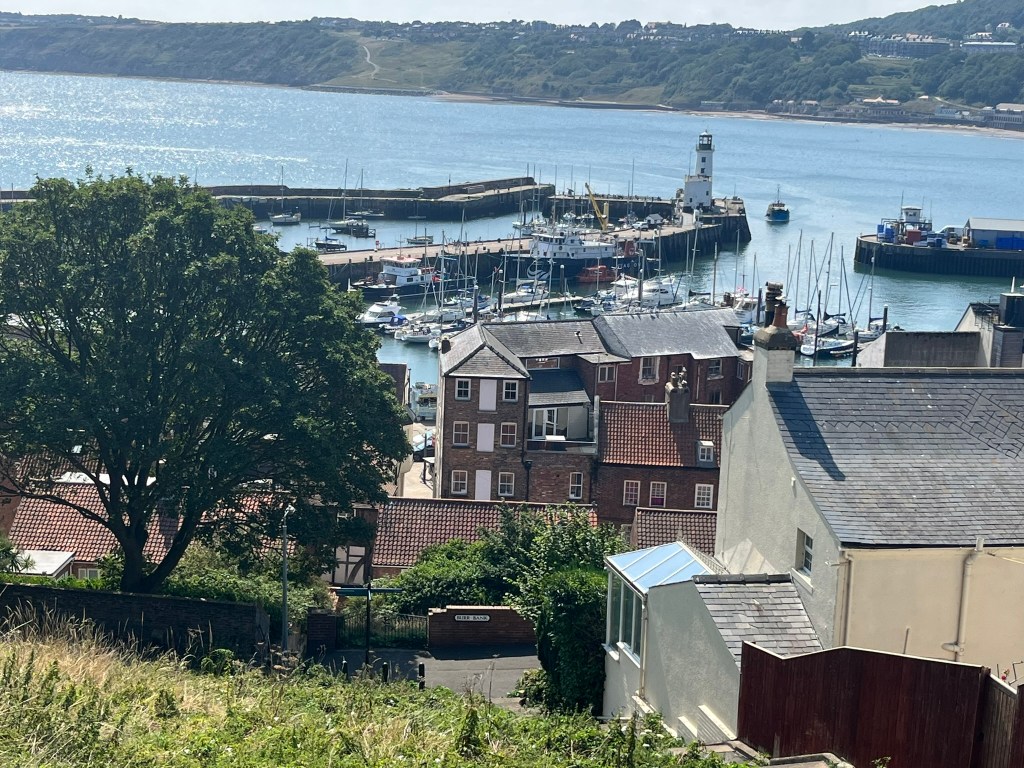
Preaching over. Add moorings and I spent 114 nights not actually tied onto the shore, which makes me feel a lot better. Irritatingly it is still six nights short of the 120 that I spent in marinas. I only rarely opted for a marina when there was a better (and usually cheaper) option, but in many places the marina is the only berth in town – especially on the East Coast, where it would be a churlish yachtsmen that begrudged working harbours their efforts to attract leisure sailors to replace the trawlers and coasters. But before showing you my Excel chart (so much more fun than an Admiralty one!) I should explain the difference between a Pontoon and a Marina. In many Scottish towns and villages there are pontoons as well as or instead of moorings, often at similarly cheap rates, usually funded by Highlands and Islands Enterprise or the local council. Sometimes, especially in Shetland, they like to call these structures marinas, but they aren’t, especially in Shetland. A proper Marina has lots of pontoon berths and is specifically designed for leisure boating; Pontoons are quite clearly public amenities for locals and visitors alike, they are generally just one or two floating pontoons, and you often share the facilities with working fishermen and dive boats, which makes things much more fun.

Having cleared that up, here’s the chart:
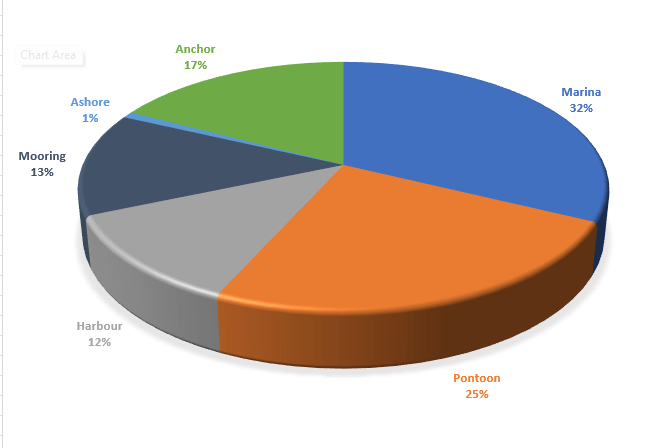
This is where I spent the nights that I spent on board. I’ve massaged the stats slightly because I haven’t included the spells where I went home, which would increase the marina percentage slightly because I generally left the boat in a marina when I did (but also for a few weeks on various moorings, a pontoon and of course a car park in Lochinver which increases the unusual ‘Ashore’ slice from 1% to 3%). I haven’t included overwintering in Liverpool.
I’m not unhappy with these stats, given the lengthy mitigations above, and I’m particularly pleased to have spent 12% of the time in a good old-fashioned harbour tied onto the wall: it’s by far the best way to meet the locals and feel part of their community, but it is increasingly hard to do in more popular destinations. And – let’s be honest – the toilets are often pretty shabby.
The next question I get asked very often is “and were you on your own the whole time?“. Readers know the answer is ‘no’, but I had only a hazy idea of how much time I spent single-handed. It felt like half the time, and indeed it was: 53% to be precise. It varied quite a bit from year to year: in Year One and this year it was a 49% and 48% respectively, last year 65%. Perhaps everyone forgot about me last year and realised this year was their last chance. I’m happy with how that worked out: I am very comfortable sailing on my own but it’s also great to have company, especially since there is more of an excuse to try out the local pubs.
A few other random stats, probably quite niche now, but answering most other questions…
Longest passages:
Kings Lynn to Lowestoft – 84 miles, 15 hours, thank you Tom
Peel to Caernafon – 73 miles, 14.5 hours, thank you Roger
Dartmouth to Falmouth, Scilly Isles to Padstow and Padstow to Watermouth Cove all 69 miles, single handed.
To prove that this really was just a series of day sails, there were only ten days when I did over 60 miles, and five of these were in the first ten days when I was trying to cover familiar ground quickly – perhaps explaining why I was so grumpy by the time I got to Watermouth Cove. Only three of these ten involved substantial amounts of motoring (Portland to Dartmouth – a day so dull I can still remember it, and Holyhead to Dun Laoghaire, a day enlivened only by Roger’s entertaining conversation and the regular appearance of ferries. Orkney to Fair Isle was exciting even motoring).
I only sailed in the dark on six occasions and only once through the night (and then only as a result of the leak crisis): the other five were only an hour or two at dusk or dawn. Even better, I only truly went out of sight of land three times if you exclude fog: from Orkney to Fair Isle and back, and from Holyhead to Dun Laoghaire.
Dullest day: see above.
Best day: this is a tricky one, with some contenders being arriving at Fair Isle, motoring up the Thames, negotiating The Swellies, combining white beaches, neolithic stones and heavy Celtic metal in Lewis, rounding Cape Wrath (twice), anchoring on the beach in New Quay and arriving in Liverpool on either occasion, but the winner has to be rounding Muckle Flugga, for fairly obvious reasons.
Best sail: even harder to name one, and especially not to offend guests whose excellent sailing skills might not make the list, which is all about the sailing and the location rather than the company. It’s hard to beat a spinnaker run in sparkling sunshine, with leading contenders being up the Firth of Forth (A week of Scottish culture), up the Firth of Lorn and Sound of Kerrera (Wind, wildernesses and walking boots), crossing the Sea of the Hebrides in blazing sunshine (To the moon and back) or wafting up The Wash between crazy sandbanks (Into The Wash…) but the winner has to be the beat to the ultimate windwark mark – yes, Muckle Flugga again (On Top of the World). Even if the following run had a few white-knuckle moments.
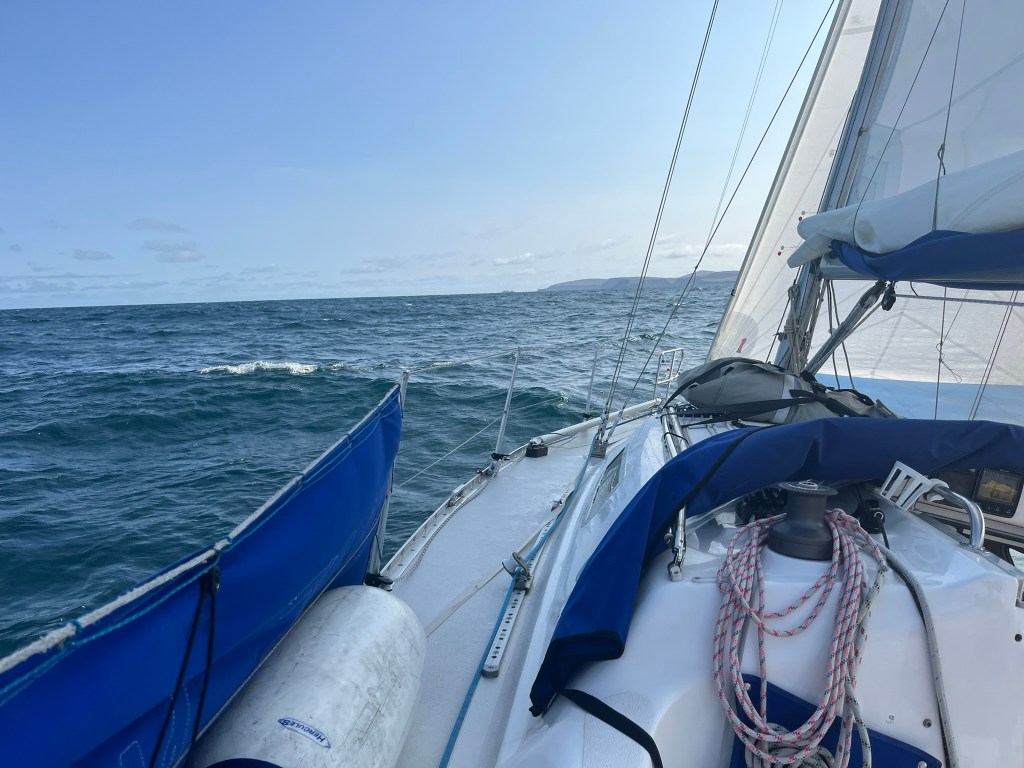
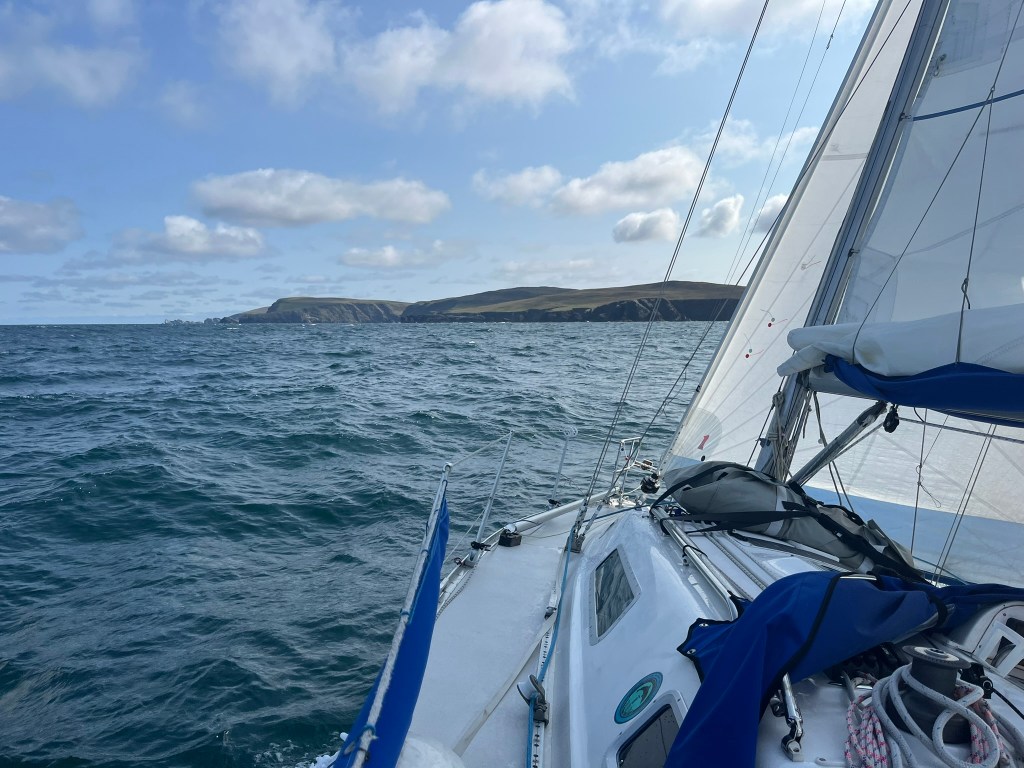
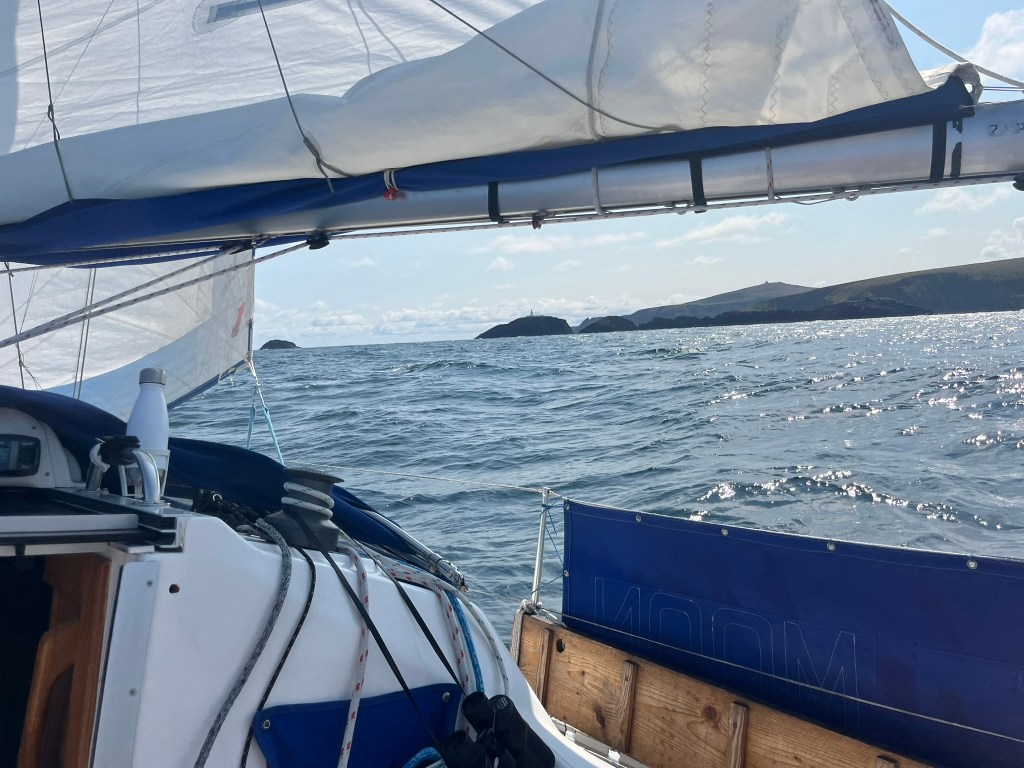
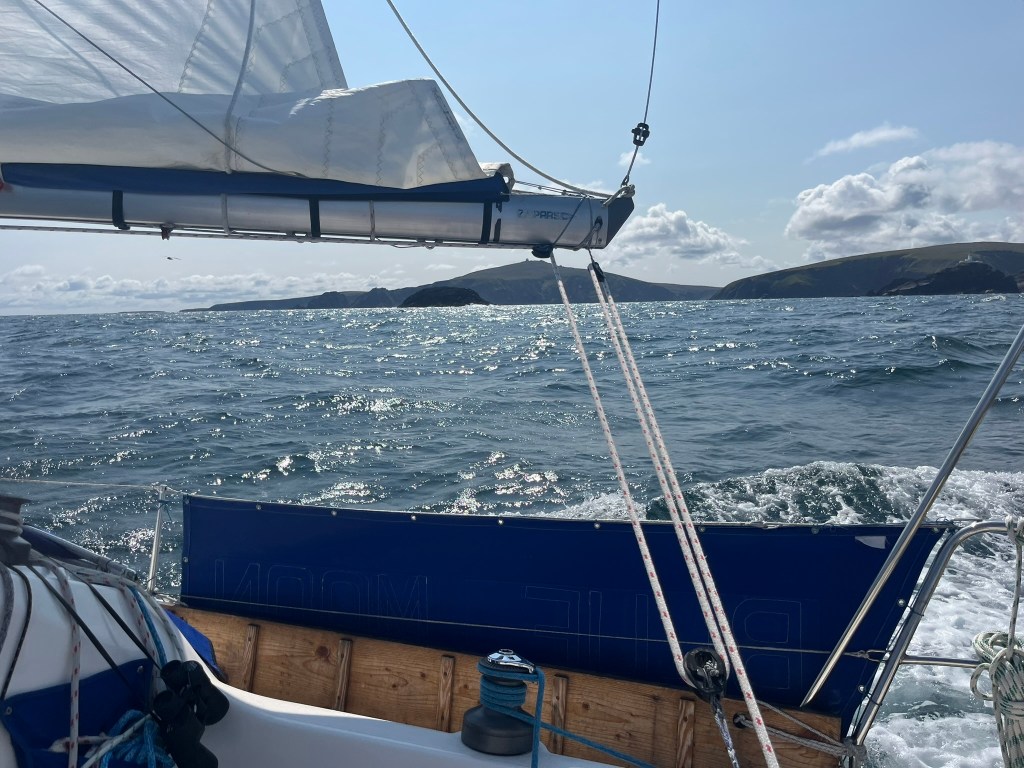
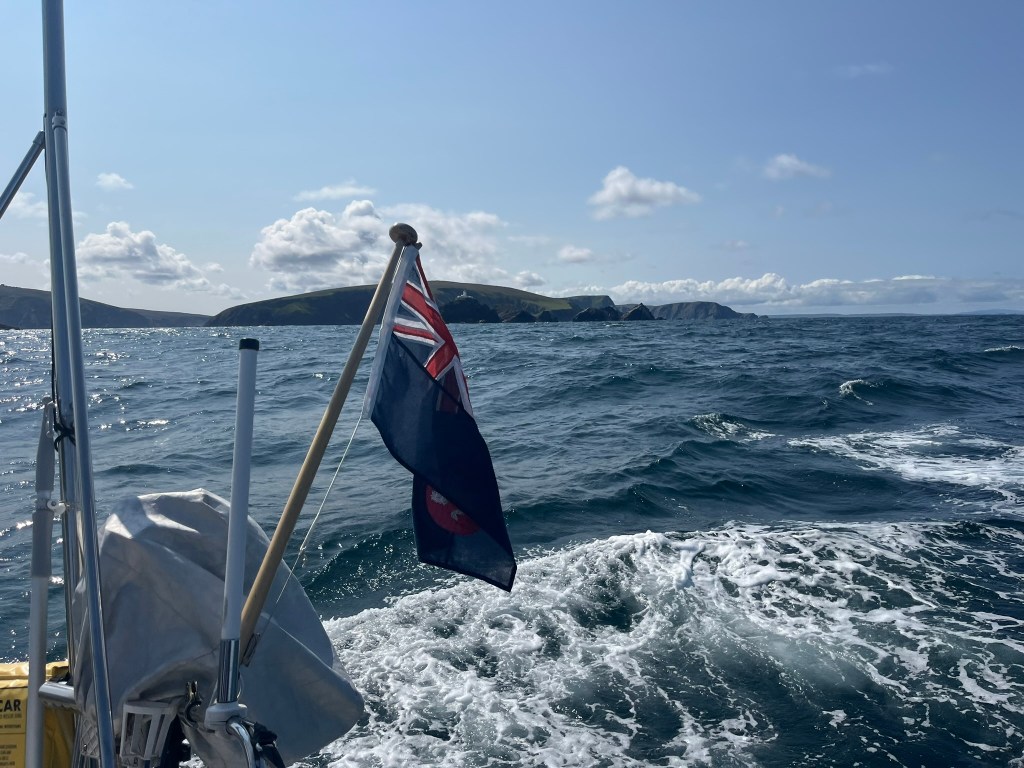
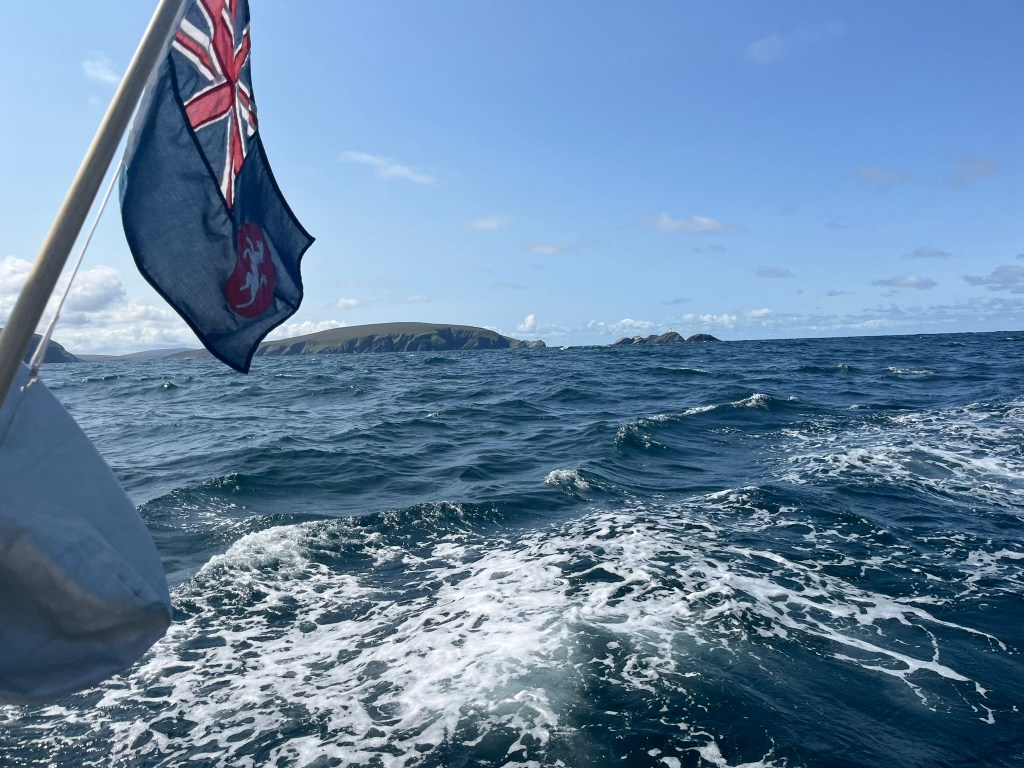
A little reminder of how much fun beating around the northernmost point of the UK can be. I gather it is not always like this.
Which leads me on to the Blue Moon Awards proper which are, of course, for everything except sailing. Important disclaimer: not being on a shortlist does not imply that any location or establishment in any way disappointed, let alone that it should be avoided by any reader undertaking a similar tour by land or sea. I can find something to commend everywhere I visited, with the possible exception of Stranraer. These are all highly opinionated, and probably of interest to no-one but me.
My first category has to be the most frequently-asked question after the ones already listed, which is, believe it or not, “Where were the best showers?” The shortlist would have to include the North Pier Pontoons in Oban because you get a room to yourself and don’t have to put pound coins in a meter, Mallaig Harbour because you get fresh baking smells from the superb bakery next door even though it’s unlikely to be open when you’re there, and the Royal Northumberland YC because you’re in a particularly lovely part of a restored wooden lightship, but the winner for sheer comfort, opulence and exceeding expectations is Aberystwyth Marina. These come at a price (£50 a night in 2023 is still the most expensive berth of the trip apart from St Katharine’s, even after mooring inflation over the two years of around 20%) but each one comes in a cosy room with marble surfaces and a heated towel rail.
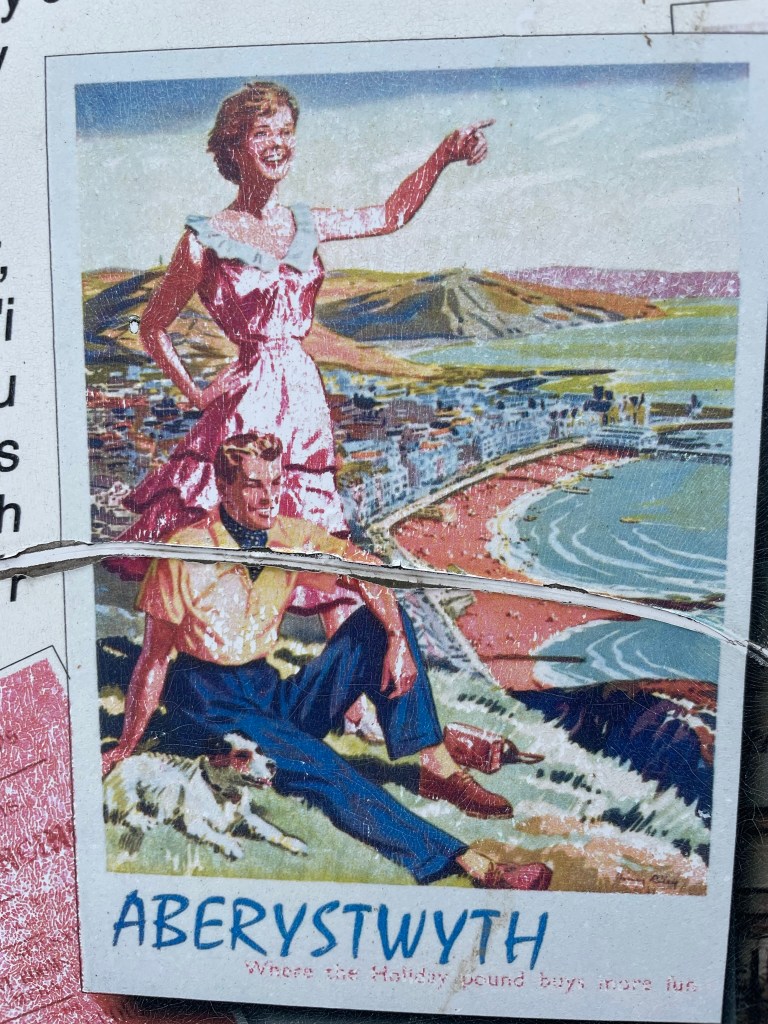
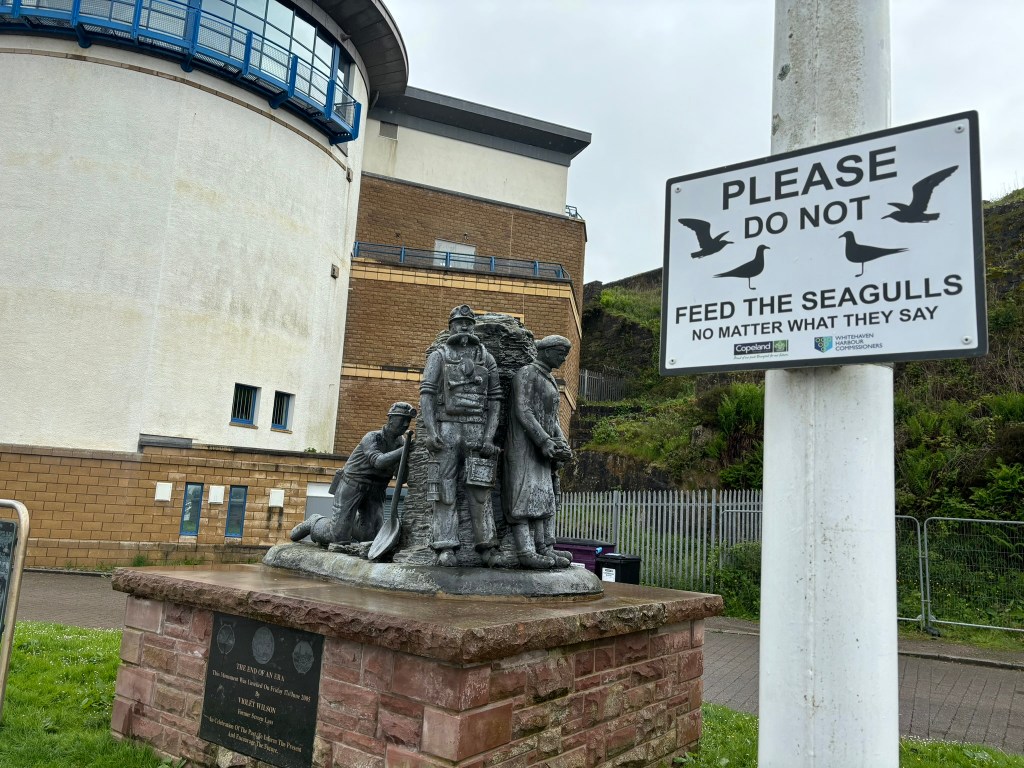
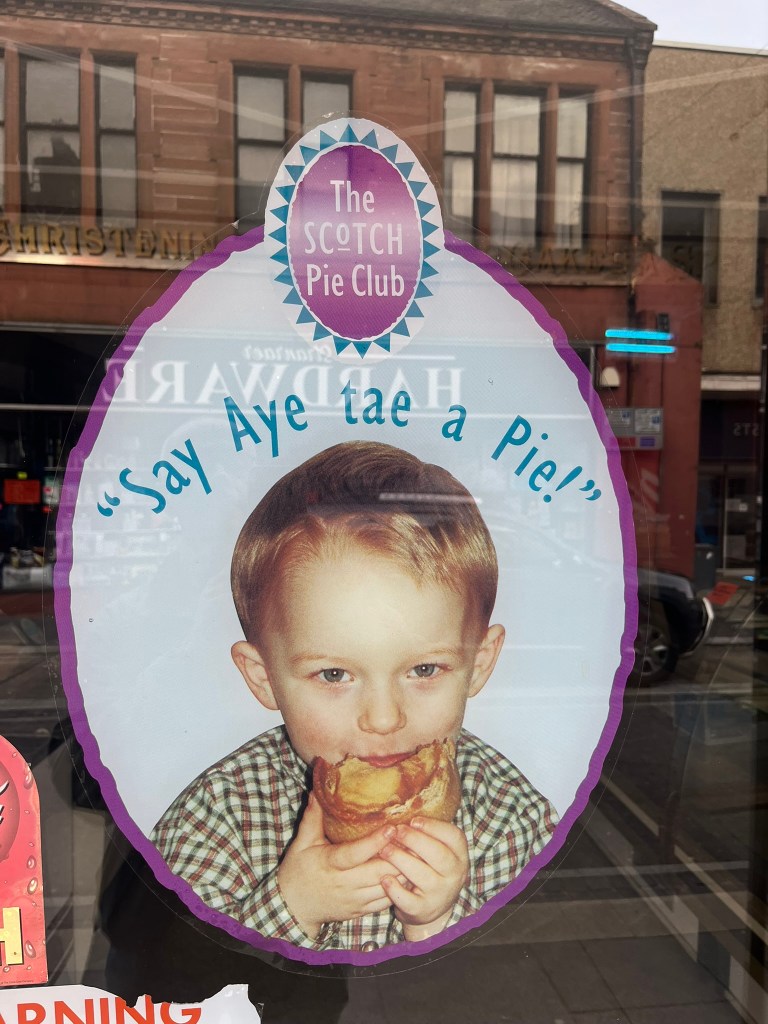
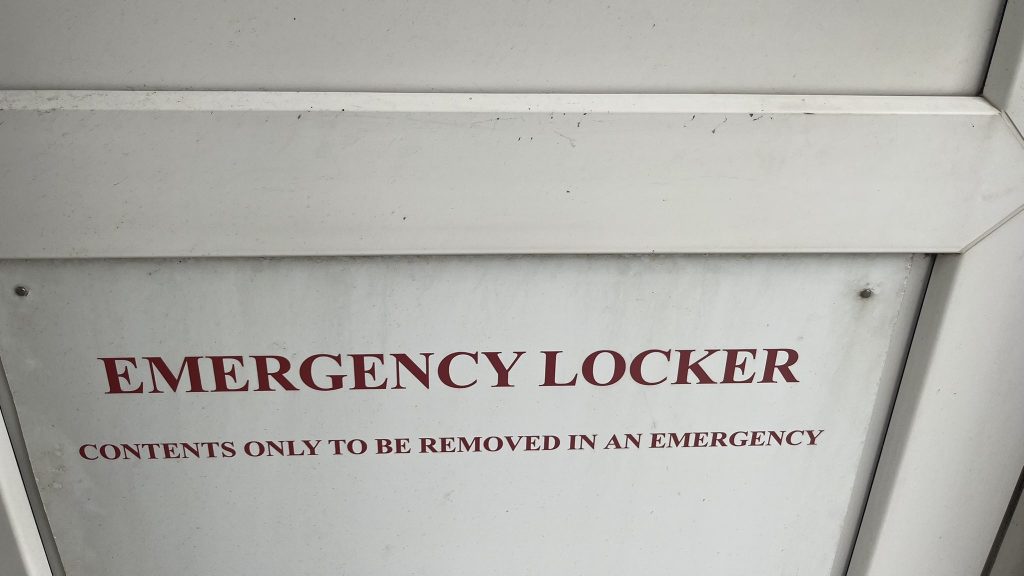
Next comes my favourite: daftest/most amusing sign. There are some strong contenders here: Aberystwyth’s own ‘where the holiday pound buys you more’ still makes my wallet chuckle in conjunction with the previous award, Whitehaven’s seagull warning and Stranraer’s pie club were the brightest points in otherwise dreadful towns, and Kirkwall Marina’s Emergency Locker wins special commendation for Health & Safety tautology. Runner-up is certainly Kinlochbervie Harbour’s callous banning of dogs from the fish dock shower…
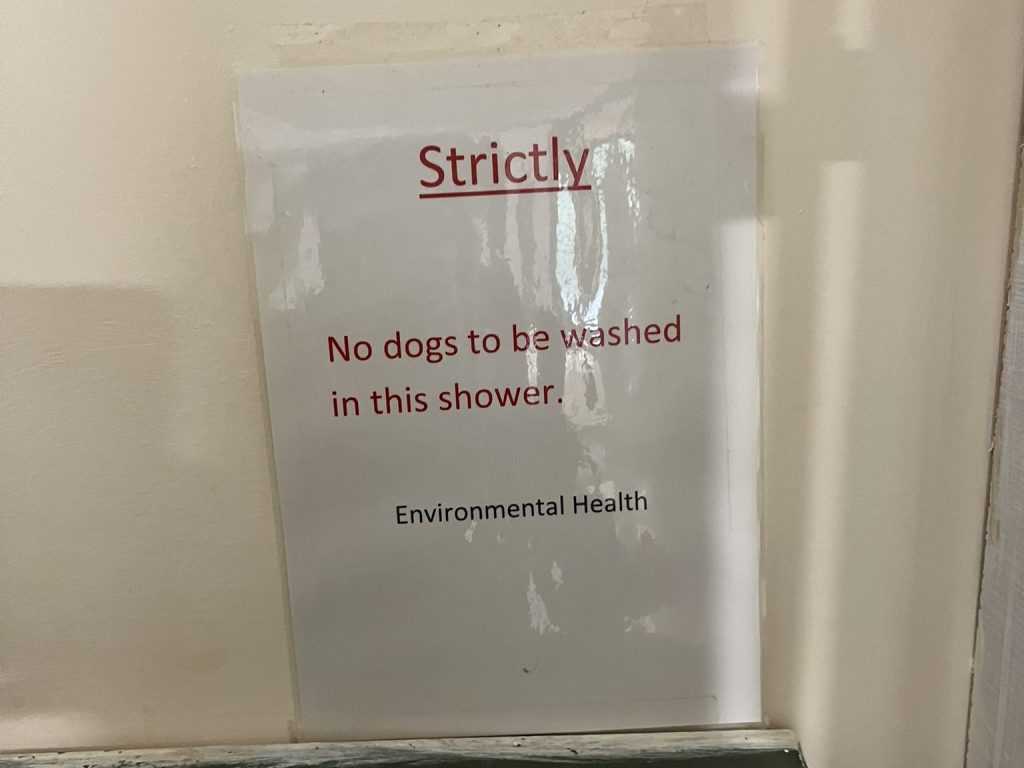
..but the winner for amusement on many levels has to be Biron’s Ironmongers in Wick:
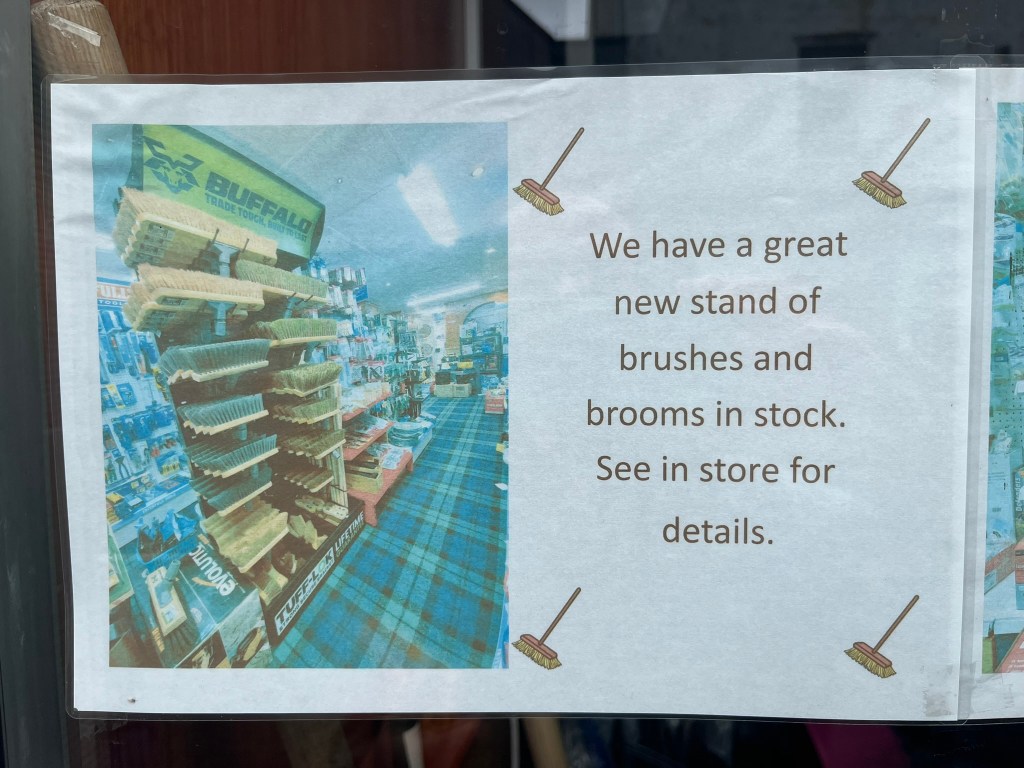
They’re clearly very proud of it as the faded colours suggest it’s been there for years, so I wonder how many of the brushes and brooms are still new. I also especially love the rather misappropriated phrase ‘See in store for details’. How about ‘come in and try one?’ Or ‘you’ll be swept away!’. Oh yes, the old Advertising magic is still there.
I feel I have to have a category for Friendliest Harbour even though it’s less amusing, if only to give semi-public recognition to some of the lovely folk, many of them longstanding council employees, who go out of their way to make itinerant yachtsmen welcome. Special mention then to Ian in Wick who absolutely insists on welcoming every yacht in to every pontoon personally, Donald in Helmsdale in whose cosy office you could easily spend an afternoon yarning about subjects from yacht lifts to the monarchy, everyone at Kerrera Marina who make spending money in a well-run yacht business feel like visiting old friends, and the members of the RNYC in Blyth who improbably find themselves alongside Wick and Aberystwyth on two shortlists already for being even more welcoming than every pilot book says they will be. Also a last chance to thank Mark and the lovely folk in Lochinver Harbour for not letting me make a drama out of a crisis (Crisis? What crisis?). And I have to mention Karen and the team at Liverpool Marina who made me feel so at home that this winter is already feeling odd without the Mersey.
A pause also to repeat the point that one of the most pleasant surprises of the whole trip is just how welcome I felt in every port, whether a swanky marina, a fishing village or a rough working harbour, in spite of very obviously being a posh English yachtsman with no gainful employment. It really was a privilege (there is no less syrupy word for it) to be able to see these communities from the inside, as it were, and to feel a tiny part of them for a night or two. The one exception, of course, was one person in Carlingford (Sailing (too) fast – part one) but I have since had local knowledge that the Royal Navy used to station a frigate in the Lough specifically during their regatta week so as to board visiting yachts from the Republic and demand to see their papers. I absolve the marina employee of his churlishness and wish to apologise: they didn’t do it in my name. However, the gallon of green diesel in your marina was all my fault.
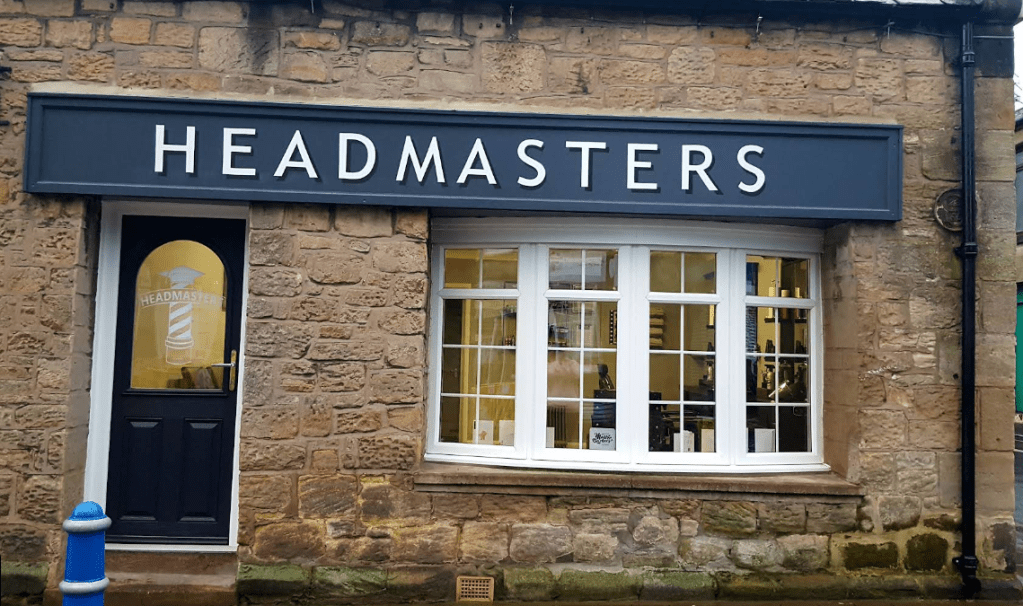
Wipe away the tears, though, becauase the winner has to be the Harbour that is officially the Friendliest in Britain: Amble. (Northumberland-by-land). Not necessarily friendlier than the others, but a briefing that includes breakfast, lunch, ice cream, fish & chips, bakery, grocery, butchery, touristy and historical recommendations was so impressive that I spent an hour in a queue for the recommended barber when I could have gone next door and had a buzz cut in ten minutes. And she too was very friendly, as was the bloke I sat next to for an hour in the queue. And the butcher, and the baker, and the people selling ice cream and coffee and kippers and the people at the castles and the bike hire people…
Now we’re past make-up and best original score and on to the big awards of the night, starting with Daftest Rock Name. And the nominations are…
Anglesey, for the inexplicable East Mouse, West Mouse, and their friend Middle Mouse;
Shetland, for too many rocks to mention along with most of the hills and villages, but special commendation to Willy White Rock and his backing group The Drongs;
No discussion of rock names would be complete without the Bell Rock, a rock which had the perfectly good name of Inchcape until the Abbot of Arbroath was daft enough to try and put a bell on it, which someone promptly stole, not before the name of the rock had (now pointlessly) changed for ever;
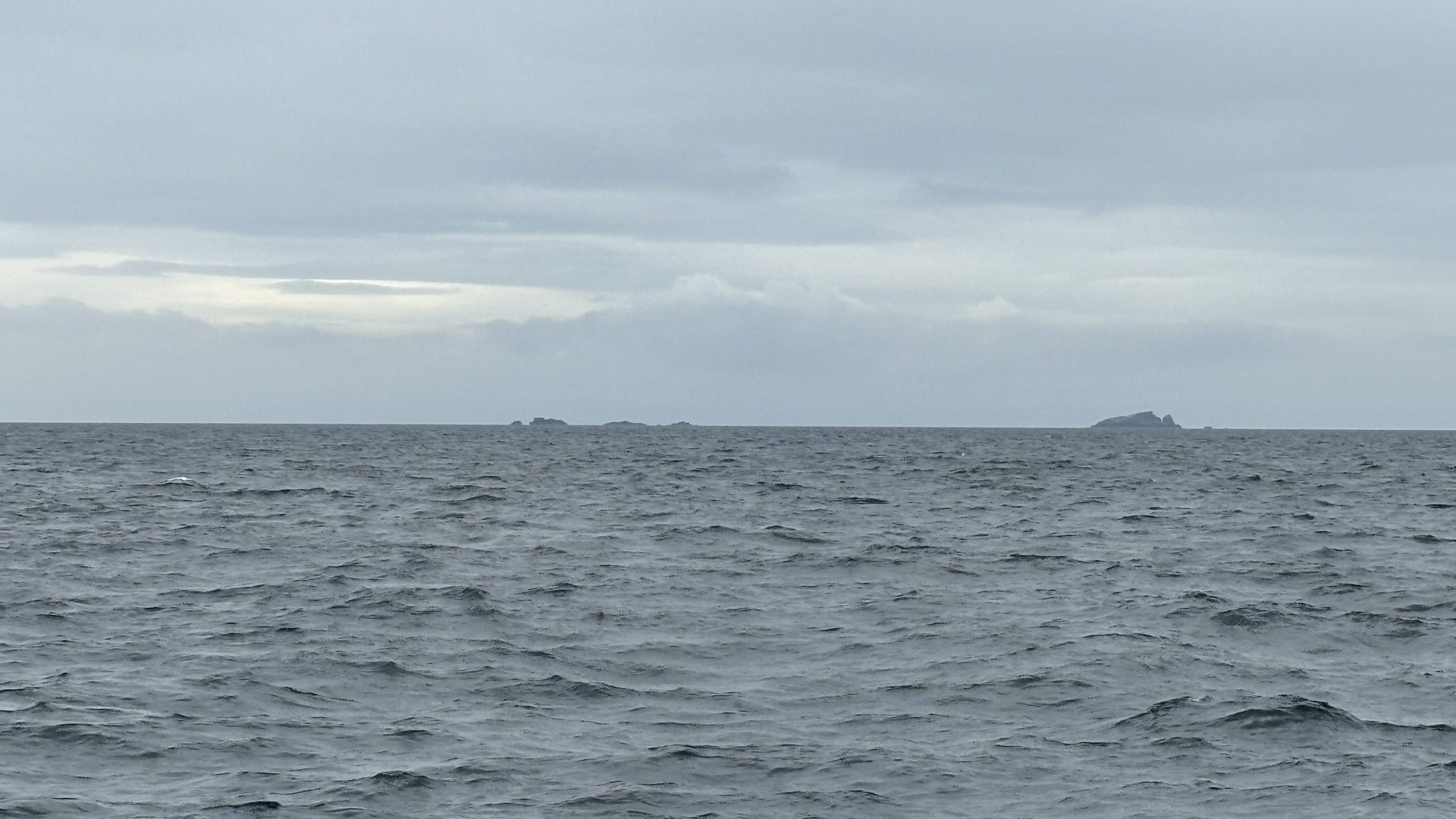
But the winner, by some way, of daftest rock name in the UK has surely to go to that sad pair waiting in the middle of Luce Bay and totally ignored because Luce Bay is so big and dull, I give you… Big Scare and Little Scare! Ladies and Gentlemen, The Scares! (Another day, another Mull)
Now the awards you’ve all been waiting for, but which are rather harder to find humour in because they’re a bit more real, so I’ll just have to urge you to re-read the relevant post if ever you’re in one of these towns, then go to the place in question and think back to the high jinks you read about. And if you are in one of these towns, you must go to the following places. But which first? Ice Cream, or Fish and Chips? Well you can’t go back to savoury now, can you, as John Shuttleworth once so memorably sang (https://www.youtube.com/watch?v=L8eh72REd_s), so we’ll start with…
Best Fish and Chips
I’ve restricted this to actual fish and chip shops, which rules out many of the excellent seafood trucks and pop-ups, where honourable mentions include Skipper’s Scran Van in Kirkcudbright, the Green Shack in Oban, the Seafood Shack in Ullapool (oh dear, it’s in Harden’s and Michelin now) and Loch Clash Larder near Kinlochbervie (Rosalind’s friend won an award at the Scottish Food Awards in only her second year).
But for proper fish and chip shops, and in no particular order, the nominations are…
Giacopazzi’s of Eyemouth: where you may have to queue around the block with sunburned Geordies to see how completely a family of Italian ice cream experts embraced deep-frying, a socio-cultural phenomenon widespread in Scotland;
Morton’s of Ballycastle: no surprise to anyone in Northern Ireland as people seem to drive here from Belfast and Bangor, both of which have adequate chippers (note my mastery of fish and chip dialect);
Steel’s of Cleethorpes: an opportunity to travel back in time to a world where a fish supper is served by a stern lady in a black uniform with a white apron on a table with a starched cloth. The rest of Cleethorpes is similar;
Rockfish of Whitehills: probably the freshest fish in Scotland as it’s over the road from the largest fish processing warehouse;
Fisherman’s of Conwy: supposedly the best fish and chips in Wales, definitely the best chips in the UK;
Picking a winner is impossible on purely gastronomic grounds, so I’m going with overall best experience, and the winner is still, I’m afraid, not in the UK at all: The Jetty in Greencastle, Co Donegal. ( Jay Rayner, pipes and drums, and an unexpected trip abroad). I daresay if I went there again, by car, it would be unremarkable, but on a blazing hot evening with local introduction and the relief of not being stuck aground in an inhospitable harbour or impounded by the Gardai, it was a meal to remember.

And so to…
Best Ice Cream
Even more opinionated, but even more likely to live in the memory as part of an excellent day on or by the sea. And – let’s be honest – there is a little more variety in ice cream than there is in fish, or chips. But how proud we can be as a nation to have such varieties! You won’t find Bramble and Peat in Naples, nor Vanilla and Tablet in Paris, will you? On your next tour of the UK coast, then, don’t miss any of the following…
Maud’s, in spite of having branches all over Northern Ireland, is still better than any local pretenders and has ridiculously wacky flavours beginning with the original Poor Bear’s Delight;
Miele’s of Inverness (and Aviemore, oddly) is worth enduring queues of tartan-clad American tourists for their gelato cakes and profiteroles;
Giacopazzi’s of Eyemouth has to win its own award for being the one-stop shop on both shortlists;
Isle of Mull Ice Cream of Tobermory is probably the only place in the world to make honeycomb, marmalade and Tobermory whisky gelato;
Sop Gelato of New Quay provided the legendary Milky Bar Mashup; its Sticky Toffee, Fig and Honeycomb was voted Wales’ best (how many entries were there in that category?);
Spurelli of Amble finally flies the flag for England with Sea Buckthorn and Rasberry Red Velvet Panna Cotta being just ordinary flavours.
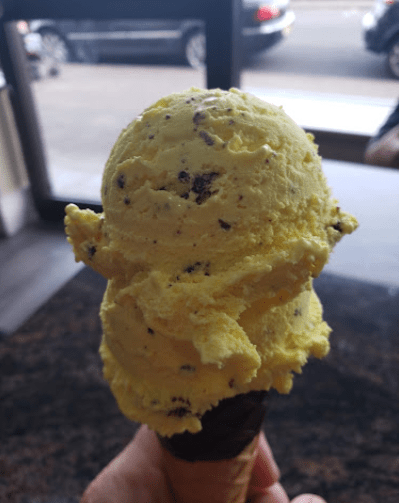

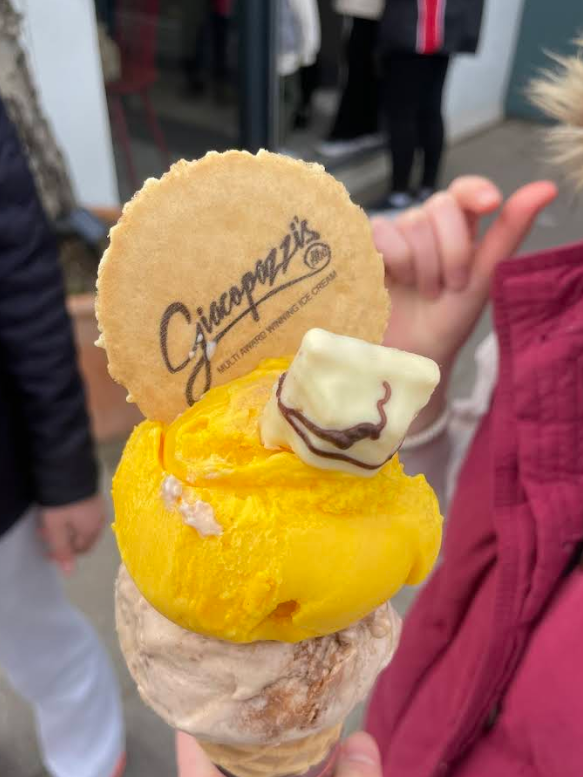
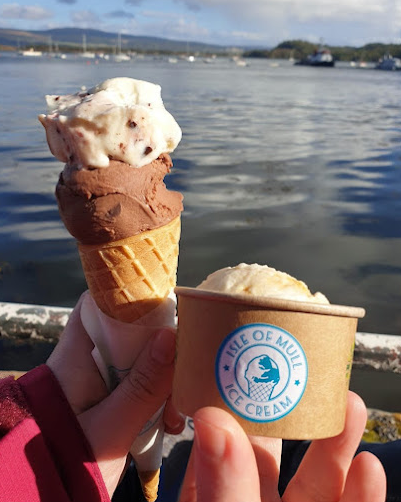
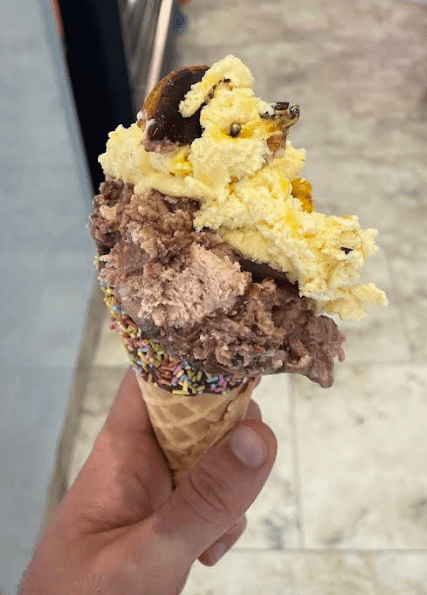
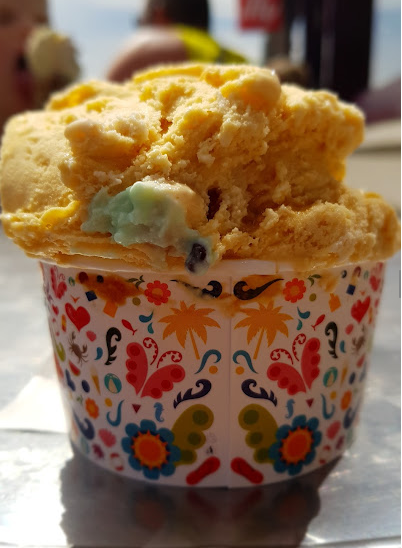
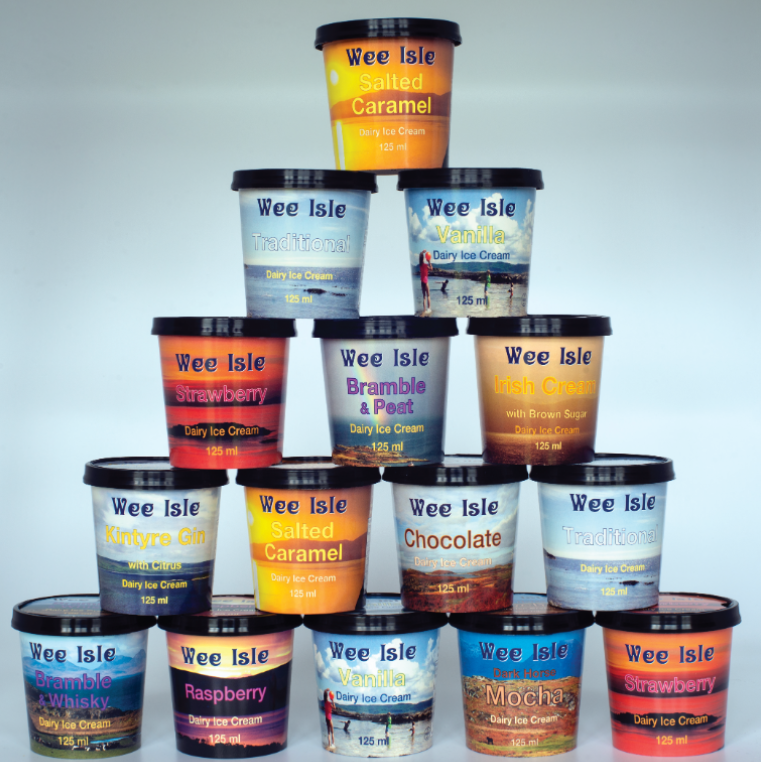
But the winner is rather harder to track down, because The Wee Isle Dairy is just a small farm on the Isle of Gigha but it provided the freshest, creamiest ice cream of the whole trip. They do supply a few shops on the mainland, but to miss a trip to Gigha once you’ve gone as far as Tayvallich would be a crime as it is simply gorgeous. (Sailing South Slowly (again))
Which does, finally, bring us on to the most-asked question: “which was the best bit?” , and you’re not really expecting me to answer that straight are you? The best bits involve dollops of schmaltz larger than the Milky Bar Mash-up: meeting a range of interesting sailors of all levels of skill, experience and geekiness; exploring far-flung coastal communities and beginning to understand a tiny bit of what life is like there; fulfilling a long-held dream of now being able to drive or walk to any part of the coast and know that I have sailed past it in my own boat; spending time with friends and family that doesn’t involve booking hotels or restaurants; acquainting myself with bizarre corners of the UK bus and rail timetables are all on the list. But I sense the demand for something more concrete, a place that can put an award on its mantelpiece and polish it for years to come, so here are some suggestions, not strictly the best bits but bits that exceeded my often already high, but sometimes very low, expectations:
The ‘other bits’ of the East Coast, especially Aberdeenshire, Northumberland and Yorkshire were a very pleasant surprise and a reminder that away from the Channel the coast is still very rural;
Orkney is technically as bleak and windswept as it is described, but so much softer and more comfortable than its neighbouring islands or mainland as to make it feel delightfully familiar and cosmopolitan;
The Far North-West looked scary in the pilot books and terrifying at first sight but turned out to have some of the best sailing, seafood, walking and welcome of the whole trip. I may have to go back in a campervan;
All of Northern Ireland gets a special award for totally confounding expectations. I know I only scratched the surface of the best bits, and for once the deck of a visiting yacht is probably not the most accurate survey point for a whole community, but I had not expected it to be more beautiful than its other half or to be populated by even friendlier and funnier people;
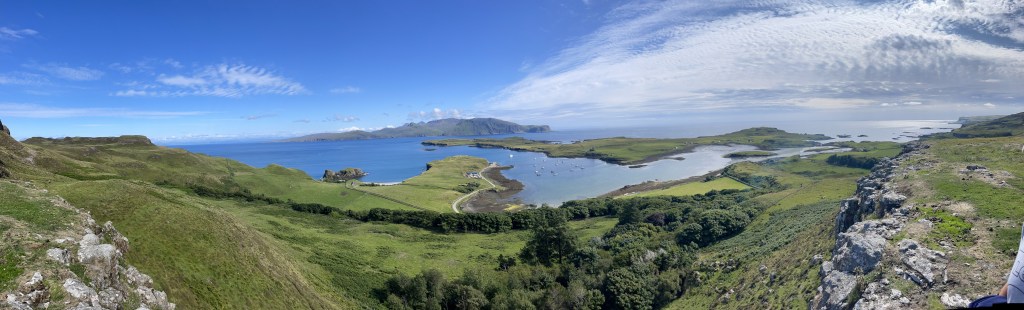
The winner has to be an island though, because that’s where visiting by boat comes into its own and marks you out from the standard holidaymaker. So many of the Inner Hebrides compete for attention it’s almost unfair to name any, but I had particularly lovely times on Gigha, which manages to offer amazing horticulture, oysters and self-sufficiency alongside the ice cream; Eigg, which has to win an award for friendliness alongside impressive sustainability of every kind; Islay, which is too obvious a choice but unavoidable for a whisky-lover and Jura, which competes with Stonehaven for being the most pleasant surprise of the trip.
But the place that will live longest in the memory will almost certainly be Canna. Partly this is down to three sets of circumstances each of which made for a very special visit, but also because it seems to combine the best bits of the islands all around the coast but especially on the Scottish West Coast: stunning scenery, accessible wildlife, a hard-working but incredibly welcoming group of committed islanders making a real community with limited resources, with a particular focus on seafood and beer. Living there would be different from visiting though, I know my place, and that wasn’t the question.
The one question that hasn’t been asked is “Did you enjoy writing the blog?” One or two people have kindly said they enjoyed reading it, including of course the occasional Awards Judge (last mention). I assume that having stated so obviously at the outset that I didn’t want to, they are stepping gently around an old wound.
The rather surprising answer is “Yes, very much so.” I won’t pretend it hasn’t been a chore at times, and always takes far longer than I expect (today being a fine case in point), but I have enjoyed writing it far more than I thought (i.e. not at all), and more importantly I now enjoy reading it – not just because I am a narcissist, but because it’s better than a diary or a ship’s log at reminding me what happened where and when, and of how lucky I’ve been. Writing this last post has reminded me what fun I’ve had not just exploring but recording this trip, and enjoying the way readers can call me out in a way that diaries and logs don’t allow. You can call me out now for writing such a long and convoluted last post which will spoil it all, but in my defence I am out of practice, and it’s my last one, and unlike the sailing at the end of September, I don’t really want to stop.


 Blue Moon's trip around the UK
Leave a reply to crweatherup Cancel reply