In the Wars of the Yachting Roses, there will only ever be one winner. Readers will remember a pre-awards era blog post on the subject of how you can motor from one end of Lancashire to the other in a day without passing a significant, or even on most tides a viable, cruising destination (It’s yachting, Jim, but not as we know it for newcomers, or the careless loyal reader), whereas Yorkshire has the likes of Whitby, Scarborough, Bridlington, Staithes and of course Hull, all of which I had been looking forward to for a range of different reasons. Sadly, I haven’t visited them all for a range of different reasons, most of them involving tide, but it has been yet another completely different chapter in the tour, consisting as it has of harbours which (with the possible exception of Hull, I suppose) are better known as seaside holiday towns. For some reason, possibly because when I think of North Yorkshire I think of moors and market towns and gastropubs and long distance walkers, I had imagined them (with the definite exception of Hull) as being rather genteel places, perhaps a northern Broadstairs or Aldeburgh. I might bump into Alan Ayckbourn, or even Alan Bennett taking tea together on the prom in Scarborough. There might be art galleries and Michelin-starred bistros in Whitby. Bridlington, as I’m sure you all know, is home to the Royal Yorkshire Yacht Club. In this expectation, and I can hear the hoots of laughter from anyone born north of Watford already, I was sorely mistaken.
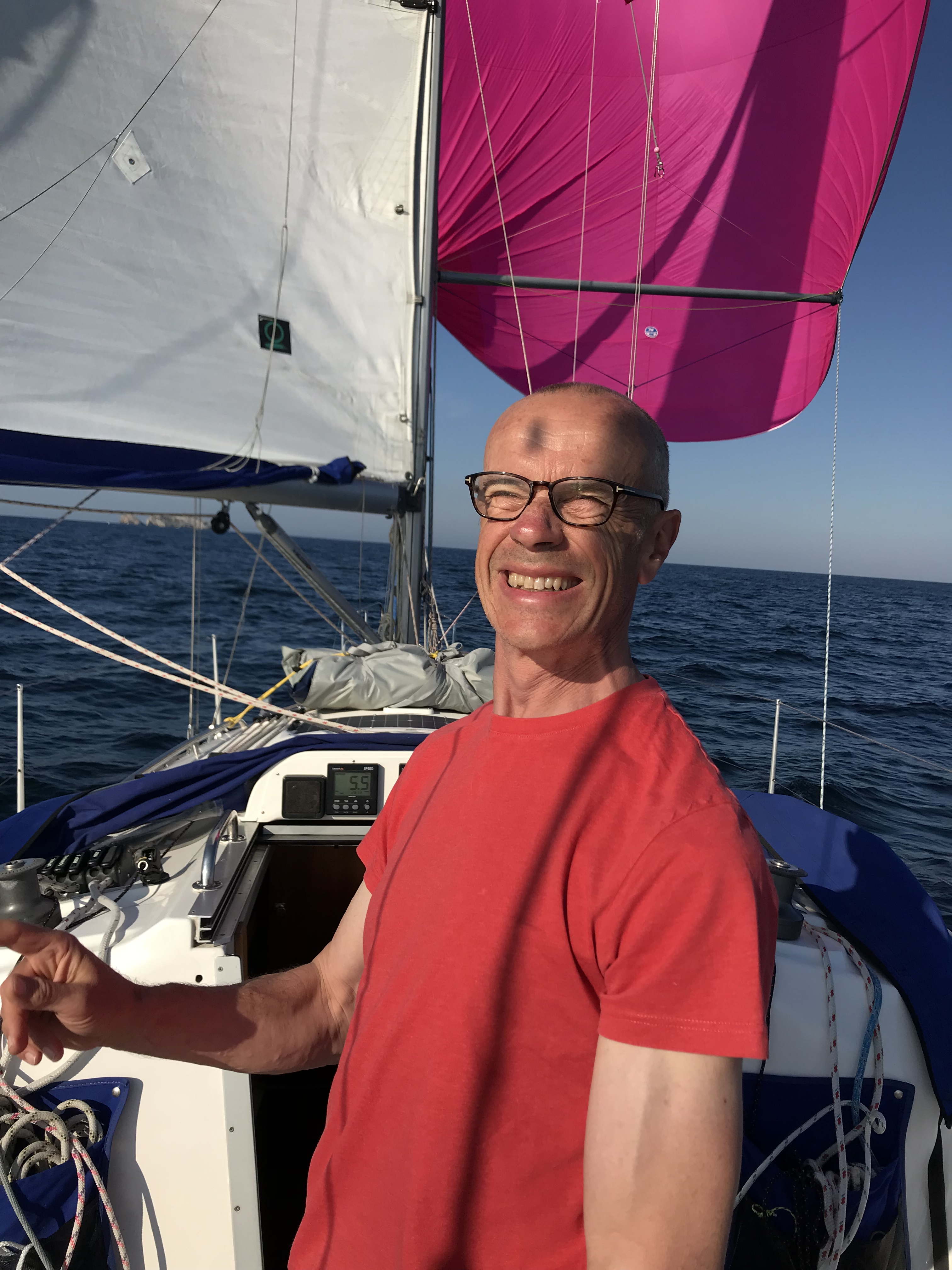
However, I had the right guests for this jaunt: Peter and Marnie are proper Yorkshire folk and perhaps I should have outlined my expectations more clearly so that they could have let me down gently. Even better, lured by the prospect of conversation which would not be primarily about sailing, Sarah joined us which made for the unusually mainstream sight of Blue Moon hosting two couples for a week’s gentle holiday. The pressure was on to deliver a holiday not a series of demanding coastal passages, so the forecast heatwave and light winds were very welcome as we could make some very short hops, and a largely incident-free week is far more conducive to a long and happy marriage than a series of entertaining mishaps, no matter how much they might increase the chances of the blog winning even more awards.
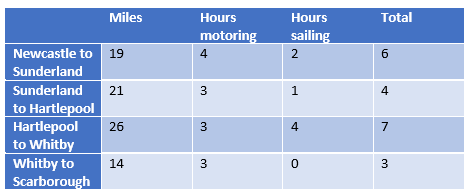
First we had to get to Yorkshire: I was in Newcastle, so we had to sail past some even less yacht-likely places like Durham, which is hard to imagine having a coast at all. Our exit from Newcastle was far from straightforward: after a night in the only Michelin-touched experience of the entire trip (a gastropub on the quays, there’s a microcosm of how Newcastle has changed) we woke to more than foggy heads. We had a bridge tilt more fixed than an Advance Purchase train ticket at 0900, and at 0730 we couldn’t see the Tyne Bridge we were moored next to, let alone the tilting one 500 yards away.
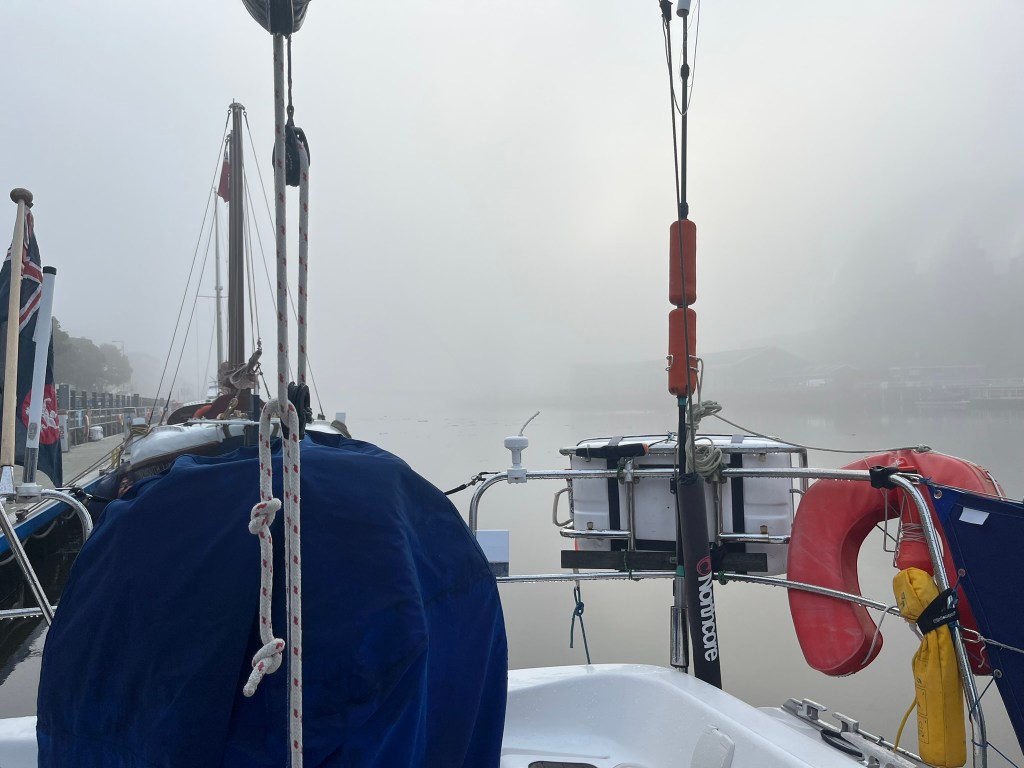
We needed sunshine, fast, and luckily we were in Newcastle on the only two days this year when it was going to be 28 degrees. Within the hour the fog had been replaced by blazing sunshine, so we could see the tree trunks and dead dogs we would otherwise have been blundering into. I do the Tyne a disservice, there were no dead dogs visible, but an awful lot of floating trees so we motored very slowly and let the tide do the rest.
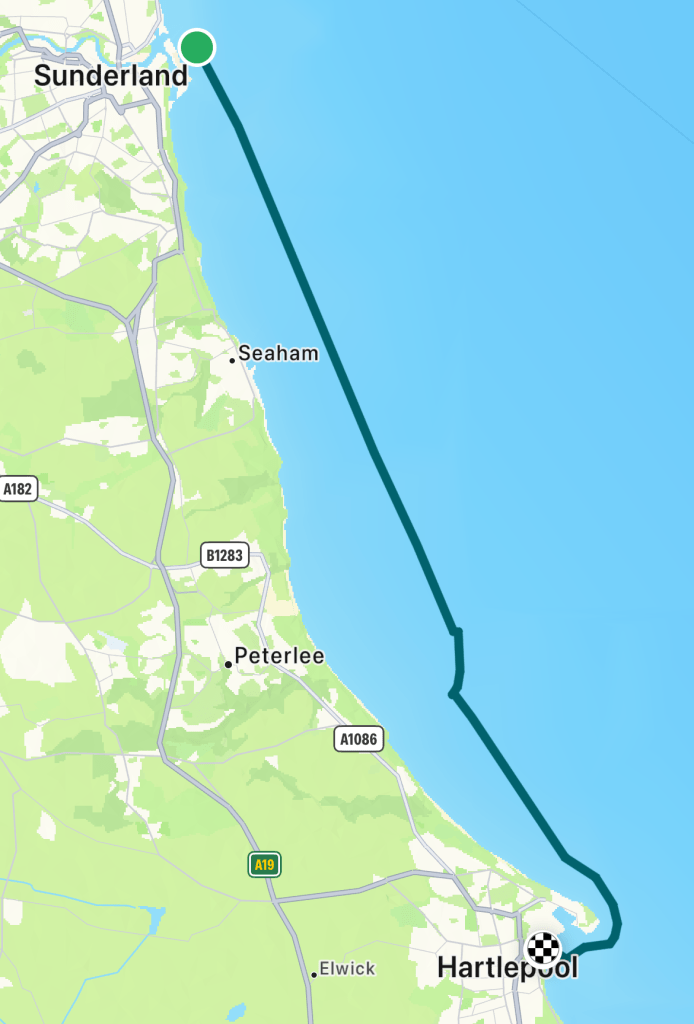
Out at sea and our early departure (my fault, I had been over-cautious booking the bridge weeks before) presented us with the daunting prospect of more than half a day in Sunderland. I had a cunning plan for this too, and replaced the slow motoring with beating against the tide into five knots of wind on the nose. This ensured that for an hour at least we were actually heading away from Sunderland, but in the end the wind won and there was nothing for it but to arrive. Here was a pleasant surprise though: who knew Sunderland had a huge beach? With yet more supposedly award-winning ice cream? And a delightful lighthouse on the end of a picture postcard pier? And arty sculptures on the sea-front to photograph it through?
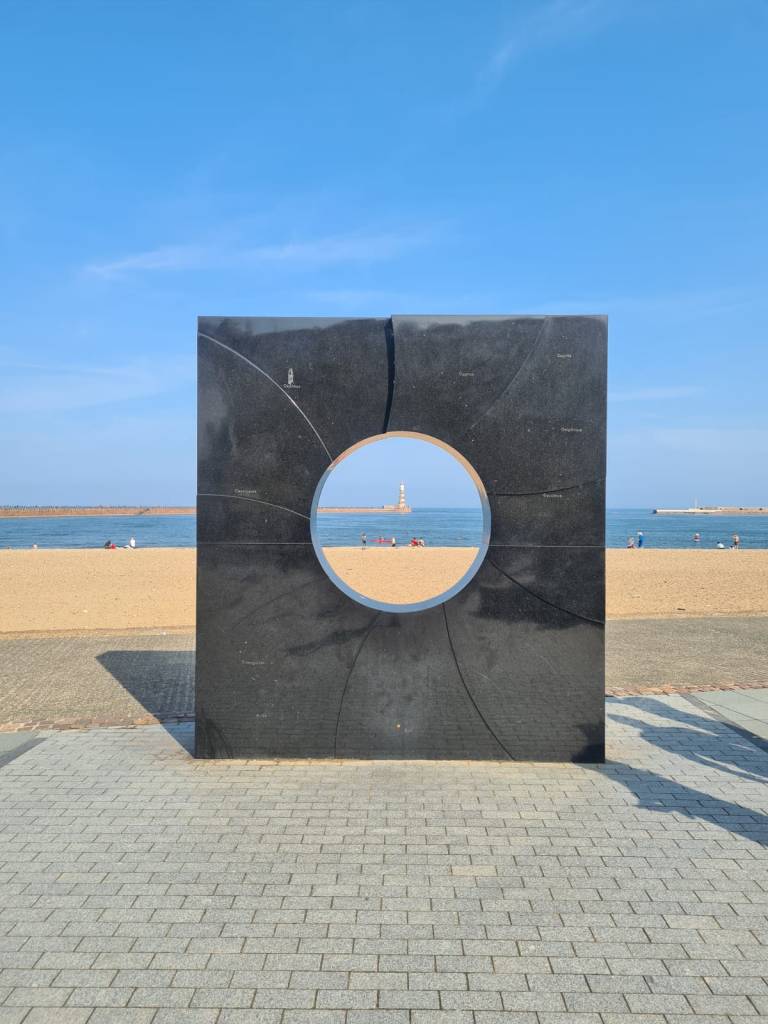
Only a true Wearside pedant would point out that we weren’t actually in Sunderland but in Roker, but I reckon that’s a suburb of Sunderland. It was called Sunderland Marina, although on a sunny summer evening you could imagine being somewhere slightly flashier…
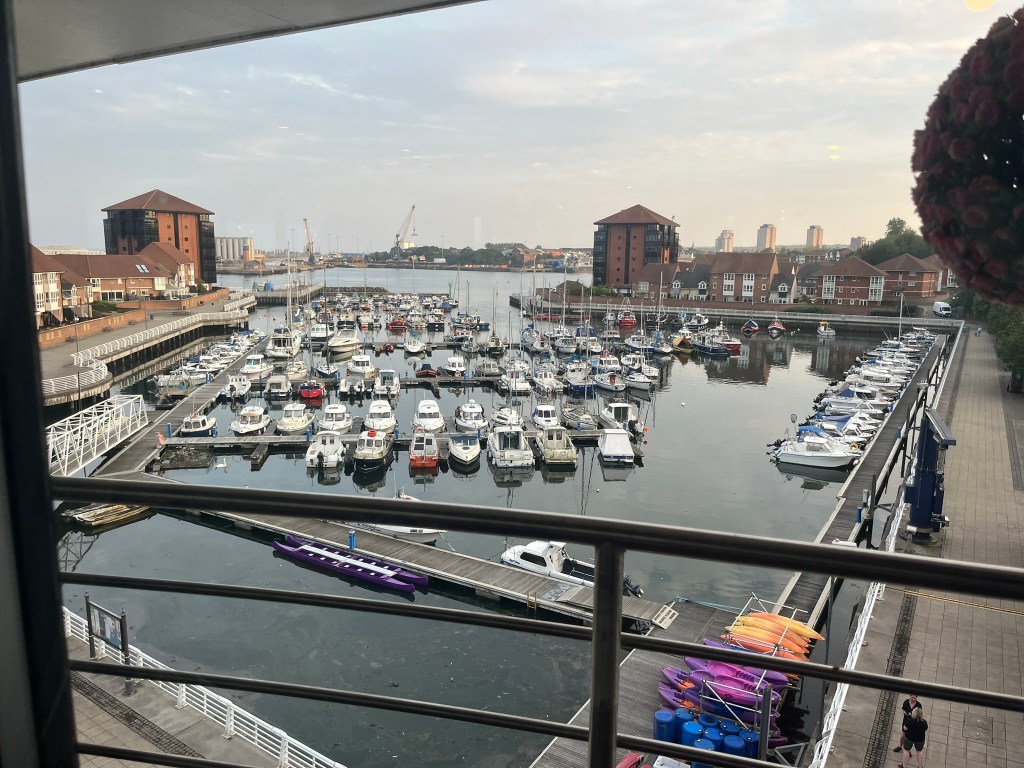
…if you took out the cranes and the tower blocks.
Sunderland had also been advertised as the only all-tide marina on this trip, which turned out to be not entirely true: when we went to reverse out of our berth the next morning nothing happened. I panicked into wondering if I was going to need a new gearbox when I spotted a cheaper and quicker solution to the problem – we were stuck in thick mud. A press of the keel up button and we were on our way to another marina where depth was more of a known issue, Hartlepool.
None of us knew anything about Hartlepool beyond it being the butt of endless jokes about monkeys rather than a serious yachting destination, but it not only has a marina that pilot guides and sailing magazines rave about, it also turned out to house the Museum of the Royal Navy, and since half the crew have more than a passing interest in that subject it seemed like a good stop, Sadly, it was where the tide began to play its nasty tricks: I’d been led to believe that we could get into the marina lock five hours before high water but a call beforehand (lucky I did) led to the discovery that this was now three hours, so we had another day of killing time before we could get in 1530. This meant that we would have a whole hour in the museum, or would have done had the lock-keepers not got their wires crossed and had us wait outside for a quarter of an hour holding station in 2 metres of water in a suddenly rising wind. ‘Luckily’ we had already decided that the museum would have to be a dedicated visit on another day.

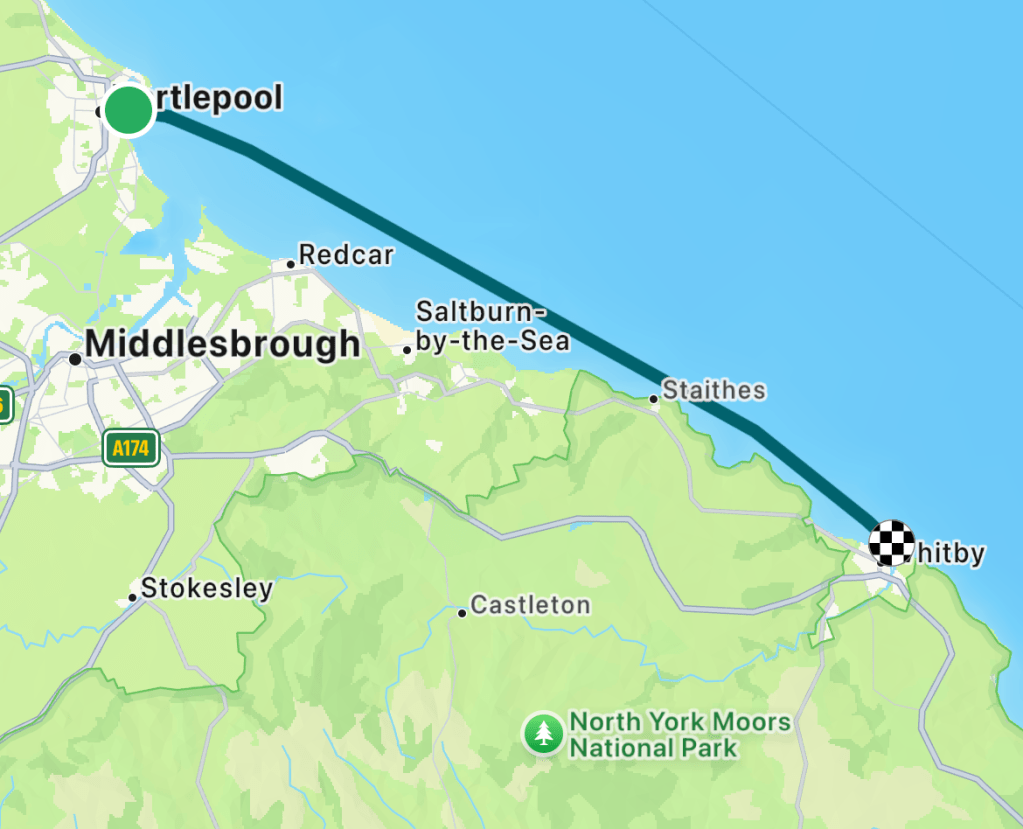
Finally we were ready for Yorkshire, but here the tide really took over. Whitby seemed to have made its own tidal restrictions: for reasons none of us could work out, they only open the bridge once every 30 minutes, and only for two hours either side of High Water, in spite of there appearing to be plenty of water in the river, so having taken the very latest lock out of Hartlepool (enough time for the crew to discover both Greggs and an M&S Food Hall, hurrah for Hartlepool after all) we still had seven hours to sail the 15 miles to Whitby before the bridge opened at 1830.. Even with a contrary tide we managed this quite comfortably and it forced me to admit that there is merit in not racing: sitting in the sunshine snacking on M&S’ finest picnic whilst watching the likes of Saltburn, Skinningrove and Runswick Bay drift past at less than walking pace has its merits and definitiely ticked the holiday vs passage-making box. Sadly the dfrifting past included Staithes – it would have been fun to visit the Captain Cook museum and the pub with over 400 gins, but the tide was very out indeed.
So Whitby was our first port of call in Yorkshire, and the warmest of Yorkshire welcomes. We’d been told there was a pontoon where you could moor up to wait for the bridge, so we motored in through the famous pierheads gawping at the Abbey ruins (Sarah and I were, Peter and Marnie come here at least once a year) when the radio suddenly barked into life with an unmistakeable accent, but one that we southerners associate more with shouting at sheepdogs than welcoming visiting yachtsmen. “White yacht enterin’ t’harbour!” she bellowed at us, “whar yer intentions?”. As sheepish as if I’d been backed into a pen by a collie I explained that we were hoping to wait on the pontoon for the first bridge. “Tha’s arright”, she barked back, “but it’s not ’til six-twenty you know, and you’ll ‘ave to raft up on t’other yacht”. We motored on towards the bridge, Peter and Marnie particularly chuckling at the Yorkshire welcome, but she wasn’t done. “Blue Moon!” the radio shouted at us again, I’ll let you do the accent in your head, I don’t want to offend anyone even more, “it’s behind you. Turn around, now!” There were tripper boats everywhere by now, but we managed to turn around without hitting any and thread our way through speedboats, mock pirate ships and holiday fishing tripppers back down to where we spotted a single Dutch yacht on a totally unmarked pontoon amongst the fishing boats, nowhere near the bridge.
We came alongside and the Dutch couple explained that they had been made even more welcome when they arrived, assuming like me that there was plenty of water to wait for the inexplicable bridge, and ran aground right in the middle of the harbour entrance. The harbour had called them and said, if their flawless English was not mistaken, words to the effect of ‘if you didn’t know what you were doing, why didn’t you call us up and ask?’ They had spent the morning being alternately mocked and sympathised with by various locals, so we reckoned we’d got off lightly. Less lightly than the bridgekeepers – when the bridge hadn’t opened on time the radio sprang into raucous life again: “Whitby Bridge,” she yelled, “you lads do know there are two yachts waiting down here, don’t you?” The bridge-keeper yelled back something even our native Yorkshire crew couldn’t understand, leaving us and the Dutch couple mystified as what we were supposed to do. Another ten minutes of watching cars drive over the bridge and without a word to anyone it began to open. We quickly cast off and headed upriver, only to see a large survey boat heading down on the other side. I flung the engine into reverse and stopped, having read that outbound vessels always had priority. “Blue Moon!” It was the bridge-keeper’s turn to get his own back now, “what are you waiting for?” “You want me to come through ahead of the outgoing vessel?” I checked, in what I thought was a seamanlike manner. “Of course! That’s why we’re all waiting for you! he barked. Chastened, confused, embarassed, we hurried through with the Dutch following equally sheepishly behind, half expecting to be spat at.
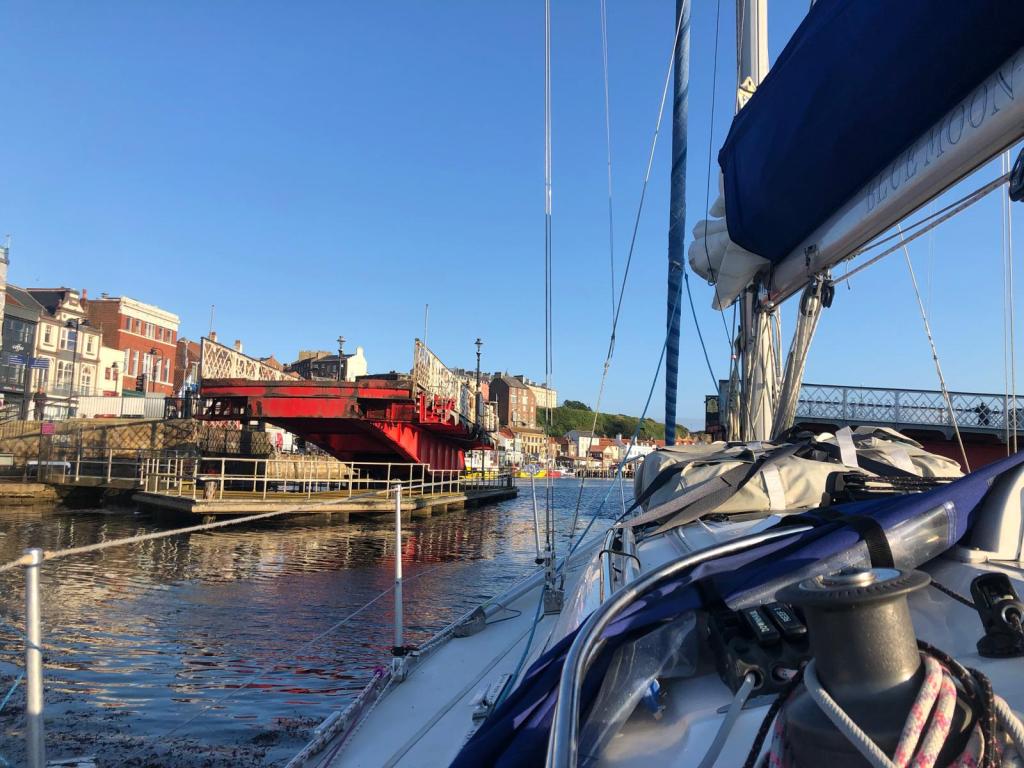
Everyone else in Whitby was very friendly, if you’ll except the harbour attendant locking me out while I tried to pay, and the otherwise excellent fish restaurant with the amazing view (local knowledge, thank you Peter and Marnie) charging 50p for a slice of Mother’s Pride and then only giving me a half slice, the excuse being that someone had eaten the other half. What it wasn’t was genteel though: I had not reckoned on having to elbow past streets full of sunburned holidaymakers scoffing chips and candyfloss, or the extent to which every shop seemed intent on everyone going home with a Yorkshire-branded memento.

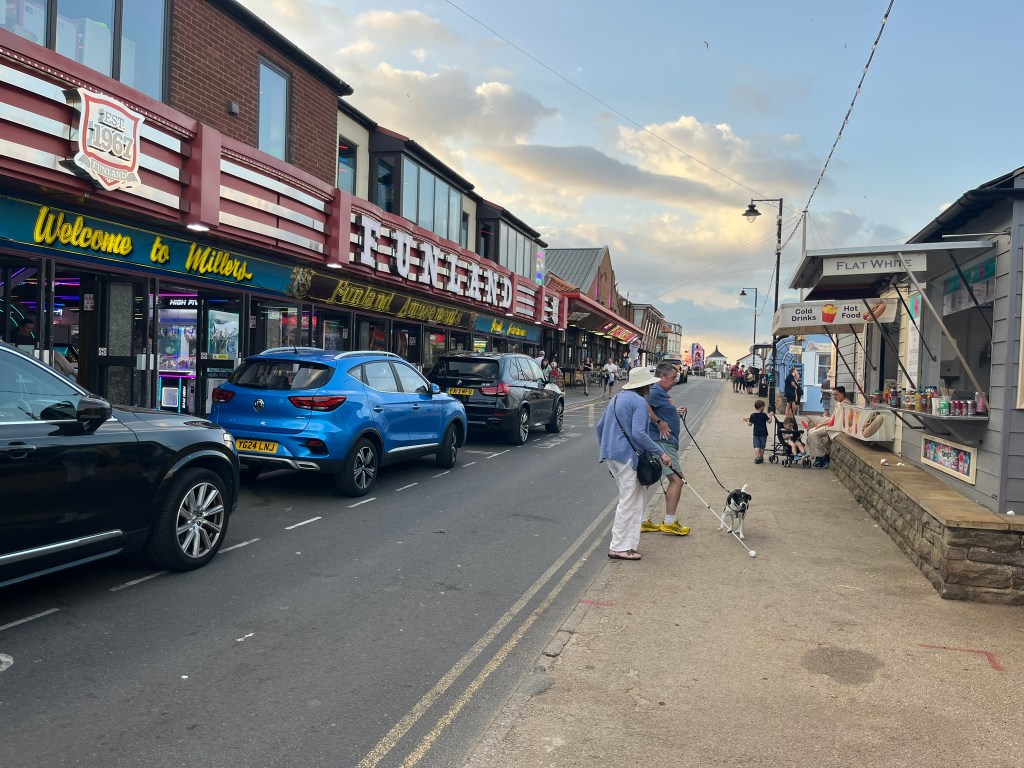

Sadly we could only afford 12 hours in Whitby, which was enough to persuade Sarah and me and that we should come back to do it justice but perhaps not in high summer. We had to be away early because – of course – our next destination, Scarborough, would only have enough water until 1000. I was fairly sure that there would be plenty of water until twelve but another encounter with North Yorkshire Harbours had set me right in no uncertain terms. “Tha’ll need to be in by ten, you can come in after but you’re on you’re own” the harbourmaster had said when I’d called, adding a new level of definition to the word ‘blunt’. We duly presented ourselves at 10, and in person he was as welcoming as any I’ve met, took our lines and came down again to make sure we had everything we needed. This was going to be an upgrade on Whitby: almost as pretty a fishing town, overlooked by a church where Anne Bronte is buried:
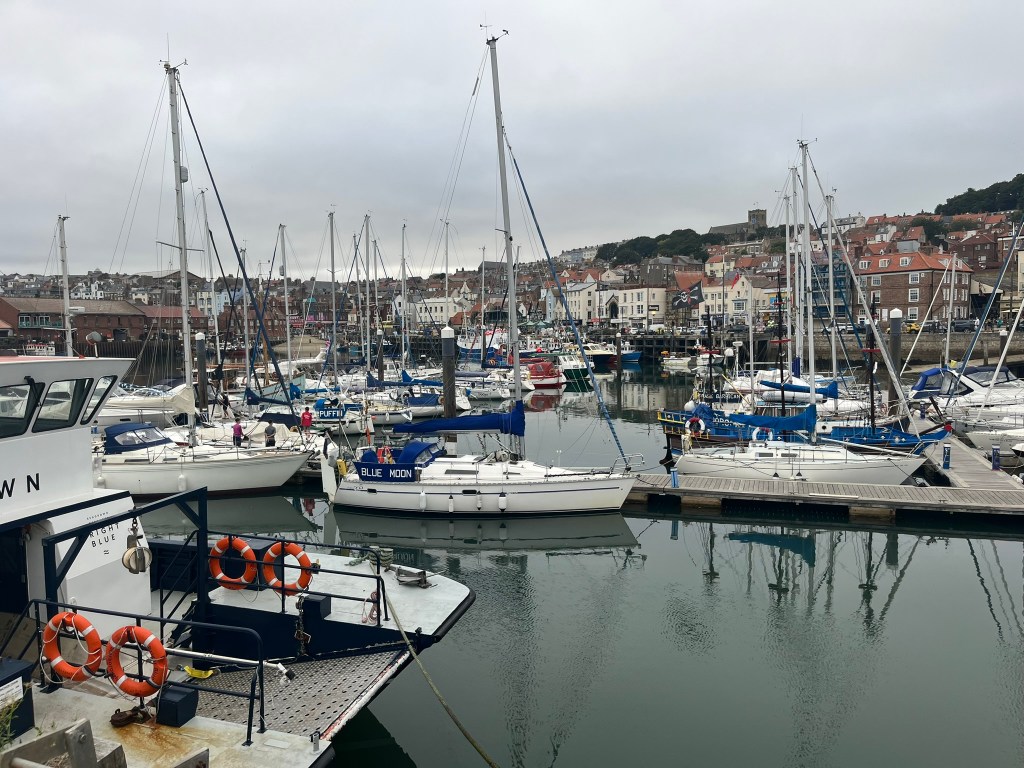
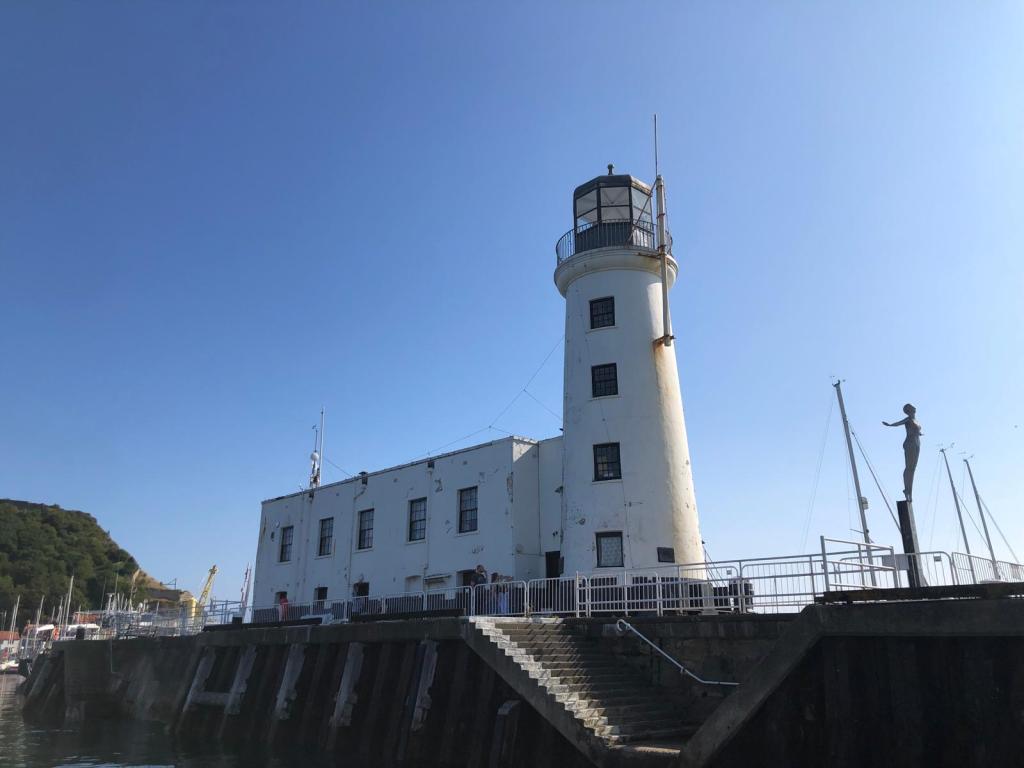
…with a yacht club in a whole lighthouse rather than a common old lightship:
…with stunning beaches, majestic cliffs and a castle:
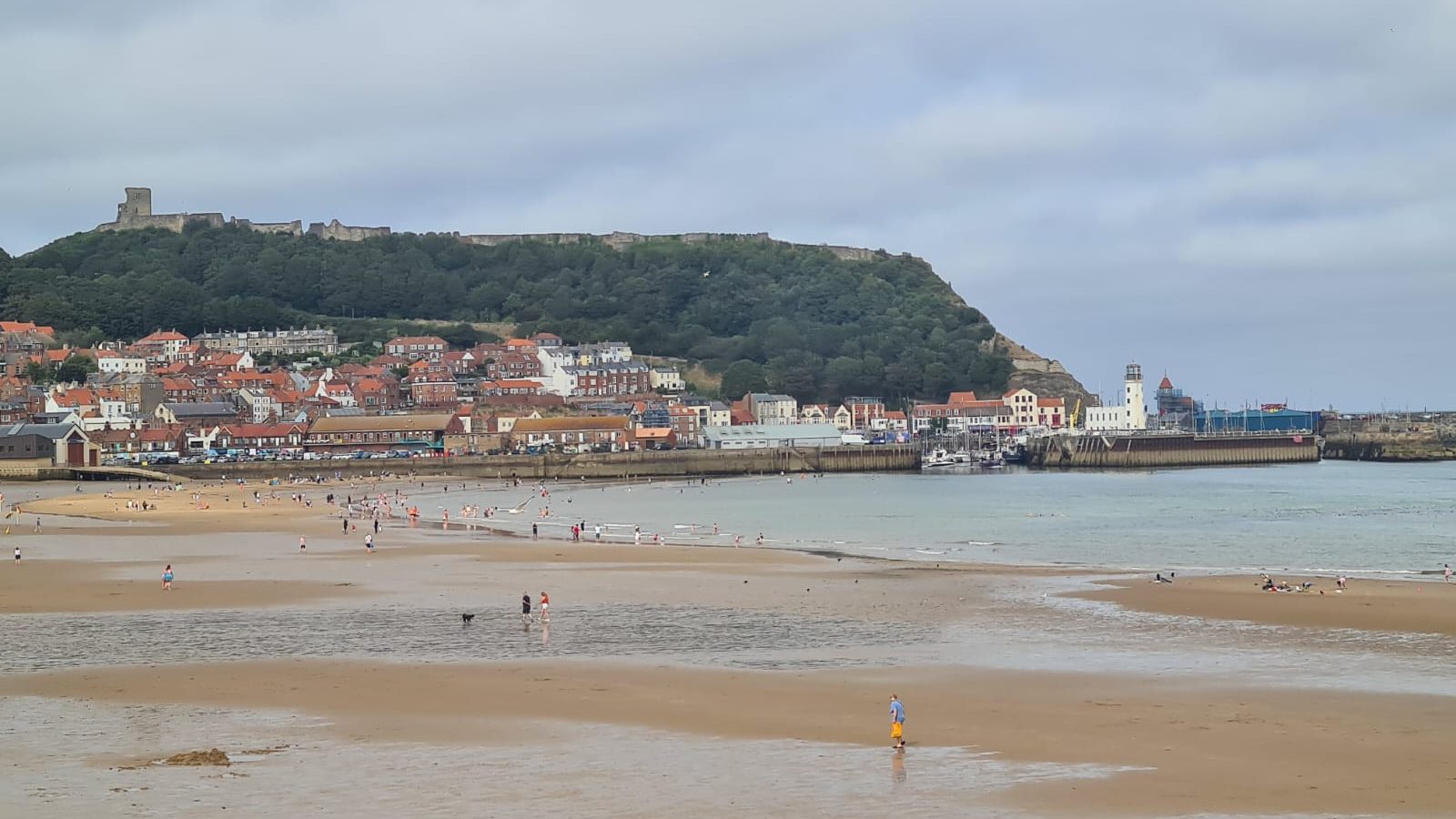
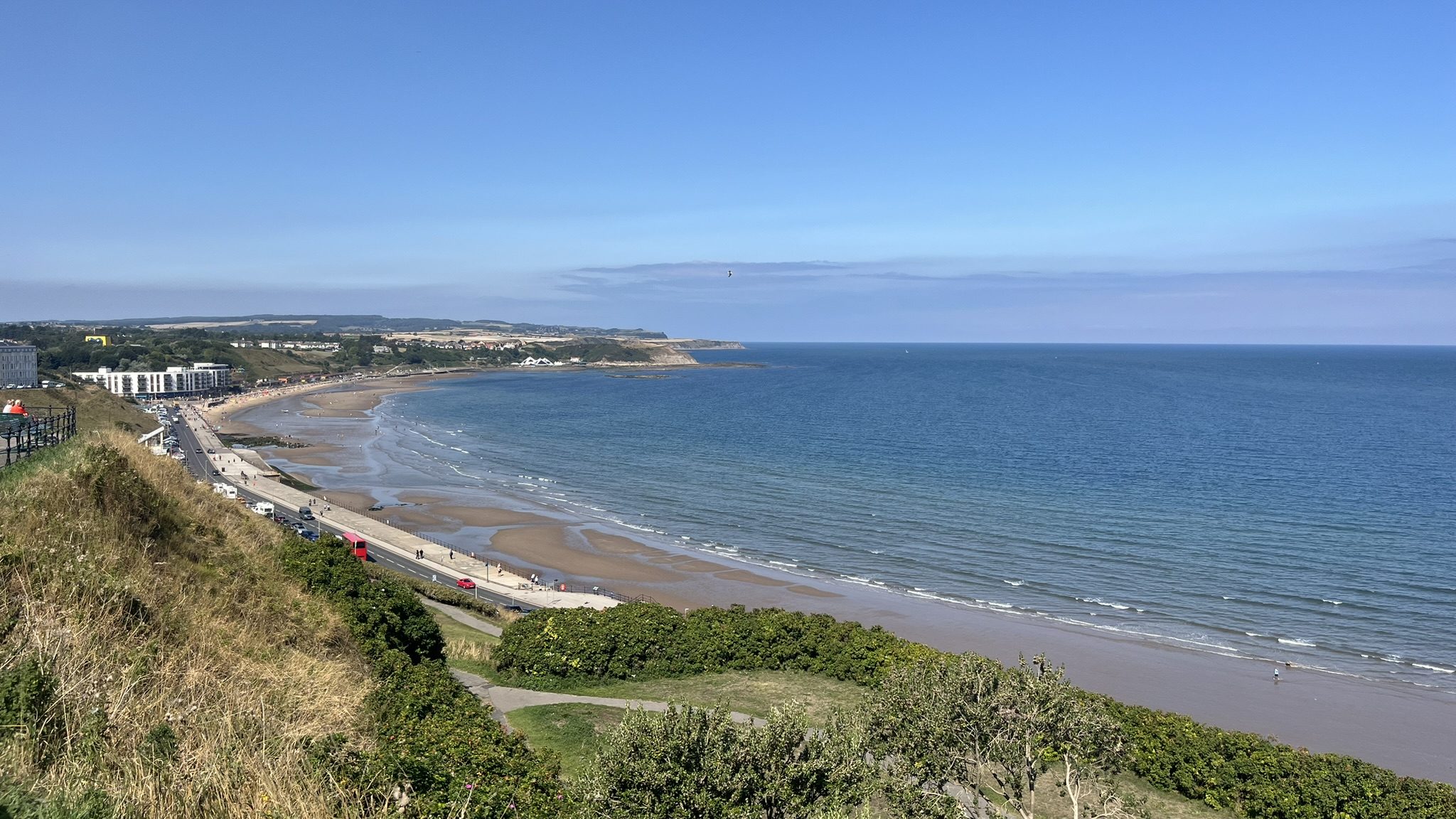
…and the grandest of Grand Hotels*:

We settled down to enjoy the genteel, traditional surroundings.
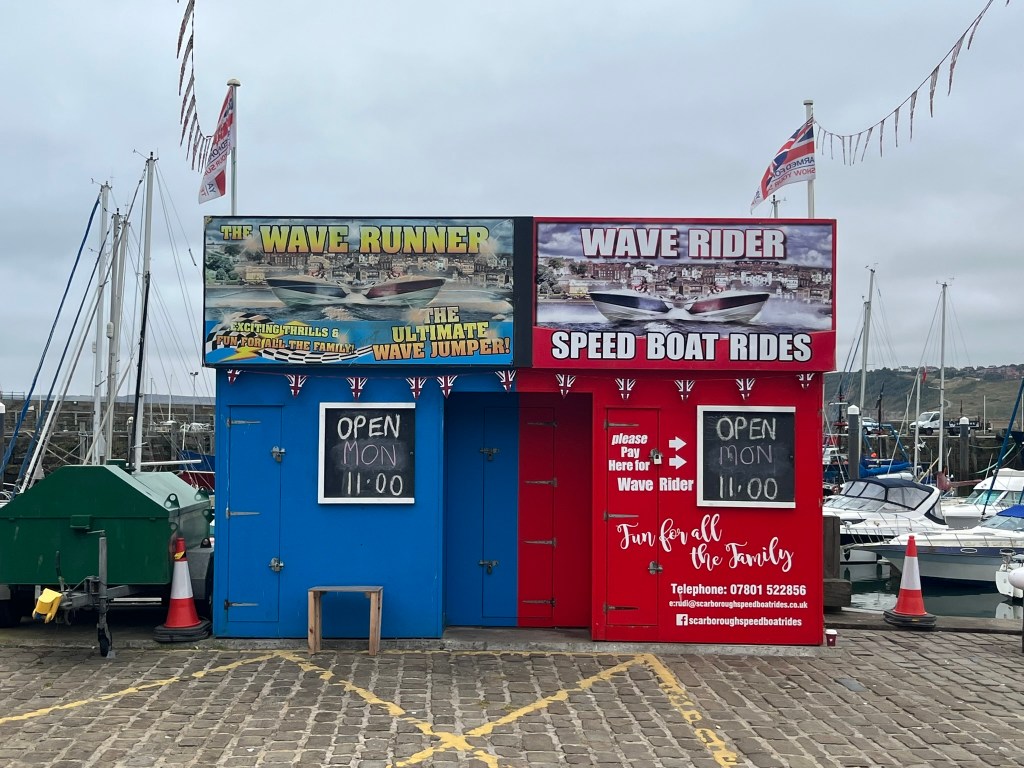
At 1030 the noise started. First, the full-throated roar of the two vast speedboats parked either side of us. They motored over to the slip across the harbour where they spent the rest of the day roaring in and out every twenty minutes with boat-loads of holidaymakers. Since the two were identical but appeared to be in competiton, this made it every ten minutes.
Then the delightful-looking old steamer next door, which proudly displayed its Dunkirk honours, sprang into life. It is now a bar, with a fairly loud soundtrack. Luckily the music was of a vintage to appeal to oldsters like us but we quickly realised that on a boat you can’t shut the double glazing to drown out the music. At least it did drown out the sound of the amusement park at the end of the harbour, and of the pubs on the harbourside who were all bellowing out their own soundtracks by lunchtime.
We escaped the racket to explore, and quickly discovered that Scarborough’s genteel days are long gone. It was absolutely rammed with mainly sunburned holidaymakers from every other part of Yorkshire, all of whom were having a fabulous time eating chips, drinking beer and catching industrial quantities of crabs in buckets. It was about as relaxing as tying up in the middle of Southend on a bank holiday. What it did offer, though, was an excellent beach cafe lunch and an intriguing Spanish – French – Mongolian dinner. Asked about the restaurant’s quality, our taxi driver replied “I’ve not heard any complaints” which Peter assured us is as high a recommendation as a Yorkshire cabbie can give.
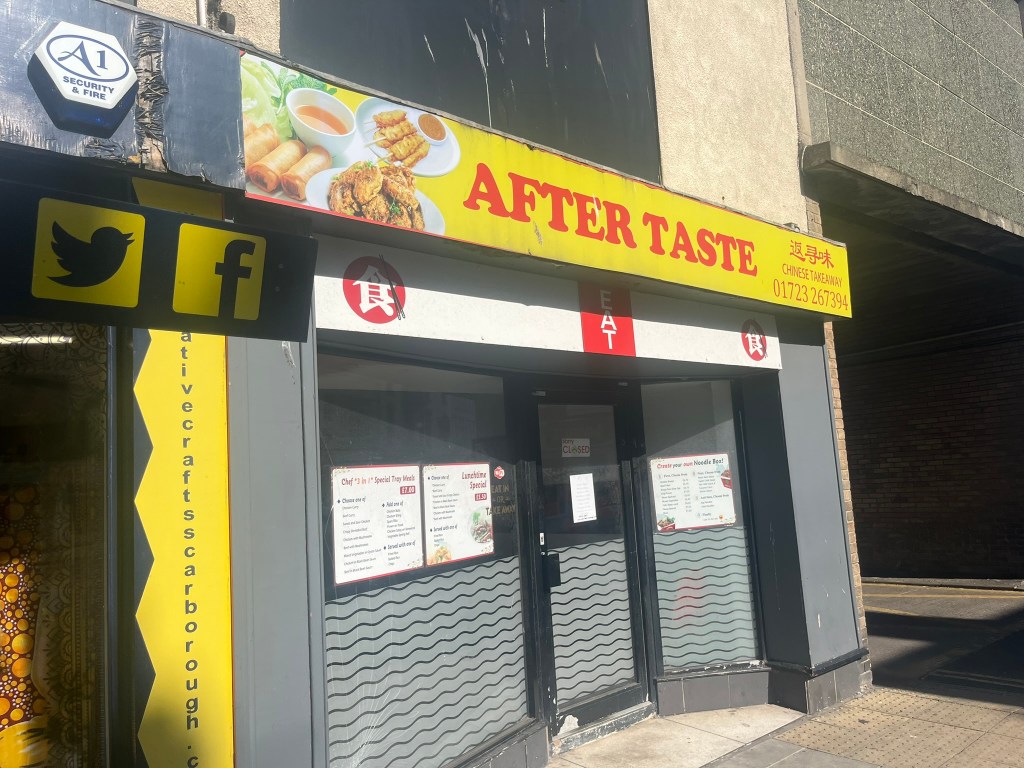
Scarborough also provided some excellent entries in my seaside sign collection:
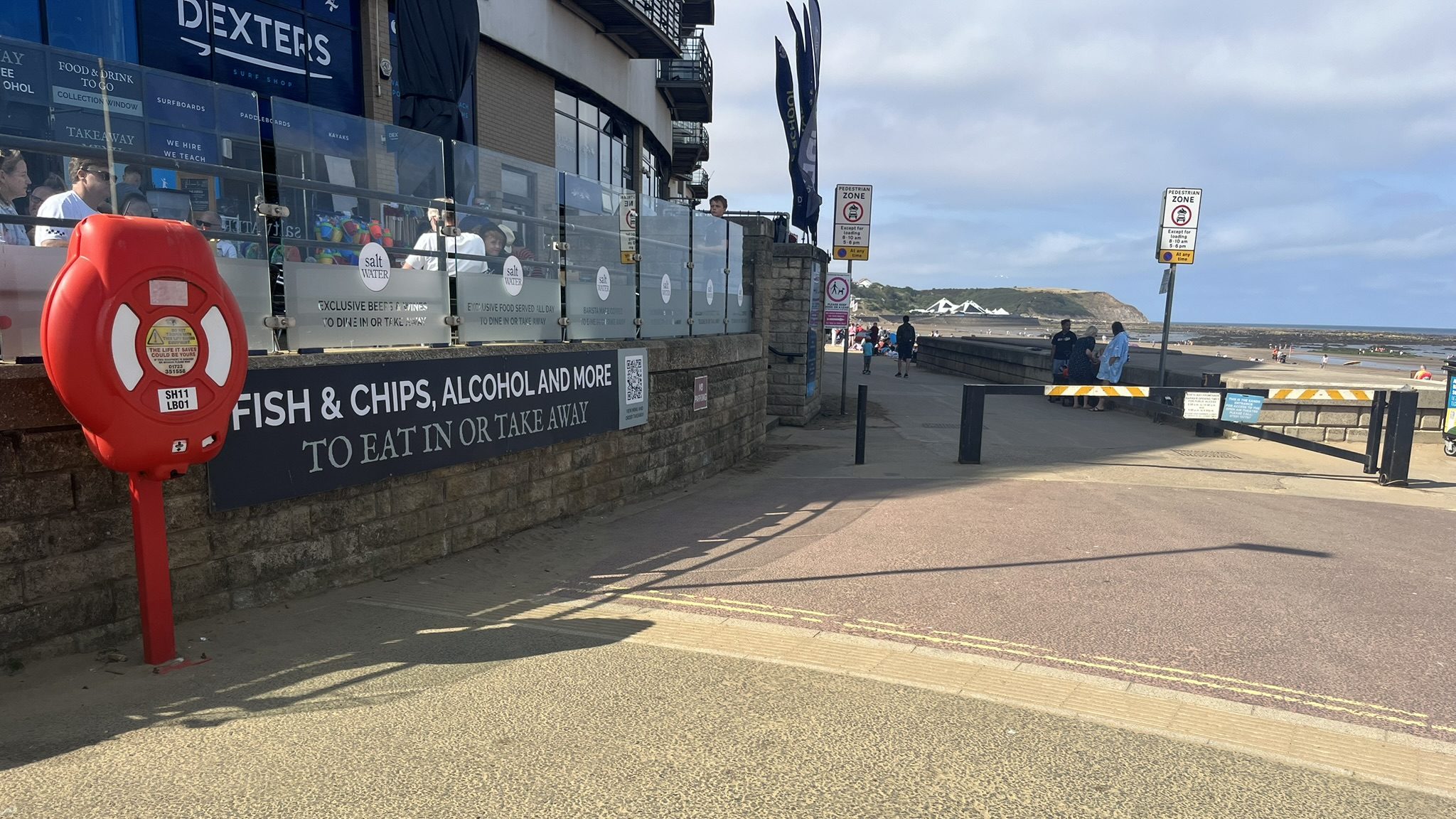
…and some great insights into its past:
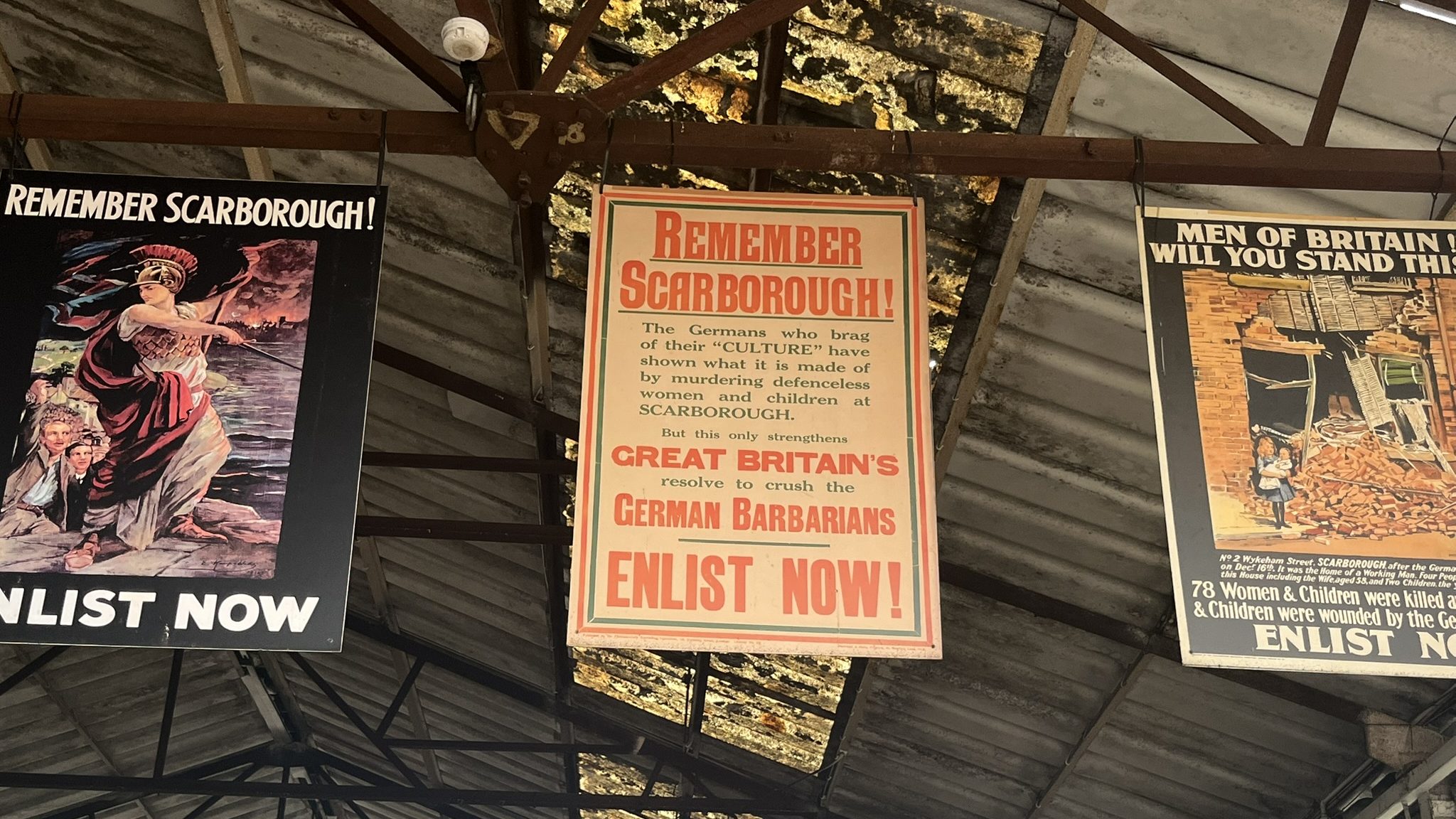
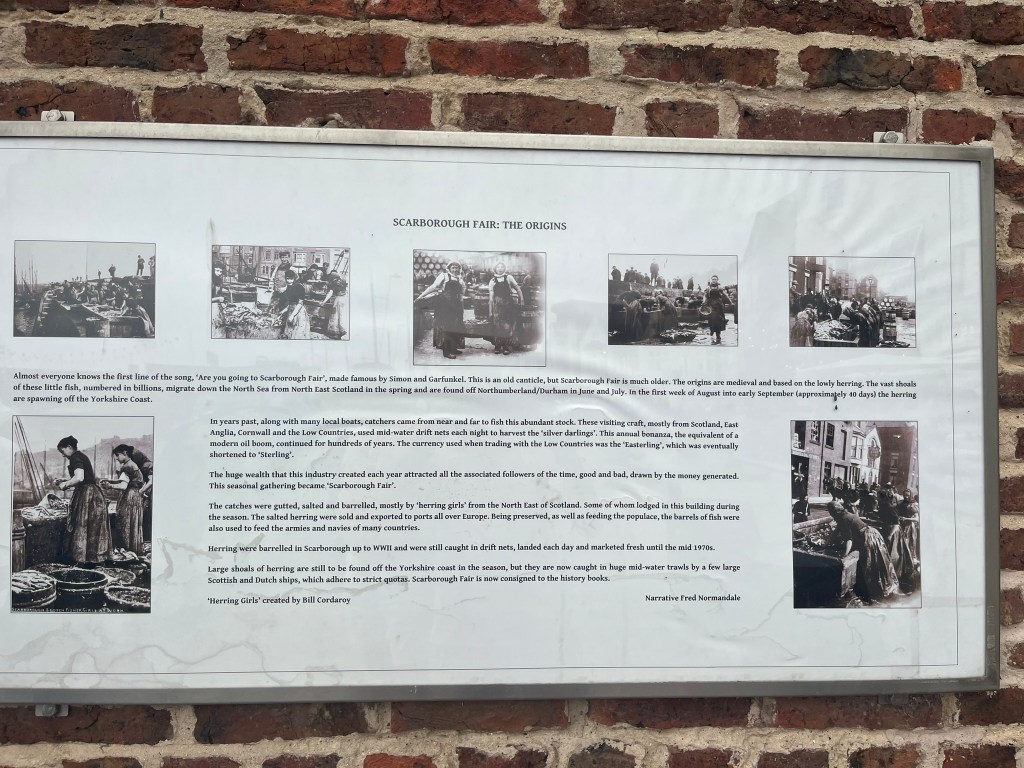
We were amused that the locals had embraced one of the town’s most defining features, its incredibly large and aggressive chip-stealing seagulls:

Apparently the local council don’t share our amusement: https://www.theguardian.com/uk-news/2025/aug/19/scarborough-gull-muggings-urban-seabird-population?CMP=share_btn_url
I’d said when setting out on this trip that I wanted to see the country’s whole range of coastal communities and Scarborough is certainly a standout example: it was quite the noisiest, busiest and simply happiest place I’ve visited, being entirely about good, cheap*, simple fun. As a relaxing place to spend a long weekend, not my first choice. Sarah, Peter and Marnie were going home the next day. I couldn’t face two more days in Scarborough, I would be deaf. Surely Bridlington and its famous Royal Yacht Club would be the quiet seaside idyll I’d been looking for? I phoned the harbourmaster to make sure I could get in on Sunday’s tide. “No chance”, he replied without a moment’s hesitation, let alone apology, “Regatta’s on. Harbour’s full. All week.” I was stuck in Scarborough for not two more days but four: my next guest was coming by train and Bridlington was the last station before the empty Holderness Coast down to Hull, and I’d planned to meet him there.
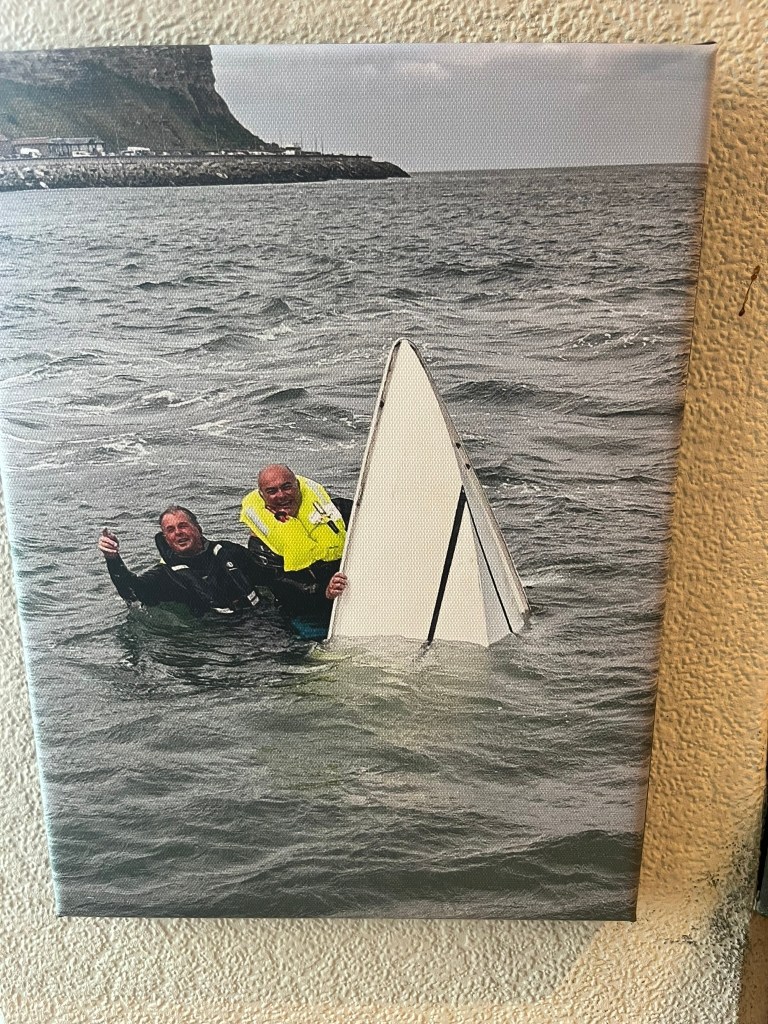
We went along to the yacht club in the lighthouse for a drink, and were welcomed by a group of members who, it turned out, had come for a celebration evening that wasn’t due for another three weeks, so they were pleased to have some visitors to talk to, especially since two of us (me and Sarah) had sailed Flying Fifteens so could appreciate this photograph all the more:
We told them about our experience in Whitby and they roared with laughter and recognition at the apparently legendary bridge-keepers and harbourmaster. “Welcome to Yorkshire!” they chorused, and we were. I was going to enjoy my very long weekend in Scarborough, genteel or not.


* Rooms in the Grand Hotel are £44 a night. In high season. Cheap, yes. Simple, probably. Good, probably not.

 Blue Moon's trip around the UK
Leave a reply to marniebuchanancf3e729b7e Cancel reply