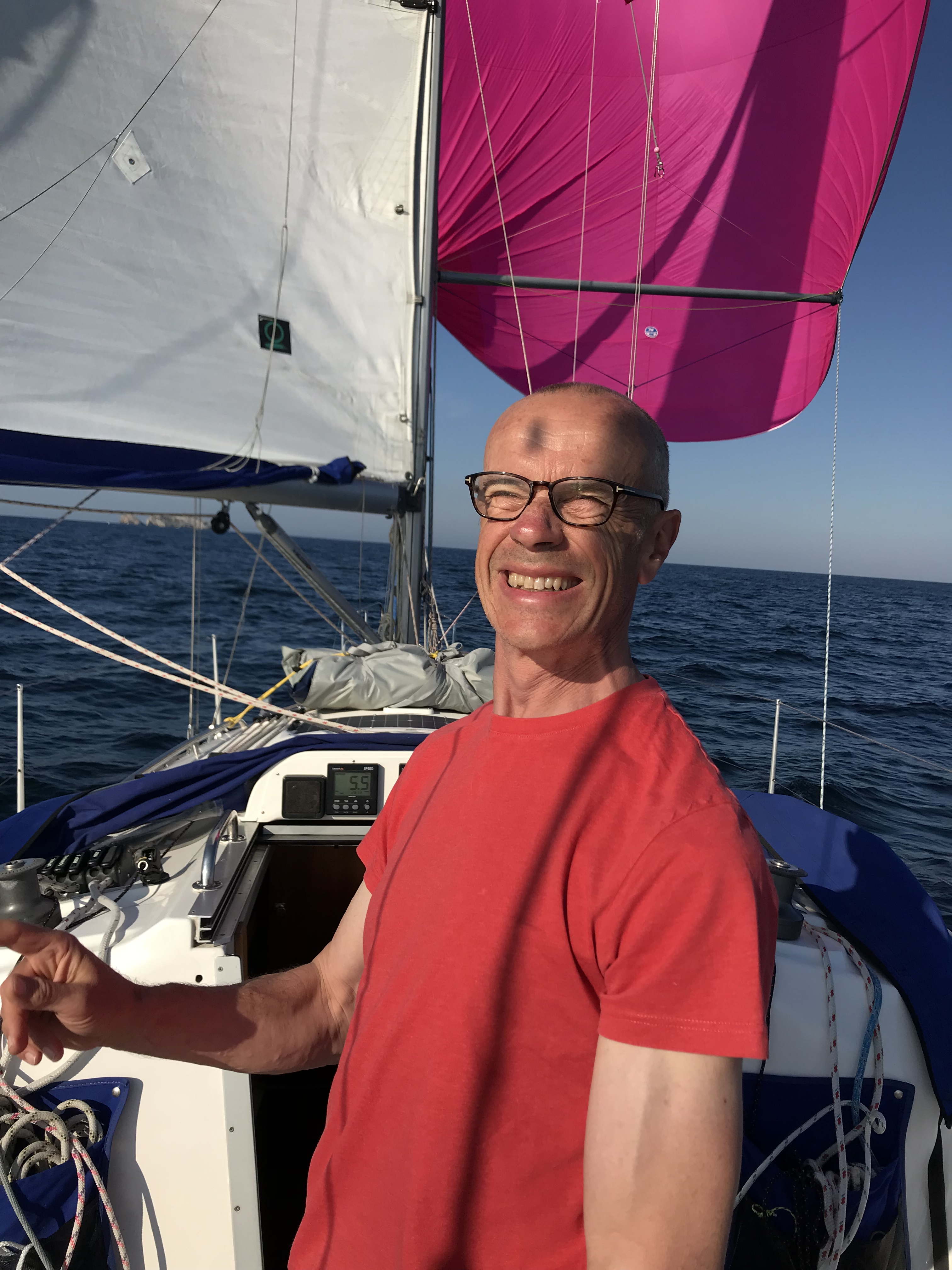
Before we start on the epic corner-turning week that I’ve just experienced, we have a paragraph of appreciation for Camilla Herrmann. Camilla is the Editor of the Cruising Association’s esteemed magazine called – appropriately enough – Cruising. It is not, for the reader with a more schoolboy sense of humour, available in the newsagents of Old Compton Street, but distributed to CA members, full of epic tales of adventurous yachting, although the tone of the Autumn edition will be lowered by excerpts from last year’s blog because everyone who wins an award, even for a blog such as this which only touches tangentially on yachting and is never adventurous, gets to feature. There are proper logs written on chart tables with pens and ink, and blogs such as Camilla’s own (https://kalessin-of-orwell.blogspot.com/2024/), which also won an award, which are far more deserving. However, she was kind enough to read a recent post (presumably to steel herself for what the magazine could be letting itself in for) and found herself among the puffins. Not only, it turns out, does she still have her Puffin Club badge, and sent a picture to prove it…
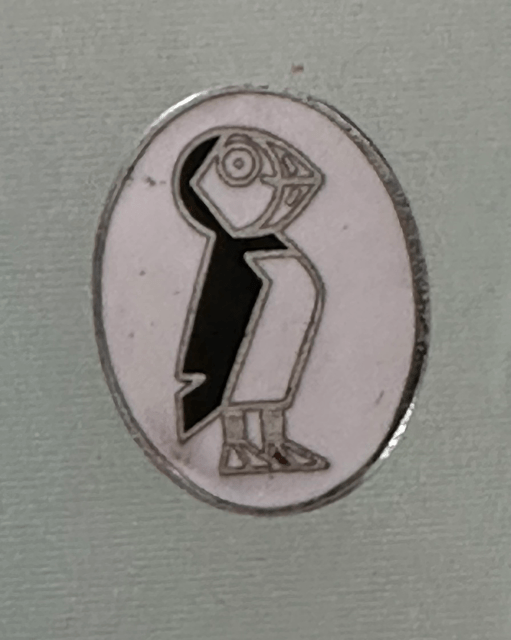
…she also sent me a link to this excellent website: https://puffinclub.co.uk/ which will bring a nostalgic tear to the eye of many a reader, judging by the response to my earlier mention of the Puffin Club.
Well played, Camilla! See you at next year’s awards…
Back to the sailing, and from one iconic figure in an esteemed yachting association to another, in the form of yet another Peter (the blog’s fourth), ex-Commodore of the Parker and Seal Sailing Association and a man who could be termed lift-keel royalty were it not for him having blotted his copybook the first time I met him or any other PSSA member when, arriving at my first event in my newly-purchased and already beloved SuperSeal, he greeted me with the less-than-sensitive cry of “That’s Impressions, from Howth! I raced against her for years! My word, they raced her hard, there’s been a fair few hobnailed gorilla boots on that foredeck over the years!”. Thanks Peter.
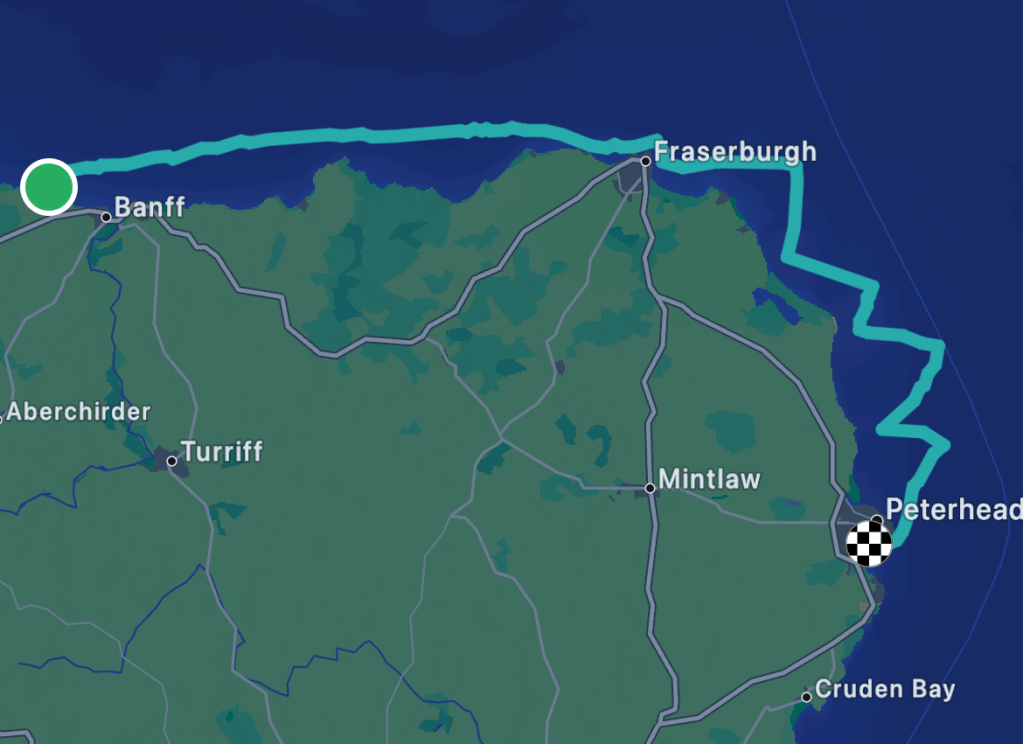
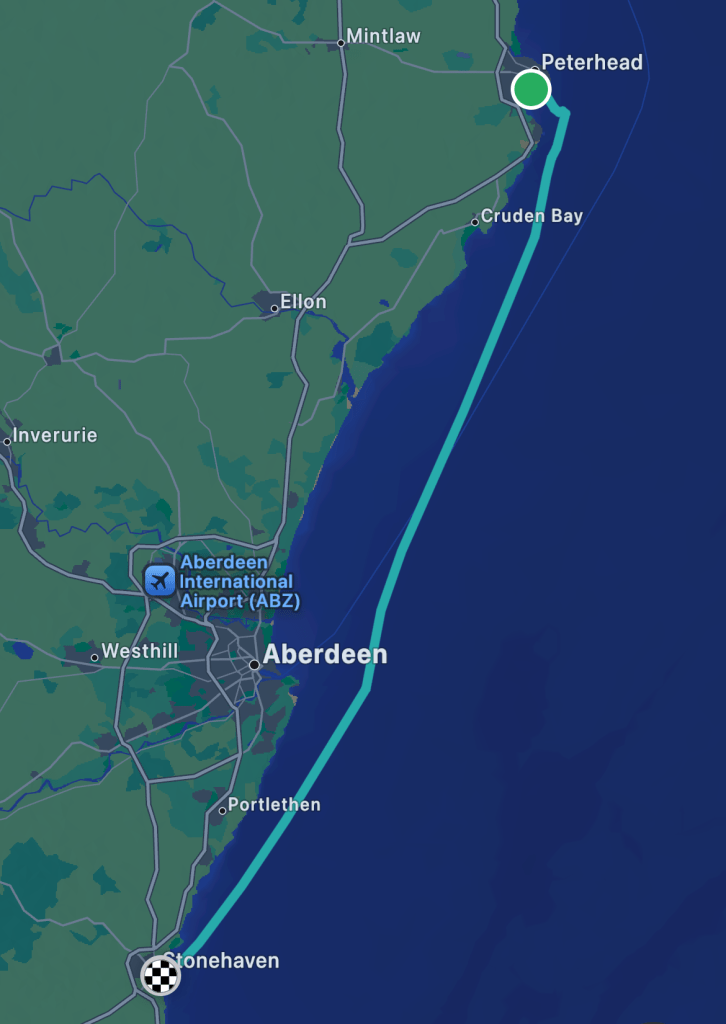
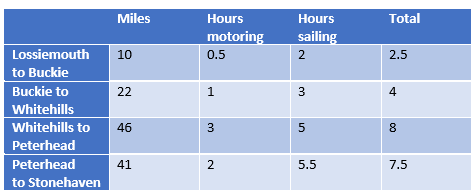
I have forgiven him, though, or at least enough to let him join a leg on what promised to be a bleak coastline. The trip was Lossiemouth to Stonehaven via Fraserburgh and Peterhead: the north and east coasts of Aberdeenshire. I’d seen Aberdeen through the car windows once and ‘The Granite City’ was definitively bleak and grey; I expected its county’s fishing ports to be even bleaker and greyer and had warned Peter accordingly. Nothing daunted, he got up at silly o’clock to make the trip north by plane, train and bus so I felt an obligation not just to deliver some adventurous yachting but also to lift the keel up a few times.
Philip and I had abandoned David in Findhorn and arrived in Lossiemouth without incident, and we had even found the bus stop home which helped me meet Peter in the right place as Lossiemouth may be the only place in the UK where the bus going in the same direction stops on one side of the road on the hour, and on the other side on the half hour, so a recce was time well spent. Philip’s departure also coincided with the school holidays in Scotland, so that evening set the tone for every evening to come with groups of shrieking teenagers with boomboxes hurling themselves and each other into freezing harbours.
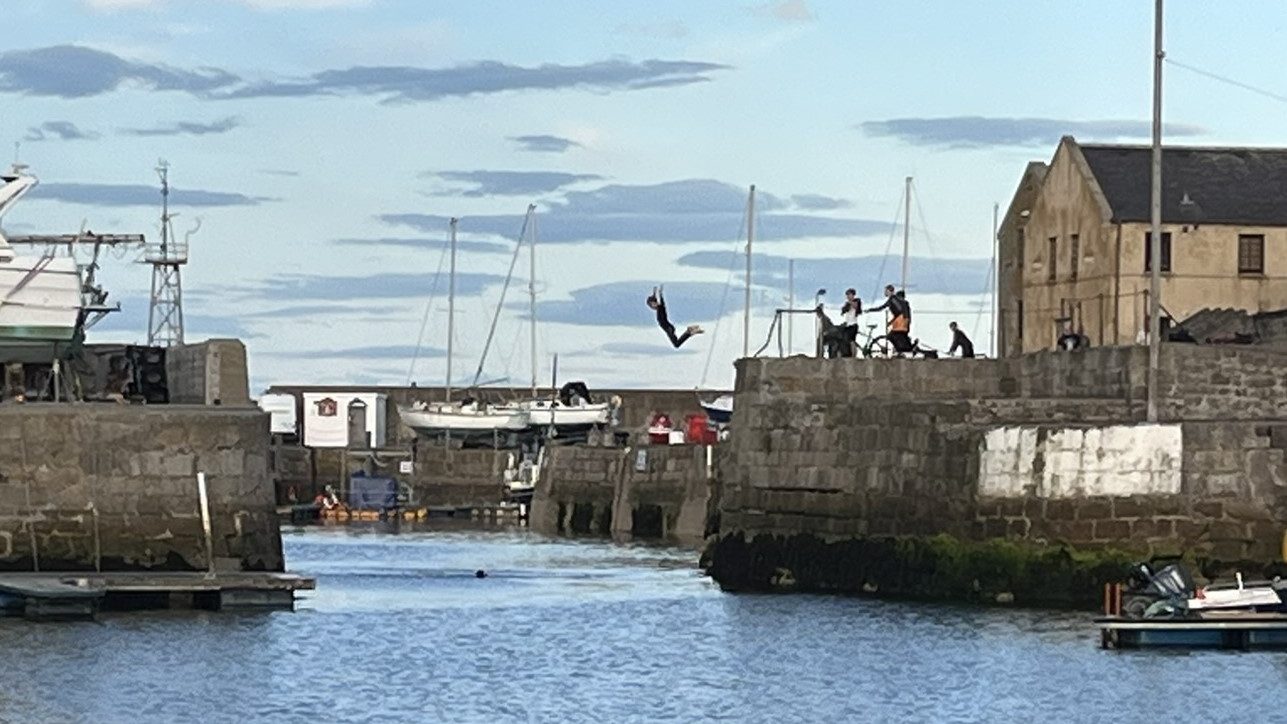
Peter’s early start meant an early arrival and faced with a choice between watching these antics all afternoon or going sailing, we decided on the latter, but there was only time to get to the nearest deep-water harbour in what I had assumed was a tiny fishing village called Buckie, largely because I couldn’t imagine the word Buckie not being the diminutive form of some larger name.
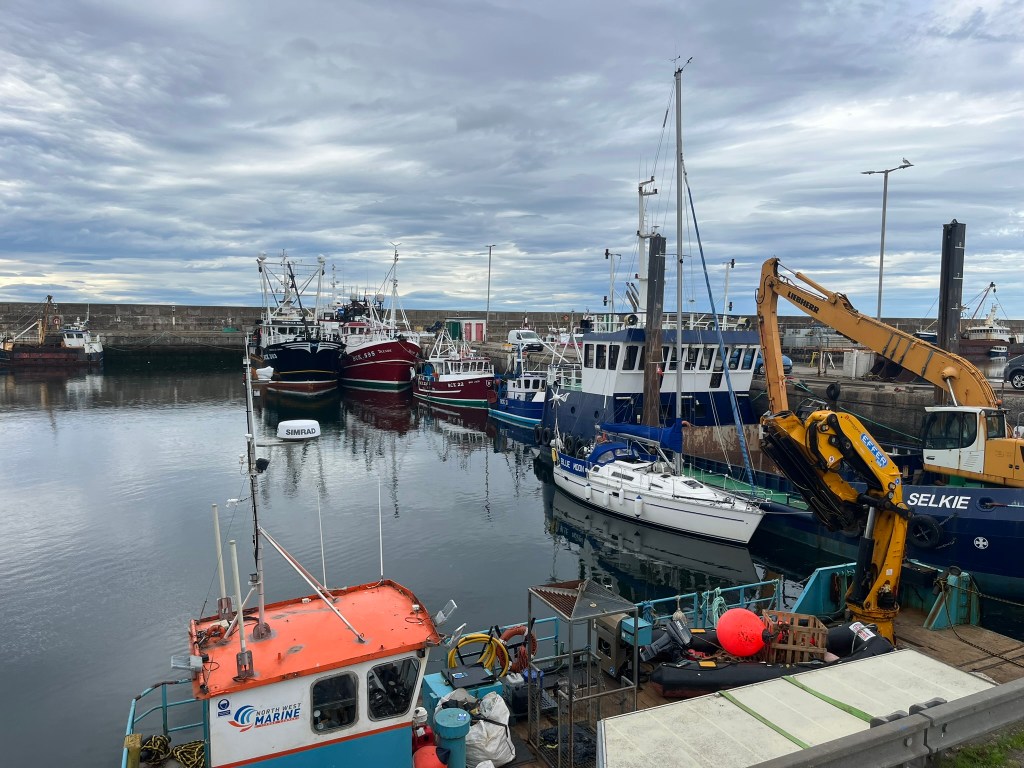
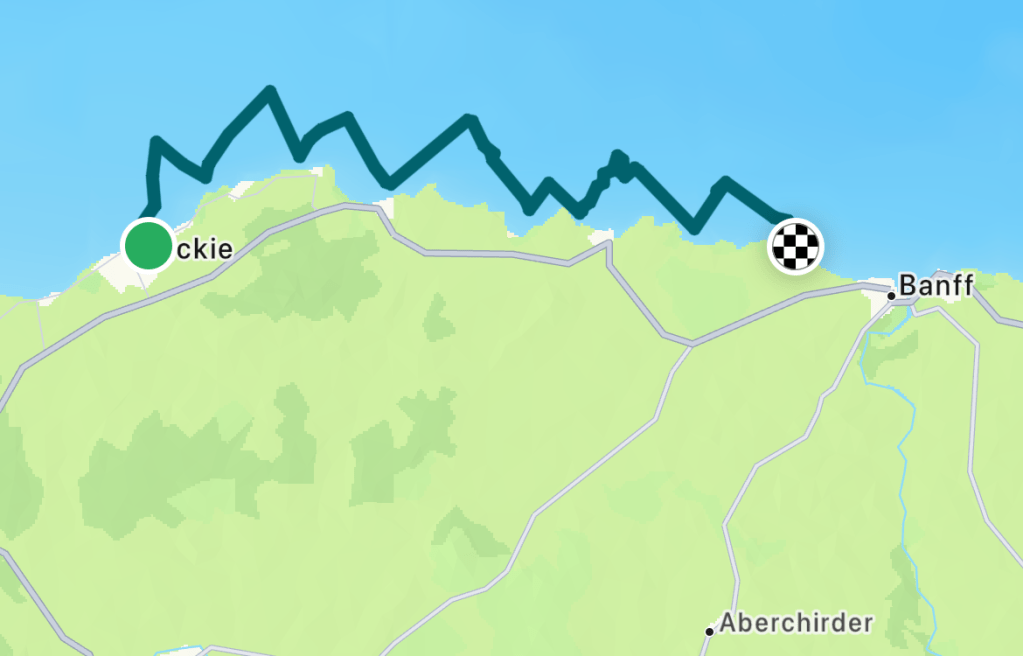
Wrong, and not for the last time in this post. Buckie is a proper town, with a proper harbour, and not one but four stone basins with all manner of largish coasters, trawlers and wind farm boats coming and going. This needed proper call-up-the-harbourmaster access and embarassingly our spinnaker trimming was so good that we got there so quickly that I managed to give him all of ten minutes’ warning of our arrival. Yachts are not a big thing in Buckie by the looks of it, but he did us a favour by letting us tie up alongside a dredger which meant we didn’t have to worry about long lines to cope with the tide or a scruffy harbour wall. The entrance was borderline scary as it involved threading down a tiny channel past a large coaster and around the first of many blind corners (yes, another meaningful title):
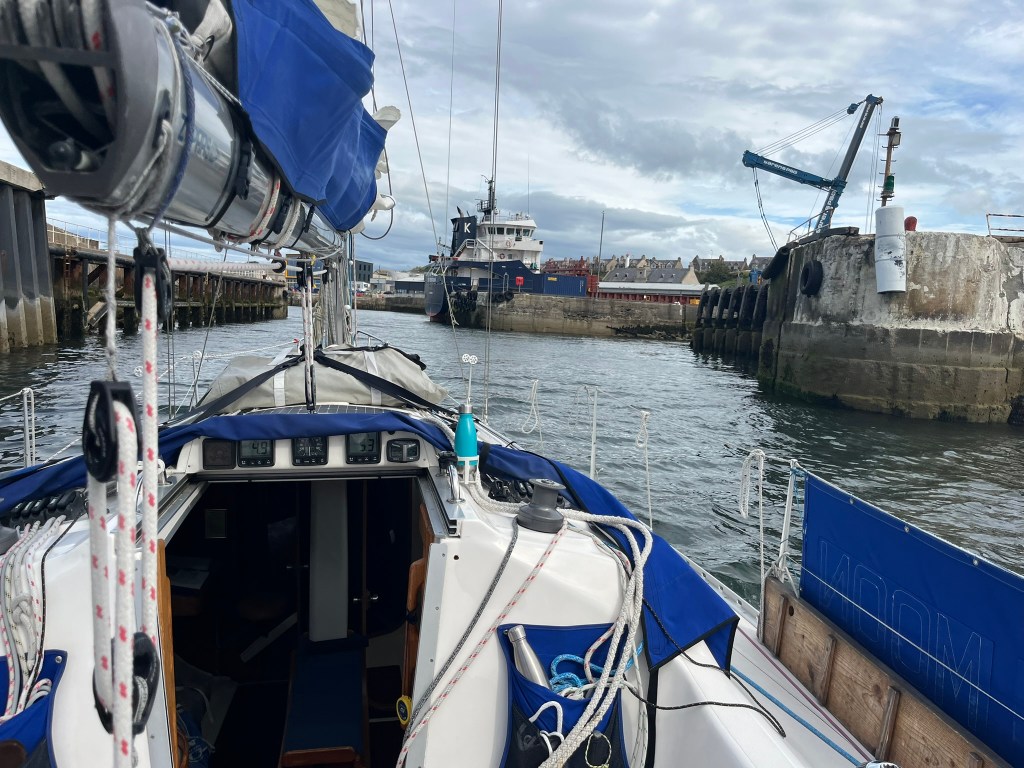
But the dredger was not too rusty and the shower not too fishy, and the harbourmaster himself thoroughly welcoming – although he did mention that other visiting yachts tended to call up before they were at the pier heads.
To get the full Buckie experience we found the only pub in town, which had a landlady so hilariously and loudly foul-mouthed that she drowned out the already powerful sound system and forced two such delicate souls as me and Peter to head home after one pint.
After Buckie I knew our next destination would be a tiny harbour with an even tinier entrance: Whitehills is famous for being so narrow and so right-angled that many passing yachts refuse to go in for fear of missing it and running up the rocks about three metres away. In an attempt to take Peter’s mind off this impending terror I kept handing him the binoculars to admire towns and villages that generally mean something else: Macduff, for instance, is a character in a famous play; Banff is a place in Canada and Cullen is a kind of Skink you get in Waitrose. All are also places on this coast, especially Cullen which is not only where Cullen Skink was invented (Skink being a kind of broth apparently, much like a haddock Scouse) but now a rather attractive holiday desitination – perhaps the only one I know where the beach view is enhanced by a disused railway viaduct.
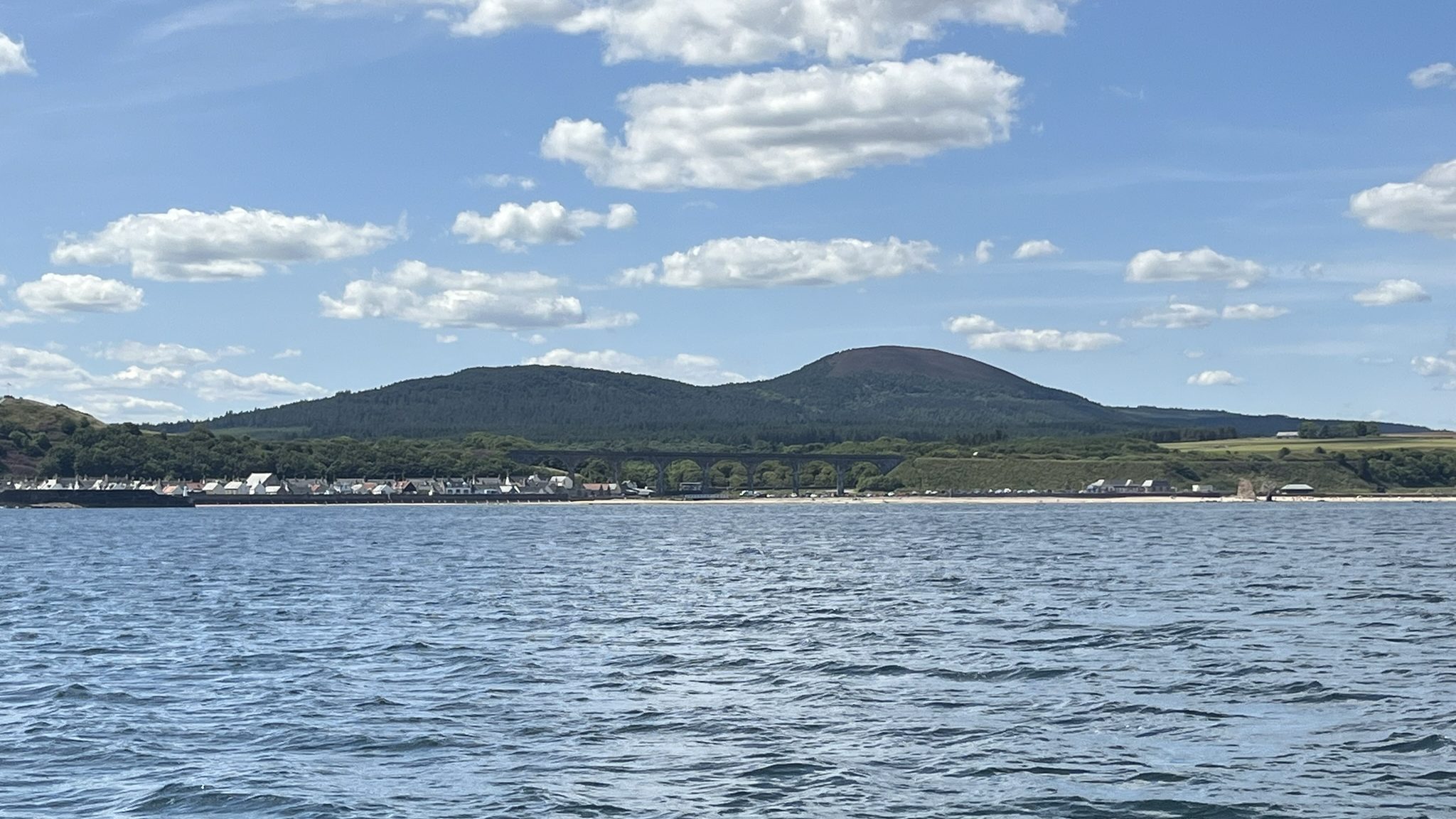
I had expected this coastline to be bleak, rugged and very dull but it was the opposite: high cliffs, wooded valleys and lush faming countryside. It looked more like Cornwall than my expectation of Aberdeenshire. We did notice that the beaches in all these small villages were rather fuller than we might have expected in North East Scotland, and when we arrived in Whitehills we discovered why: the much-vaunted heatwave had finally arrived and the temperature was in the high 20s. Unheard of, and it gave me an excuse for the sweat pouring off me as we made our way down the impossibly narrow and rocky channel into Whitehills before executing a handbrake turn 90 degrees through a gap in the wall that looked more like an arrow slit in a castle wall than a harbour entrance.
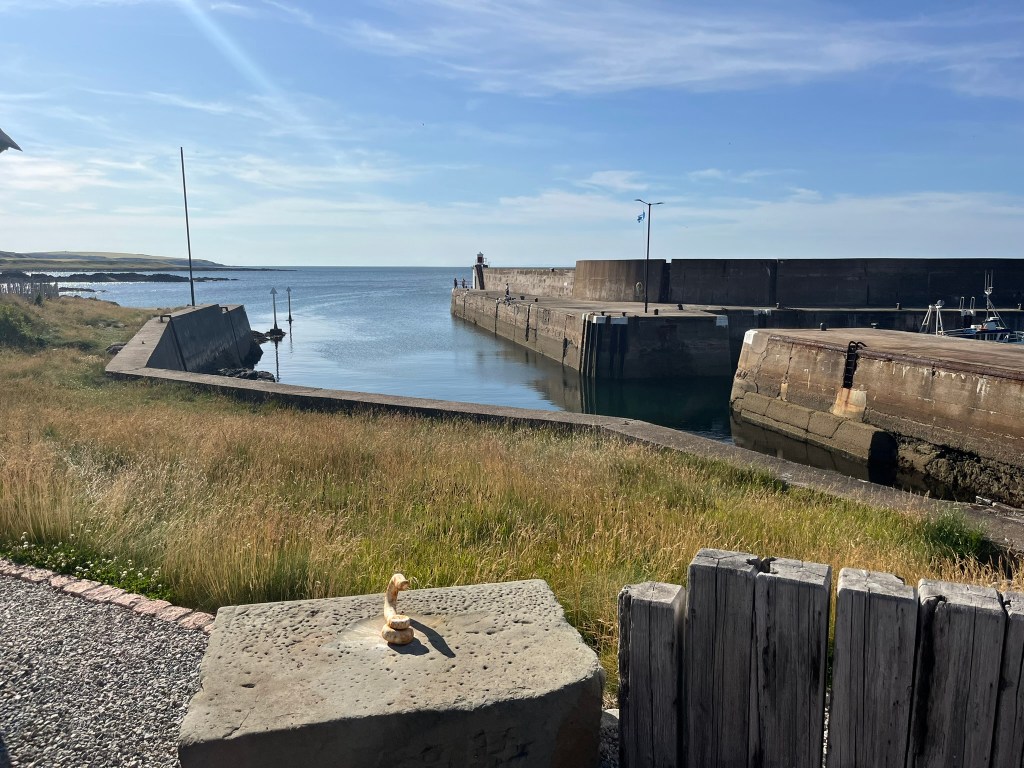

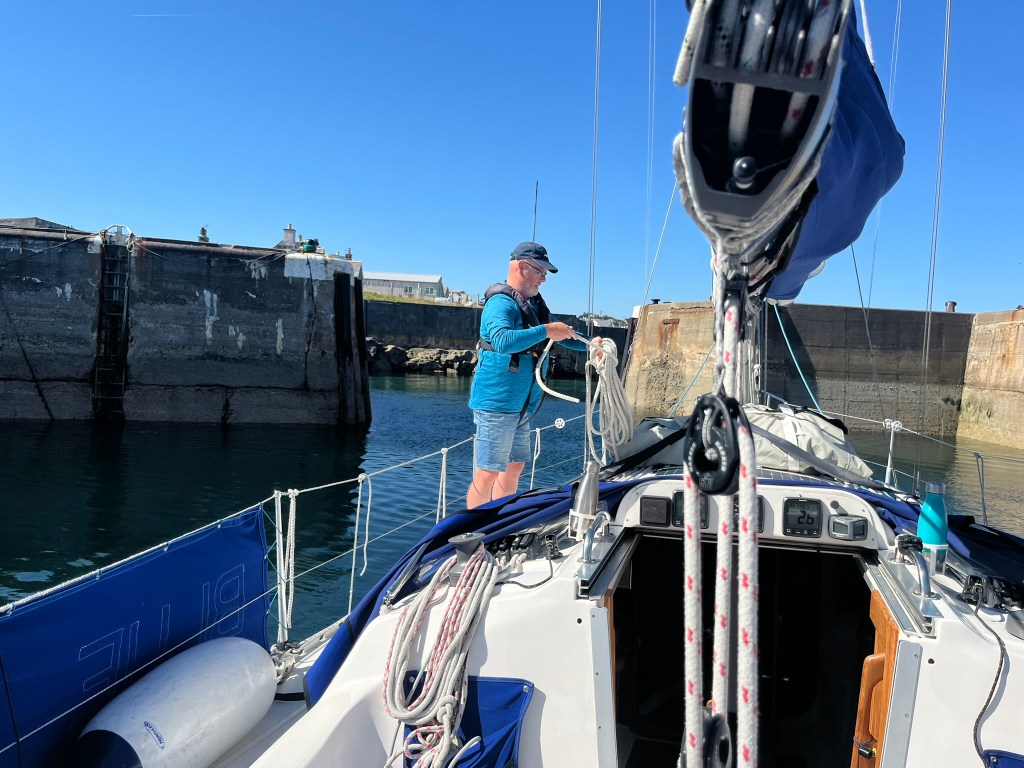
Whitehills – which I had assumed to be a town the size of Buckie, but turned out to be a village smaller than I had thought Buckie was – was thoroughly lovely sweltering in its summer heatwave, and miraculously had only the second pub I have visited in Scotland with a beer garden. It also had a chip shop which is firmly in the Top Ten of the entire journey, which made sense given that it was up the road from a massive fish processing plant.
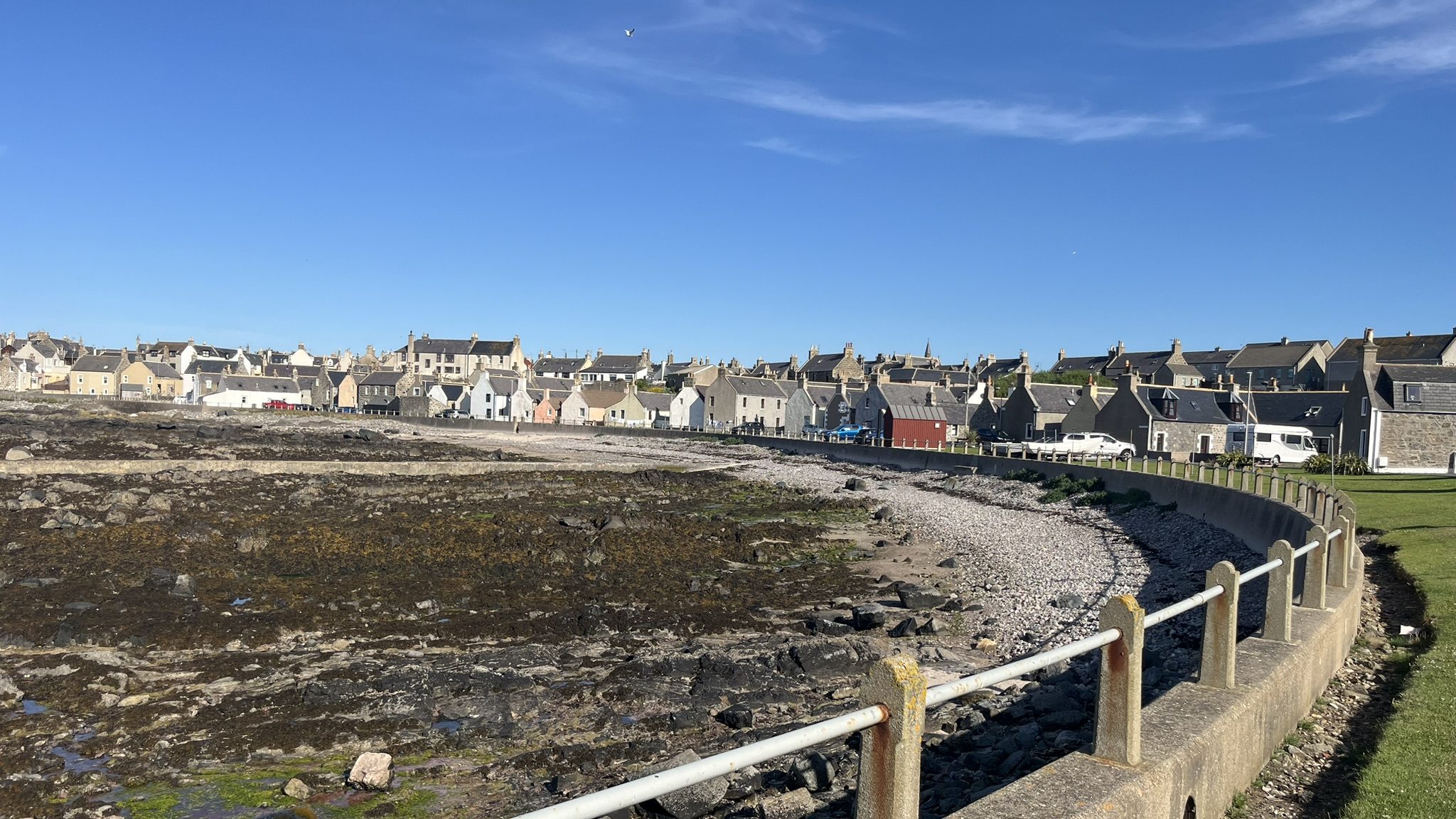
Whitehills was also the scene of another major farewell sadness: it was so clear and calm that we could see the mountains of the Highlands on the far side of the Moray Firth, and I watched the sun sink behind them for the last time.
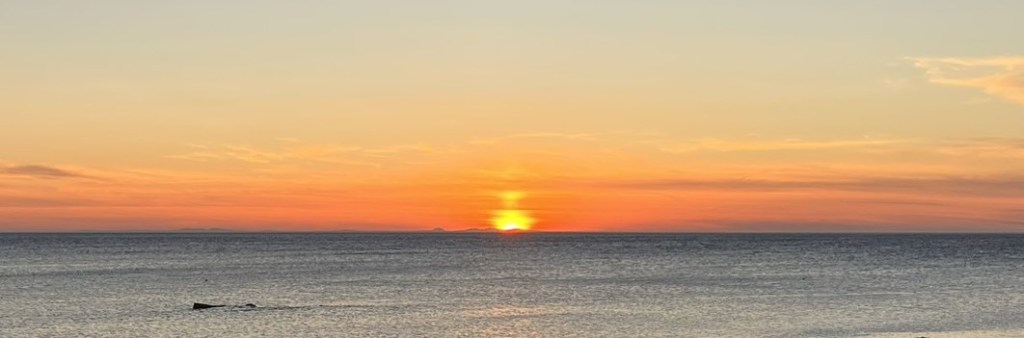
We were headed for the East Coast, where mountains are something you read about in books.
In the light of such extraordinary weather I had cooked up a cunning keel-lifting plan to impress Peter the next day: we were going to go into a disused harbour called Sandhaven further down the coast, dry out on the sand after which I hoped the harbour was named, and show off by grilling steak on our boat barbecue, a sure way to endear us to the locals. Then we would walk across the sand the following morning and trip the three miles into Fraserburgh to visit the Museum of Scottish Lighthouses. Who wouldn’t? This seemed an especially good plan since various pilot books warned that Fraserburgh is a very busy fishing port which “does not always welcome yachts”, which sounded a bit ominous, and we were unsure how to find out if we were welcome without asking.
I have to admit that when I mentioned the plan to the harbourmaster in Whitehills he clearly thought it was less than cunning. “Nobody ever goes in to Sandhaven” he said, “there’s nothing there but sand”, which I thought was rather missing the point. As it turns out, the weather forecast did his warning-off for him: it would be hot and sunny with lots of breeze today but there would be fog tomorrow. “Och aye,” he said, “you watch out for the Haar now.” I had heard about the Haar, although I hadn’t heard it pronounced in such terrifyingly Scottish doom-laden tones that would make Private Frazer blanch. The Haar is a kind of fog that the Northeast specialises in and seems to be quoted by sailors as a reason to avoid the East coast altogether, much as others consider midges a red line which stops them visiting the West coast. I had no real idea why it was so terrifying beyond the fact that fog generally is, so we resolved not to find out but to use the sunny day to sail all the way to Peterhead, around the Northeast corner past Fraserburgh, and be tied up in the marina before the Haar came anywhere near.
This plan worked well for about thirty minutes, during which we roared along at over seven knots in sparkling sunshine, although there was a bank of fog out so sea looking a bit threatening. Then the wind dropped, and we ended up motoring, but we did at least get a good look at Sandhaven, and pretended that it was our good idea not to go there after all as it did look very dull, and we would have been stuck inside on a sandbank all the next morning in thick fog.
Then the wind came back, but on the nose, and we resigned ourselves to beating all the way to Peterhead. We were up for this and closed the lighthouse at Kinnaird Head, the oldest in Scotland and the site of the museum, just on the edge of Fraserburgh.
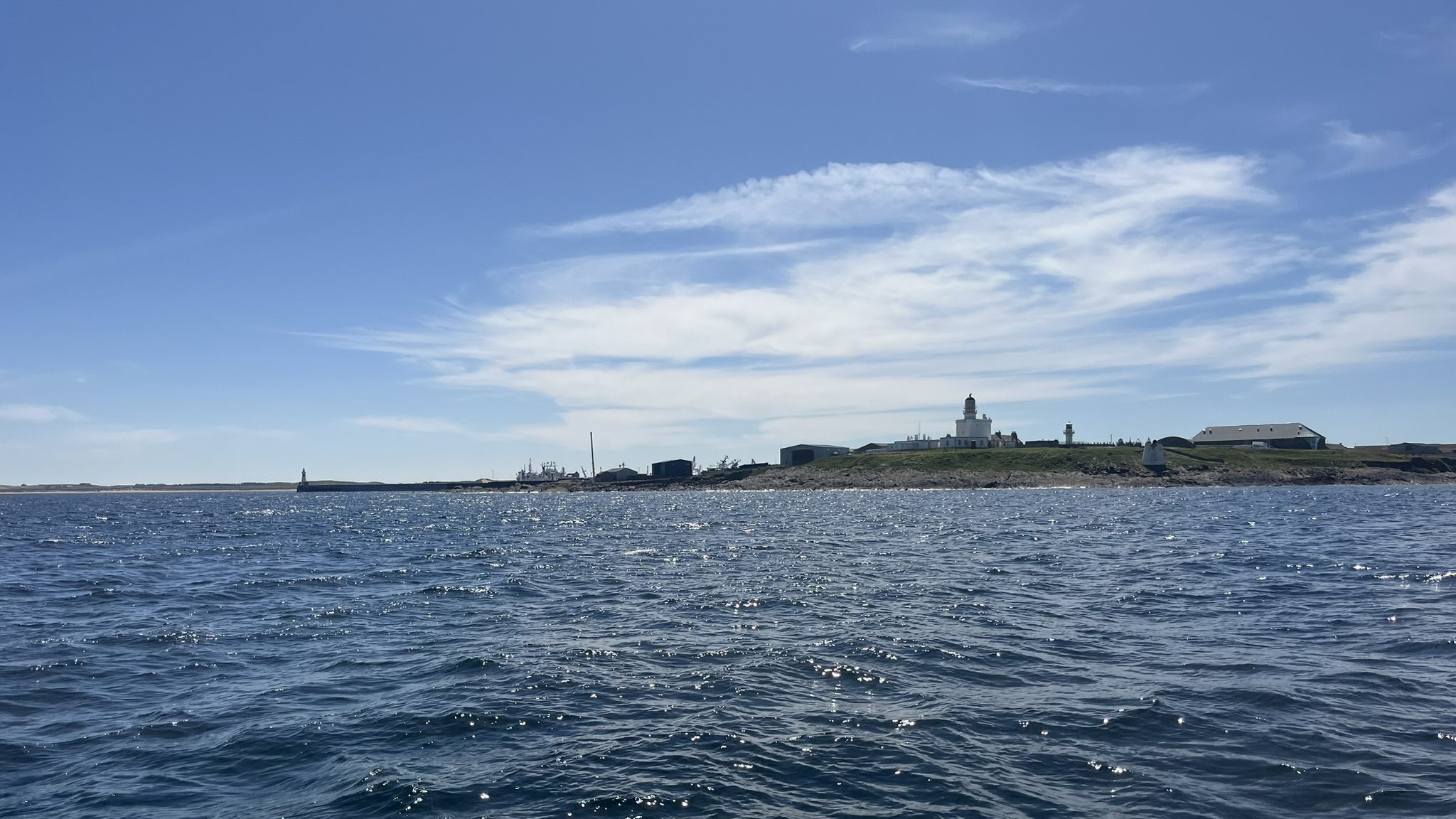
Thinking that we would get better tide inshore in the bay the other side, we tacked back in but as we did so the radio sprang into life: it was the harbourmaster politely but very firmly informing us that if we weren’t coming into his harbour would we please clear off out of the way of the big trawlers about to leave. My apology was genuine as we tacked away, but this did rather confirm the warning in the pilot books. Sure enough, no sooner had we tacked than a huge boat roared out behind us and headed off to sea.
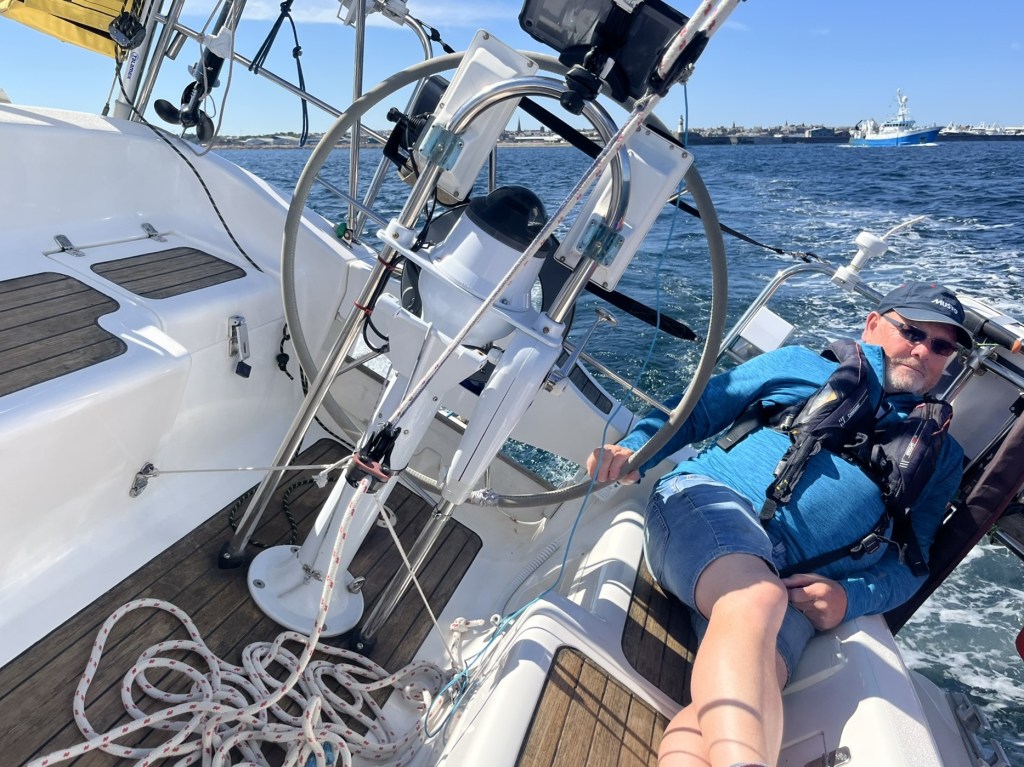
Out of the bay now and we were lifted up towards Rattray Head, my final significant turning point before the North Foreland. It’s where the North Aberdeenshire coast finally turns South, through more than 90 degrees, and it also marks the end of the huge northern Inshore Waters weather forecast area which runs from Cape Wrath to Rattray Head. I’d imagined another bleak and rugged headland but we were astonished to see that it is nothing more than a load of soft sand dunes with a rather small lighthouse guarding some moderately inoffensive rocks. I’m afraid I don’t have a picture however, because as soon as we reached it we suddenly sailed into a bank of the thickest fog I have ever been in. It went from 20 degrees and sunny to 10 and sopping wet in a matter of seconds, and we could suddenly see nothing at all. We sailed on until we could clear the headland and tacked back, but now the Haar was up to the shore, or at least as close as we dared go. We never saw Rattray Head again, and only knew that we had turned this major corner by looking at the chartplotter screen.
So the weirdest afternoon unfolded: tacking out and back in zero visibility, Peter glued to Gary’s screen to see ships on the AIS, me glued to the Haar to spot pot buoys. Neither task was rendered easier by having to wipe Haar off our glasses every five minutes, and the boat was totally wet. A larger yacht was motoring up behind us but we only once glimpsed him for a second or two, but we kept well clear of each other until suddenly, two hours later, we caught sight of the pier heads of Peterhead all of 50 metres away. I say suddenly, we had called the harbourmaster in good time this time, and he’d asked us to follow this yacht in at a safe distance so as to make only one target for the trawlers to hit. He didn’t actually say that, we surmised it.

We made it to the marina entrance across the harbour without ever seeing the yacht in front until we turned in past the marina pier and out of the fog into a surreal sight: the marina is on the edge of the laughably named Lido Beach which was full of locals basking in 28 degree sunshine. The marina staff were waiting for us in shorts, and the yacht we’d followed was just ahead. They, like us, were already sweating in full oilskins.
Peterhead, as I’m sure you know, is the largest fishing port in the UK, which means it is not a place to lounge around on a Sunday as it is totally grey and workmanlike and – because it’s in North East Scotland – it’s mainly shut on a Sunday. Armed with the forecast of even more fog we caught a bus back to Fraserburgh to see the lighthouse museum which, whilst admittedly a slightly niche taste, was really very good as we got to go up the lighthouse we’d sailed past on an excellent tour. I also got to bore poor Peter to tears by pointing out which of the 267 lighthouses in Scotland I had sailed past, which is most of them, but it made me feel very superior, and I bought a tea towel with which I can bore all future guests.
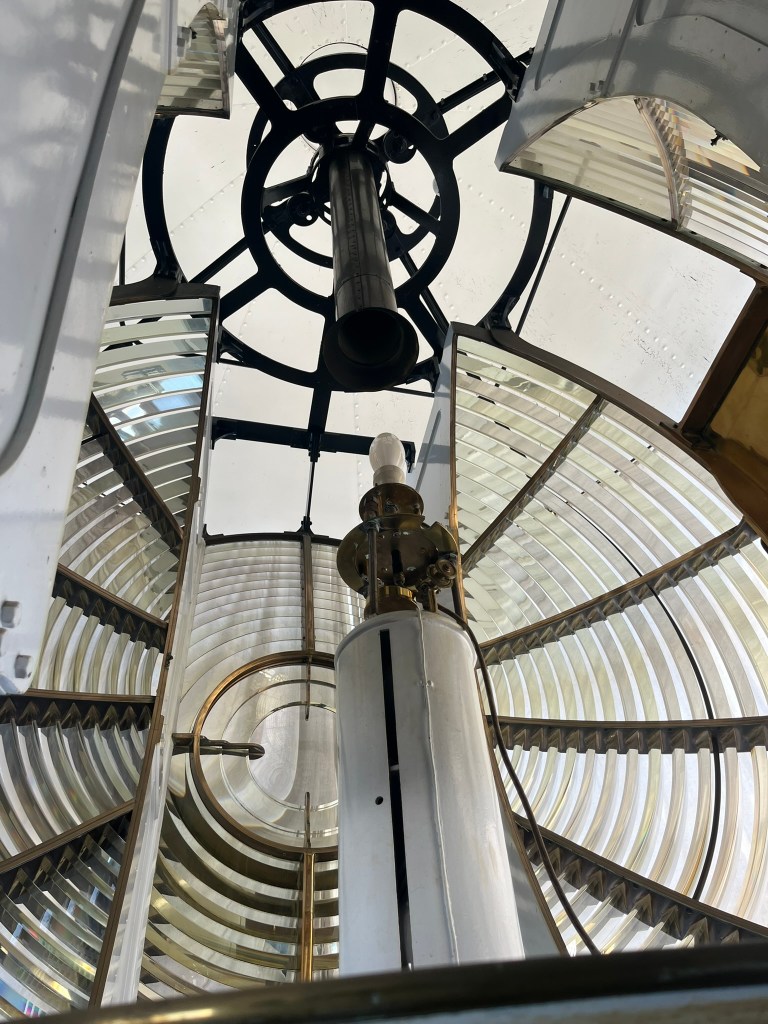
Rather more annoyingly there was absolutely no sign of fog at all, Haar or otherwise. The other people on the tour must have been confused by us gumping about how sunny it was.
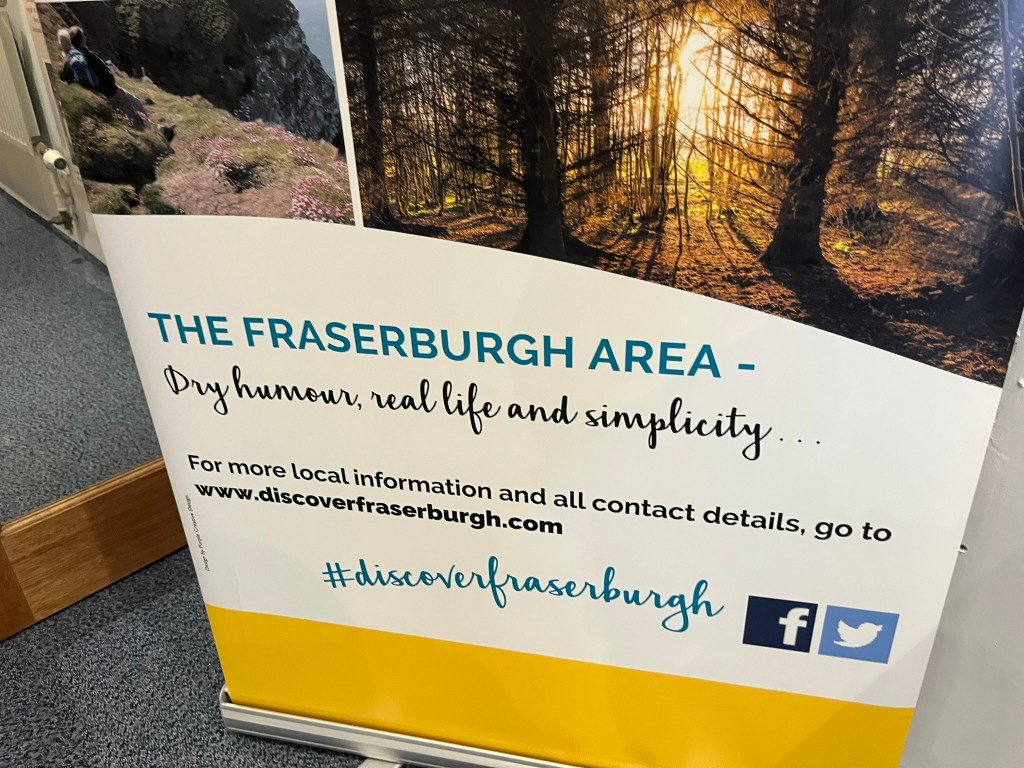
Fraserburgh also added to my amusing sign collection:
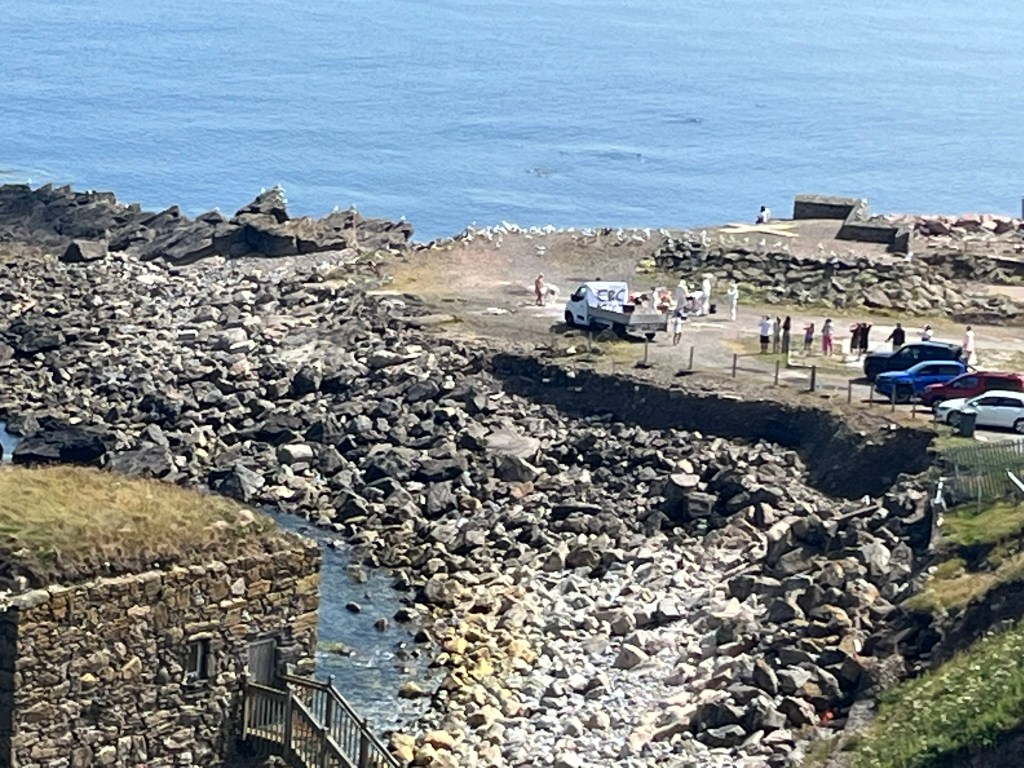
From the top of the lighthouse we also witnessed a ‘blacking’, where (our lighthouse guide told us) a bride- and groom-to-be are pelted with past-sell-by-date food and driven around the town on the back of a truck. Rather oddly, they were all wearing white, which made it look a bit more like the Klu Klux Klan.
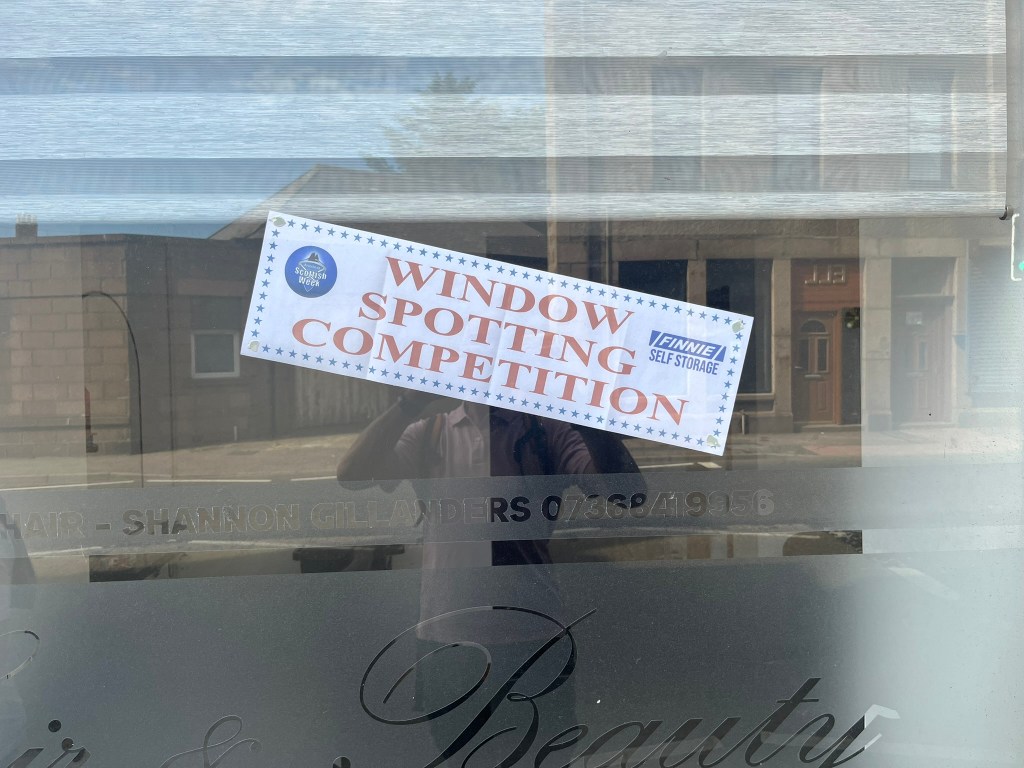
Back in Peterhead we discovered how the locals liven up a quiet Sunday, other than by swimming and paddleboarding off the Lido Beach in the shadow of a giant fish processing factory, which is to go around spotting shop windows as if they were trains, i.e. collecting numbers. Really.
Time really does fly when you’re having this much fun, and all too soon it was Monday and time to head south to Stonehaven, Peter’s final destination. Miraculously the Haar had gone, and we had an unqualified good sail south on a fast reach, albeit rendered less fast by the tide which was unhelpfully against us most of the way.
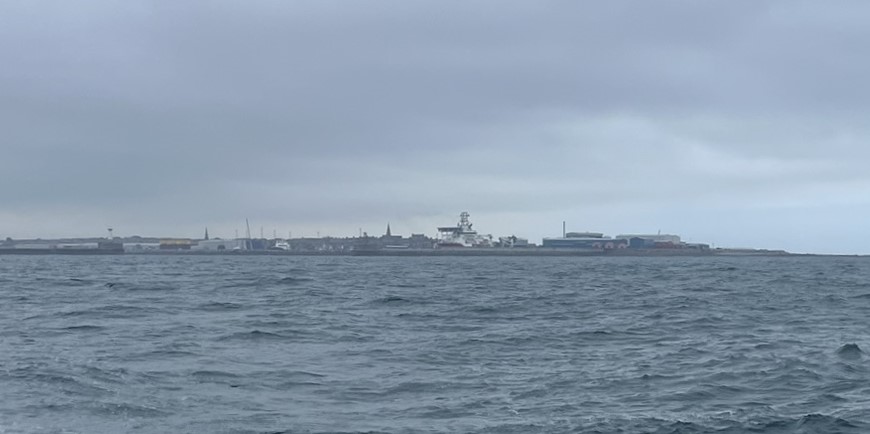
Stonehaven’s name suggested that it would be every bit as grey and granite-like as Aberdeen, its near neighbour, so we were slightly surprised to see grassy cliffs and attractive villages appear again as soon as we sailed south. Even more so to discover that really it’s only Aberdeen, Peterhead and Fraserburgh that conformed to my expected grey stereotype: the rest of Aberdeenshire (having sailed 95% of its coastline now) is simply gorgeous and would not disgrace the lid of any biscuit tin.
Stonehaven itself, whilst having a haven and being built entirely of rather dark local stone, would stand comparison with Cornwall’s finest in a postcard competition, and the harbourmaster was the perfect antidote to Fraserburgh when we called him up. There was a berth free on the outer pier but it was quite expsosed; did I say our keel lifted? If so, we could dry out in the inner harbbour with the locals which is as sheltered as can be. At last! Lift keel fun, and just in time for Peter to be part of it. Into the harbour, past the visitors bouncing up and down on the outer pier, hard left through the narrowest entrance yet, left again and we were there. Tied onto the harbour wall the only thing disturbing us was going to be the local boombox kids diving into the harbour when the tide was in, and the local heron stalking his supper when it was out. Both quite entertaining in different ways.
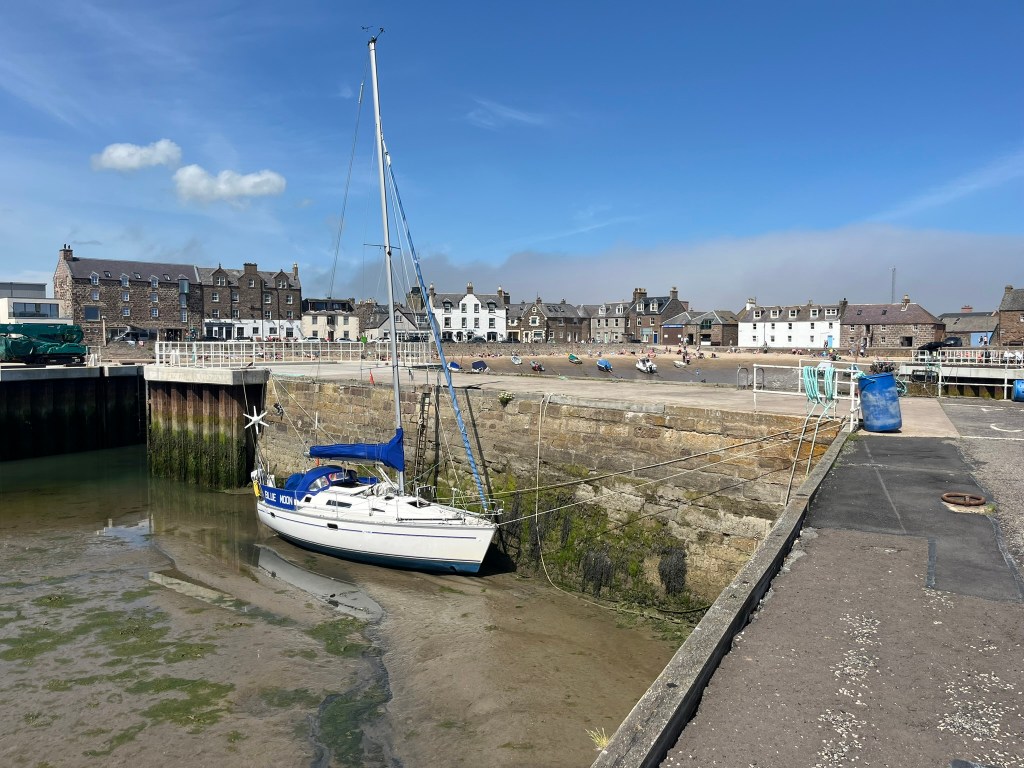
Peter went home the following morning after an excellent fish supper in one of the harbourside pubs, sharing my smugness at being able to sit in mud in the most sheltered corner of the harbour, and I turned my attention to a range of jobs, mainly not boat-related.
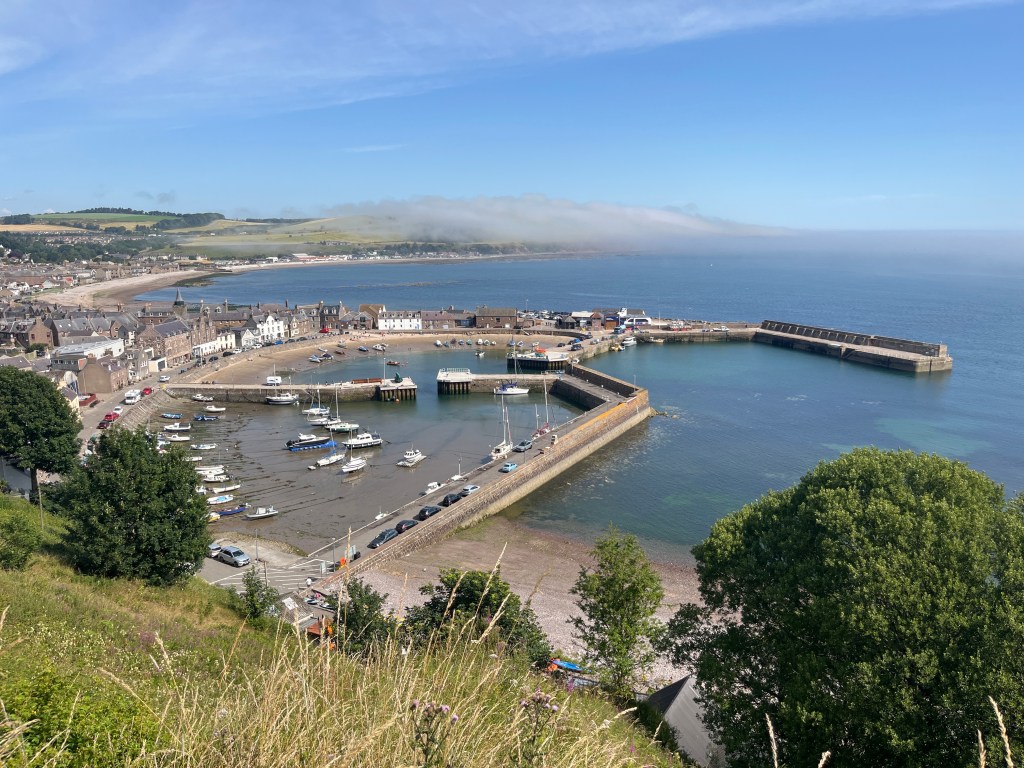
Stonehaven is right up there with the most pleasant stops of the trip: it’s clearly benefitted from Aberdeen’s prosperity as the houses are very well-kept, there are delis and nice shops in town and there are two beaches, one actually in the harbour, full of happy families, paddleboarders, dinghy sailors and rather well-heeled-looking hobby fishermen. There is apparently the largest heated open-air saltwater swimming pool in Scotland, and a railway station with direct trains from London which makes life easier for my next guests.
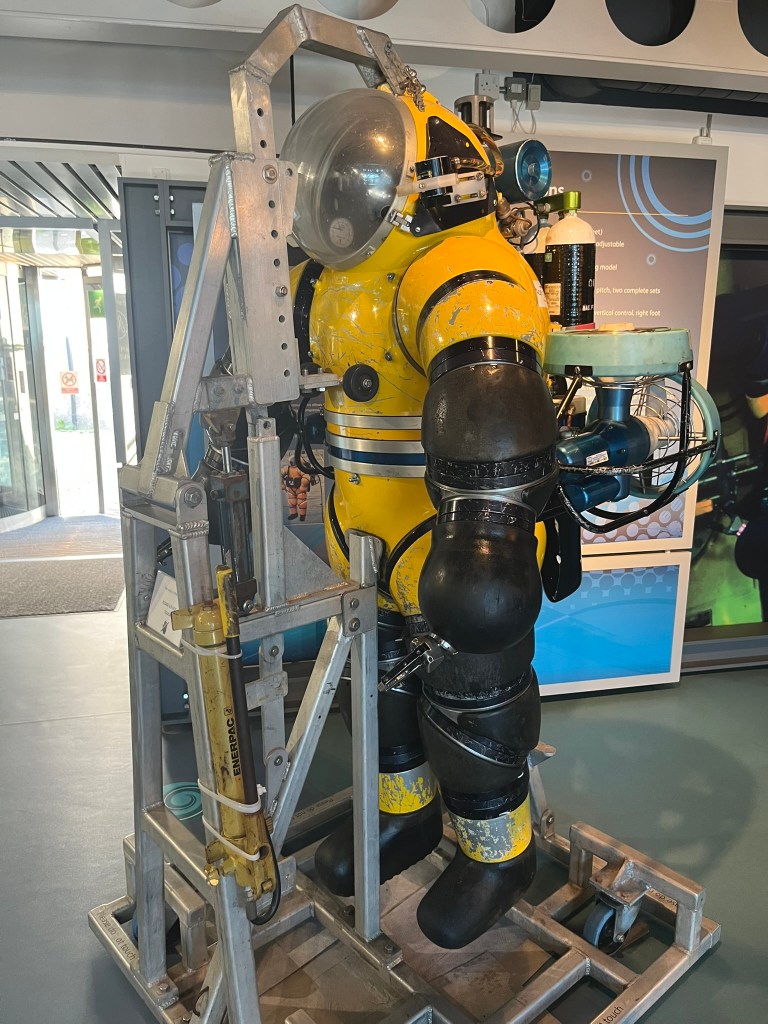
It also made life easier for me to pop in to Aberdeen to tick off another coastal city I’ve never visited. They don’t allow yachts in, and you can see why: it’s a vast commerical harbour full of ferries, wind farm and oil rigs boats as well as trawlers and coasters. It’s also, of course, an absolutely huge city full of shops and bars and buses and all manner of things I haven’t seen for ages; it makes Inverness feel distinctly small-town provincial. Its maritime museum even has a genuine deep-sea diver suit just like the one I had in my Ladybird Book of Oil Exploration or whatever it was called:
Even on a sunny day it is very grey though…
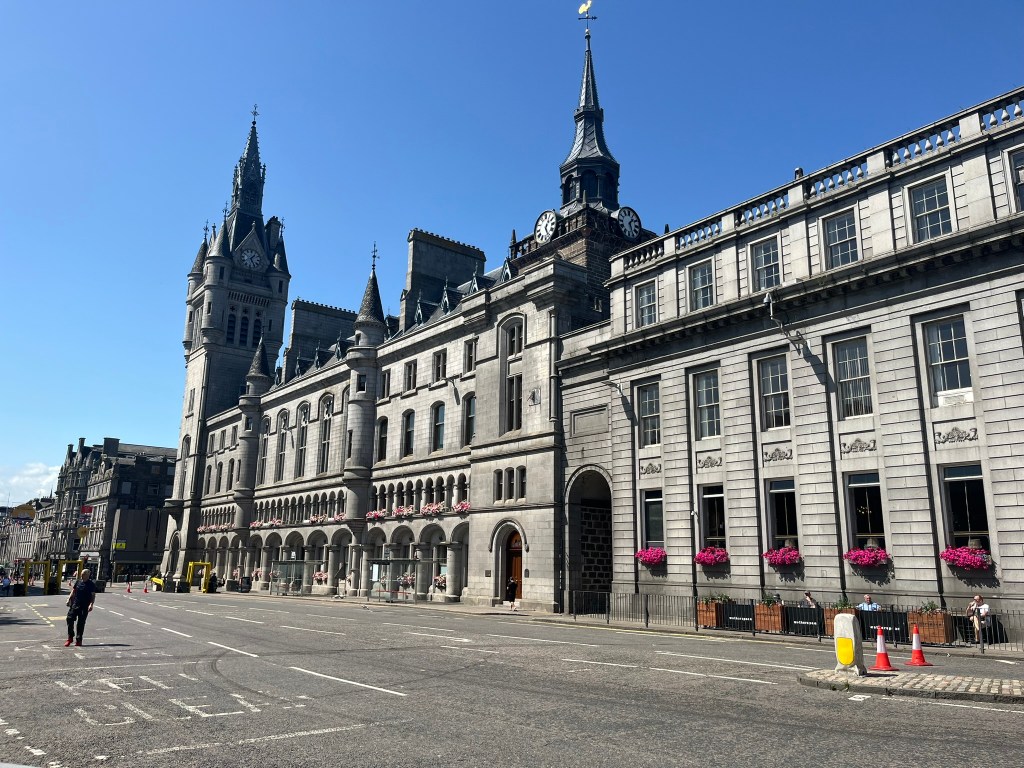
…so I was pleased to get back to rural Stonehaven where I was surprised to discover a final treat: it is the birthplace of the deep-fried Mars bar. Allegedly.
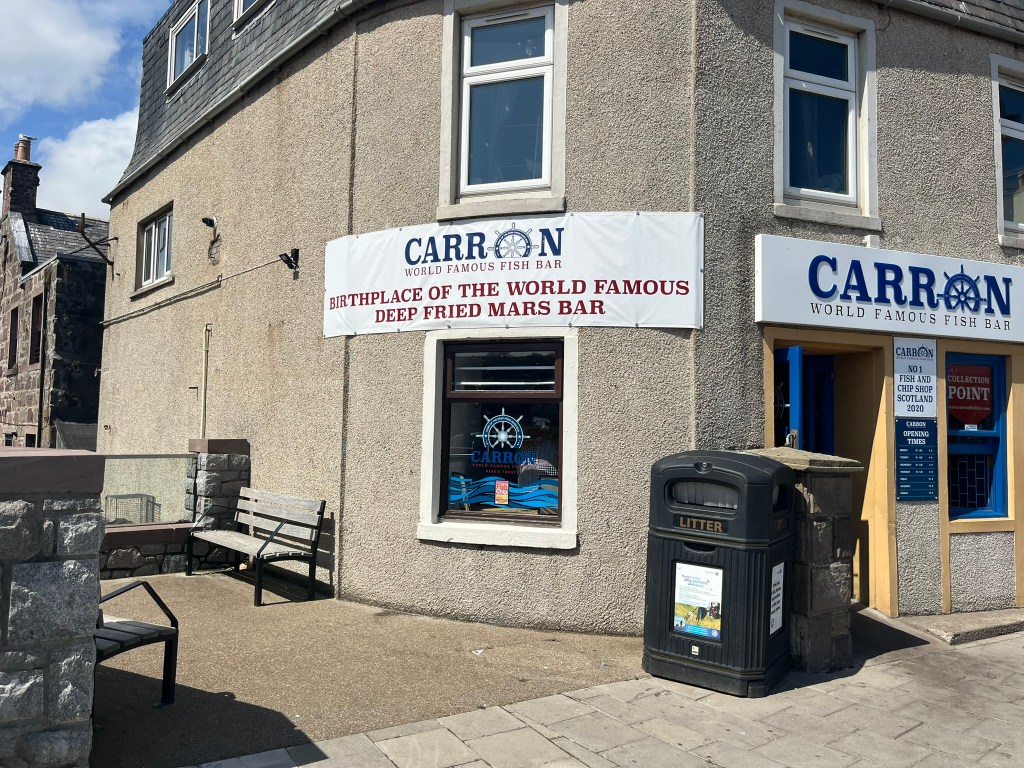
I couldn’t pass this by, could I?
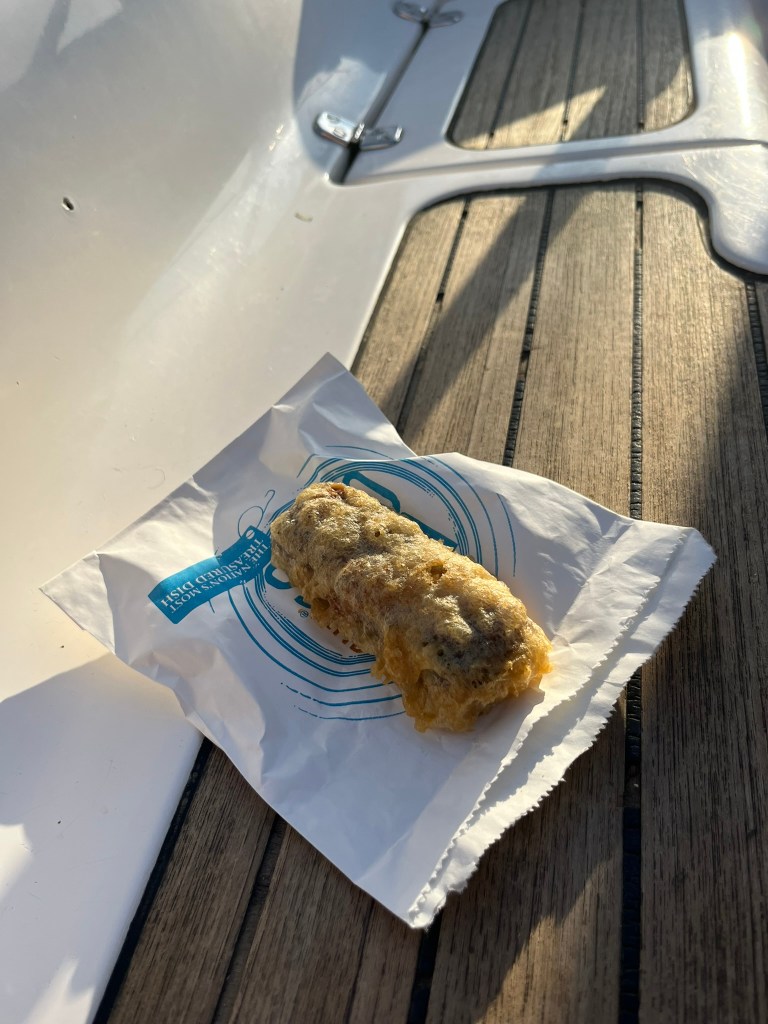
Sadly it tasted even more disgusting than it looks, which is quite disgusting. But that’s not enough to put me off Stonehaven, and the heatwave they have laid on for me. I keep thinking, now that I have rounded that big corner and am really heading south, that it will be 25 degrees and sunny all the way home. Then I look at the forecast and feel sorry for Hugh and Tina who are about to get off that London train, and for myself a bit. Fingers crossed, perhaps the weekend will be as nice as a surprise as Aberdeenshire has been.



 Blue Moon's trip around the UK
Leave a reply to peterdann11 Cancel reply