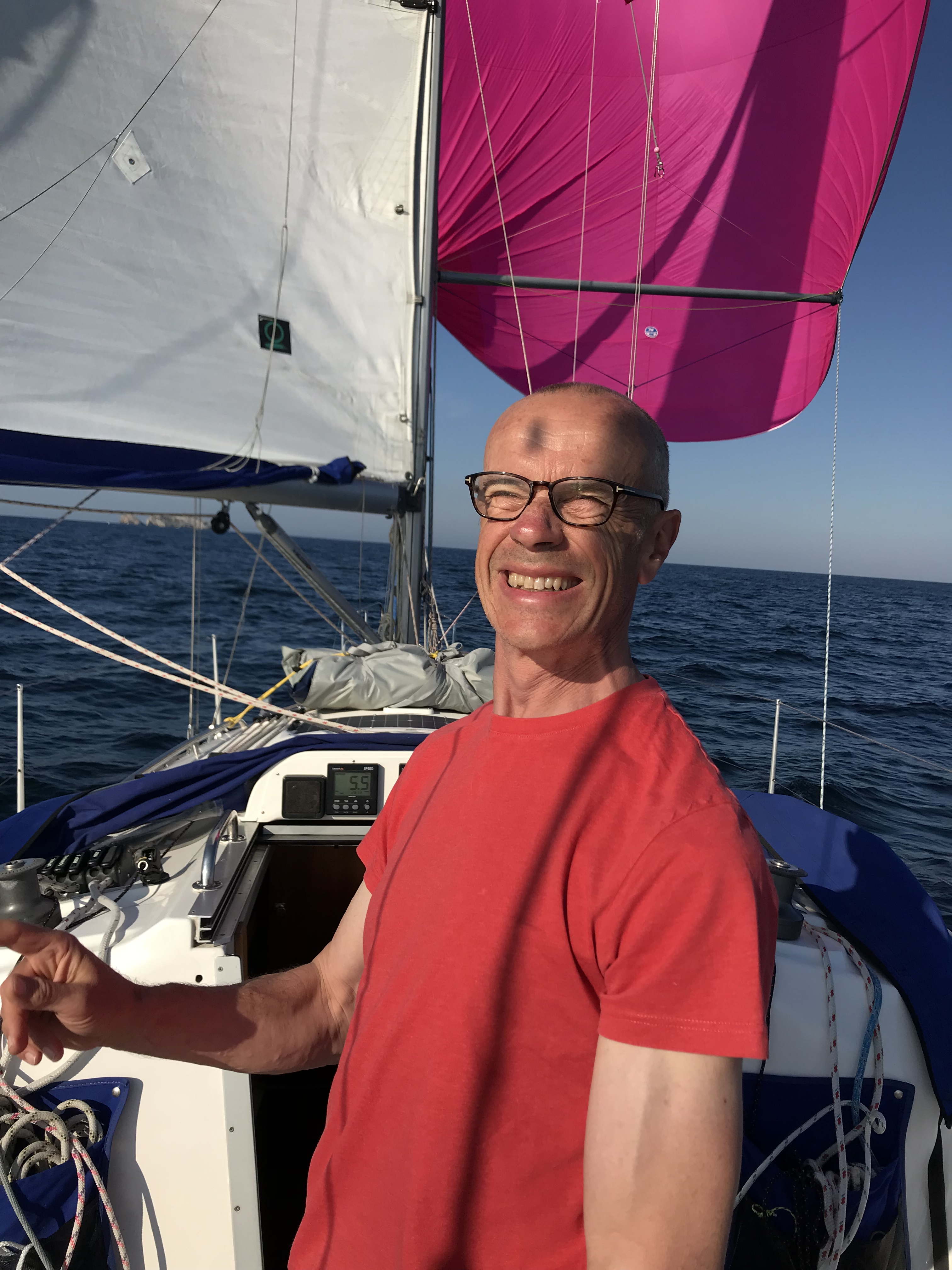
Don’t worry, Tim and I did not get married, nor did we wreck ourselves. But we did anchor in some truly weird anchorages. So much excitement means so little time to write a blog post and in any case, for those impatient readers impertinent enough to demand weekly copy, I absolutely refuse to write a blog post whilst I have a guest on board, even if I jeopardise any chances of winning even more awards by being so unreliable. It’s bad enough to expose their holiday antics to a wider public; the least I can do is wait a few days before doing so.
This week’s guest wins the Blue Moon Commitment Award for the entire trip: it’s committed enough to travel all the way up to Lerwick and back from Kirkwall in return for a week’s sailing; the commitment required to spend four hours sitting in Aberdeen airport eating departure lounge pizza while they rather ominously checked the runway to make sure it was still safe meant that I did feel some pressure to deliver some rewarding sailing and sightseeing. We both agreed – Tim having read the previous blog post – that Orkney would probably be a better bet on both these scores than Shetland, so the plan was to head south as soon as possible. This being Shetland, that could be in a few days’ time: the forecast when Tim finally made it on board around 10pm was for it to be blowing 30 knots the next day and I had pencilled in a hire car so as not to subject Tim to the full rainy-day-in-Lerwick-with-cruise-ship experience. Rain, of course, was inevitable whatever the forecast said, as were temperatures of 12 degrees or less. I really am fed up with the BBC blathering on about heatwaves, and now strongly suspect that if they either (a) shut up or (b) occasionally gave all of Scotland more than two seconds of weather forecast and/or didn’t run ‘national’ headlines about heatwaves then support for independence would plummet. One more month here and I’ll be voting SNP.
I should at this point state for the record that Shetland is a very nice place, as Tim may not be the only reader to have surmised that I had a bit of a downer on the place. Not so: it is undeniably beautiful in an extremely rugged sort of way, it has some amazing if slightly challenging sailing and the warmth of the welcome more than makes up for the lack of any kind of physical warmth whatsoever. It was simply that after two weeks I was ready to eat a meal I hadn’t cooked myself, drink a pint of beer not from a can or even to be tempted by a cup of proper espresso, and for any of these things to happen we needed to be somewhere other than Shetland. Unfortunately, whilst expressing these views a week later to the cheerful Orcadians who run Kirkwall marina, and making their day, I was overheard by a native Shetlander, who expressed stronger views about my taste in Northern Isles.
I am delighted and very lucky to have had the chance to explore the islands in my own boat, and to prove it here are some pictures that amused me that could not have been taken anywhere else:
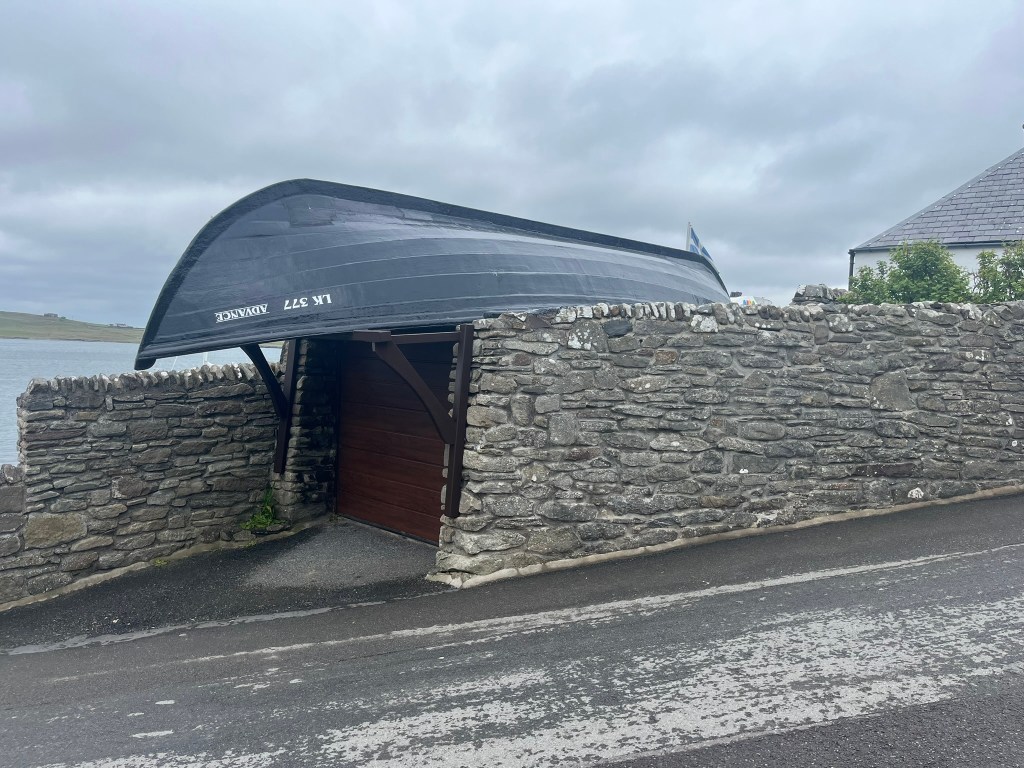
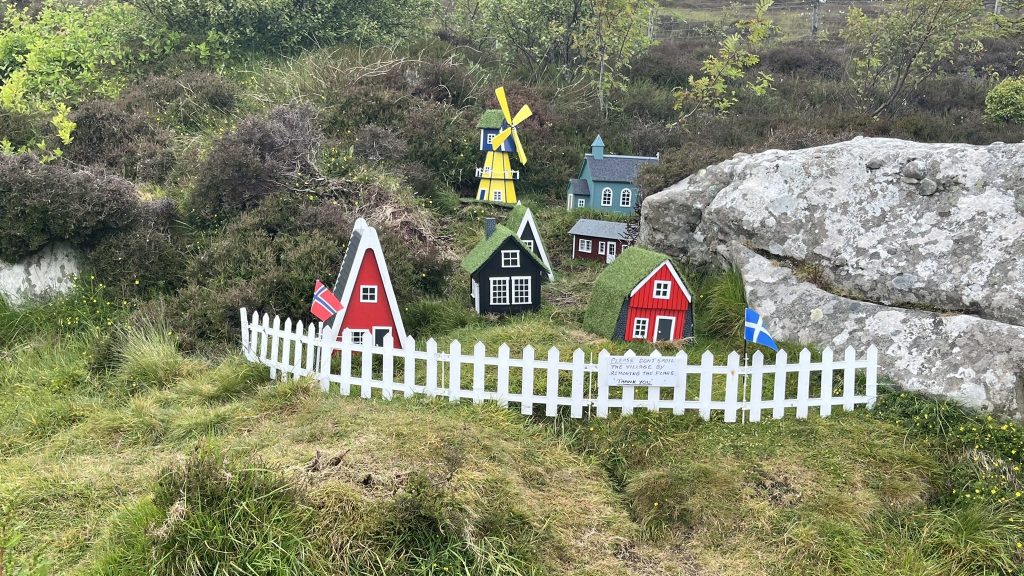

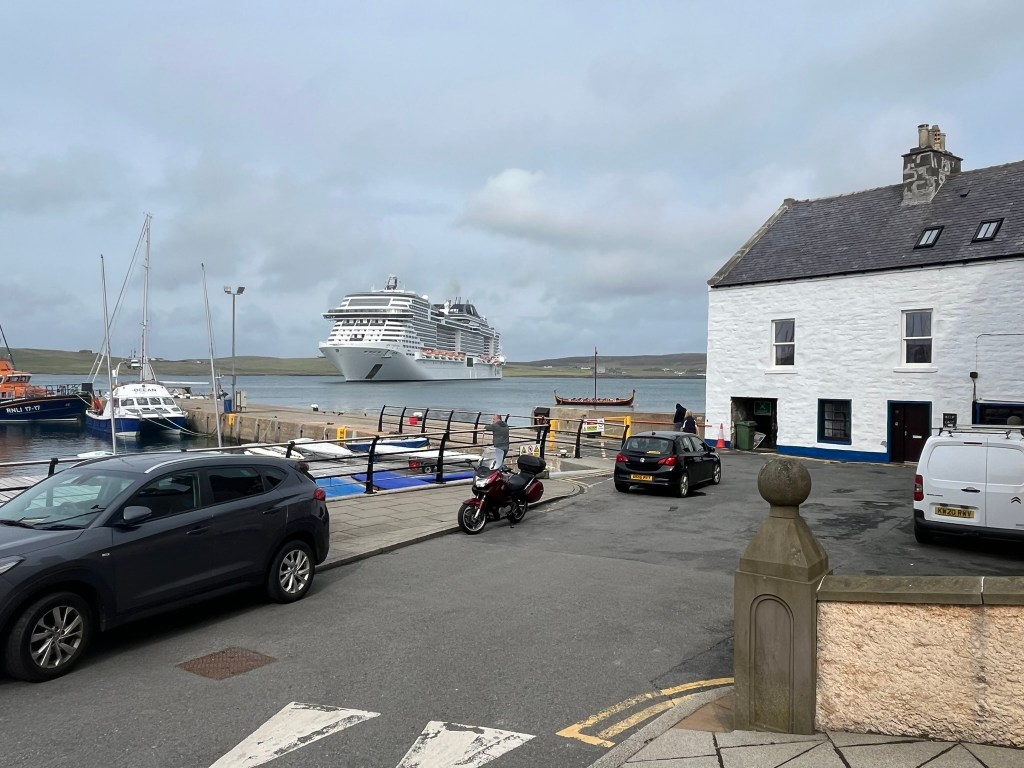
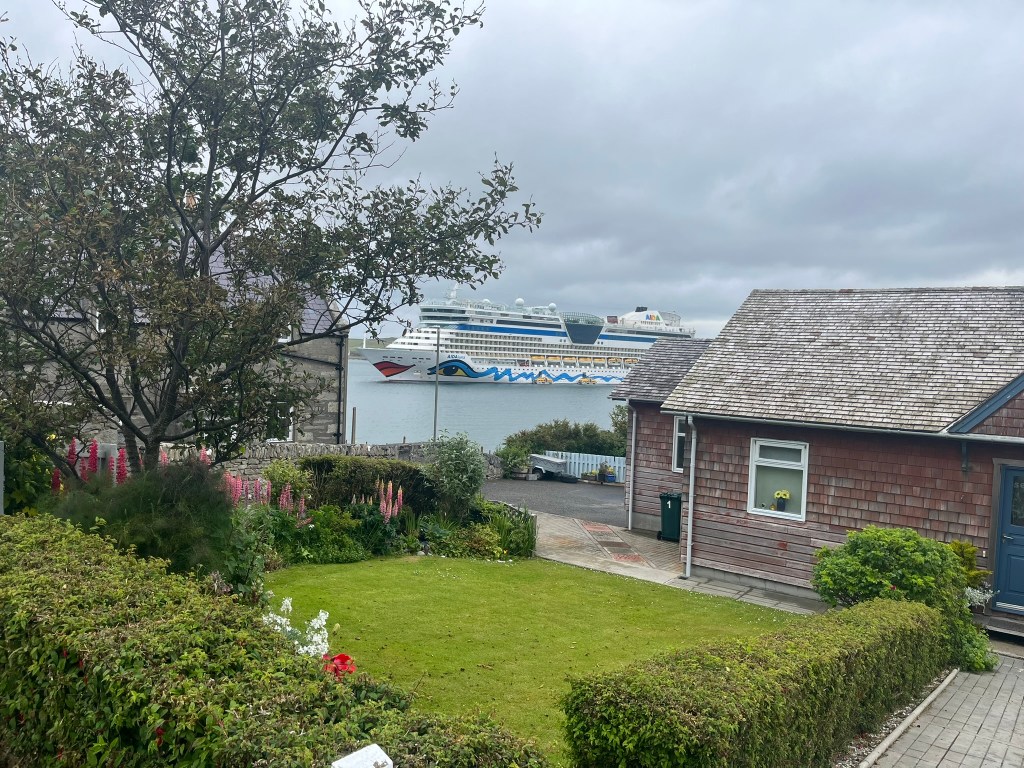
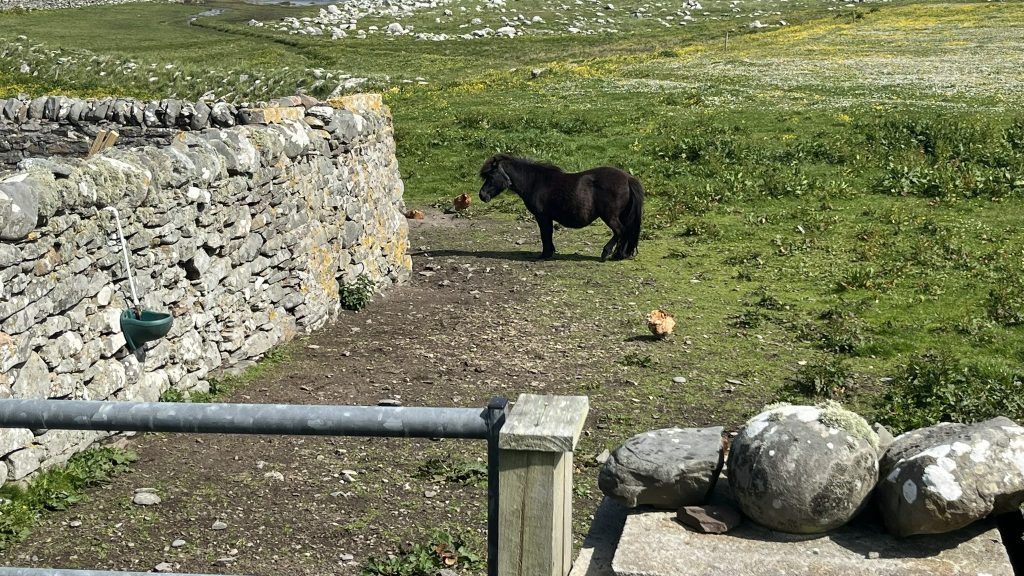
I also need to return to the Norwegians. For most of my stay in Lerwick I was the only English boat there, being surrounded by Norwegians for whom this is the equivalent of the Solent sailor’s booze cruise to Cherbourg. My presence was so remarkable that the Cruising Association’s man in town came down to the harbour to say hello on arrival and, impressively, on departure too (how did he know?). I had tied up next to two very friendly and very entertaining guys called Gregor and something unprounceable (and probably, if I know Norwegian, unspellable. We once bought a Dragon from some Norwegians and the labels on the control lines were a series of mystifying sounds however you said them), and it turned out that Gregor was sailing to his own wedding on Fair Isle and Unpronounceable was his best man.
I was very impressed by this as it made my odyssey seem quite pedestrian: it turned out that he and his girlfriend Grys, (another excellently Norwegian name, rhymes with Bree so I suppose that’s OK) had sailed together to Fair Isle last summer (with Unpronounceable as the crew gooseberry) and, struck by the beauty of North Head where I had had tea with the puffins, Gregor had gone down on one knee and proposed. They were to be married on that same spot, and Gregor entertained me with tales of how much time and paperwork was involved in getting a Scottish registrar to the most remote island in the UK to marry two Norwegian citizens on a clifftop. Arranging for there not to be horizontal rain and sub-zero temperatures had been a doddle by comparison, as had sorting out a reception in the canteen of the Bird Observatory which had luckily re-opened this year or they would have been eating day-old meal deals from the Lerwick Co-op.
This could have been a bit awkward as I had wanted to eat at the Observatory too – they offer meals and more importantly showers to visiting yachtsmen, even ones who can’t tell a Puffin from an Auk – and I didn’t want to gatecrash. It was the night before the wedding, not the actual wedding feast itself, and Gregor insisted that they had made it a condition of booking that the Observatory would stay open for everyone else (they didn’t have a wedding policy, having never hosted one before). Even so, when I phoned to book, the manager explained that he needed to check with the cook (“you won’t believe this, but…”) whereas in fact he phoned Gregor on the boat next door to check he was OK with us being there.
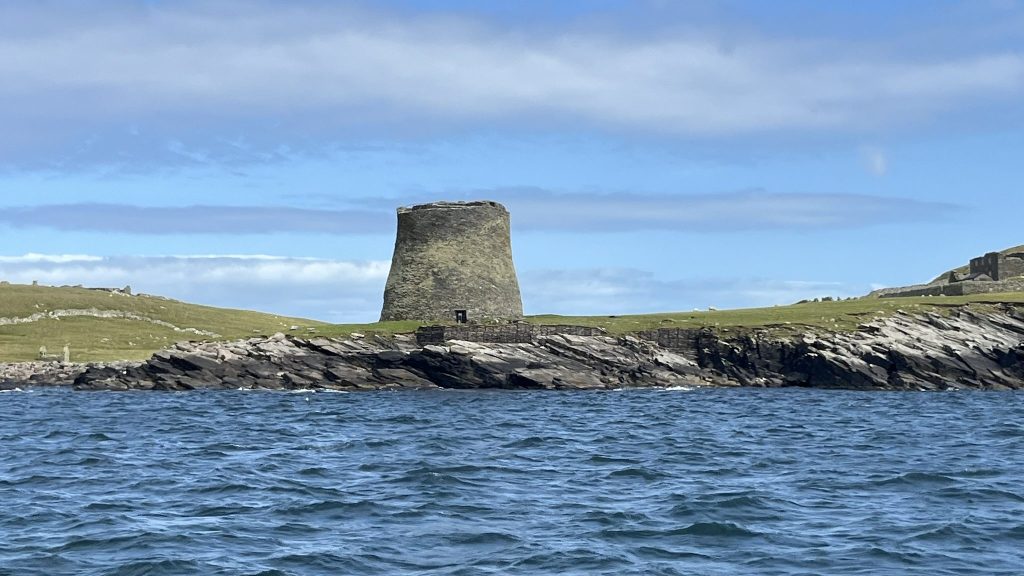
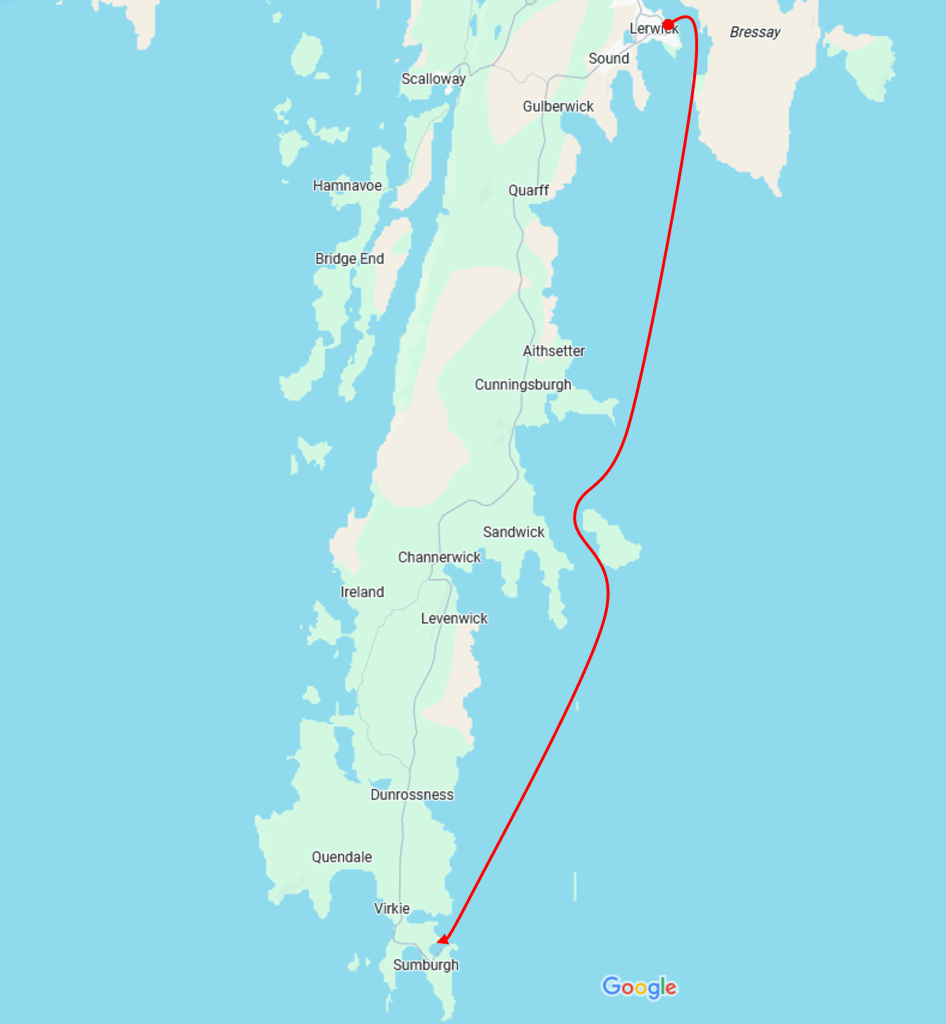
They have 12-hour forecasts in Shetland for a reason. When Tim and I woke up eight hours later it had already changed: it was now going to be quite sailable in the afternoon, and totally unsailable the next day, so we cancelled the hire car, waited for the wind to stop howling, extricated ourselves from our Norwegian sandwich and headed south. I wanted to visit the Broch of Mousa, the best preserved broch in Europe: we’d have had it all to ourselves if there hadn’t been a still-feisty Westerly blowing into the bay so we had to sail close and take pictures instead.
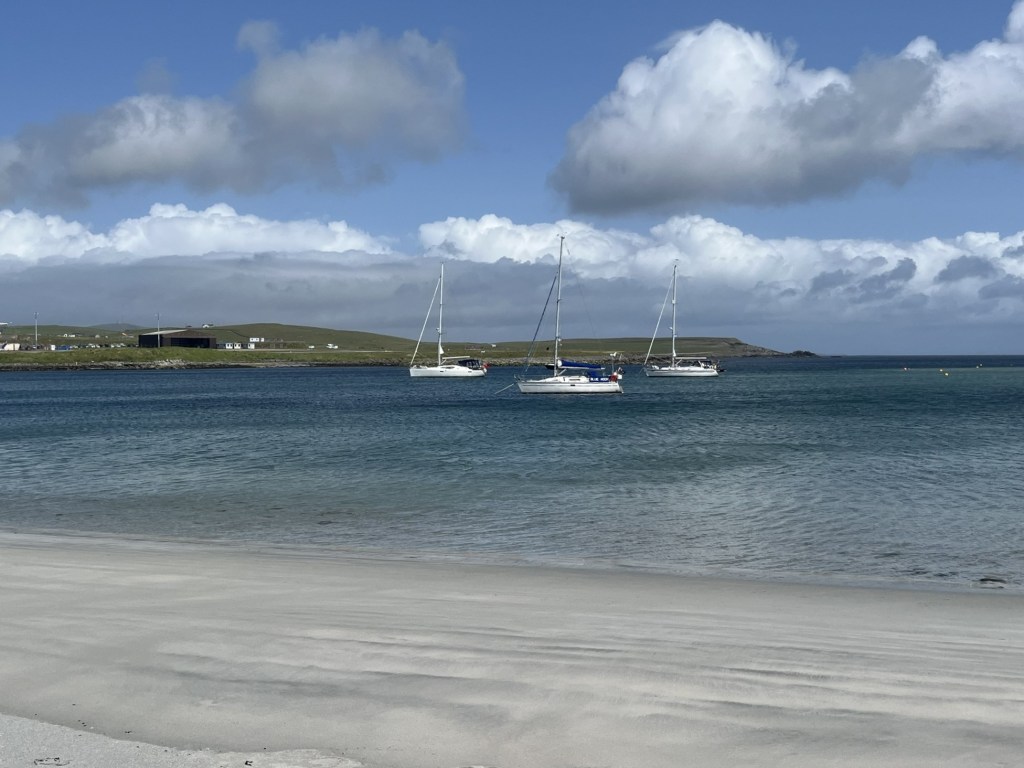
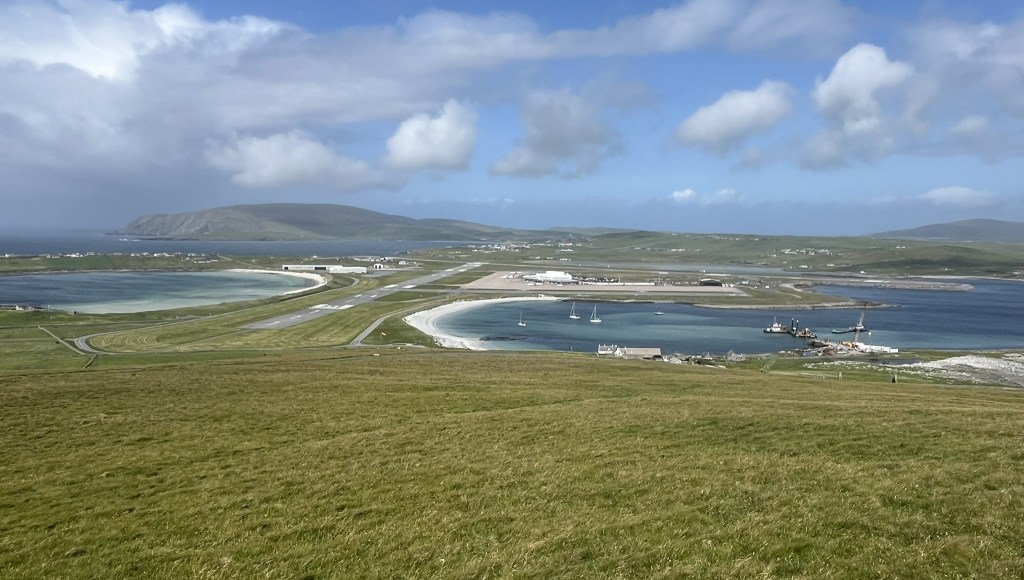
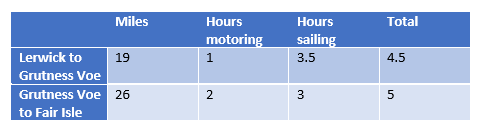
Our destination could have been controversial given Tim’s airport experiences the previous day: Grutness Voe is a highly recommended anchorage with excellent shelter and good holding on white sand with easy access to walks around Sumburgh Head. It is also at the foot of the runway at Sumburgh airport and you are warned not to dinghy ashore onto the runway side as you will be arrested promptly. We’d worked out that with only a few flights a day we could ignore the airport, but had reckoned without the almost constant troop of helicopters ferrying people to and from oil rigs which could have made it feel as if we had wandered into Apocalypse Now if it wasn’t for the steady Force 6 blasting off the sand dunes competing for aural attention. We anchored as close in as we dared, and were in due course joined by the cheery chap from the Royal Cruising Club who I’d met in Scalloway and bumped into again in Lerwick. It must be an odd feature of being an RCC member that the fact defines you in any harbour. I suspect it also marks you out as being good company since you will have tales to tell, and indeed Stephen invited us over for drinks that evening with his school friends who had joined him for the sail south, so we spent a happy evening comparing whisky and telling tall tales in the (enclosed, this is Shetland) cockpit of a large yacht just like retired gentlemen are meant to do, an experience only enhanced in its salty cruisiness by having to don full oilskins and lifejackets for the rather demanding row home upwind. Thank you Tim, your sculling training is paying off already.
We’d chosen Grutness not for the quality of its company but because in addition to a famous lighthouse it also has great walks and what is billed as ‘the UK’s most accessible puffin colony’. It’s all relative I suppose. We dinghied ashore to a beach so Caribbean-looking that mad Shetlanders swam off it, and headed off to explore.
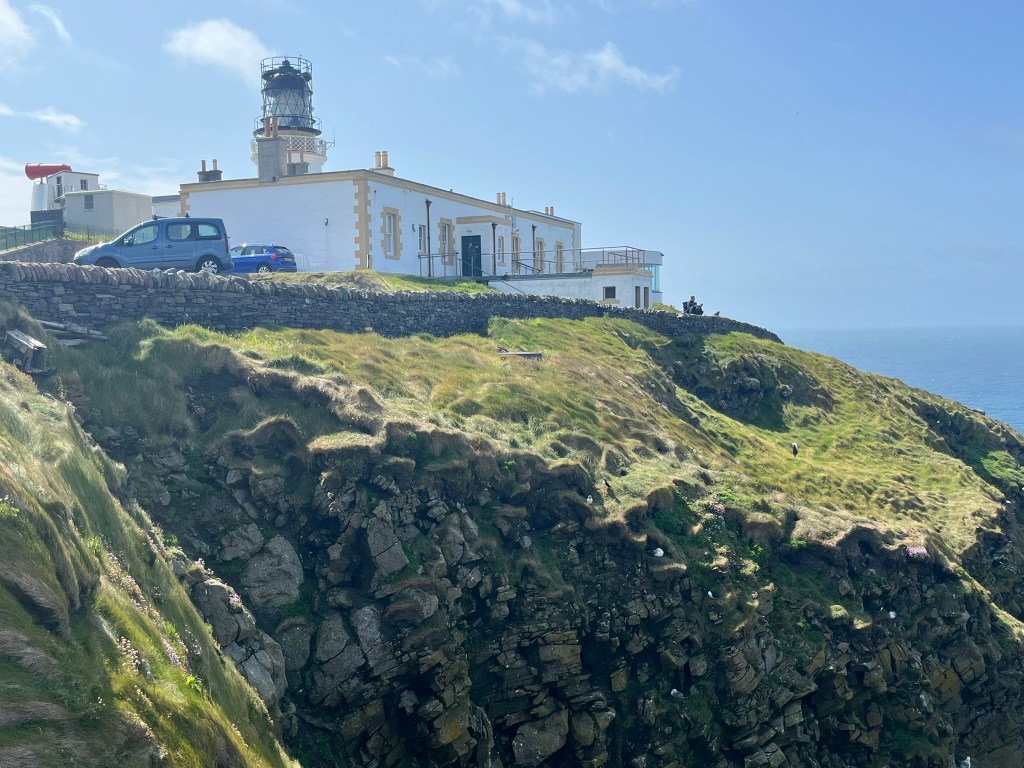
Sumburgh Head is a great place to be on a Wednesday in a Force 7 Westerly (for once the forecast was right) as long as you aren’t in a boat: there were great cliffs with some puffins who could be deemed accessible by people who hadn’t been to Fair Isle, and an award-winning visitor centre and cafe (closed Wednesdays).
Another five miles in a stiff breeze brought us to the excellently-named Point of Bargi where we stumbled across what appears to be Shetland’s best prehistoric site: the very Norwegian-sounding Jarlshof. Sadly the name was invented by Sir Walter Scott not the Vikings. A bit like Skara Brae but this time with added time travel as it encompassed ancient neolithic stuff all the way through the Bronze Age to Picts, Vikings and medieval lairds, the ancient bits only being re-discovered after the obligatory storm blew the sand away.
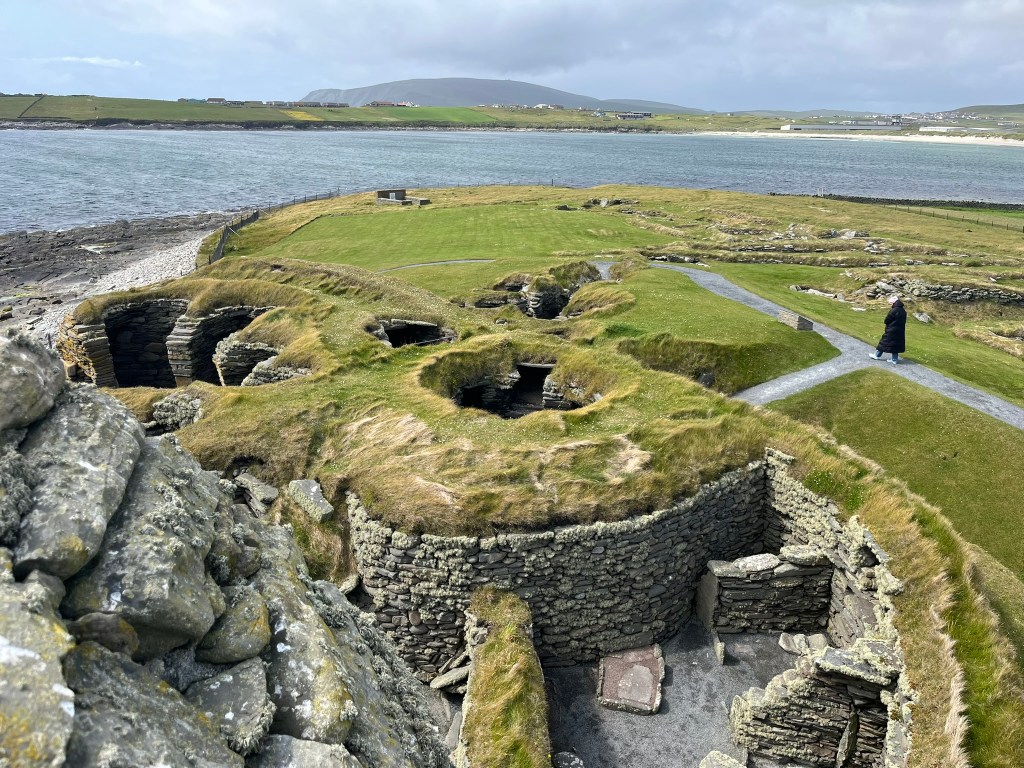
Apparently this was considered one of the cushiest places to live in Shetland and on a sunny midsummer’s day we could almost believe it, until we stood up and felt the full 12 degrees Force 7 summer breeze.
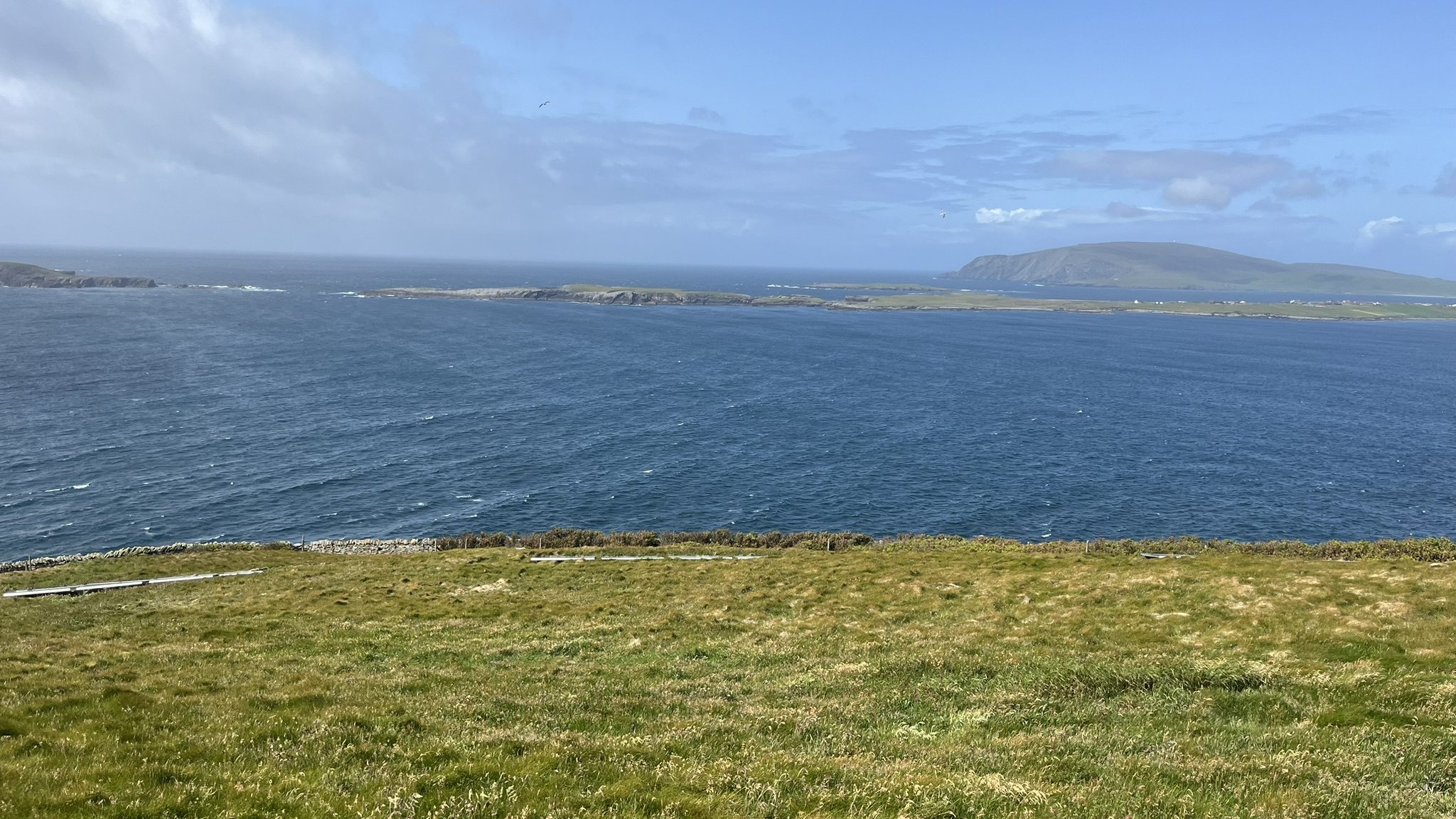
12 miles later we were back where we started, now surrounded by Norwegian boats again, two of them the wedding party who told us that they had to go ashore to have dinner in the airport hotel (not as grim as it sounds) with the future in-laws. Not something you hear in every anchorage.
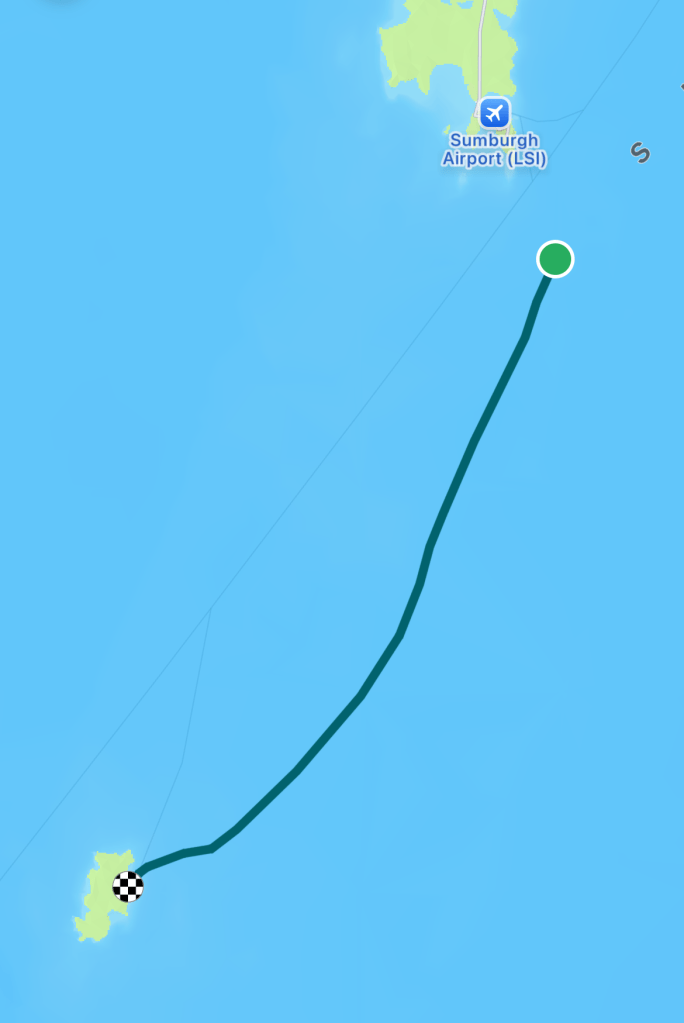
Luckily, next day that same breeze had dropped to windspeeds deemed cushy by today’s softer sailors, which was a cue for us to race our Norwegian friends to Fair Isle. We won by cheating: we left half an hour before them, but they also cheated by heading straight through the Sumburgh Roost and nearly catching us up so we cheated more by turning the engine on and leaving the sails up so they wouldn’t notice.
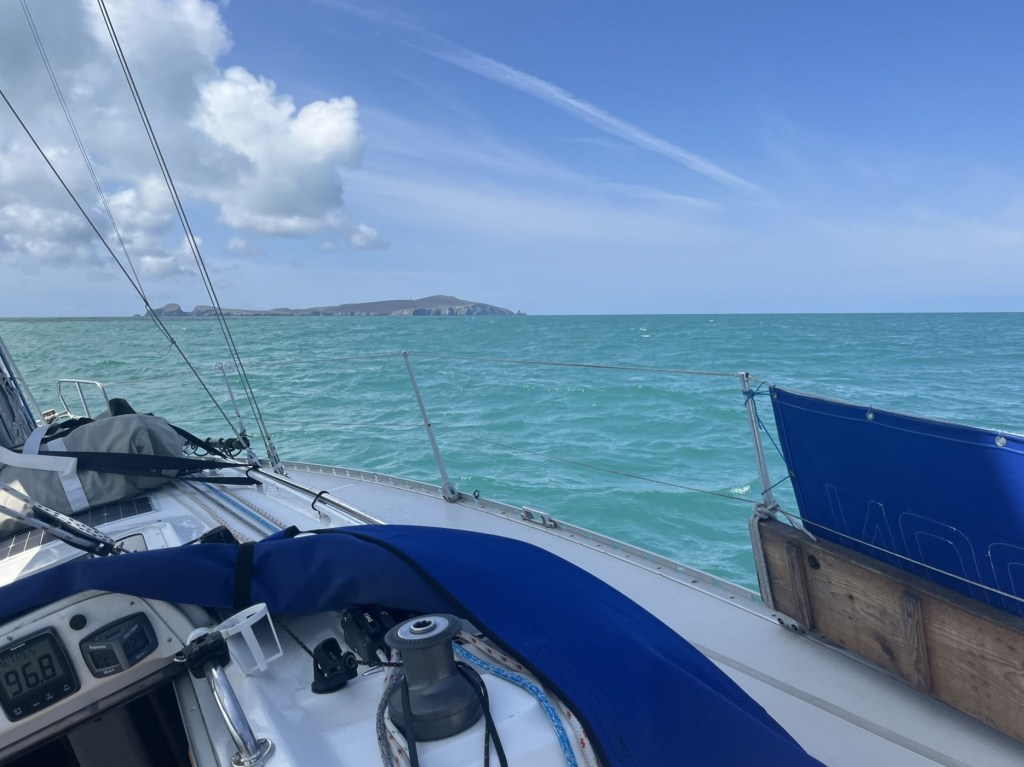
If I had lost a yacht race the day before my wedding I would have been grumpy throughout, but Gregor and Unpronounceable took it in good spirit and let us tie up outside them so we could make a quick getaway the next day. Or perhaps they were looking forward to seeing the back of us.

While they went to have showers and press morning suits (I doubt the latter for a Norwegian Cliff-top Wedding), we toured Fair Isle in sunshine. Rather annoyingly, Unpronounceble had told us we didn’t have to walk an hour to see puffins as some lived about 100 yards away from the harbour, so as it was too early for tea we went and had lunch with them instead.
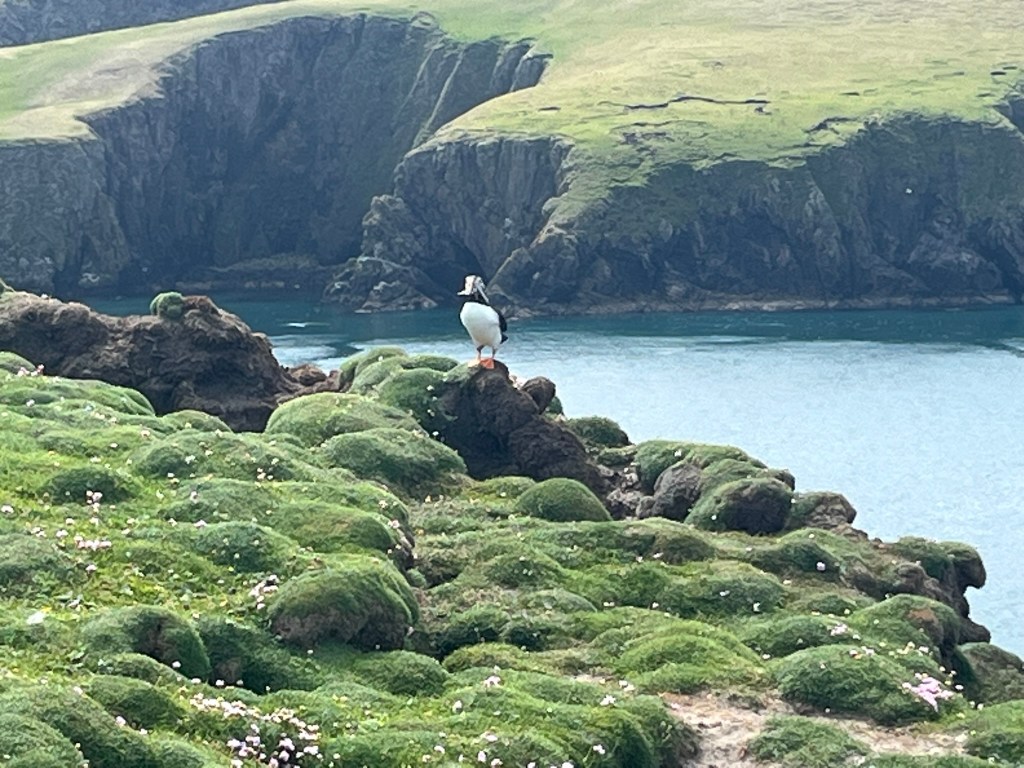
Then we took ourselves off to see what happens on the UK’s most remote island (true – Tim Googled it). Not a lot. There are 61 people living in 22 crofts with two churches and one shop (closed Thursdays) on an island 3.5 miles by 1.5 miles, 35 miles from anyone else. But there are stunning views, and the rush hour is almost non-existent, consisting as it does of a small aeroplane when demand requires and a ferry smaller than many fishing boats.
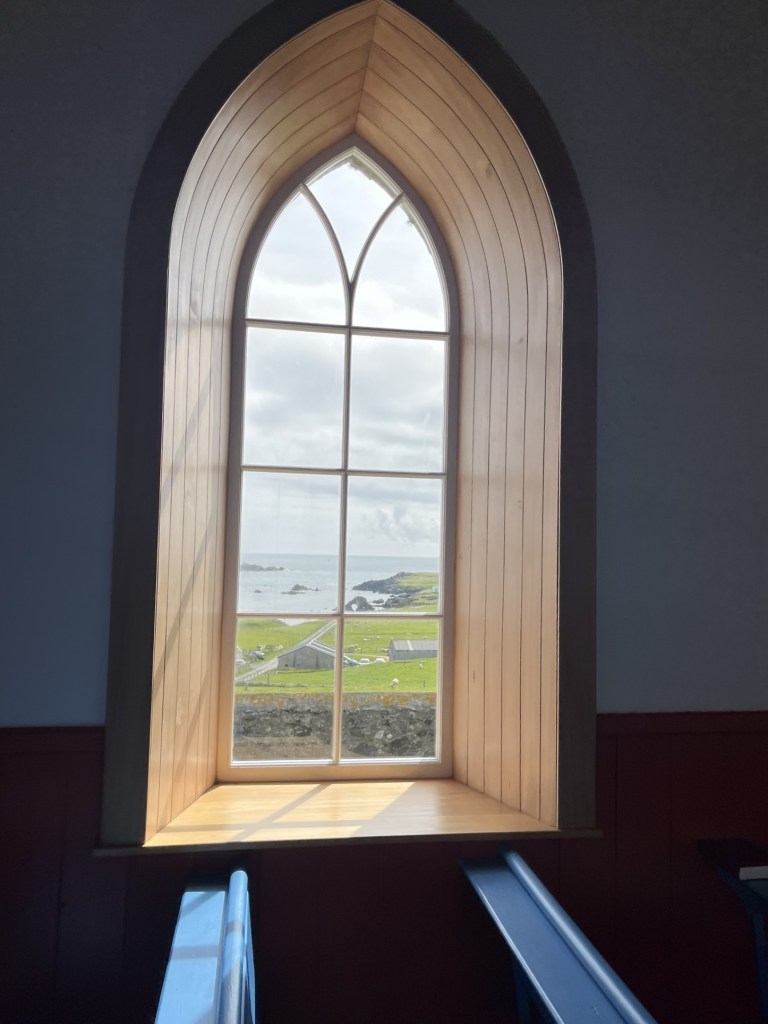

On the way we had – of course – bumped into Stephen and crew who told us that they had twisted the Observatory cook’s arm even harder and wangled an extra three dinners. This was good news: rather than gate-crashing a Norwegian pre-wedding we ended up having a jolly dinner in what felt like a sailing club dining room with fellow sailors, whilst a dozen Norwegians in wedding T-shirts appeared to be on a mission to set a speed-eating pre-wedding record and were out of the room before we had got onto the stories involving friends in lavatories on cross-Channel yacht races. They had gone to have a last look at the puffins and waved goodbye to us from the clifftop above the harbour. We wished them well at the tops of our voices and returned to the after-dinner entertainment of fitting another eight yachts and the ferry onto the tiny quay whilst being free to leave early next morning.
All in all it had been an unexpectedly sociable but thoroughly enjoyable end to the Shetland experience, and as unique and improbable as the islands themselves. They may only have one coffee shop but things seem to happen here that tend not to anywhere else.


 Blue Moon's trip around the UK
Leave a reply to peterdann11 Cancel reply