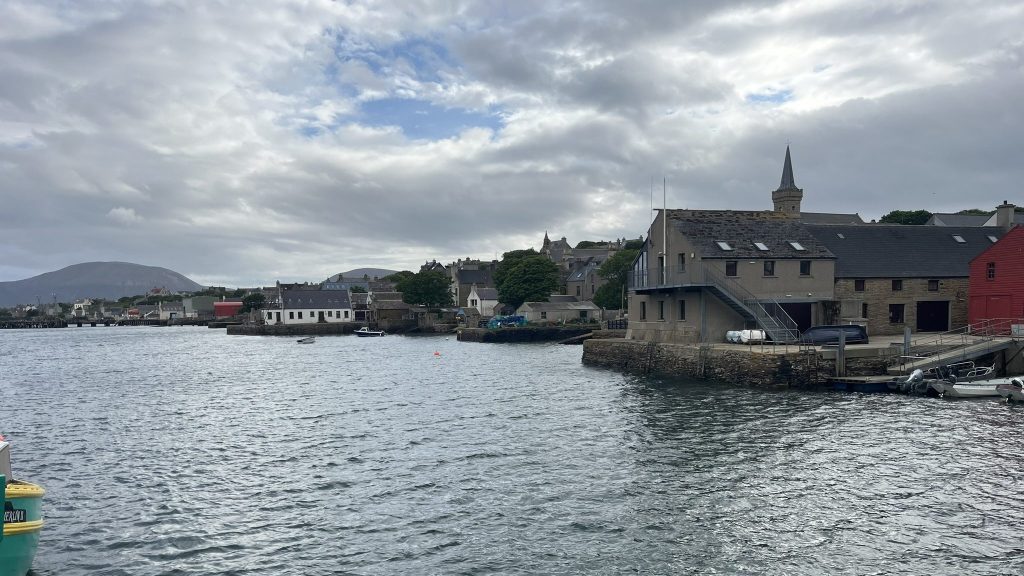
I need to make one thing absolutely clear before we go any further: Stromness is an extremely attractive place. I would call it a village but it prefers to be known as a town, and since it is Orkney’s second largest place I won’t argue. It is what a film-maker would want from a fishing village (or town): smart cottages and larger ex-sea-captain’s houses around paved and cobbled streets, steep alleys with names like Mollie’s Steps, beautifully kept gardens, many backing on to the harbour with old quays and boathouses at the end, a nice range of small shops and pubs, a great bakery, butcher and fishmonger and the home of Orkney’s leading smokery and oatcake manufacturer. It is handy for visiting a range of world-renowned prehistoric sites, or you can catch the ferry to Hoy and eat oysters and/or walk to see the Old Man. If you are visiting Orkney, and at some point you really should, you must go to Stromness and you won’t be disappointed.
However, I would not recommned scheduling a five-day stopover when it is blowing a gale and pouring with rain, as these attractions will wear a bit thin. I had, of course, suspected this when I saw the long-range forecast and that was also a factor in deciding to stop at Longhope for the night, and I was half minded to spend Sunday exploring bits of Scapa Flow so as to minimise downtime in Stromness, but then I woke up and saw that it was already blowing 20 knots again and forecast to increase, so I upped some quite small sails and headed off to the totally sheltered marina that makes it such an attraction for yachts. With a beefy breeze I was there by mid-morning and was greeted by a range of cheery sailors from all over who were all equally resigned to seeing a great deal more of each other over the coming days. Luckily they were all good company: there were Simon and Carol from Dover (they spotted the MYC burgee on my way in) already on their way south having spent May in Shetland, Eddie and Matthew from Tayvallich, a group of cheery French friends from Camaret in two boats who had been astonished when Rosalind had spoken French to them in Kinlochbervie and consequently treated me as a good friend but never introduced themselves, and Edith (I think her name was) who had just sailed non-stop from Mallaig in 36 hours. Bonkers? Yes. Also French? You guessed. Over the course of the afternoon the pontoons gradually filled up and so did the wind, which blew between 30 and 40 knots for the following three days. Astonishingly, it didn’t rain the whole time, so it wasn’t an entirely miserable experience, and we all agreed there are far worse places to be stormbound than Stromness. None of them had been to Whitehaven, for instance, so I was able to point out their good fortune.
You don’t need an hour-by-hour account of how I spent my time, that would be like reading a holiday diary not a multi-award-winning blog, so here are some highlights, in no particular order.
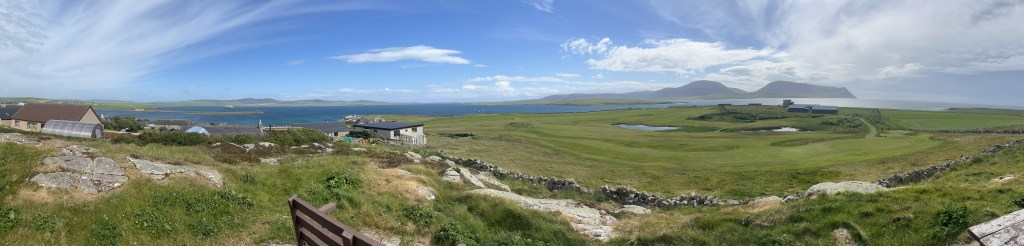
I managed a short hike around the countryside before the rain set in. I was struck by how green Orkney is after the increasingly rocky moonscape of the North West. It may not have any trees but it’s full of green fields with cows and sheep – hence the focus on cheese and knitting I suppose. I could see why the Vikings liked it so much.
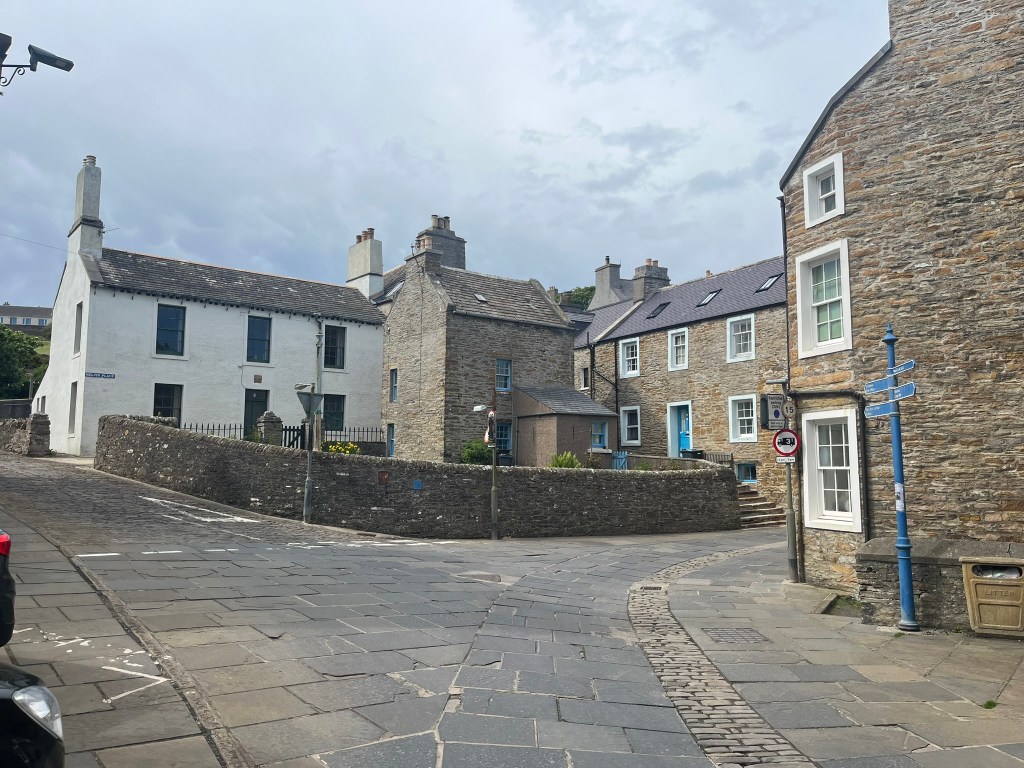
I had a good wander around the streets of Stromness. Several times, as you do when marooned somewhere with not much to do. Luckily they are nice to look at, although less interesting on a Sunday when all the shops are shut.

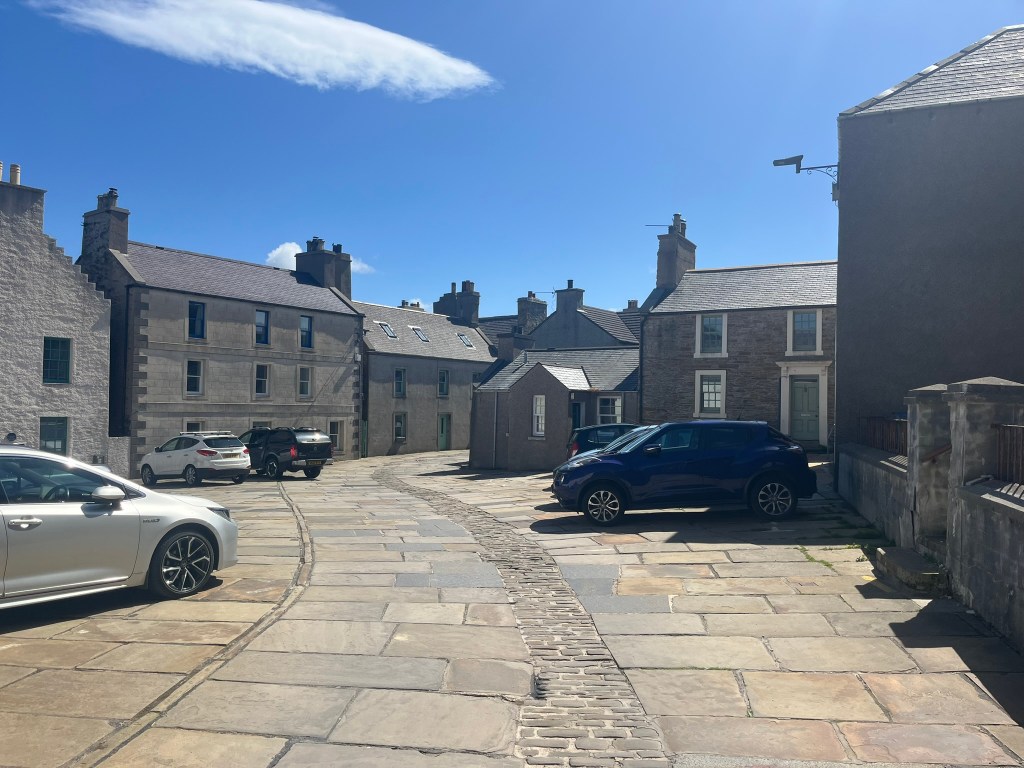
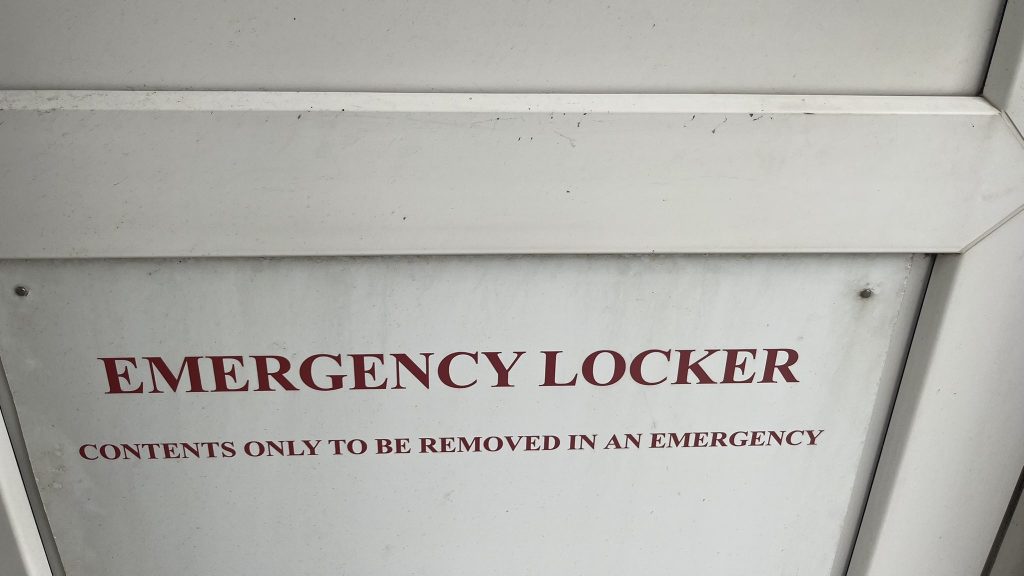
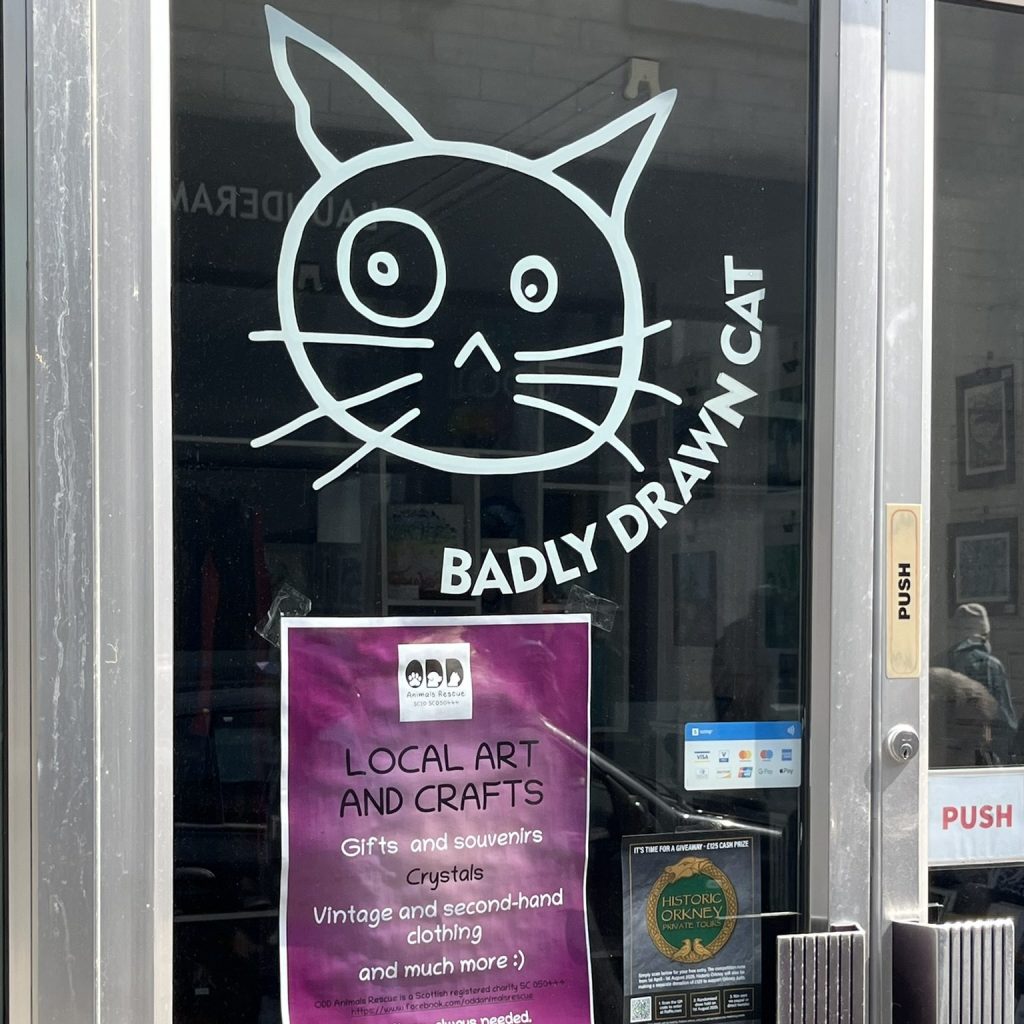
I took some photographs that amused me:

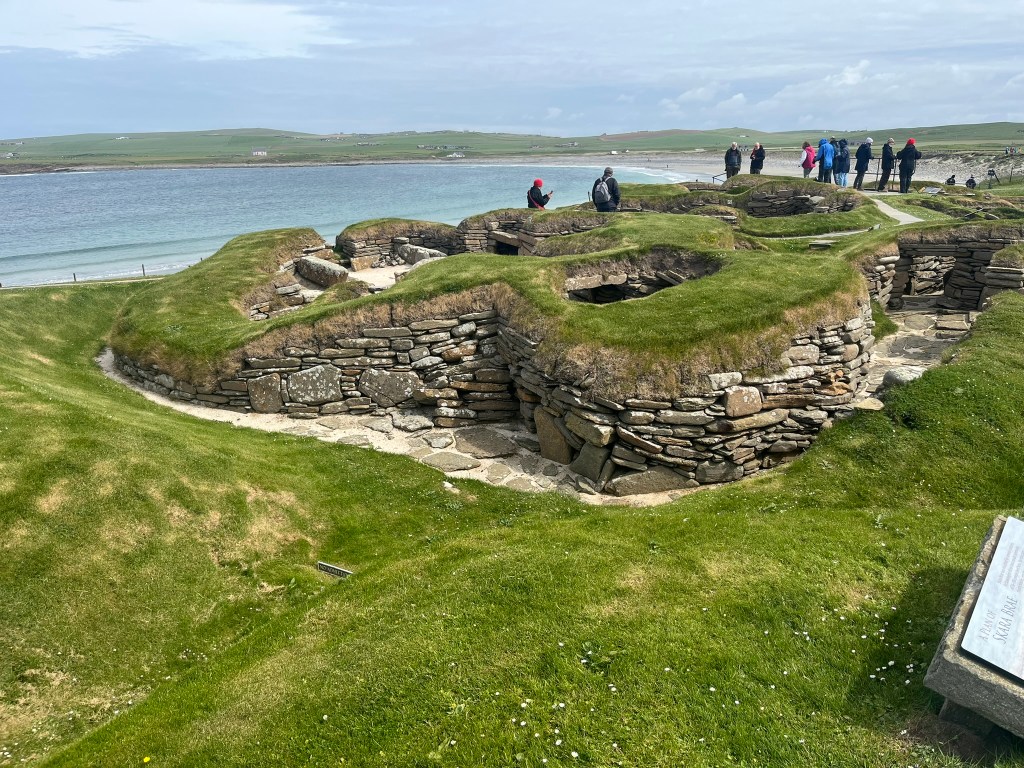
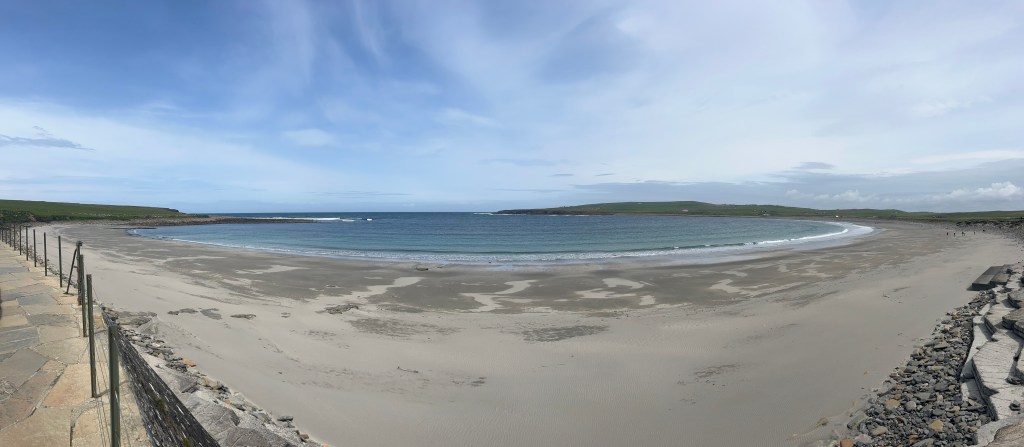
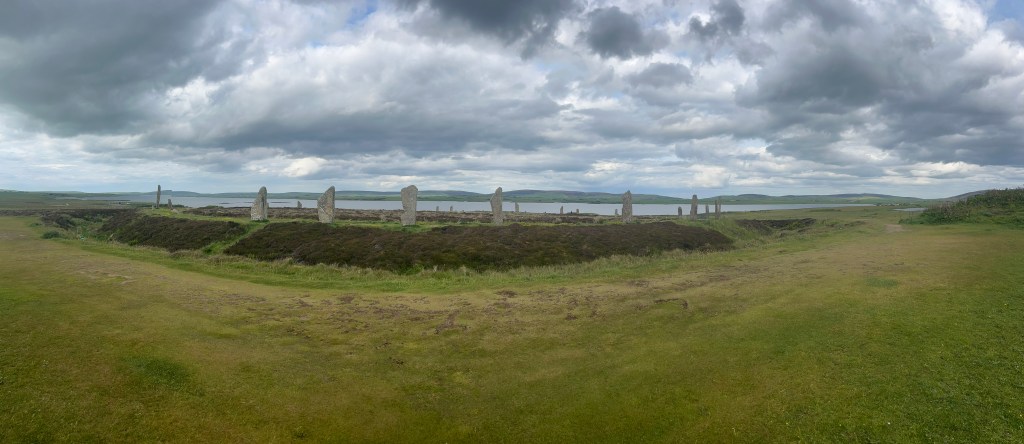
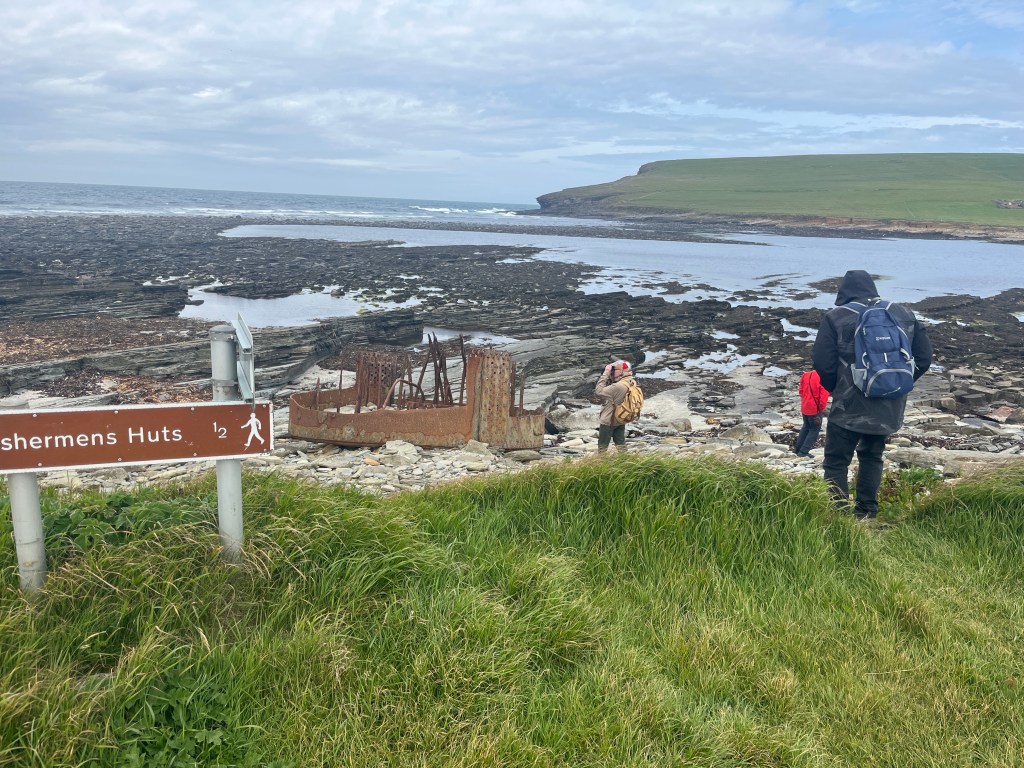
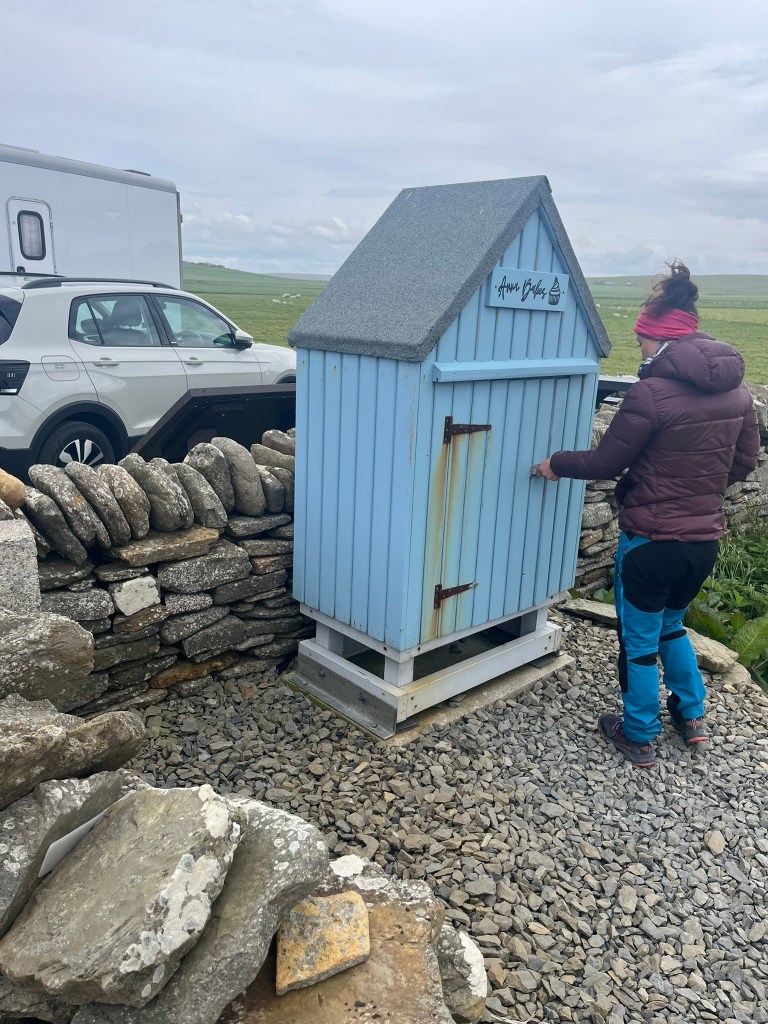
I hired a bike and cycled 38 miles, 19 of them into 30 knots of breeze, without a battery because I am not one of these namby-pamby South Downs part-time e-cyclists. Instead of drinking lattes wearing lycra in places like Storrington I visited Marwick Bay, Skara Brae, the palace of Birsay, the Ring of Brodgar, the Stones of Stemness and the Barnhouse settlement, which is more neolithic places than I have been in my entire life all in one day.

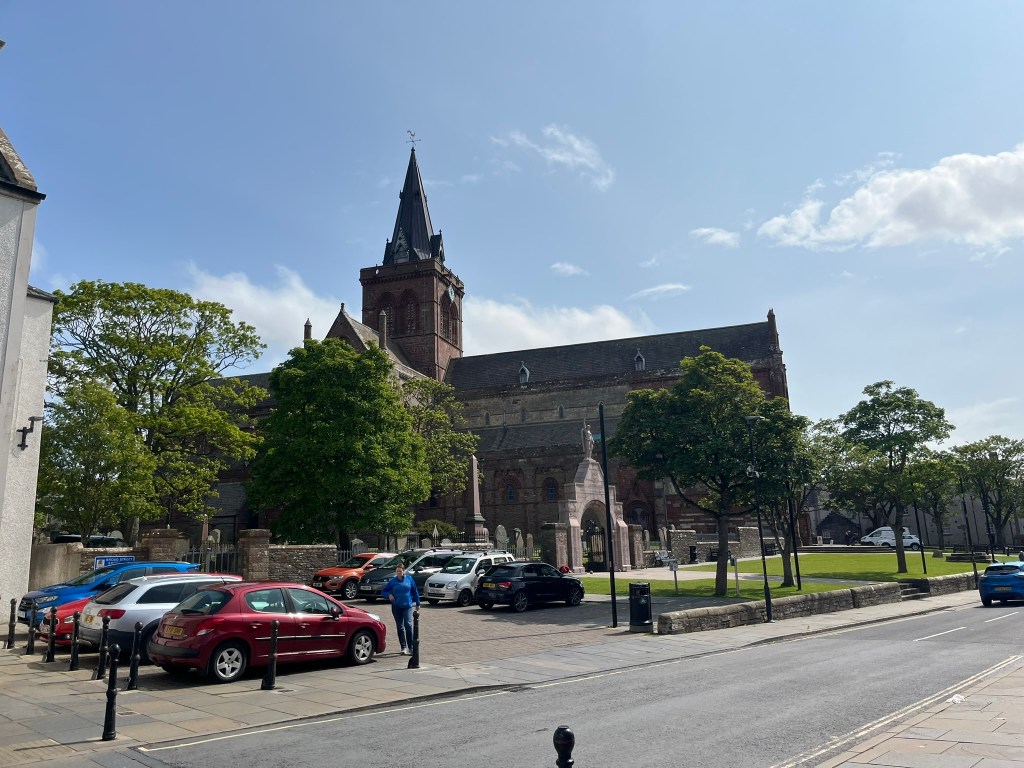
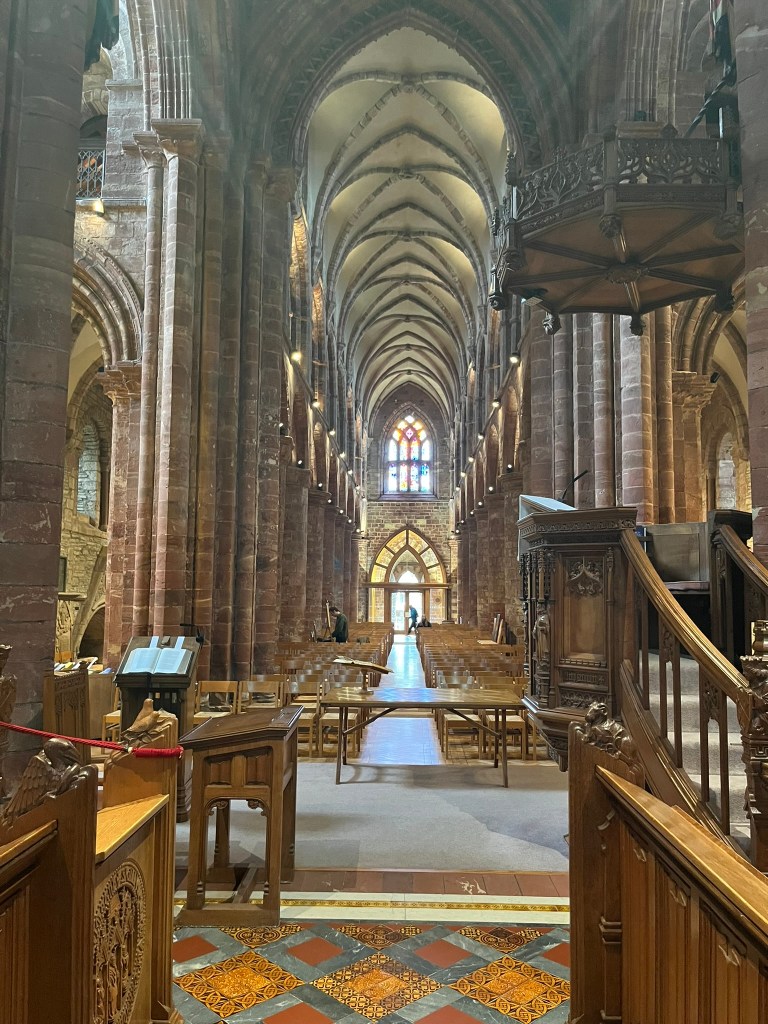
I caught the bus to Kirkwall to do my laundry. I think such domestic details are important to give readers an insight into the reality of the itinerant yachtsman’s lifestyle, and I dare say the blog will win even more awards as a result. The flaw in this plan was that it came on to rain rather hard, and I can only drink so much coffee to keep out of the rain while I was waiting, and most of Kirkwall is taken up with jewellery and knitwear shops for cruise passengers. Hence the inspired trip to the library. I did get a chance to see St Magnus’ Cathedral though, which come to think of it is the first proper church I’ve seen since the Isle of Man: considerably better than the standard rather grim little kirks and meeting houses that dot West Coast villages.
Half the passengers on the bus back were sailors stuck in the marina. We were all running out of things to do by now, and conversation revolved around the weather and the tide. Getting out of Stromness is even harder than getting in, which is safe to do for the full six hours that the tide is with you. You can only go out safely through Hoy Sound at low water, i.e. once every twelve hours. Low Water on Thursday was at 1240, almost exactly when the wind was forecast to moderate. The others were all keen to go but I was a bit doubtful – there would be lots of swell left from the gales, and even at slack tide you had to thread your way between some nasty rocks on one side and what’s called around here a Roost, a patch of breaking waves caused by tide turbulence. Moreover, the chances of the wind actually doing what it was told to do were, in my experience, pretty slim, so I resigned myself to the fifth day and booked the early ferry to Hoy so I could avoid harbour rot by hiking around the cliffs.
I woke early and glanced at the forecast to make myself feel smug at my choice. You guessed of course: it had changed. 15 knots. Even with a swell that was doable, and I wanted to head north. I made another snap decision, changed from walking to sailing clothes and ran around the Co-op stocking up. The cheery French crews were already heading out into what the rest of us agreed was surely a maelstrom as it was still blowing hard, but they looked like the kind of hardy souls who get wet for fun (see Spot the French). Then – disaster. The others had changed their minds, and started muttering about the swell the way I had yesterday. But I’d canned my walk, done the shopping and put my seaboots on. I felt committed. And it would be 15 knots soon! I was going. “Good luck”, said Eddie and Matthew, “drop us a text to let us know how it was. In fact we’ll walk round and watch you.”
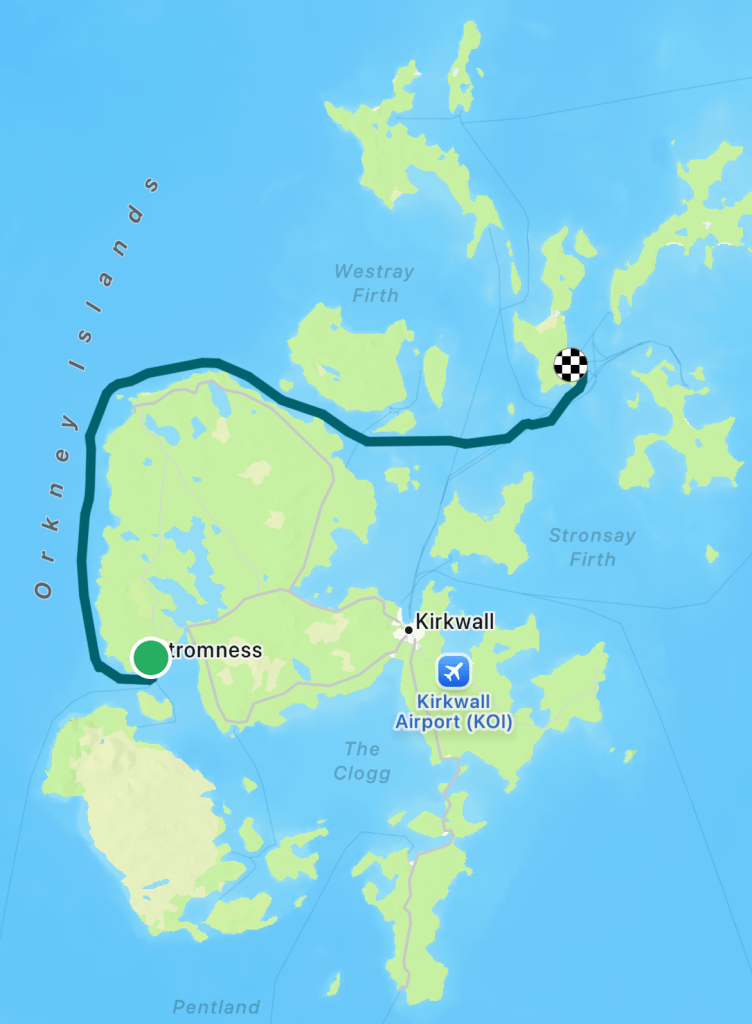
1240 came and I took a deep breath. As soon as I let go the lines it started lashing down with rain, and the wind piped up again. Just a shower, I thought. No, out of the harbour and round the corner it was blowing 20 knots with steady rain, but I could see a bit of water that wasn’t completely white with breaking waves, and headed for it. The wind went up to 24 knots but I was going to see this through now. Full throttle and first use of lifeline this year as we climbed up some very nasty waves and bashed into their accomplices waiting behind. But I missed the rocks and the roost quite easily, and twenty minutes later had some reefed sails up and was free at last, heading north. The sun came out and I flew up the coast past Skara Brae and Marwick Head and the Brough of Birsay almost as fast as I had cycled to them, on account of only having to go up and down waves not hills.
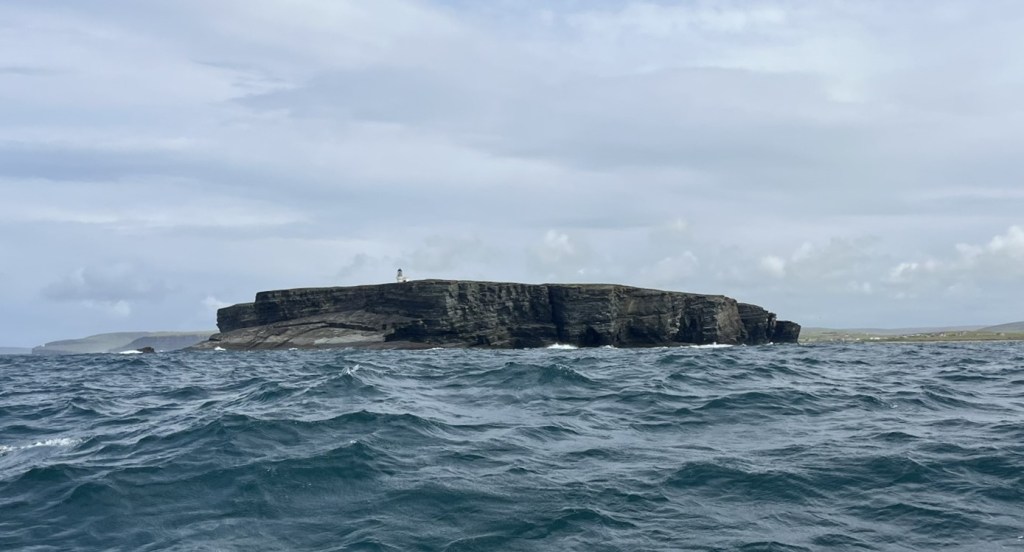
The wind did eventually moderate a bit but never to the promised 15 knots, but now I didn’t mind as it was a fast downwind sail, threading through a range of rocks and islands to Eday, one of the more northern islands of Orkney (apparently Orkney is always singular, as if it was a country, which is how it likes to think of itself). I didn’t have the chance now to stop and visit them since I had spotted a two day weather window when it would be good to get north to Shetland, but I was happy enough to be on the move again, and by 1830 had picked up a mooring buoy off the island’s main ‘village’ (I counted four houses) with the odd name of Braccaland, downwind of some authentic Orkney cowsheds and surrounded by authentic Orkney windfarms. I didn’t care: I was no longer in Stromness marina and it felt good to have escaped.
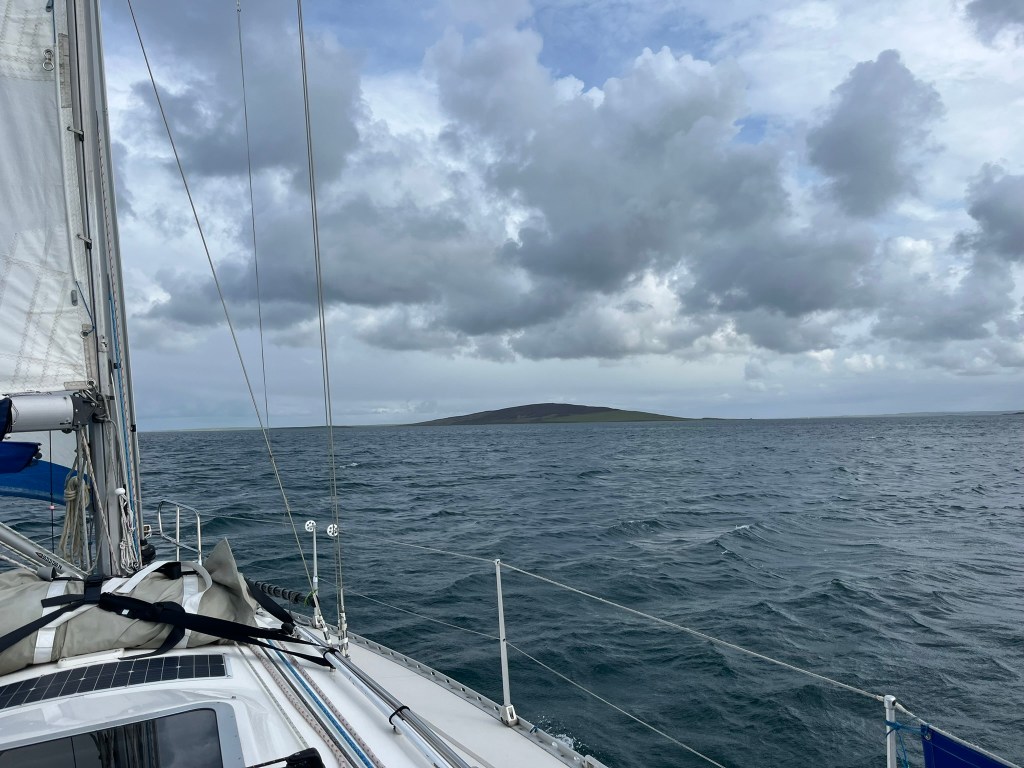
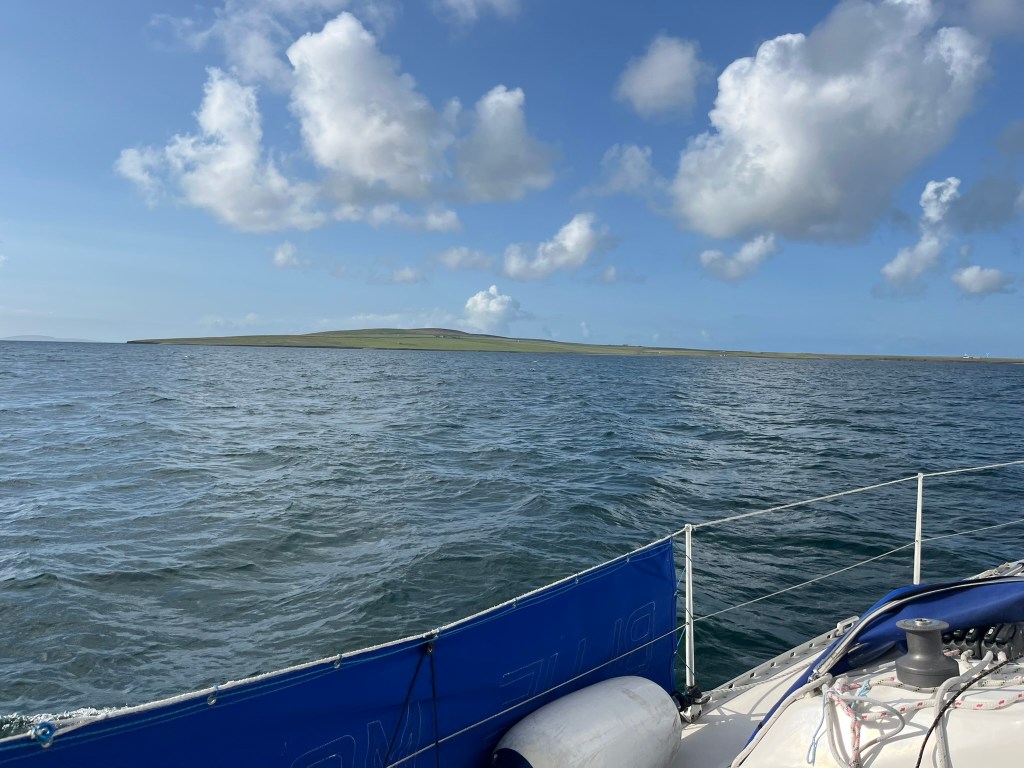
After the West Coast, Orkney is amazingly flat. Most of the islands look completely identical, like scotch pancakes dropped into the sea. This one is Rousay, I think.



 Blue Moon's trip around the UK
Leave a reply to phwatisyernam Cancel reply