I know I am old and grumpy, and I know that the AI-powered future is already leaving me behind, but I do find my occasional brushes with the technology rather disappointing. Take for instance this excerpt from Google:
Is Stranraer worth visiting?
AI Overview
Yes, Stranraer is worth visiting for its picturesque coastal location, historical sites, and access to the stunning natural landscapes of the Rhins of Galloway. It offers a blend of coastal charm, history, and outdoor adventures, making it a good choice for those looking to explore south-west Scotland.
Thank goodness I hadn’t booked a holiday on the strength of it.
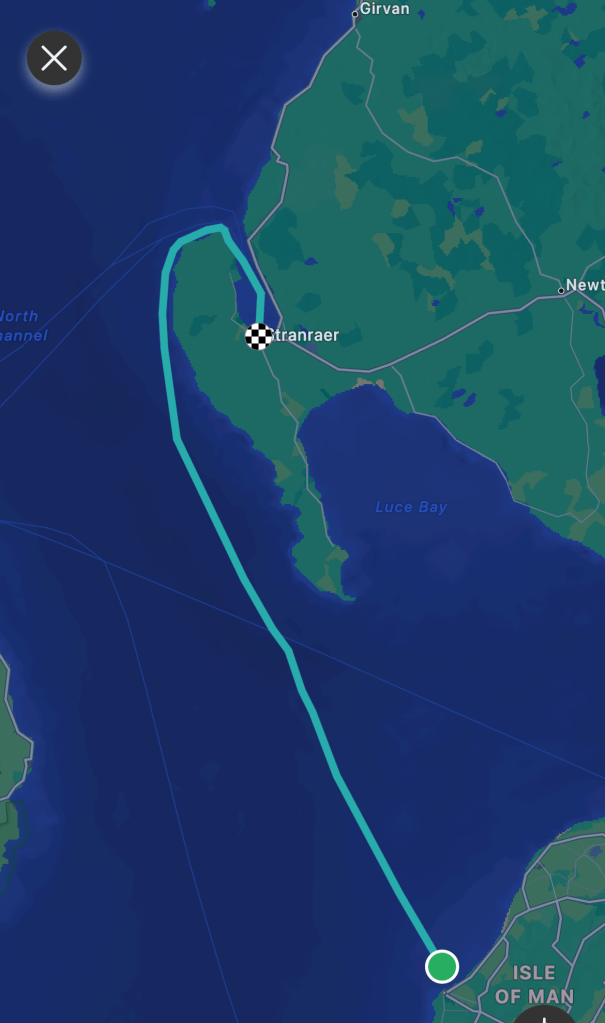
Pretty much the only significant stretch of West Coast I have missed out on in the last two years is the stretch from the Mull of Galloway up to the beginning of the Clyde – variously bits of Galloway and most of Ayrshire – and one of the benefits of a third year was to be the chance to see a bit of this coast, and to pop into some places that sounded significant because I had heard of them: places like Stranraer, Girvan, Ayr, Irvine and so on. So, heading north from Peel, rather than making a beeline for the very pleasant Portpatrick, I planned to sail on past, round the corner into Loch Ryan to have a look at what was described (by pilot books, not idiots in California with bots and algorithms) as a very pleasant loch (presumably Scotland’s most southerly) and to visit the second-largest town in Dumfries and Galloway: Stranraer. Surely such an evocative and important town would have heaps of interesting quirks with which to fill the pages of any multi-award-winning blog.
The fact that in order to get to Stranraer I had had to leave well before the Peel gate opened, thereby spoiling my Sunday evening and my topsides and fenders, had unfortunately increased the weight of expectation: as it turns out, to a weight which poor Stranraer’s shoulders were simply unable to bear.
In addition to the early start, it was a fairly miserable Monday morning. Steady drizzle followed by fog patches which meant that I saw precisely nothing of the Mull of Galloway or the coast until I was off Portpatrick, in spite of only being a couple of miles off it. There was a silver lining: there was a bit more wind than forecast, and for the first time it wasn’t directly behind me, so I managed to put up the assymetric spinnaker and try out my new, very flash, carbon bowsprit.
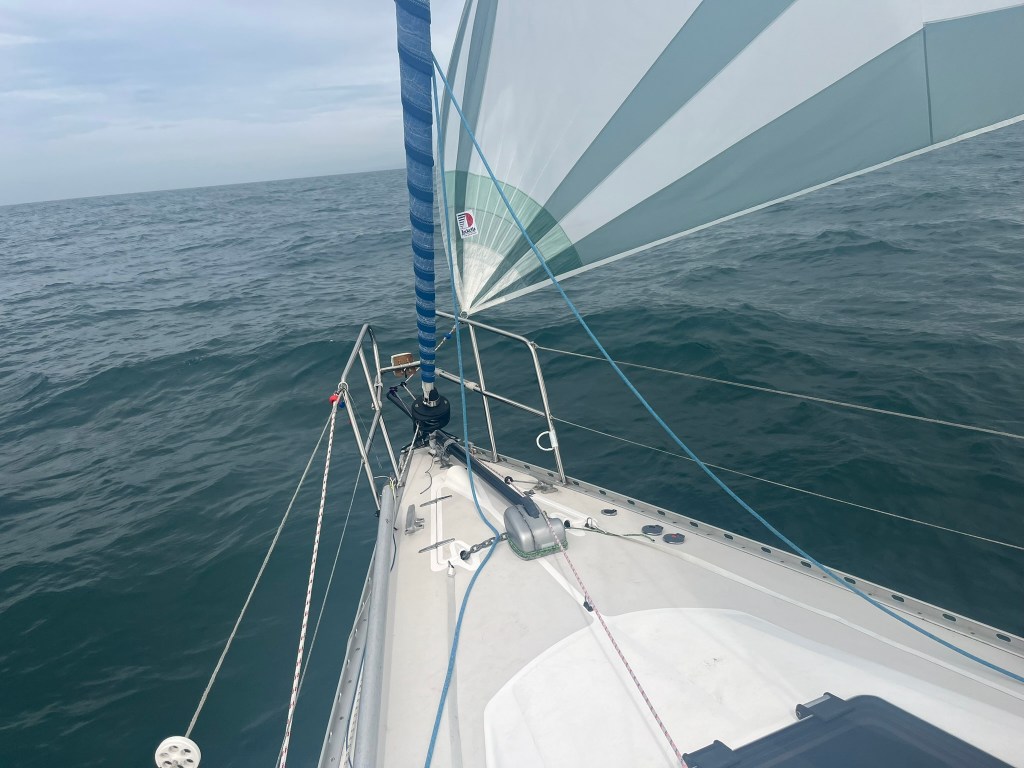
I’m very proud of this, having made it out of a broken windsurfer mast I found round the back of Wembley Sailing Club. It cost me precisely £63, which is around £2,137 less than if I’d bought it from a chandlery. It takes about five mintes longer to rig, but I reckon so far that’s around £427.40 a minute, so time really is money.
Finally the Galloway coast appeared out of the fog, the sun came out and – as so often happens when the sun comes out and you’re sailing – the wind died, so I ended up motoring around the top of the weirdly-named Rhins of Galloway into Loch Ryan.
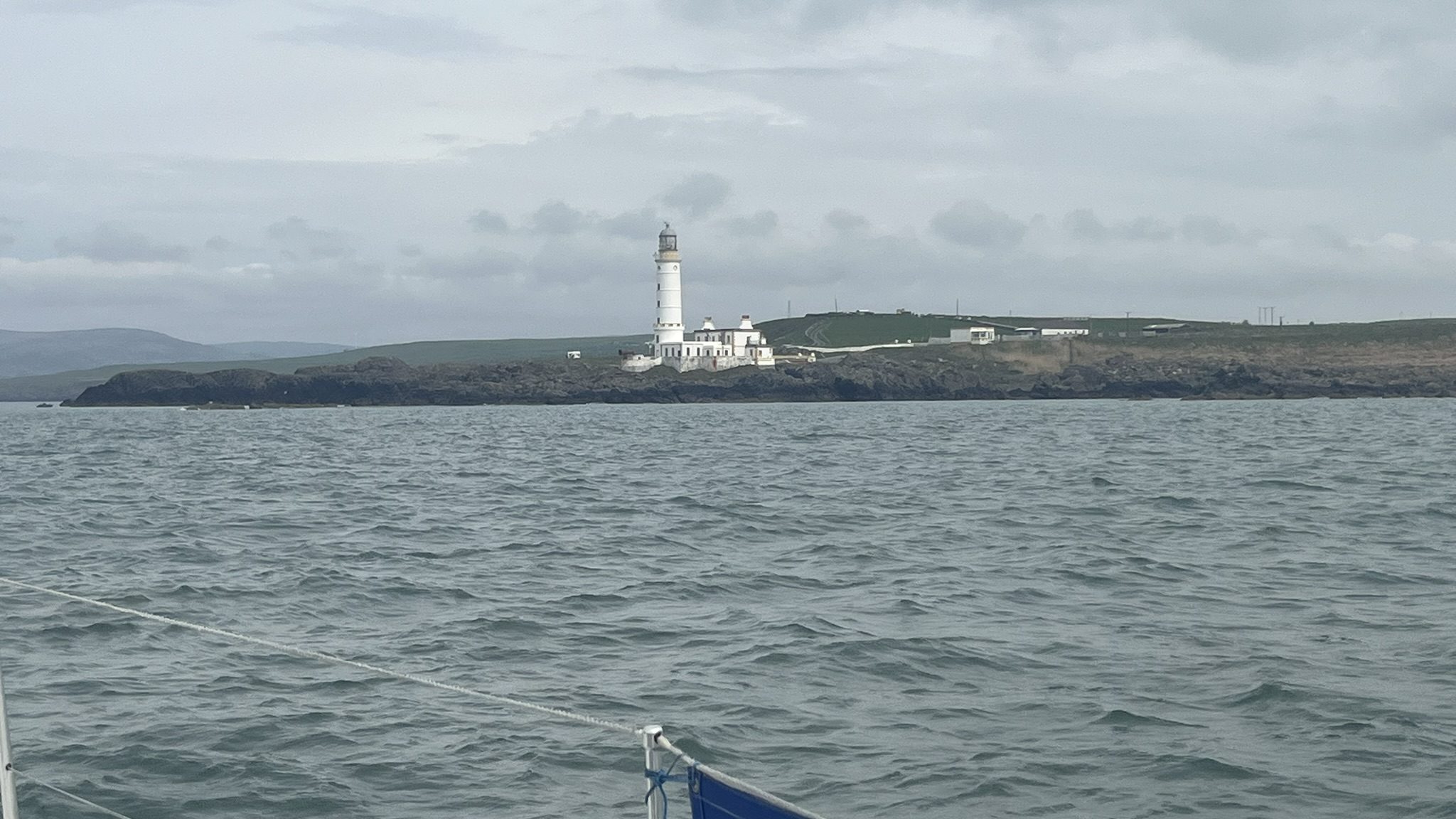
I had somehow assumed that all of Lowland Scotland was populated on similar levels to England: in other words, the towns would be big, the villages substantial and plenty of farms in between. We had once got lost driving to a Gold Cup in Troon and had accidentally driven through several small villages into a farmyard and out the other side with a Dragon on the back and caused quite a stir among the locals, so I had experience on the subject. This coast was different though: I strained through binoculars and could rarely see more than two houses at once, even without the fog. There was quite a nice lighthouse though, all on its own…
…and, to confirm my expectation of a large, bustling ferry port like Dover, as soon as I rounded the corner the first of a troop of ferries appeared.
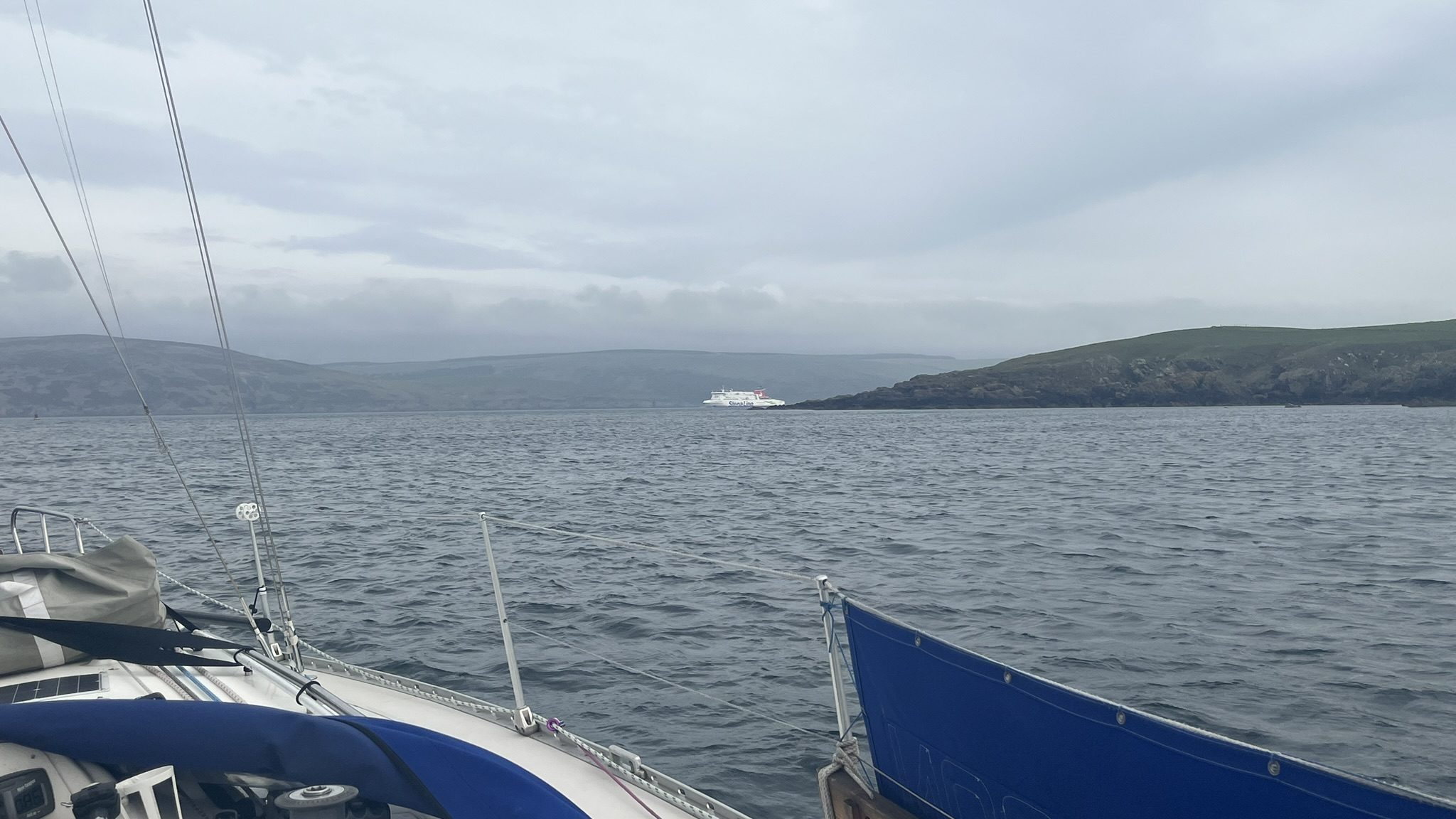
Loch Ryan is an interesting ferry hunting ground, or more accurately killing field. I was dimly aware that although people still refer to the ‘Stranraer-Larne Ferry’ the ferries actually left from out of town: it turns out that Stena and P&O have each built a ghastly modern terminal on the otherwise rather pretty side of the loch, in the middle of nowhere, which has, in conjunction with Stena’s beastliness to Holyhead and P&O’s beastliness to all its employees, convinced me to park the planet and fly to Europe from now on. Perhaps picking up on my thoughts, as soon as I entered the loch the next ferry out (P&O, bastards) insisted on firing up its afterburners straight off the jetty to try and force me onto the rocks opposite, in spite of the loch being a mile wide and full of deep water. Just to rub it in, he and every other departing ferry made an announcement over the VHF ‘I am departing and will be using the West side of the Loch’. What, all of it? Having desecrated the East side with your terminals and car parks?
At least I had the joys of Straraer to look forward to. Unfortunately, as I got closer, these looked to be rather limited, and the closer I got, the more so. First, the smell. I know I am a townie but I did grow up around farms, and I know that Galloway and Ayrshire are famous for cows, and I know what smell cows make. This, however, was on a level to make James Herriot blanch. It blasted down the loch towards me in waves, and continued to do so all evening and night and into the next morning. I once spent a Varsity Match at Aldeburgh, along with at least two regular guests featuring in the blog, staying in a house between three pig farms and, just as the owners promised, after a night we had forgotten all about the pigs, unlike our team-mates. Stranraer is not Aldeburgh: I am convinced I can still smell the cows down below two days later.
Next: the harbour, and here I have to pick my words carefully because I really want to be a good tourist. I knew that when the ferries left the council had built a set of yacht pontoons to attract visitors, and they come with splendid shore facilities, a cheery website that only takes about half an hour to book a berth on, and easy access to the delights of the town. Unfortunately, they are opposite the remains of the ferry terminal and the evil corporate bastard ferry companies have simply walked away and left it.
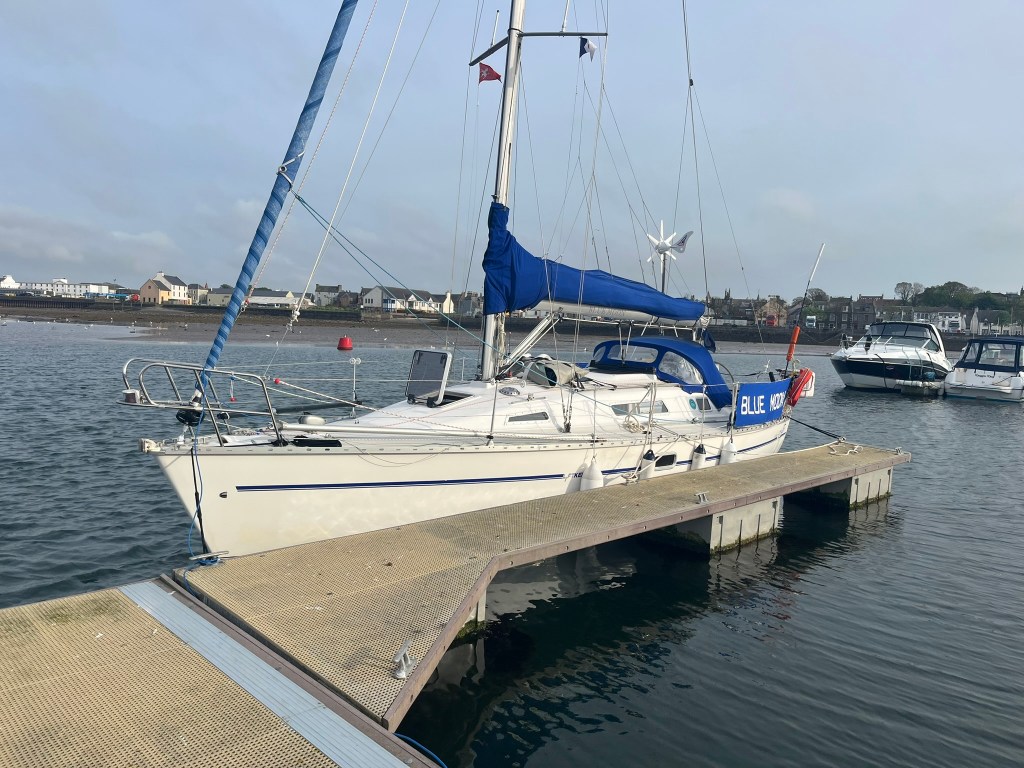
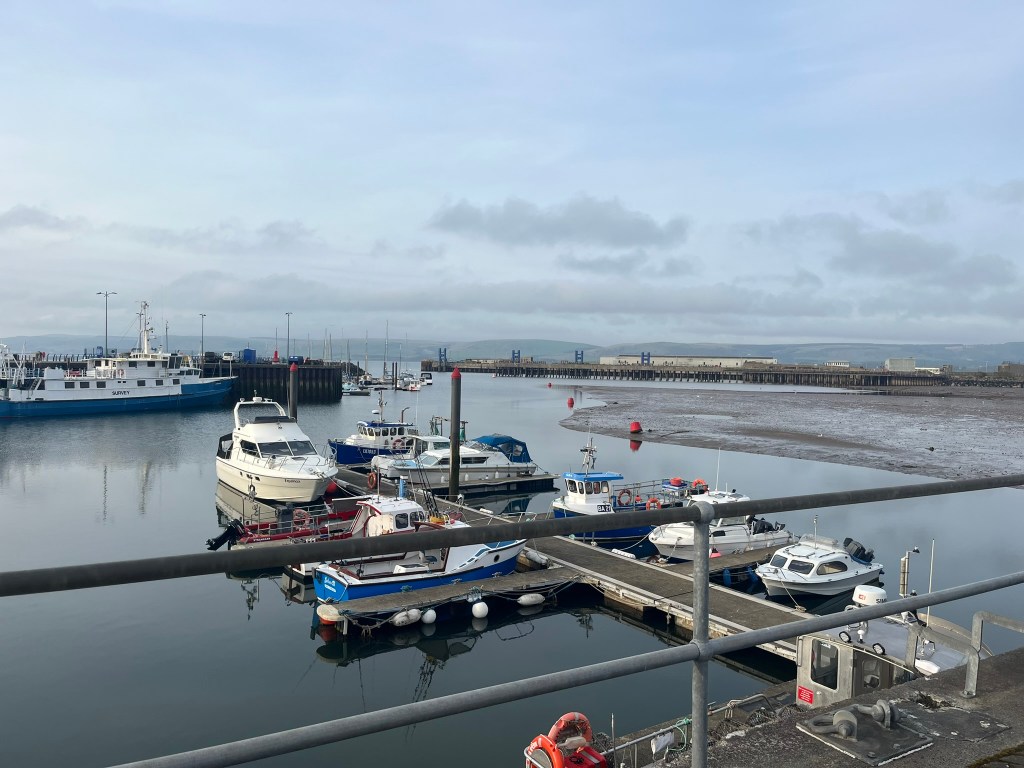
They have walked away and left Stranraer too. The vast terminal complex on the edge of town looked like something out of The Last of Us, and about as welcoming. I had a little explore and it was, on the one hand, a fascinating sociological/economic case study on what happens when you remove the sole purpose of a town; on the other, I’m afraid it was just deeply depressing. It made Holyhead look like St Albans, or Milan, as Holyhead still has ferries and a purpose. Stranraer was tiny (turns out Dumfries and Galloway’s second largest town has all of 10,000 inhabitants), completely deserted and more of the shops and pubs were boarded up even than in Whitehaven. It was also eerily silent until I rounded a corner and came across a marauding gang of teenage girls who suddenly started a huge, incredibly loud and incredibly vulgar shouting match with a woman and her two much youger children, who seemed louder and more vulgar than the girls. Shocked, I turned around and walked back but could hear the screams even on the boat. I didn’t dare return in case there was actual blood on the pavement.
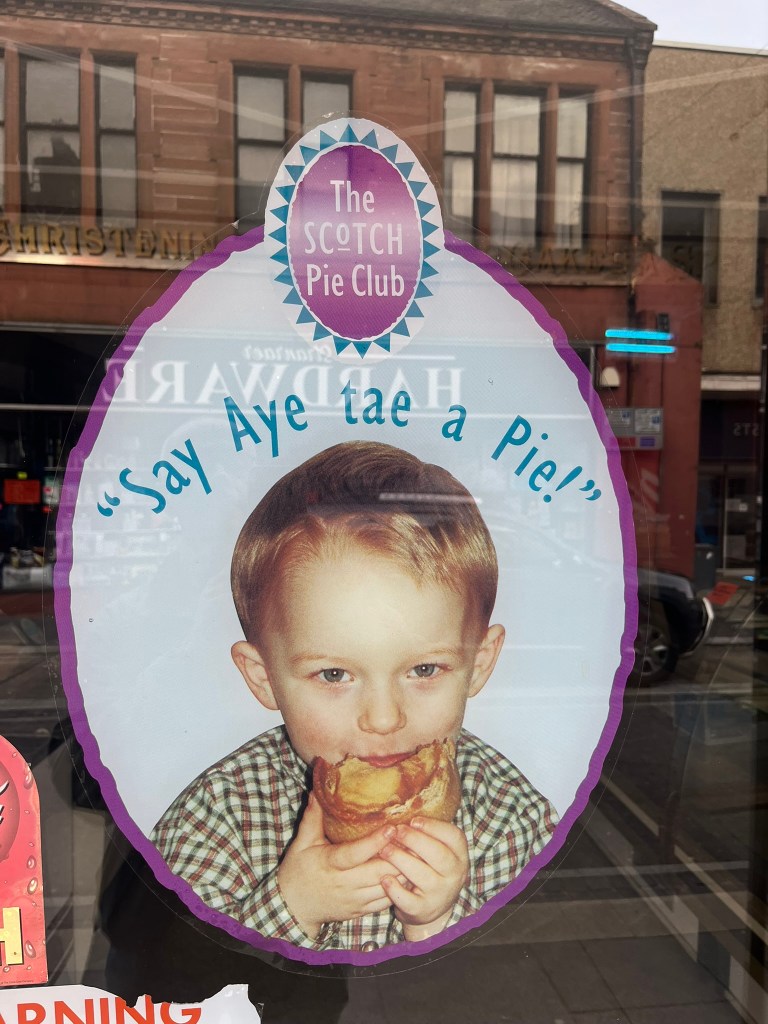
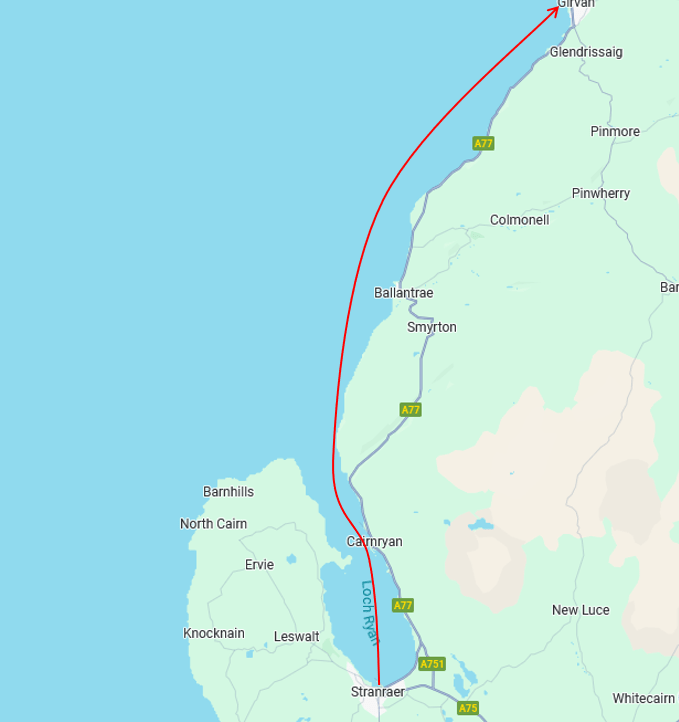
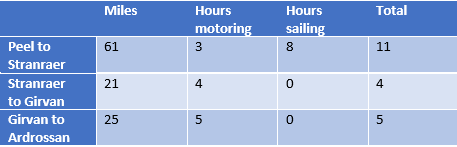
I still had Girvan to look forward to, though. This just felt like a historic town, and I needed a town as my sleeping bag had fallen apart and it was freezing cold at night, so a trip to the shops was in order. I was away from the pontoons rather smartly the next morning, as you can imagine, dodged no less than four ferries in an hour, and set off up the coast. The wind stayed dead behind but never went above six knots so the engine got a good workout and I was in Girvan by lunchtime, where suddenly it was 20 degrees and everyone was wearing T-shirts. As you may recall from my previous visit to this part of the world, this is not always a recommendation.
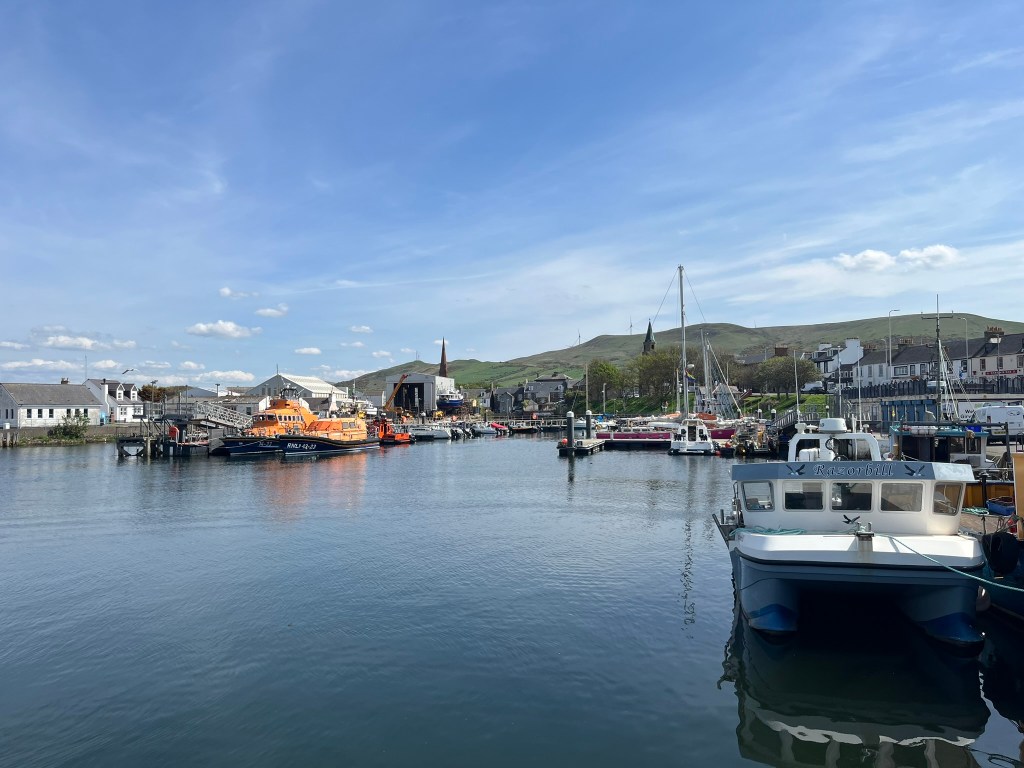
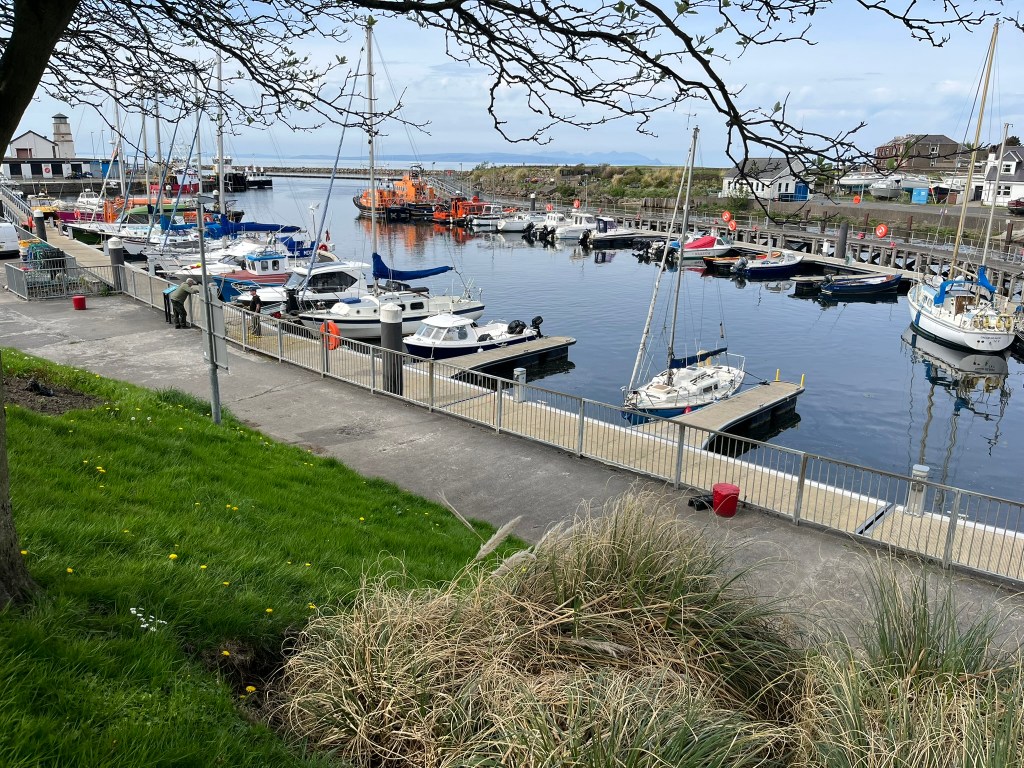
Girvan harbour is small, shallow but very welcoming. It didn’t smell, except a bit of fish, which is par for the course in a proper harbour, and the cheery Harbourmaster was waiting on the pontoon to take my lines along with his friend Billy, who I later discovered had just bought the boat next door. Billy was a native of Girvan, I could tell from his welcoming remarks. “Wa hae yer bethern ye caen durch a Genoa fairlead d’ye no?’ was more or less the gist of it. I had to adopt my Londoner-in-Lowlands approach of smiling, nodding, and hoping that the answer involved the weather, which in this case it clearly didn’t as he was pointing at the rather sad thing wrapped around his forestay. Turns out he’d bought the boat having gone on a Coastal Skipper course for a week, which was the sum total of his sailing experience. He clearly had a thousand questions to ask, but restricted himself to the saggy genoa, which I could help with by finding the halyard and winding it up the forestay about three feet from the position it had been in when he bought it, and the glow plug on his engine, which I politely declined to engage with. The genoa did the trick though, he’d been wondering why his was baggy when everyone else’s was tight and smartly rolled, so I left him beaming and headed into town to find a camping shop, or even Sports Direct.
Girvan, it turns out, is a town in name only. Perfectly pleasant, it has an Asda, a Greggs, some craft shops and a sports shop from the 1970s in a town where Green Flash are probably not going to be cool again, ever. So I caught the train to Ayr instead, which is – finally – a recognisable town. Indeed, I assume, a County Town since all of Ayrshire seemed to be there on a hot and sunny afternoon packing out shops that would make any County Town proud: M&S! Primark! Card Factory! Sports Direct! and to my delight the complete Blacks/Go Outdoors/Mountain Warehouse/Regatta/Trespass combo. This is a market where mergers/realignments/bankruptcy must be just around the corner, surely? Or do we Brits have such a passion for drip-dry semi-waterpoof clothing and walking boots that only last six months?
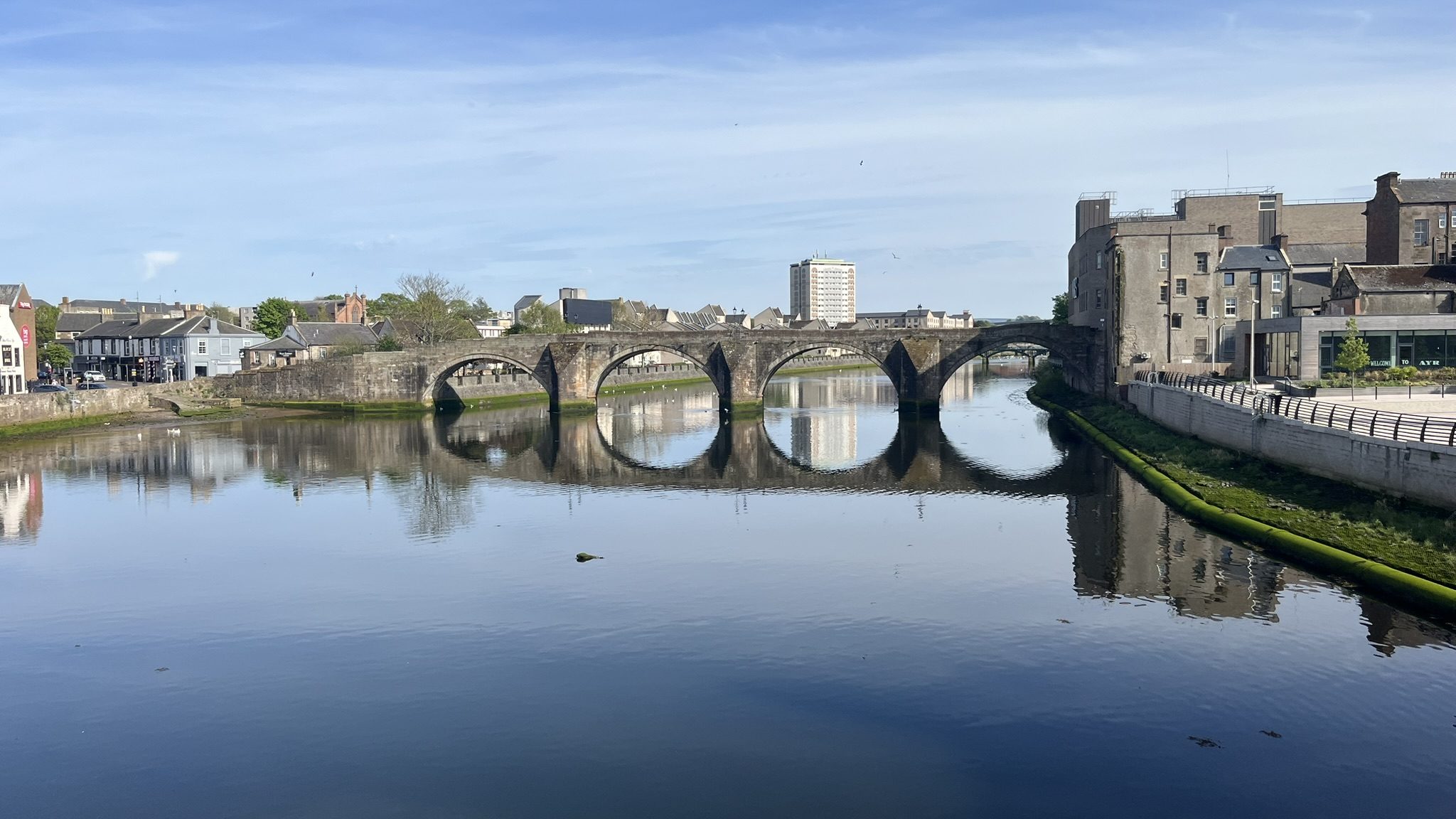
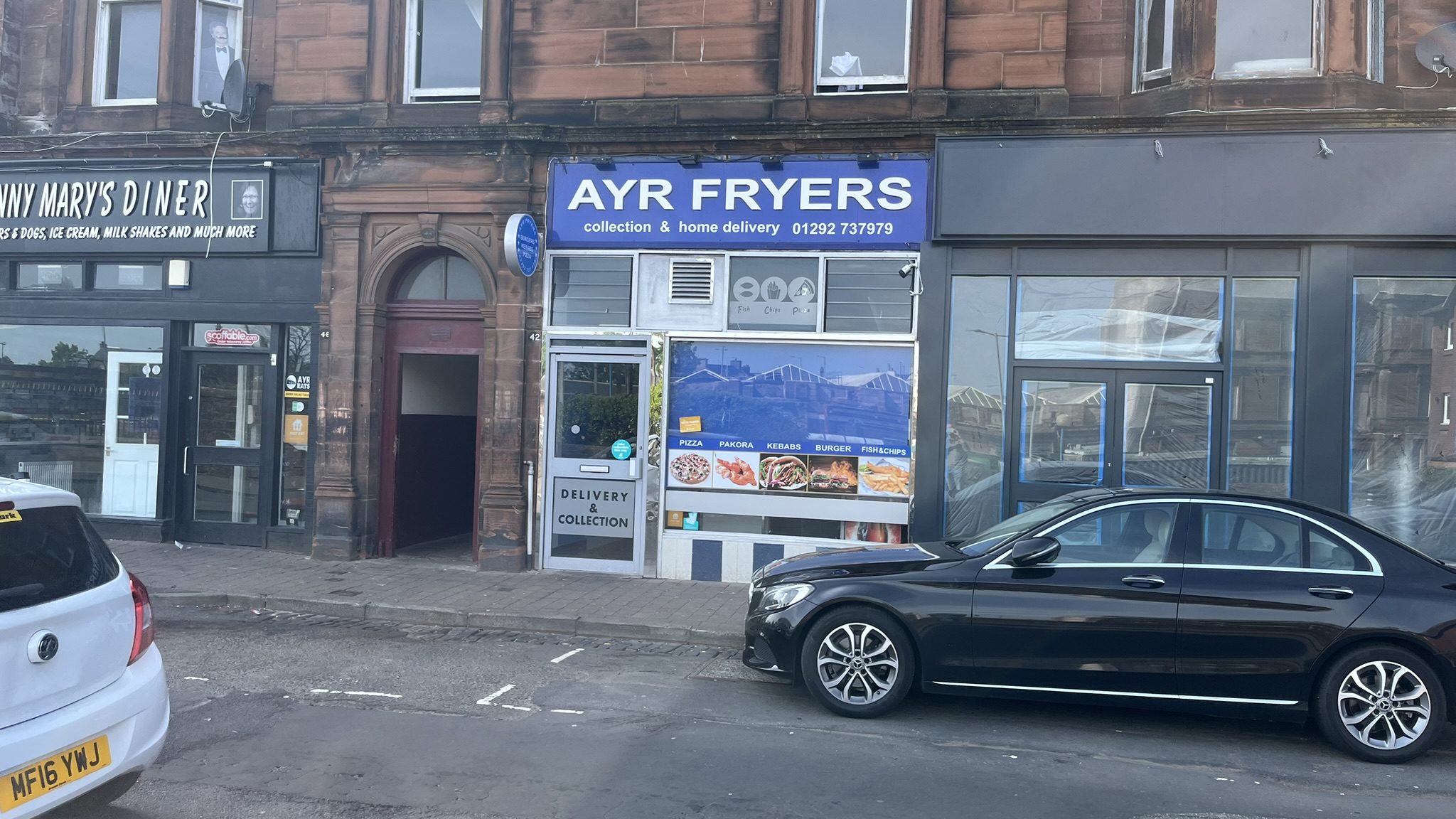
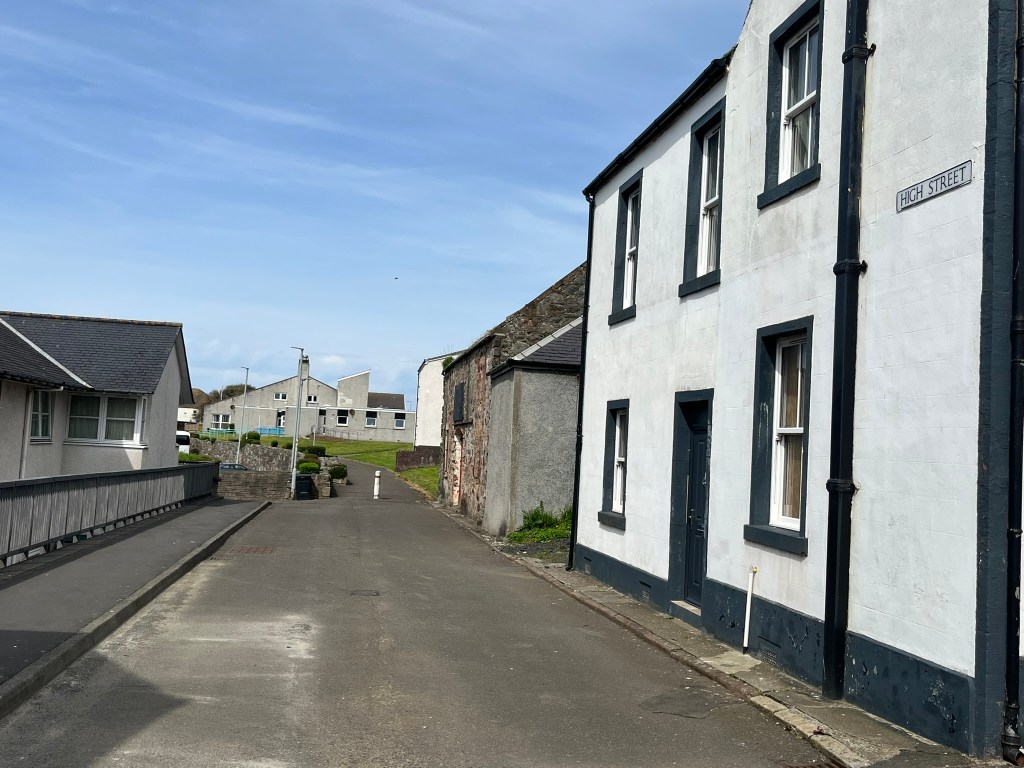
Sleeping bag replaced, and obligatory surplus-to-requirements drip-dry T-shirt acquired, it was a 20-minute train journey back to Girvan. Enough to notice that South Ayrshire and Galloway are sufficiently under-populated that they could only find one town in the 30 miles between Girvan and Stranraer to merit a railway station. And, to remind me that I am not in Glasgow yet, on arrival in the Girvan rush-hour (two commuters from Ayr got off the train with me), I found that the main street was jammed not by cars but by tractors. No-one was batting an eyelid.
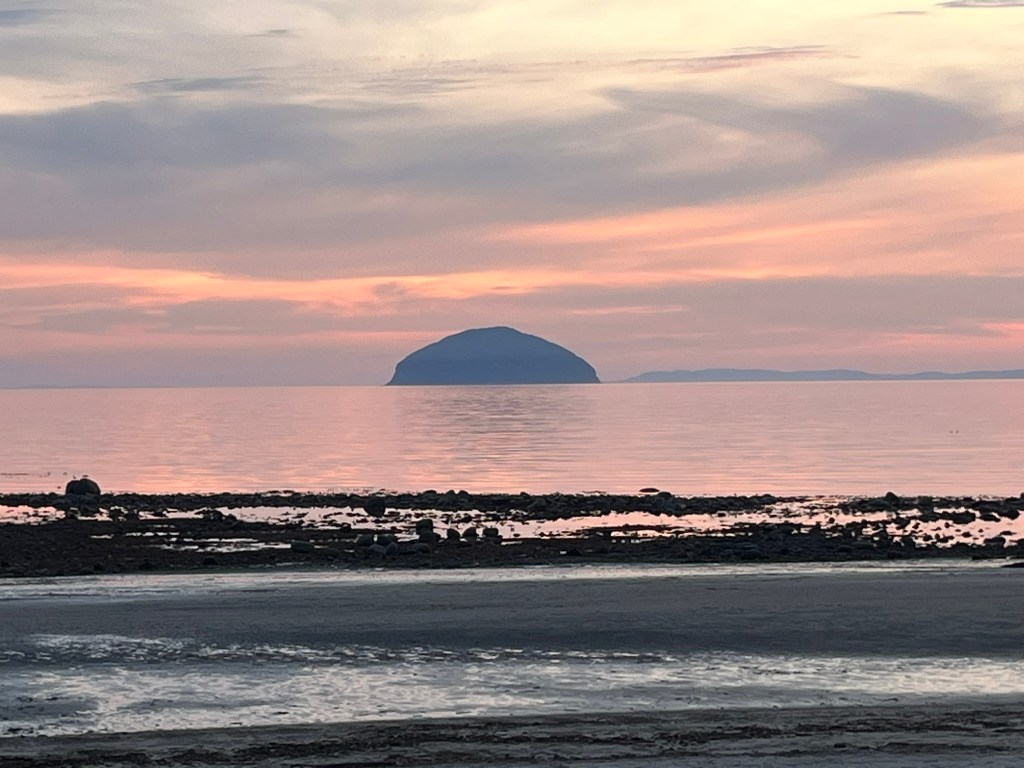
Girvan does have one feature that other, more towny, towns don’t have and that is Ailsa Craig. It’s the weirdest shaped island and all the curling stones in Scotland come from its quarry. All of them. I’ve seen it in the distance a great deal, but in Girvan you can sit on a bench on the beach and look at it all evening, which I did.
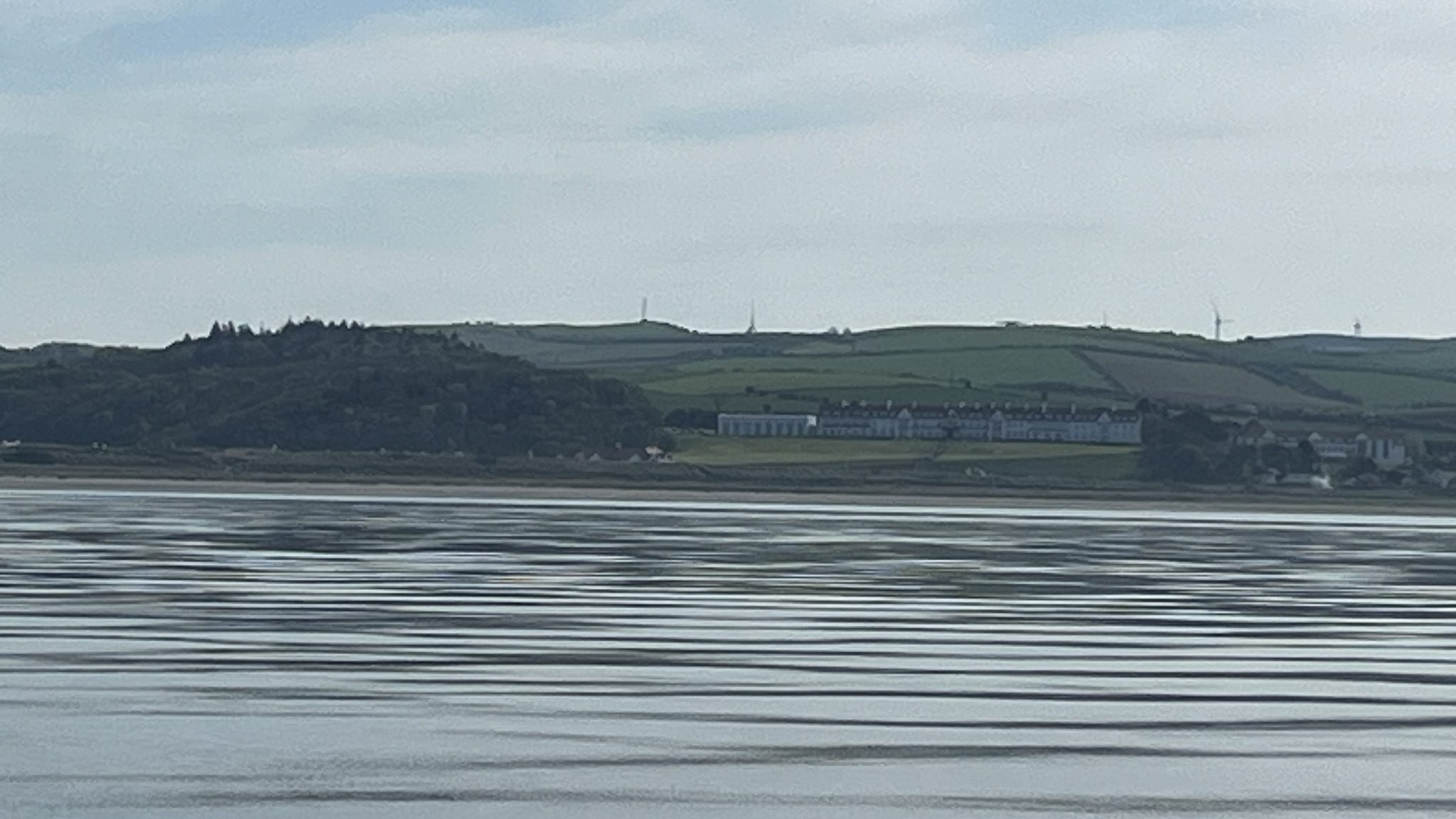
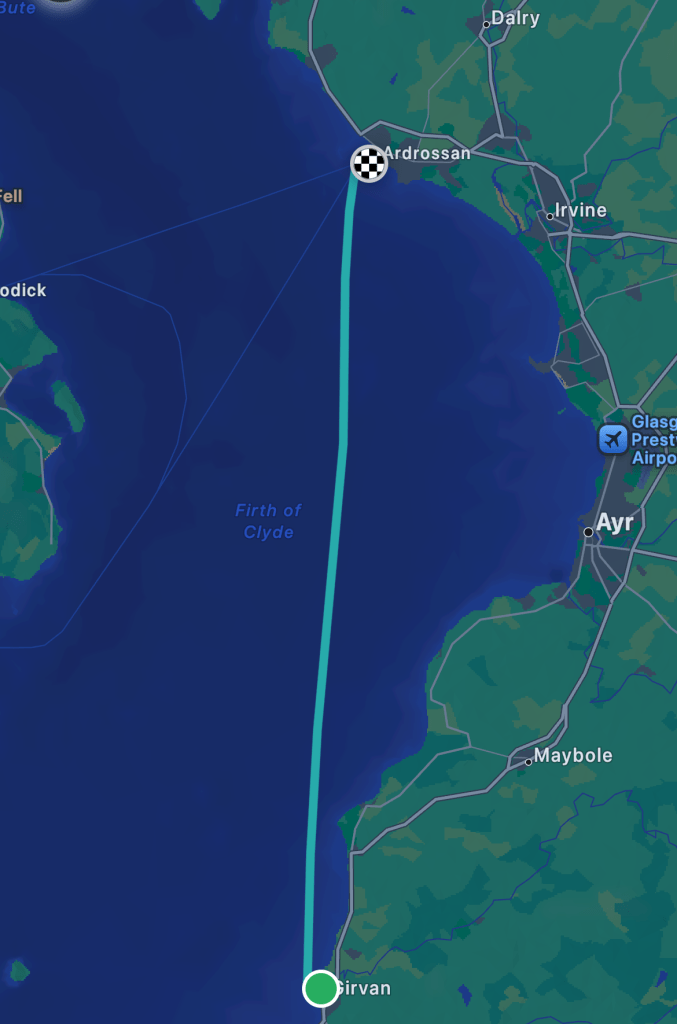
And so to Ardrossan. Another morning of motoring, today in a completely flat calm past a largely unremarkable and now quite flat coastline. I spotted Ayr in the distance, and Irvine, and was quite glad that neither town welcomes yachts, and then Troon, which I have sailed out of before having found the way from the farmyard in Galloway and don’t need to go again. The higlight, such as it was, was motoring past Turnberry just as the team from Greenpeace were doing their thing:

Readers will, of course, know that Ardrossan is not going to stage a remarkable injury-time turnaround in my perceptions of Ayrshire, and indeed nothing has changed since my last visit (Karma and calmer. And Ardrossan). Unfortunately it is almost as hot as then, so the Ardrossan Tan is on full display, and what with it not even being May yet, not a ray of sunshine has touched these lily-white torsos for at least nine months. Quite incredibly, and I promise I am not making this up in order to win more awards, the very first local I walked past on leaving the marina had the obligatory Ardrossan boombox which was playing Born Slippy, which I am sure all blog-reading yachtsmen will immediately recognise as the title tune from Trainspotting.
“Why am I here?” you may well ask, and so do I. The answer is that my first guest is arriving tomorrow and this is the only marina I know of where the train station is between the marina and the boatyard. The last time this guest came on a boat with me we ended up stuck in the middle of one of those berths they have in the Med with stern lines running off the dock. Ours were not just wrapped around our propellor, they were welded to it as the lead lining which makes them sink seemed to have melted as I desperately engaged full throttle to avoid the ridiculously swanky yachts on either side.
Eager readers will be licking their lips in anticipation of a week of nautical mishaps, but I will try and disappoint by paying more attention to my skippering this time. Consequently it may be a while before I have time to write the next blog post, or perhaps recover from some shame or other.


 Blue Moon's trip around the UK
Leave a reply to tokarenbrown Cancel reply