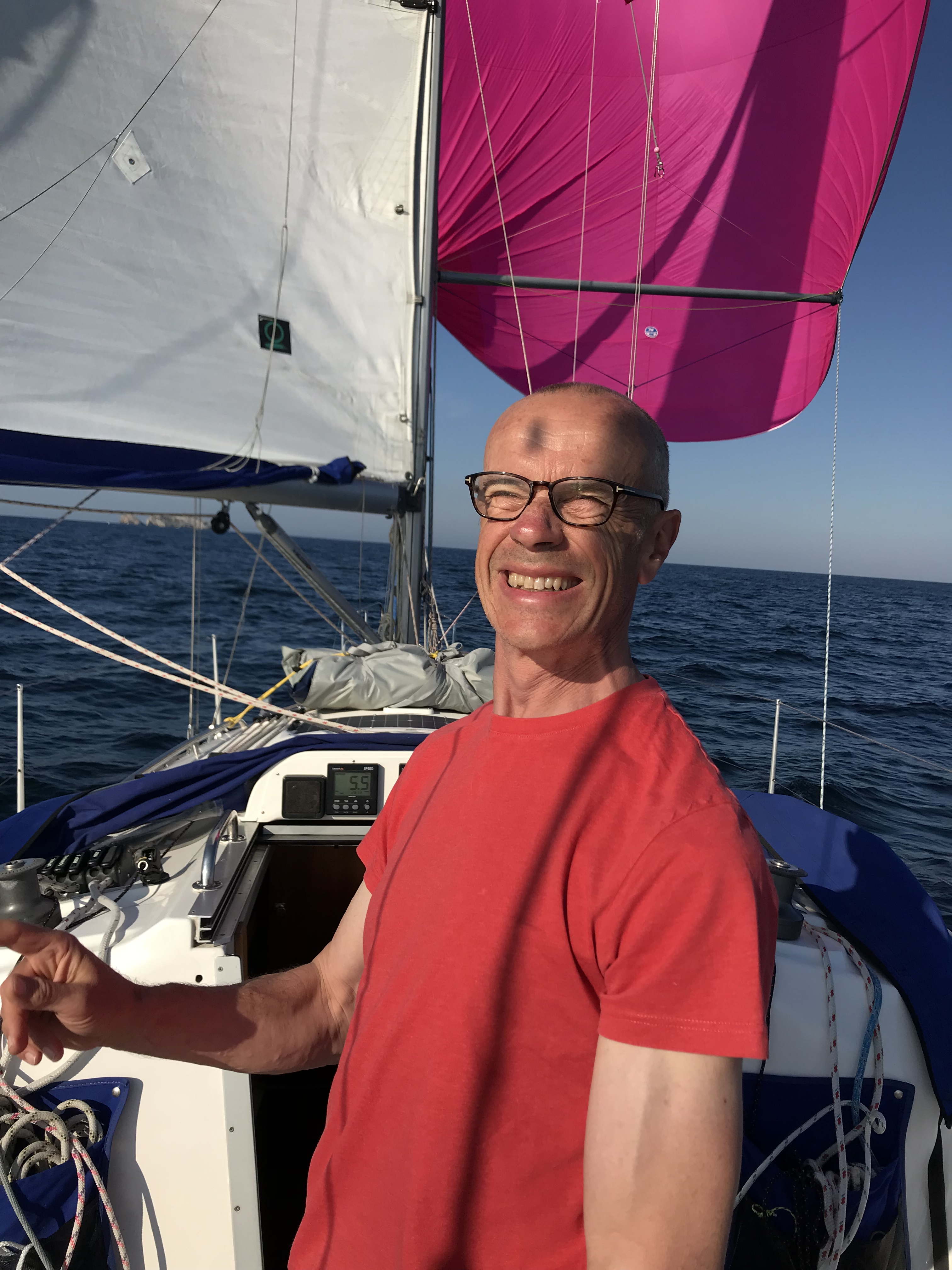
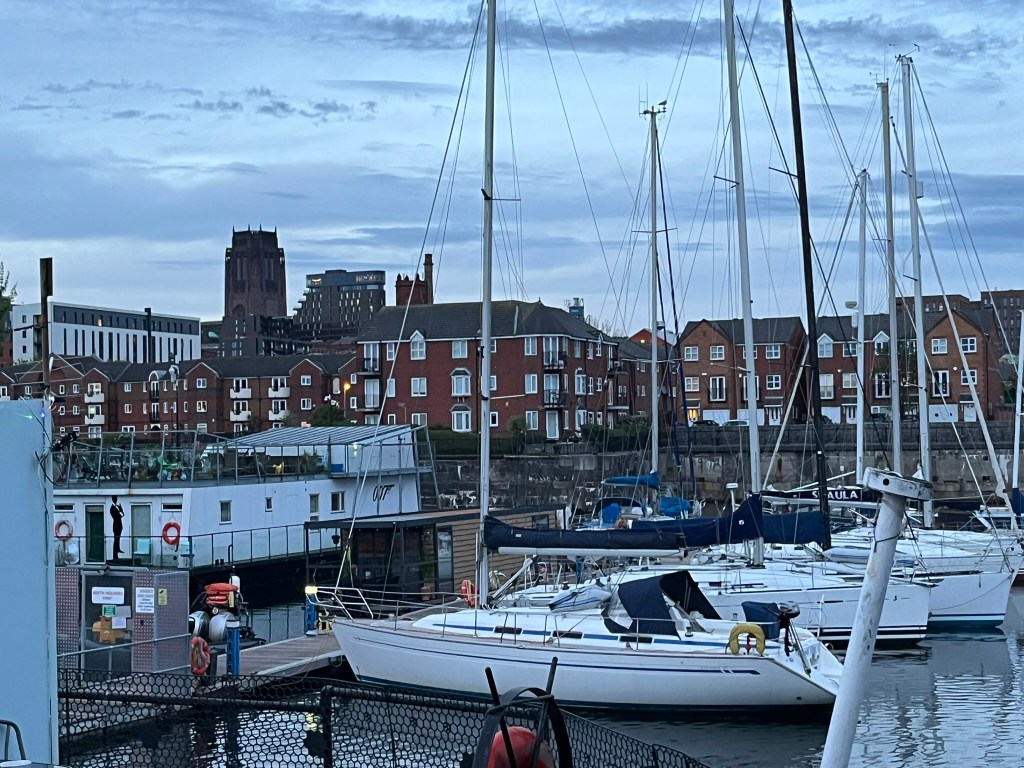
Tomorrow is a sad day. After two winters of commuting by car and train to Liverpool, I am leaving for the last time – by boat of course. I am trying to think of reasons to come back and visit because I really like the place, but I am sure staying in a hotel won’t be as much fun as staying on your boat, and it might cost a bit more.
It certainly won’t be as friendly: Liverpool Marina is more of a club than a marina, and several of my neighbours heard I was leaving and came round to say goodbye. Quite a few people keep their boats here in the winter and sail up to Scotland or over to Ireland for the summer, so there are lots of well-intentioned promises to look each other up on the AIS if we’re on the same Hebridee. The staff don’t just know your name and say hello, they often stop and chat which, since they are all cheerful and loquacious Liverpudlians, can seriously slow down any boat work.
Not a great deal has happened over the winter, which in boat-owning circles is generally good news: I wouldn’t want to be telling you about the hurricane that mysteriously invaded the city and sank all the yachts, and since it’s late and I have an early start tomorrow I will restrict myself to a few observations on why Liverpool is the best place to keep a boat.
One: there is a boatyard next door in amongst the harbourside flats which is, improbably, run by a couple of ex-International 14 sailors from West Kirby. In spite of their reckless dinghy racing youths they seem to work on all manner of proper Mersey working boats and wind farm supports, and they have real coffee on brew all the time, so when you’ve whiled away the morning nattering to the people at the marina you can wander down to Bluepoint, stand in the warm, drink their coffee and rub shoulders with tug boat captains and river pilots.
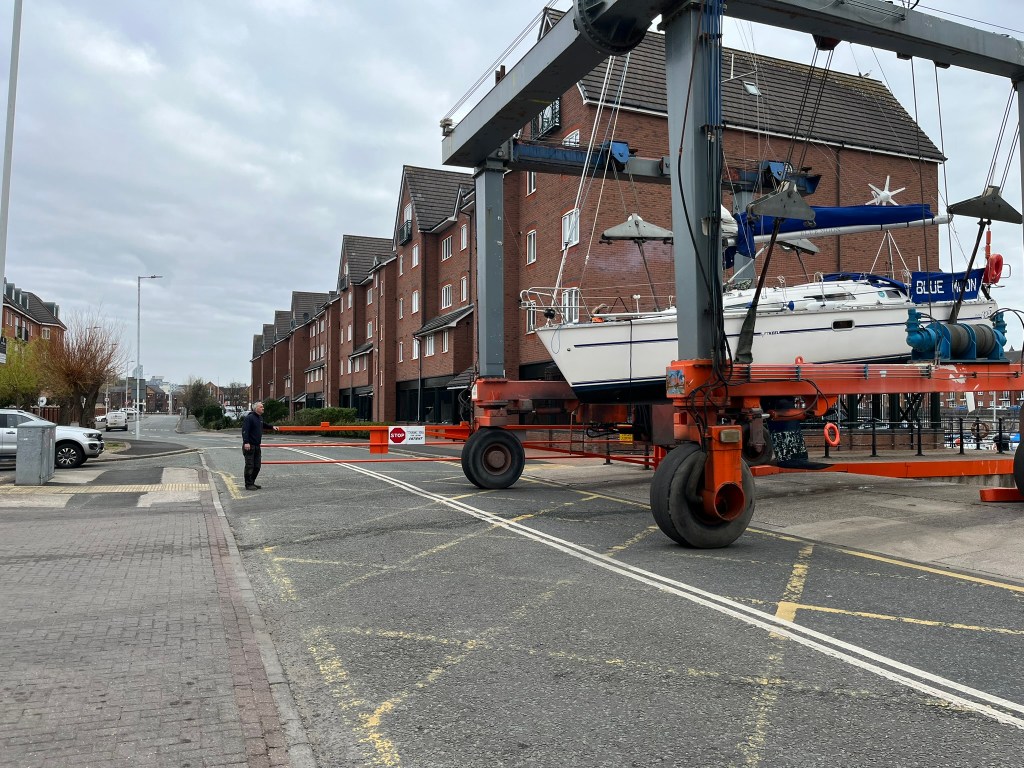
Two: quite apart from the cathedral view, it is the only marina I have visited that has an award-winning Italian restaurant/delicatessen and coffee roaster next door. When the wind is in the south the smell is as good as the view.
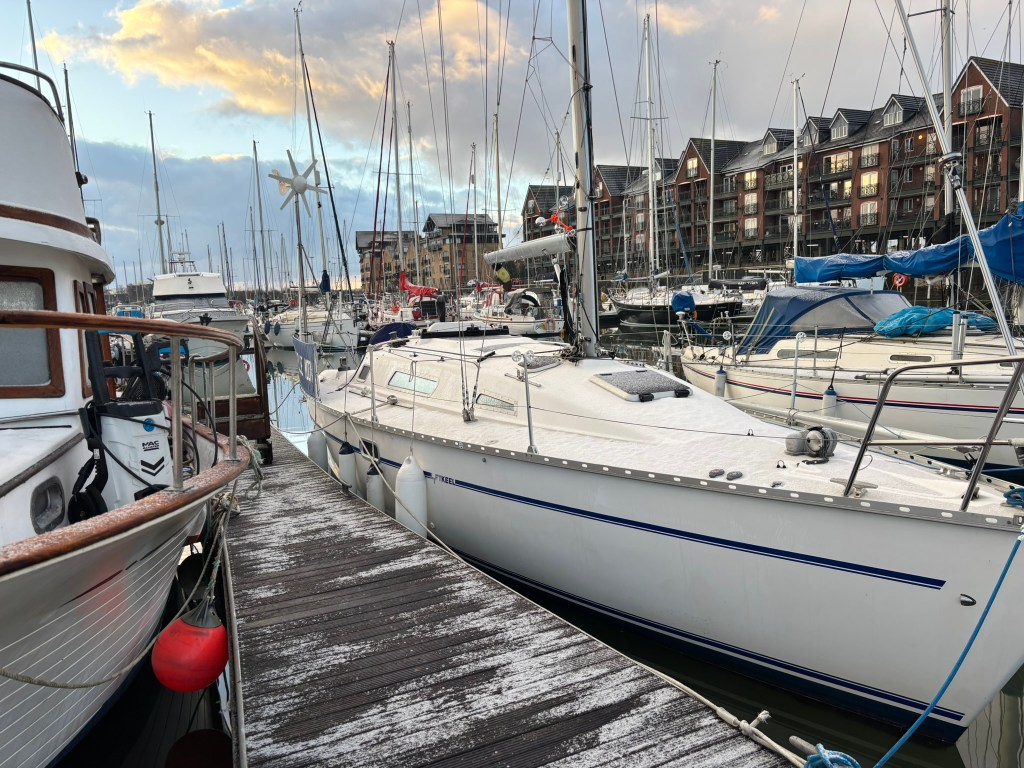
Three: an advantage of being just on the edge of the city is that when you arrive (by train) at 8pm on a January evening to spend the night on your boat only to find that it is -4 degrees and the hatches are frozen shut, rather than freezing to death in the cockpit you can walk five minutes to the Campanile hotel where they have central heating and charge £36 for a room with a river view.
Four: rather a niche benefit this. If, in the process of servicing your keel lifting ram you happen to discover that one of the hydraulic pipes has worn through on the inside of the keelbox, rather than bodging it up and probably destroying the keel later in the summer, you can drive up the road to a place where they will make you a new one in under ten minutes. And you can admire the brand new Everton stadium up close while you’re waiting.
Five: just when you’re getting wet, cold and tired doing some tedious piece of boat maintenance and it’s getting dark, you can be cheered up by seeing crews from the rowing club next door who train by rowing up and down the same piece of dock. They are wetter and colder than you, and you can pat yourself on the back for giving the sport up a very long time ago.
Oh, did I forget to mention it? One or two readers may not yet have heard about the unparalleled success the blog has enjoyed over the winter, winning not one but two prestigious awards! The first, the world-famous Turner Prize, is sadly not the Turner Prize the blog won. That Turner Prize was donated to the Parker and Seal Sailing Association by Chris Turner, after whom it is named, for ‘offbeat activities’ in a Parker or Seal. I suppose it is slightly offbeat to be sitting down below tapping away at a computer when all other cruising yachtsmen are telling each other tall tales in the pub or the cockpit. The second, if anything even more prestigious if sounding less so, is the hotly-contested Lacey Trophy, presumably donated by a Mr Lacey to the Cruising Association, and generally won by incredibly detailed logs describing deep-sea exploits and heroic acts of seamanship. They must have been looking to change things around a bit. The judge, who is a nautical author and publisher, remarked that it was impressive to be able to make a rainy afternoon in Liverpool sound interesting, to which I replied that if you grow up on the Medway you can make anything sound interesting. Rather oddly she left before she could offer me a book deal.
The upshot of all this is that I am now really feeling the pressure, not only to complete this voyage but also to ensure that entertaining things happen which I can turn into further multi-award-winning blog posts. This could be quite unseamanlike, so perhaps I should quit while I’m ahead.
I am now scraping the barrel. Enough. Tomorrow I am heading out via the rather scarily-named Rock Channel (there aren’t any rocks but an awful lot of wrecks) but all my new friends assure me it will be a doddle as long as I line up the Catholic church in New Brighton with the second tower block and then head for the 18th wind turbine from the right. Yes, really. Then all I have to do is get past Great Orme Head before it turns into a tide race and sneak up the Conwy river without running aground at half tide. Something more interesting and blog-worthy might come up.
*I learned today that the name Liverpool is derived from Old English Lyver Pule. Lyver means thick, clotted or muddy and Pule means a pool of water. Apparently the enterprising Scousers have spent many years putting it about that Lyver actually means the water of life, as in the Liffey in Dublin. This, according to non-scouse etymologists, and anyone who has seen the Mersey at low tide, is not the case.
Further, it is probably better known but wasn’t by me until last year, that Scouse was originally a kind of broth. Apparently it really caught on in the docks of Liverpool and the rest, as they say, is etymology. I’m wondering if I should get in touch with Gary Lineker about a new podcast.

 Blue Moon's trip around the UK
Leave a reply to dreamilyimportant67224e245b Cancel reply