Way back in January, my fellow 325-owner John Clack did me the huge favour of recommending that I went to a seminar hosted by the Cruising Association on sailing around the UK: this was such a good idea that I joined the CA in order to go, and a very good move that was too as they have a brilliant app with lots of detail on places to anchor and where to eat and the price of showers and other sailory essentials. The seminar was good too, and the best speaker was a chap called Alan Kohler: best because he got the best bit i.e. the West Coast of Scotland, where he sails. He kindly shared many of his secret favourite places with a horde of English sailors in full knowledge that we would descend on them like locusts, and he even left us with hand-outs highlighting his Gold Star favourites. Faced with a bewildering range of options of where to go next around here I have found this invaluable and have done my best to tick off the gold bits (and I haven’t been disappointed).
Alan also had lots of good bits of advice, of which my favourite was not to plan ahead but to go where the wind takes you. This may sound obvious but most sailors do like to plan ahead and then moan when the wind doesn’t co-operate; Alan’s point was that because the Scottish coastline is so fractal with lochs going every which way, there is always a route which avoids going upwind and takes you somewhere nice and sheltered. If you planned to go, say, South and the forecast is for big southerlies, then don’t spoil your week by beating into them, change your plan.
I’ve tried to follow this advice and it has worked very well – so well that I have not actually tacked since the 9th June when Andrew made me wind winches all the way up the Clyde (Doon the watter). I say ‘have’, but as you will discover that is now ‘had’.
After Skye I wanted to pop in to Loch Moidart, because I had seen pictures of the ruined castle on its island in the middle with yachts anchored all around. In spite of it being another Yachting Monthly ‘must-see’ Alan had given it gold status too, so it must be good. Then it would be back round Ardnamurchan Point to Tobermory for a day or two as it was going to blow hard from the South.
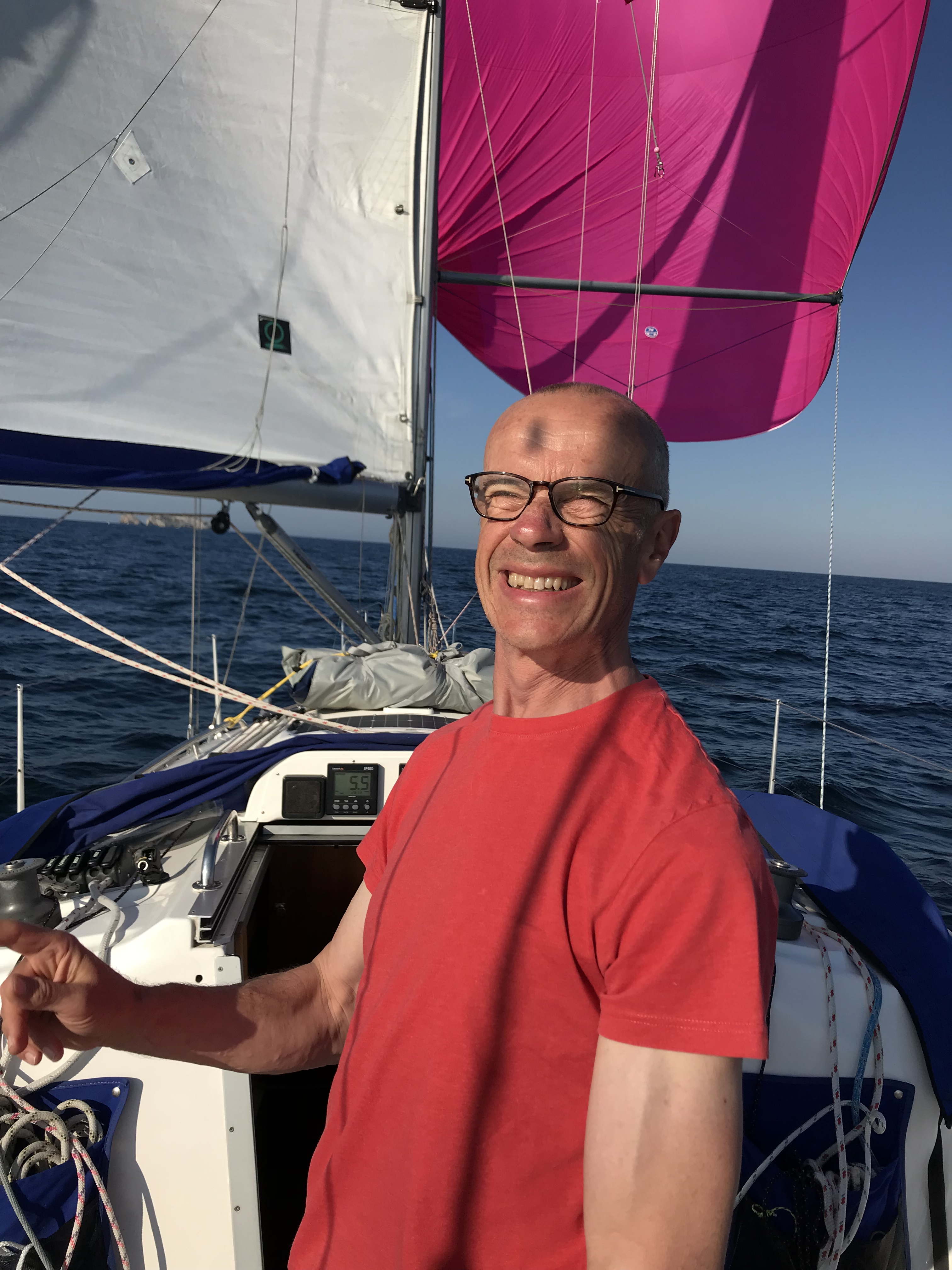
The forecast was its usual rubbish self – instead of motoring into three knots on the nose I was roaring along in 15 on a beam reach (non-sailors: this is the easiest point of sailing and usually the fastest in a cruiser. Patronisingly referred to as a Soldier’s Wind). Instead of rain it was bright sunshine. When I looked at the forecast for the next day (I know, why do I bother? Because I would be in trouble if the lifeboat had to rescue me and my excuse was that I had ignored the forecast because it was always rubbish) I saw that I would be beating or motoring into not the previously advertised five knots but now 15, against the tide. I didn’t want to spoil my spotless Ardnamurchan record (To the moon and back) so I duly followed the advice, canned the longed-for Loch Moidart and carried on. This was a good move: the breeze held and even let me put a spinnaker up once round the point, which was frankly showing off.

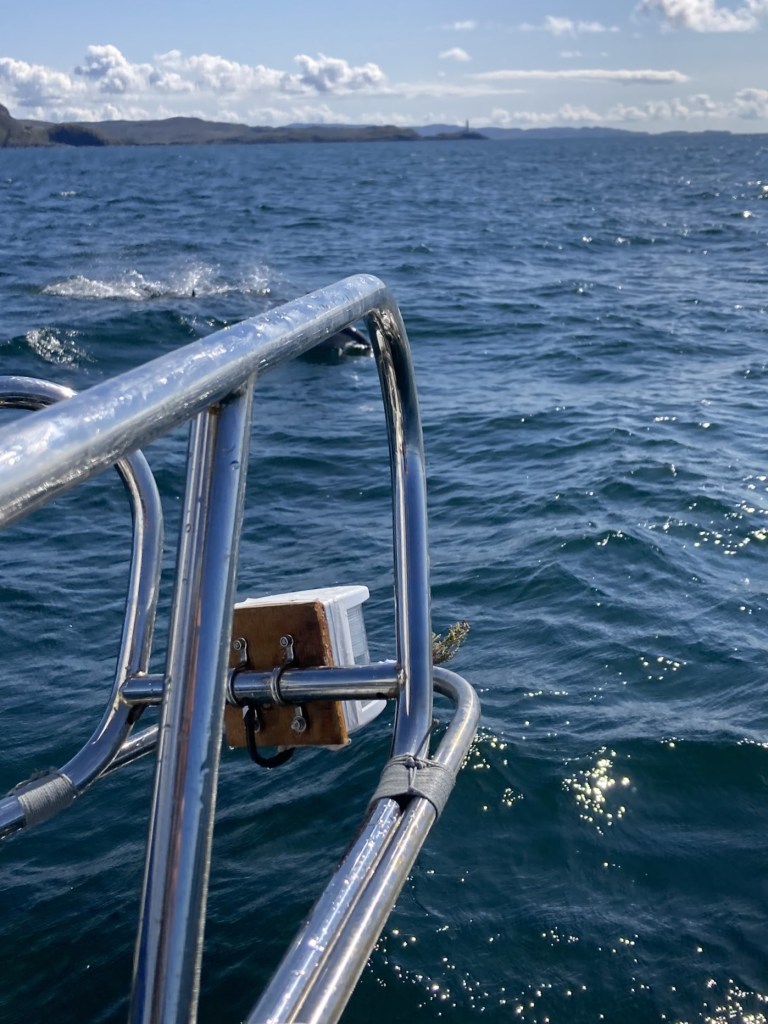
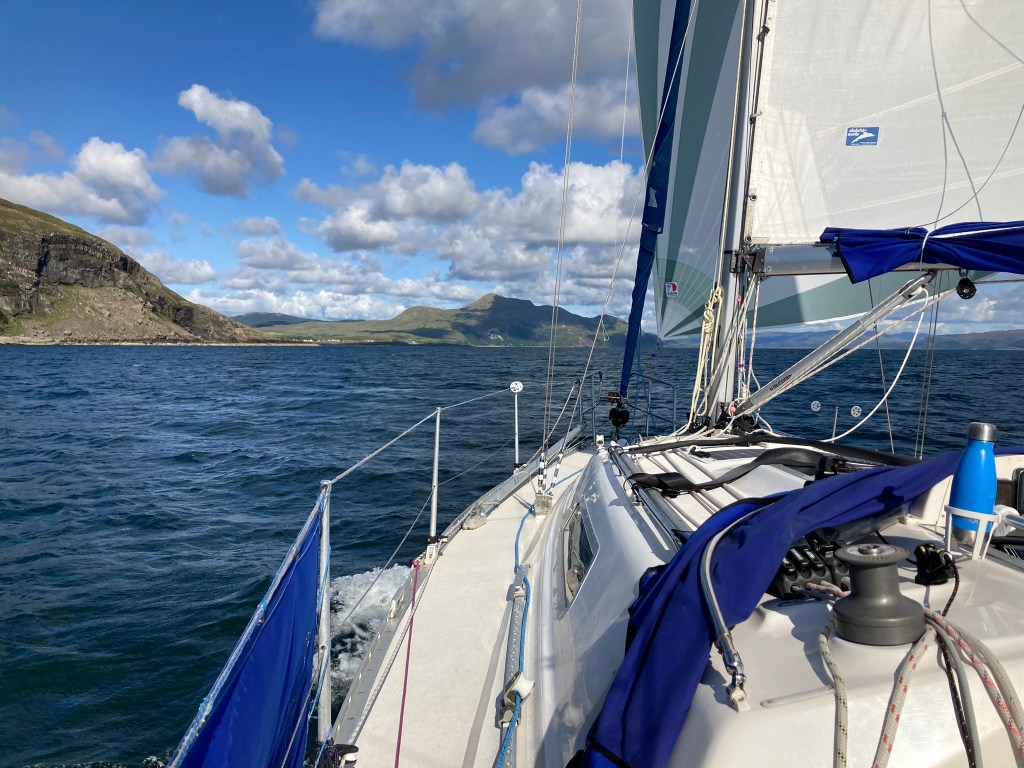
The moment I was round the famous point everything seemed different. I could only see one actual Munro, for starters, the coastline was much mellower, and I could see more than one house at once, sometimes even villages. When I was here for the first time six weeks ago it all seemed ridculously remote and rugged, now it felt a bit tame after the wild northwest around the corner.
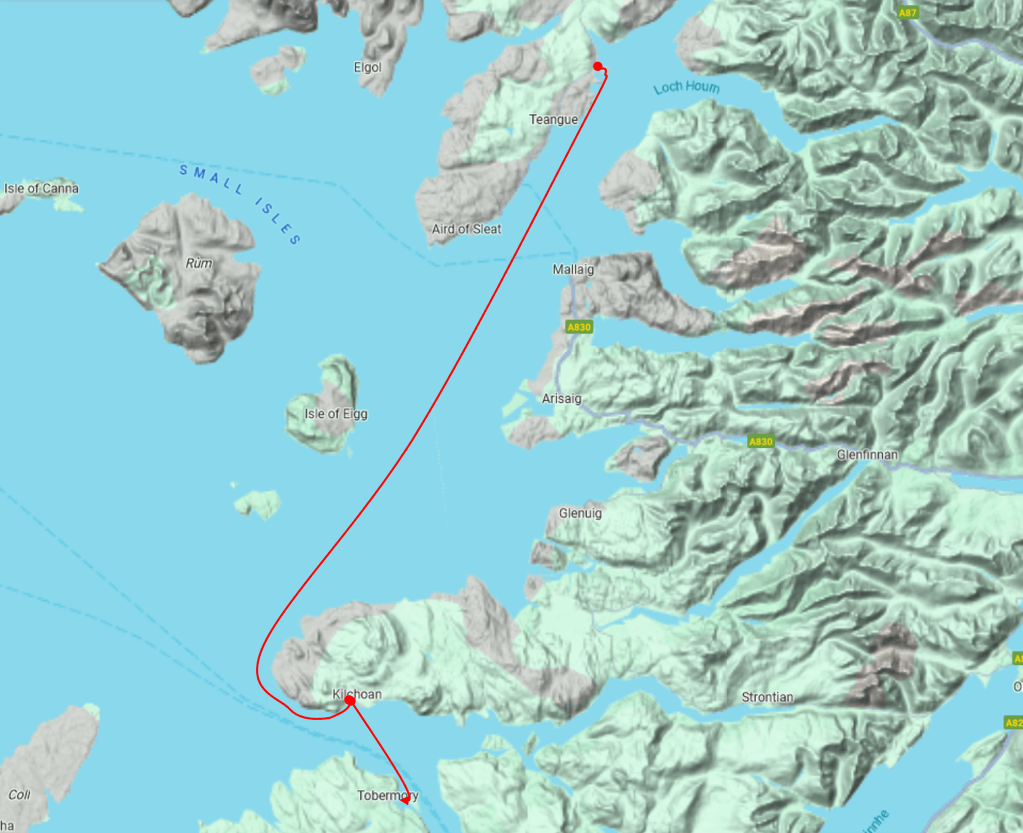
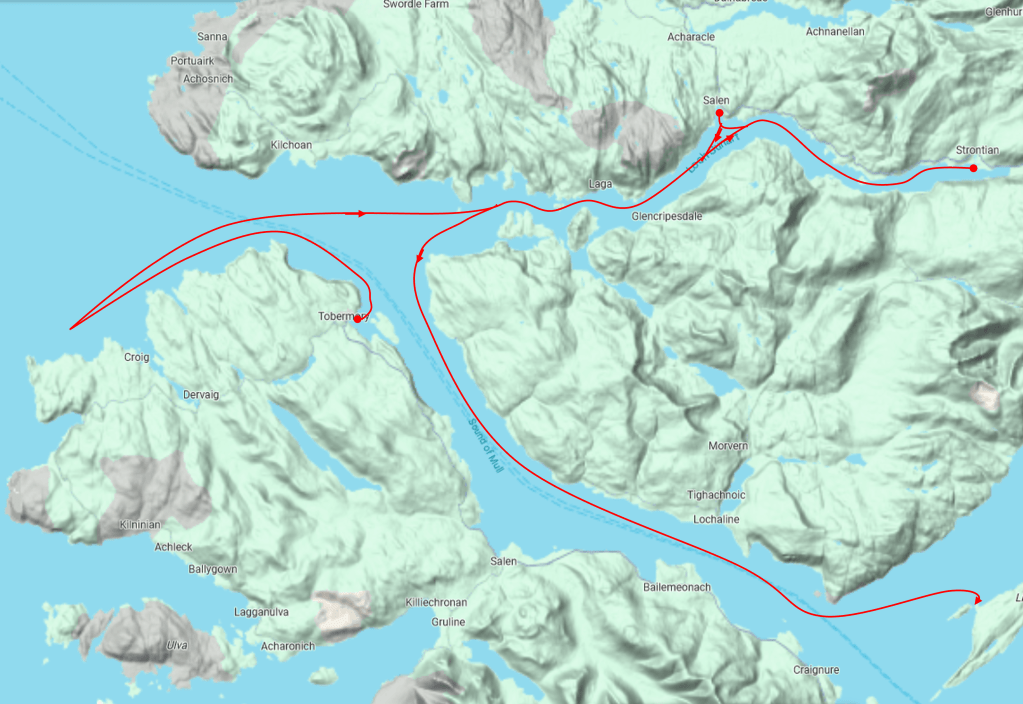
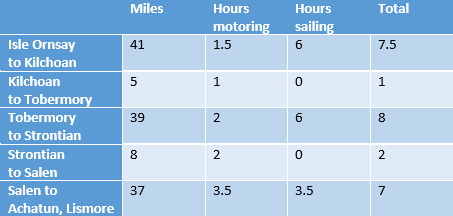
As it was quite late I headed for the first bay around the point, Kilchoan, dismissed by most of the guides but perfectly sheltered in the NorthWesterly currently on offer, and I picked up one of the village’s community moorings. Their website explained that the only money they could raise to mend their pier came from passing yachts and an annual welly-whanging contest or some such, so I thought I was doing them a favour. Silence descended and the scenery, if mellow, was still dramatic. I noticed that there were quite a few tents dotted around, and good old Google Maps told me that many of the houses were holiday lets or B&Bs. Then voices across the water – a group of holidaymakers were mucking about in kayaks round the pier – but something was wrong. Hang on a minute – they’re English! I realised that since rounding Ardnamurchan in June I had simply not heard an English voice. Well, with the exception of Neil, Sarah and Marnie of course, and everyone in London when I’d popped home. And Gareth from Cafe Canna, and his wife and children and mother-in-law. But that was pretty much it – even the holidaymakers had been Scottish, apart from the French/German/American/Canadian/Faroese/Dutch/Northern Irish sailors and the French/Spanish/German/American/Chinese/Japanese tourists in the castles. This did feel very odd indeed, and it combined with the re-rounding of Ardnamurchan Point to make me feel like a whole chapter of the trip had just closed.
Now all my readers know what a windy weekend in Tobermory means, don’t we? Indeed, the Cruising Association App had recent updates bemoaning how often it was full, and Saint Alan had been compelled to offer advice on how to bag a berth (mainly – get there early). Kilchoan being all of five miles away, I was there by 10, to find most of the pontoons completely empty. People from the boat next door took my lines as I parked, and said “Medway Yacht Club? We used to keep our boat in Chatham Marina”. Yes indeed, they were English. So was everyone around me, and everyone who arrived as the pontoons filled up. There were young families, extended families, older couples, groups of friends, retired-boys-on-tour, all English. And unlike a marina where visitors are dotted about amongst residents, on Scottish harbour pontoons everyone’s a visitor so every boat is occupied and the noise of English accents was deafening, especially the large number of very posh kids with school hoodies. I wouldn’t notice this normally, this is yachting after all and there are one or two posh people around with loud entitled voices, but after months away it was a nasty shock. I went into town and realised what I hadn’t realised before: most people there were English too. Not just the tourists: both the assistants in the chandlery were English, the woman selling ice creams, even the Harbourmaster and his assistant, all English. I had to go into the Co-op to find Scottish speakers; it felt so reassuringly familiar I managed to think of some other things I needed so I could go back.

Slightly disorientated, and perhaps lulled into a subconsciously non-Scottish way of thinking, this is where I made my mistake. I got out the pilot books and Made A Plan. Once the big wind had gone through I would head around Mull to bits where the holidaying English don’t go, and tick off some more of Alan’s gold stars and mine too: places like Staffa and anchorages that Yachting Monthly readers like me drool over with names like Bull Hole and Tinker’s Hole. Never mind that the wind would still be in the south, it was forecast to keep dropping and I could do with a bit of tacking after months off. So I laid out plans for a full five days ahead. I even worked out that I could dinghy over to Iona not just to visit but since it would be Sunday I could catch an actual Mass. Perfect. I was so chuffed with my plan I even told several neighbours about it to impress them.
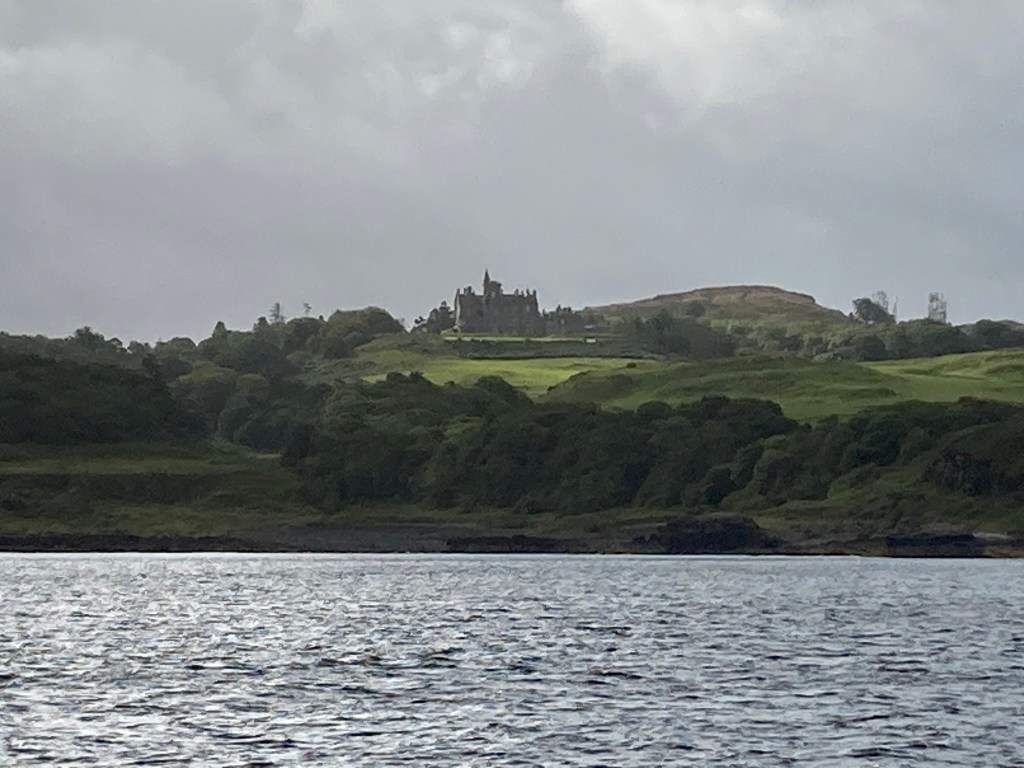
It didn’t work out, as you will have guessed. It started OK on Friday morning – I was all prepared, I’d put the skinny jib on (non sailors – it’s a smaller sail at the front for tacking into bigger winds) and put a reef in and was happily heading off down the West Coast of Mull, hard on the wind in around 15 knots. All good. I even had time to take a picture of yet another castle (Glengorm) looking as Potter-esque as it sounds in the windy clouds…
Then it started getting windier – 20 knots, then a bit more, and some rain to spice it up a bit. No problem, I was ready for this, and rather enjoying it, but it was a whole lot more than forecast. I looked down at the Met Office app to see what ridiculous lies they were peddling now and had to look twice. They had just doubled all the weekend’s wind numbers – what had been 10 knots southerly and dropping was now 20-25, all the way until Monday. There was no way I could stay in any of those places as they are all exposed to the south, and taking an inflatable dinghy across the Sound of Iona to go to church in that wind would need more faith than I could muster. I had so wanted to go to these places. I still do… Alan’s words rang in my ears. I turned around 180 degrees back the way I had come with the wind now behind me, put the kettle on and – literally – got the chart out to see which lochs I could visit downwind. Not a single one was even on his list, let alone gold starred, but as it turns out every one was absolutely stunning. But I did encounter a lot of English people. Perhaps that’s why he missed them out?
By the simple expedient of keeping on going the other way I found myself in Loch Sunart. Strangely unappetising name, don’t you think, which is why I had ignored it (that and Alan not mentioning it). Even the pilot says ‘most yachts pass Loch Sunart by’ without bothering to explain. Well, they’re missing out, especially in what I believe Australians call a Southerly Buster. Since it runs East to West it was effectively a Soldier’s Loch – totally protected, no waves but plenty of wind to speed you the 18 miles inland, past increasingly spectacular mountain scenery and surroundings apparently as remote as any I’d seen, except that unlike further north every now and then I came across a Grand Designs type of house, often with a big Mercedes alongside, so I knew I was South of Ardnamurchan.
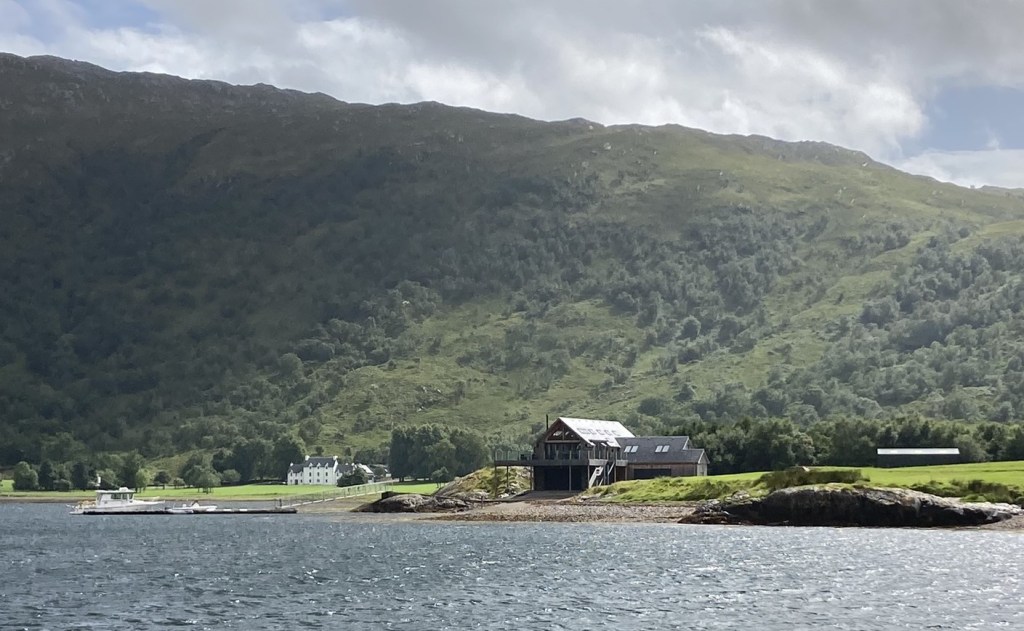
There were roads occasionally, albeit only one each side and hours from anywhere. There were interesting rocky narrows to thread through, bits where the wind caught you by surprise as increasingly even a Southerly Buster got confused by the mountains, and eventually I arrived at the head of the loch off a village which should, now I know my Gaelic, be called Kinlochsunart, but is actually called Strontian, where I anchored in the kind of mud that would feel at home on the Medway, and consequently meant I could sleep soundly in the newly re-forecast wind.
Strontian is one of those Scottish places that you will recognise if you have ever owned a road map of Scotland, being on the junction of two A roads, but the A roads are both single track and the village is tiny. It does, however, have a bit of the Periodic Table named after it, which must make it unique amongst Scottish villages. That is, unusually for this blog, true. It doesn’t have much else to suggest going ashore in horrid weather was worth it, so I watched the older couple from the only other boat up this far commute to and fro in oilskins in a tiny dinghy and wondered why. My best guess was that their son or daughter lived or was holidaying in the village, didn’t have a spare room, but they wanted to see their grandchildren. You can see how little was going on. It rained and blew and promised to do the same next day, so I resolved to stay down below, write a blog post about Skye, and do the most English thing: watch Association Football (since it was on BT Sport and I was jealous of George who was going, although not of the hour long queue due to the stupid new electronic ticketing system).
The morning contained two surprises. First: I was startled to hear voices just outside the boat. I leaped into the cockpit in the rain to find two women swimming around the boat. “Morning!” one of them called cheerily. “Sorry, did we confuse you?”. Yes indeed, they were English. I suppose if you were to draw a Venn diagram of people who seek out Grand-Designs-esque holiday homes a hundred miles down a single track road combined with people who like swimming in freezing cold water there would be quite a large intersection bit in the middle. They weren’t going for it though, they lazed around as if it was Highgate Ponds in a heatwave, chatting in that passive-competitive way about how their children were doing at school and where to get the electric Merc charged (sorry, I made that second bit up, but not by much) and made it hard to concentrate on a blog.
The second surprise involved the weather forecast, so not a surprise at all. As soon as I sat down to the (delayed) kick-off the sun came out, so I had another reason to complain to the Arsenal about their wretched new ticketing system. I suppose it helped me feel I was there in that first-match-of-the-season-unexpected-sunburn type of way. And since the surroundings were now looking lovely in the sunshine I decided to head back down the loch to somewhere even prettier where I could do some walking.
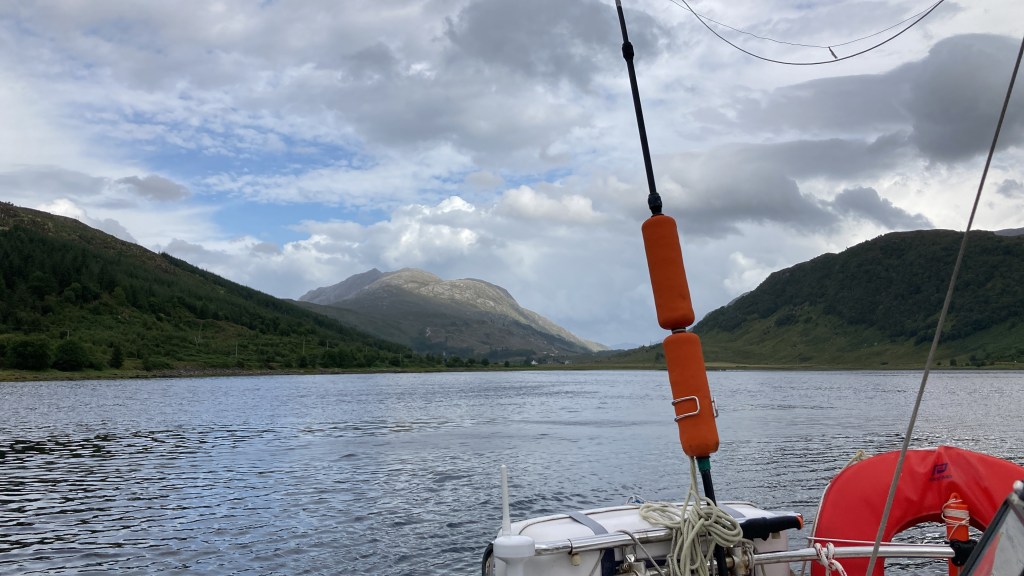
Needless to say, the weather had seen this move coming and immediately started raining again. Instead of wafting the eight or so miles down the loch to the even tinier hamlet of Salen I motored into pouring rain and squalls, but at least when I arrived there would be showers, as I had spotted in the guides the most Scottish of things: a tiny ‘boat station’ with pontoons for about four yachts. I bagged one and went to find either Jan or Mark (the owners) to pay. Jan appeared on cue; “shocking weather isn’t it?” she said, thereby marking her out as completely English in that no Scot would ever bother mentioning it, that and her (Teeside, I guessed) accent.

Salen Jetty is charming: in addition to showers and water and electricity there is a cafe/shop with home baked cakes and they have leaflets with lovely walks where you can climb up the hill and see (how painful) Loch Moidart on the other side. I have to take all this as read, as the cafe had just closed and it rained too solidly to walk anywhere. I even got up early the next morning and the rain waited until I put my boots on before sneaking round the corner and hosing down, so I gave up and waited for the cafe to open.
Now for the beating, and why the worst thing by far about sailing in Scotland is the rubbish weather forecasts. It was clearly advertised by every source to be 10-12 knots southwest. A few light showers. I was heading up the Sound of Mull, which runs southeast. Another Soldier’s Wind. Perfect. I set off, down Loch Sunart, around the corner, past Tobermory: flat calm. Engine on. Then the first rain squall. Bam! 20 knots on the nose. It passes, the wind drops and swings into the advertised southwest just long enough for me to put the sails up before dying again, the next rain squall comes and knocks us flat and then settles firmly into the south east. Dead ahead, do keep up. This time I am not being outdone – I am going to beat into it, come what may, not least because the are no lochs left downwind to explore, I can’t face another night in Tobercotswolds and if I follow the downwind strategy I willl end up back on Skye or Stornoway or perhaps Greenland. So I spend the most miserable Sunday alternately beating and motoring into wind ranging from 5 to 20 knots, in now steady heavy rain. I feel very English at this point, suspecting that Alan would have waited for the English to leave and then bagged a pontoon in Tobermory and even now be tucked up in the Hotel enjoying a wee dram by the fire.
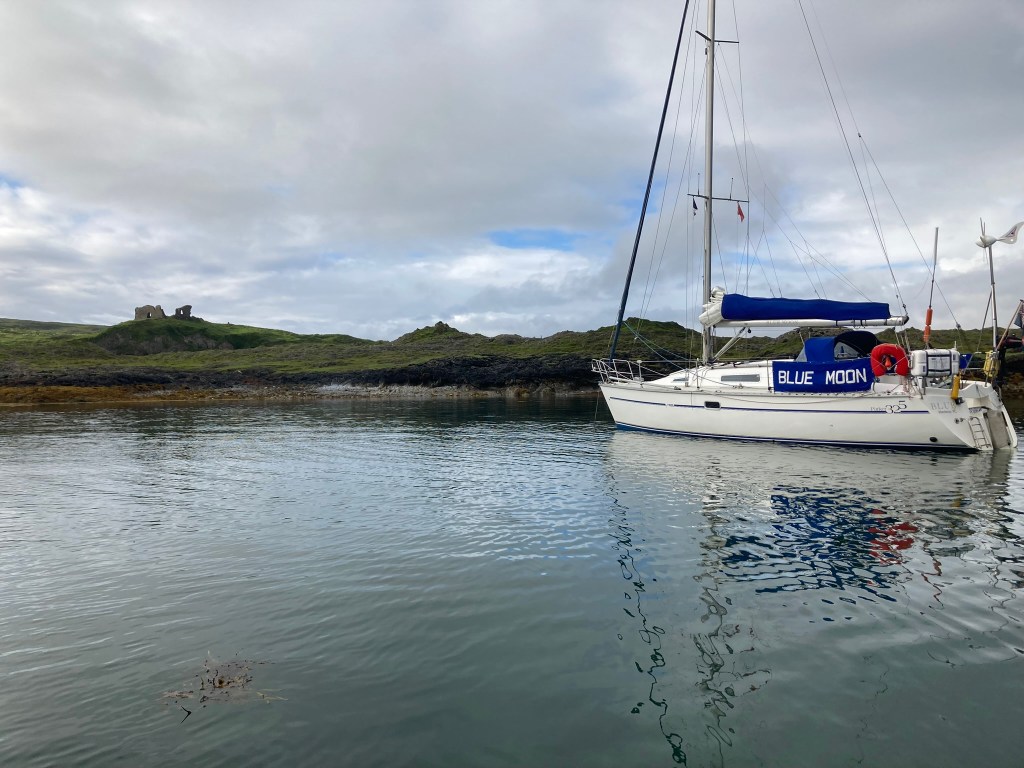
I achieved my objective though, which was to anchor in a tiny bay on the island of Lismore where there is a ruined castle you can walk ashore to. But it was late by now, I was cold and tired and it was still raining so that had to wait until tomorrow, as will the blog.


 Blue Moon's trip around the UK
Leave a reply to John Clack Cancel reply