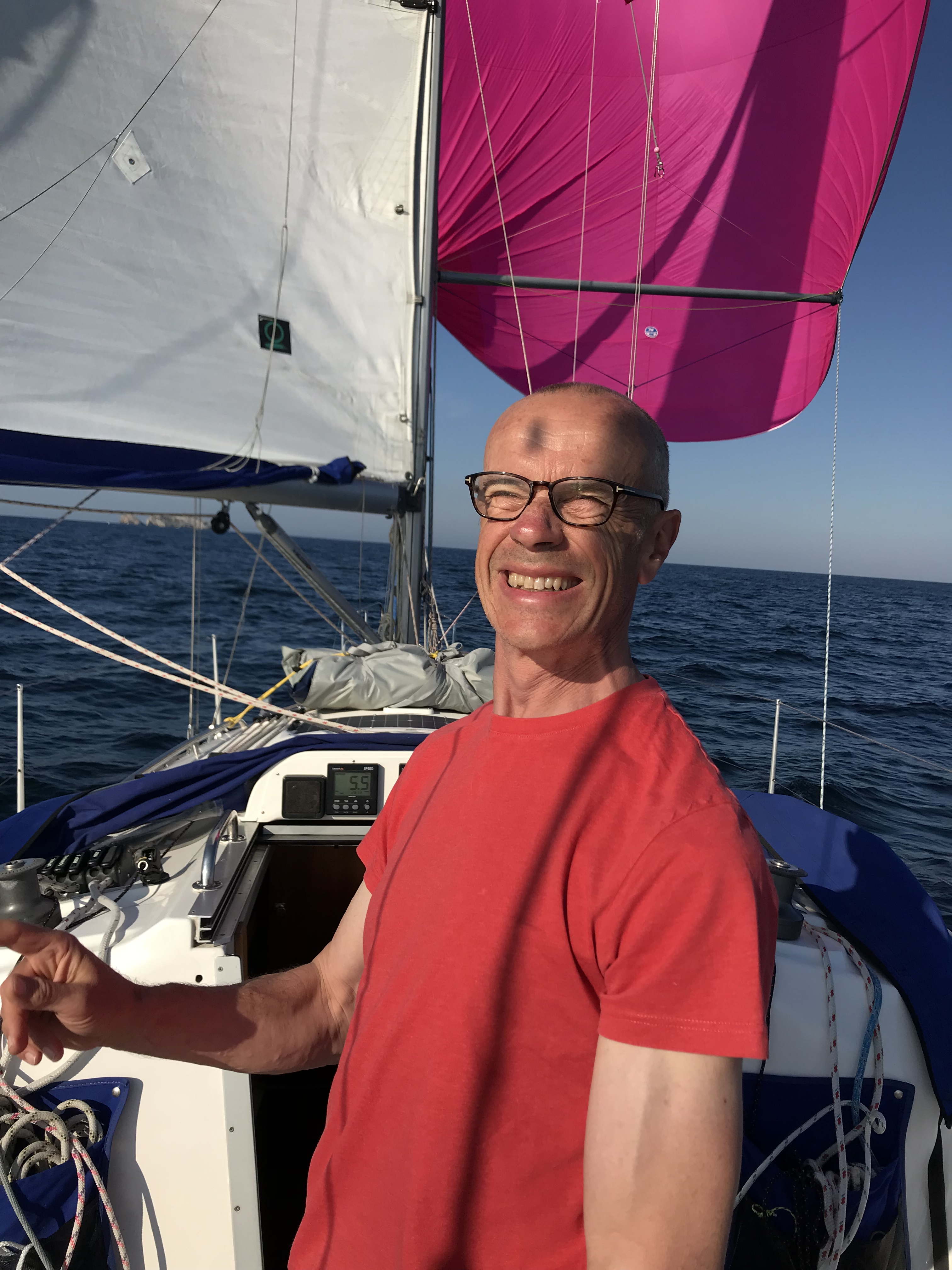
The first time I took Neil sailing (his first more-than-one-day-sail) it was a bit of a baptism of fire – or more specifically water: there were a peachy couple of hours as we drifted down the Western Solent but then it turned horrid and we spent an afternoon beating to and fro in St Alban’s Race, an evening being shouted at by rude locals in Portland Harbour (see earlier post https://peterdann11.com/2023/04/17/dull-sunday/), a day motoring across Lyme Bay in no wind and downpours while being stalked by the Prince of Wales (the aircraft carrier, not the current King), a day stuck in the pissing rain and howling wind in Dartmouth and one finally making it to Plymouth before finishing our trip to have lunch with the Accounts Department in Penzance by train, which was very galling and not the best introduction to sailing for a man whose usual watercraft does 35 knots and would have got him to Penzance in time for aperitifs on Day One. So I was delighted that he was prepared to have another go, and totally understanding that he could only spare three days: I assumed his thinking was that at least that would minimise the pain if I cruelly served up a similar experience. But it did mean that I was very anxious that – he having spent two days traversing the country and back – those three days should have the bare minimum of wind, rain and rude locals.
Phew, he has made it back to Glasgow airport safe and sound and the last time I saw him he was still smiling despite having sat on ScotRail’s least comfortable seat, next to the grumpiest woman I have ever seen on a train, for all of five hours. And so am I, even though I have another six train hours ahead of me, because we have had a rather splendid three days in the Small Isles. No, I hadn’t heard of the Small Isles as a collective name before either, although I was dimly aware of Rum, Muck and Eigg because of the funny (in English at least) names, but not Canna, and that one turned out to be the best and one of the trip highlights – although to be fair to Muck and Eigg we didn’t have time to visit them. They’re on the list now. Apparently in the 18th Century or so the Earl of Muck tried to have the name of the island changed because all his fellow peers kept saying things like “How now, My Lord of Muck?” and falling about laughing.
I was so keen not to disappoint that I had got to Mallaig a day early, thinking I could explore the town. My mistake here was that Mallaig turns out to be a village, and a pretty small one at that, in spite of being a busy ferry and fishing port and once the capital of the UK herring industry (as I was gently but firmly informed by our hostess at the fish restaurant when I dared to suggest that the best soused herrings come from the North Sea). So I had seen it all in less than half an hour, and instead took the advice of someone from the Cruising Association and caught a train one stop to Morar, from where I could walk the nine miles up the shore of Loch Morar to Tarbet and catch the ferry back.
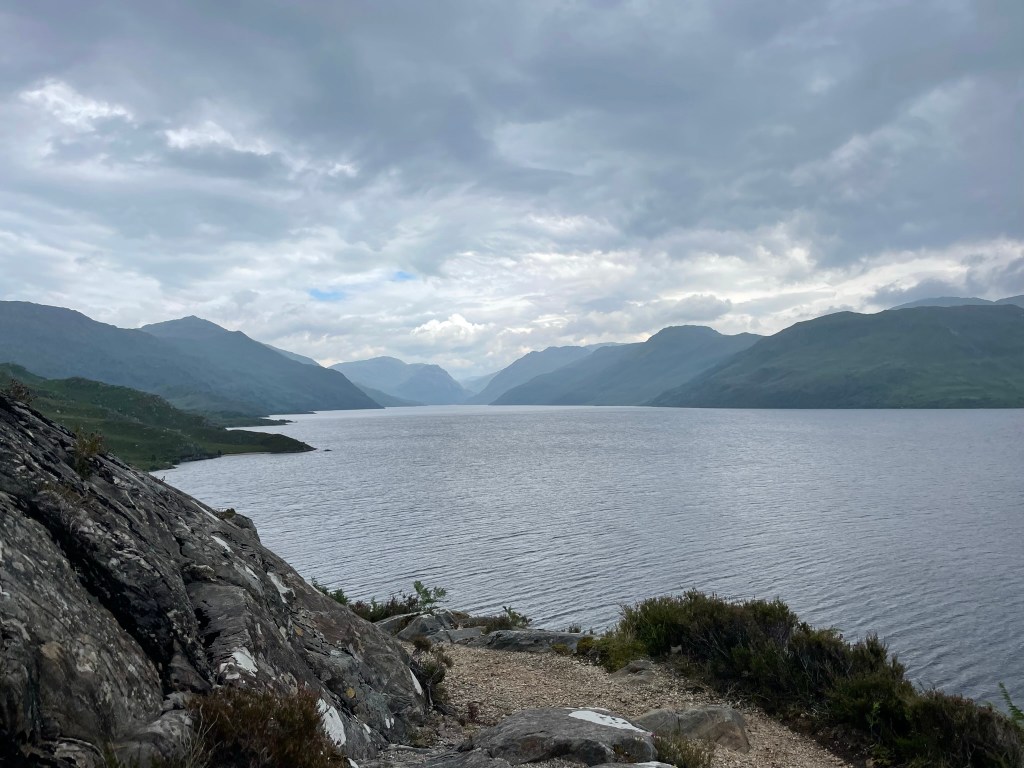
This was an excellent move: Loch Morar is a freshwater loch and the deepest lake in the UK. It’s surrounded by stunning mountains but best of all it is totally remote. As I walked up the shore the nearest house was the one I had left behind which was eventually eight miles away; on the opposite shore the nearest track was ten miles, and the fish farm half way up could only get its fish out by helicopter. There was complete silence except for the sound of waves lapping on the rocks, and I was really enjoying the solitude and emptiness of the place when, towards the end of the walk, I came around a corner and found by the side of the loch a substantial house. This was a shame for my stats since it turned out I had never been more than four miles from the nearest house after all, but it was extraordinary to find a really quite large Victorian villa in the middle of nowhere, with no roads at all.
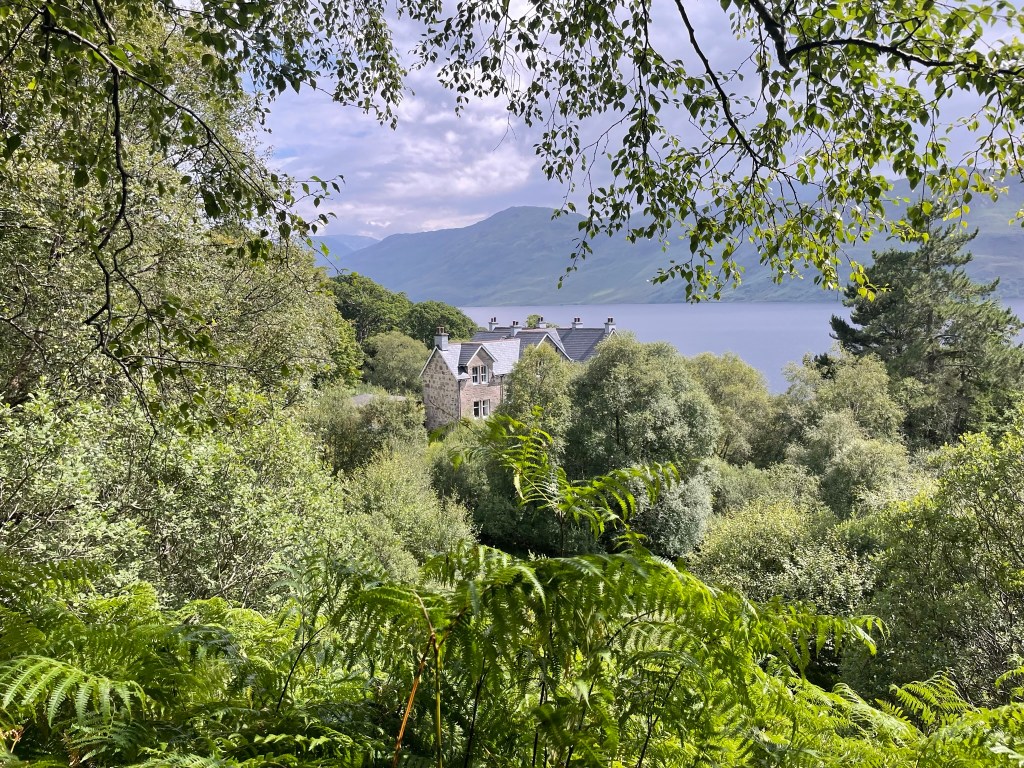
It had clearly been done up very recently, and every single builder must have come up the loch by boat, along with all the materials. In my experience most builders spent half their time nipping out to Screwfix or Plumbase so God only knows how that worked. Perhaps they made friends with the fish farm helicopter pilot. It turned out (when I was back in mobile range waiting for the ferry) that the house was commandeered by the SOE to train secret agents during WWII, which was much more the kind of slightly sinister remoteness I was after.
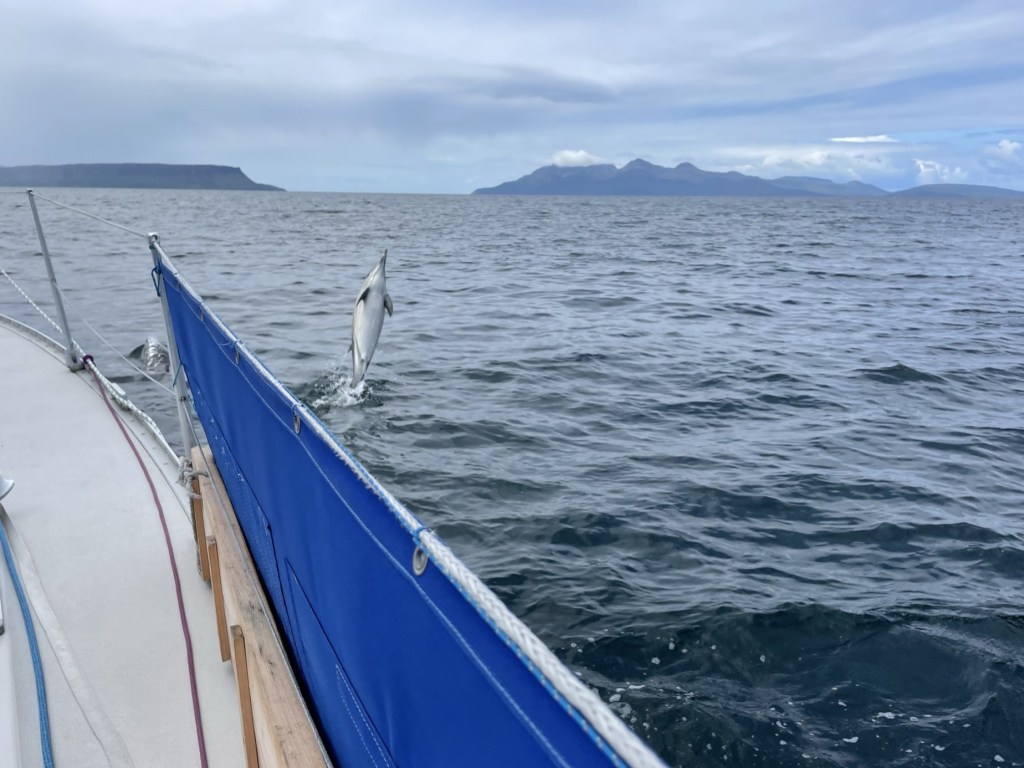
There are loads of Tarbets in Scotland and this was my fourth of the trip. Apparently it is Gaelic for ‘place where you can carry your boat from one loch to another’ but I’m assuming they’re talking about the Coracle Superlight BC2000 here, it was a hike over the hill to Loch Nevis where the so-called ferry calls once a day, exclusively to pick up people like me who’d walked there. Then it went to Inverie which claims to have the most remote pub in the UK on account of not having any roads to it, omitting to mention that it has a fast ferry from Mallaig four times a day. Annoyingly for me, but to the delight of every other passenger on their way home from a not-so-remote pub lunch, we came across some dolphins which wait there to perform tricks, and the ferry slowed down so everyone could take pictures while I grumped about being late back for a Teams call.
Mallaig has two unusual features to delight the visiting yachtsman. The first is a combined bakery and marina facilities building, which means you can shower in the morning to the smell of baking bread, then buy the best croissants outside Paris for half the price you’d pay in Gail’s; the second is a seal called Annabel (how did they find that out, I wonder?) who lounges around the harbour eating fish very publicly. I could have sworn the one we saw her scoffing was a kipper, so I reckon she just gets thrown things by fishermen and tourists.
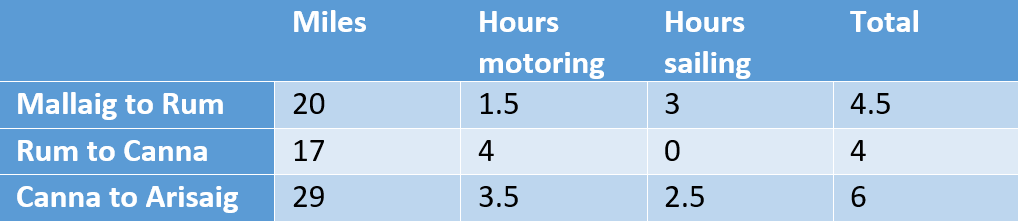
After these delights we headed off to our first Small Isle, Rum. It doesn’t look that small from any distance, as it’s made up almost entirely of mountains which I could see from up Loch Morar and indeed on a clear day from the Outer Hebrides, and which contributed to a bonkers wind that alternately blew 18 and 8 knots from a range of directions, then not at all, in true Scottish fashion. We were prevented from getting cross by the reappearance of the Mallaig Dophin Amateur Dramatic Society, who in the absence of a fast ferry came to practise their slow speed manoeuvres with us.
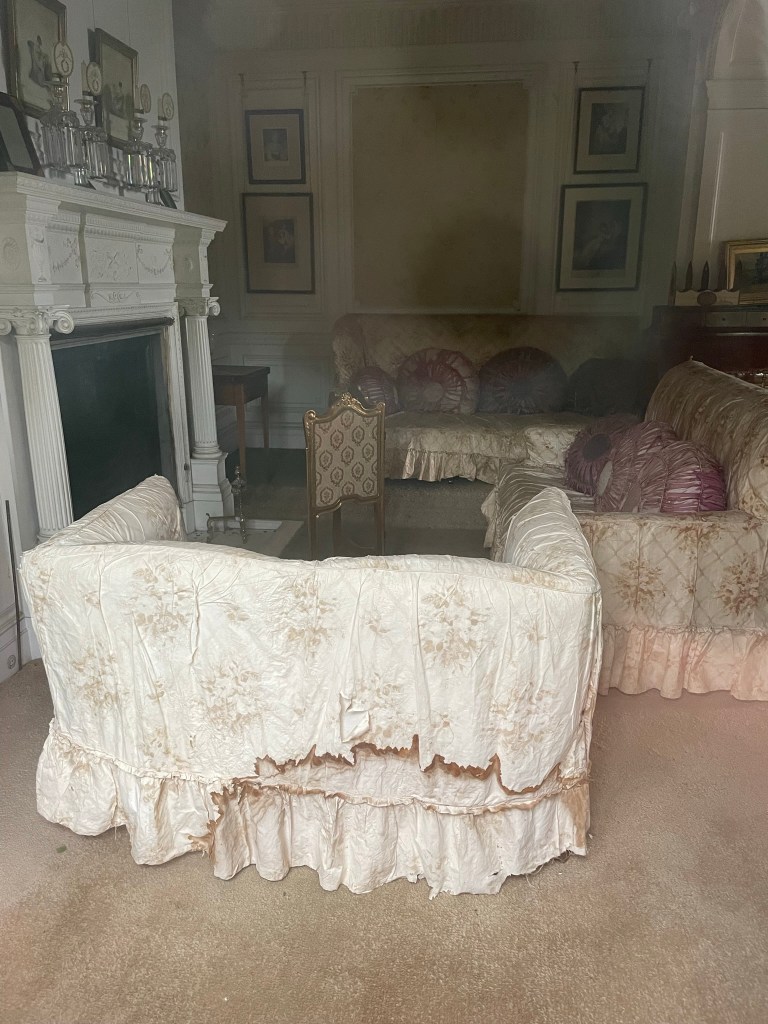
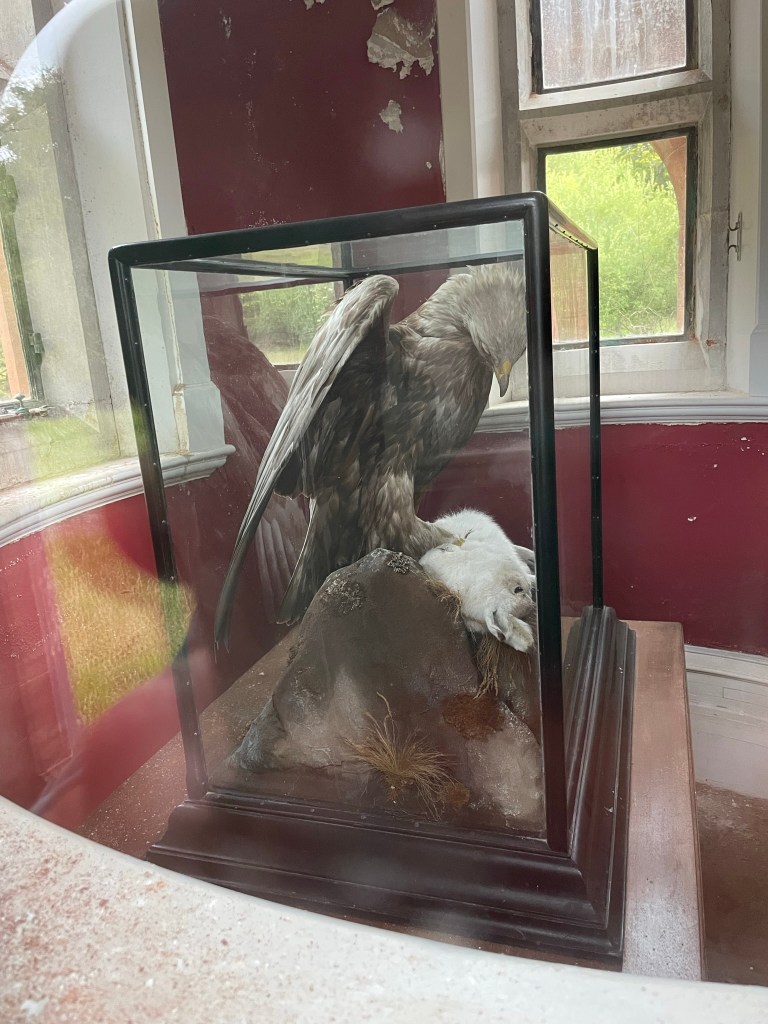
Although the sun was out Rum felt a rather gloomy place and my Big Boys’ Book of Scottish Islands told us that indeed it was: it had been fertile and quite wooded and supported a population of several hundred until in an all too familiar story it was bought by someone who cleared everyone out and cut down the trees so he could use the island as a sheep farm which went bust after just 13 years. Eventually it was bought by a Victorian millionaire from Accrington as an occasional shooting estate, and his crazy son built a fantasy castle as a shooting lodge which he only used for a few weeks each year; he paid his gardeners more if they wore kilts and – I have since read – built heated alligator ponds in the garden. In the Fifties his widow locked the door and walked away, leaving all the contents exactly as they were, and donated the whole island, castle and all, to Scottish Nature or some such. Now it is a nature reserve with a population of 22 people, few of whom are permanent.
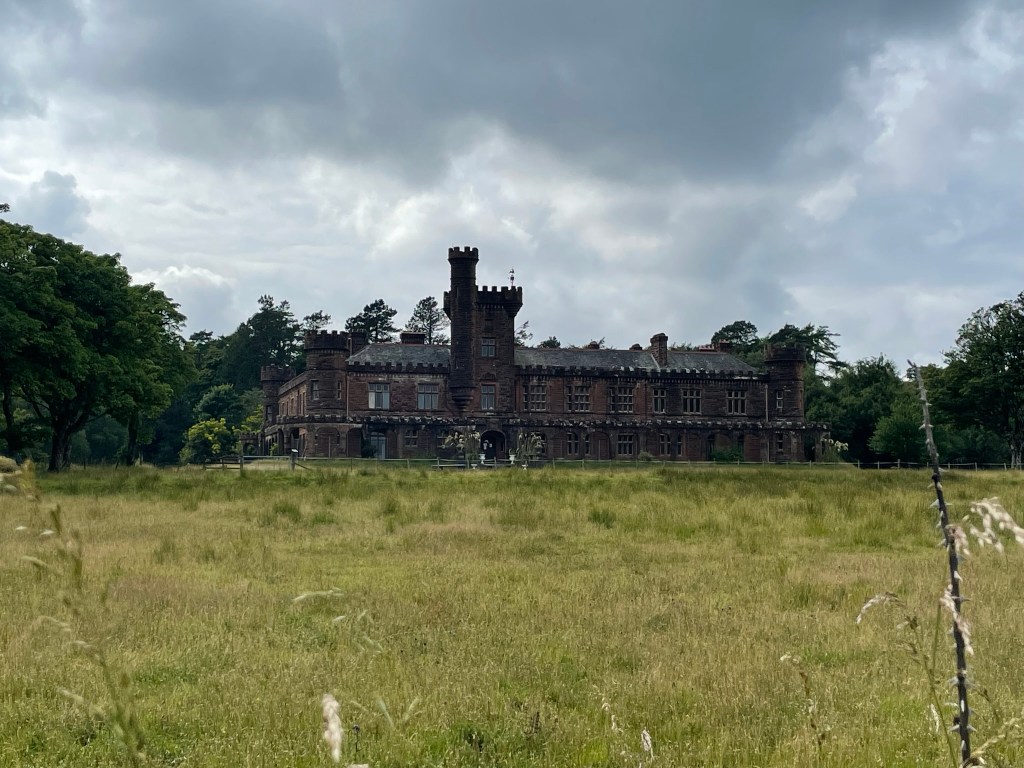
We rowed ashore (the wretched outboard is playing up again) and took ourselves off for a walk around; the community shop advertised ice creams so we walked a mile or two to make it feel like we deserved them and we came across a garden shed calling itself a croft where a hippy family had had a go at subsistence farming but given up. When we got back it turned out that the shop had sold all the Magnums days ago and we were stuck with a trip down memory lane in the form of a Fab: these were far smaller than we remembered and probably only merited about 200 yards’ gentle stroll. The shop was as sad as its ice cream cabinet, seeming to sell mainly tinned food and bottles of cheap wine, and was only open a couple of hours each day. The castle was locked up – they used to offer tours but now it’s unsafe – but you could peer in through the windows at the bizarre sight of rooms furnished as they were when Lady Bullough left.
We were quite pleased to get back to the boat and cook up a curry, although the night was a bit spoiled by the forecast being as predictably rubbish as the outboard: having promised light westerlies we were dished up a sharp breeze from the only direction – East – that the anchorage isn’t sheltered from, so a dozen boats spent the night rolling around violently, cursing.
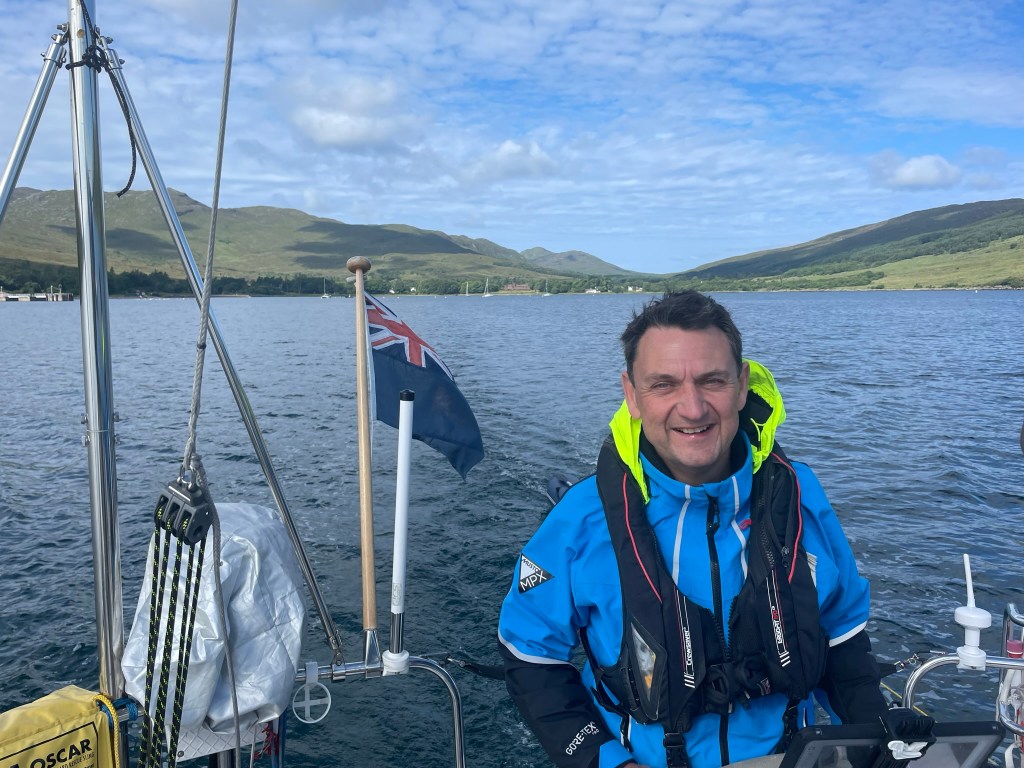
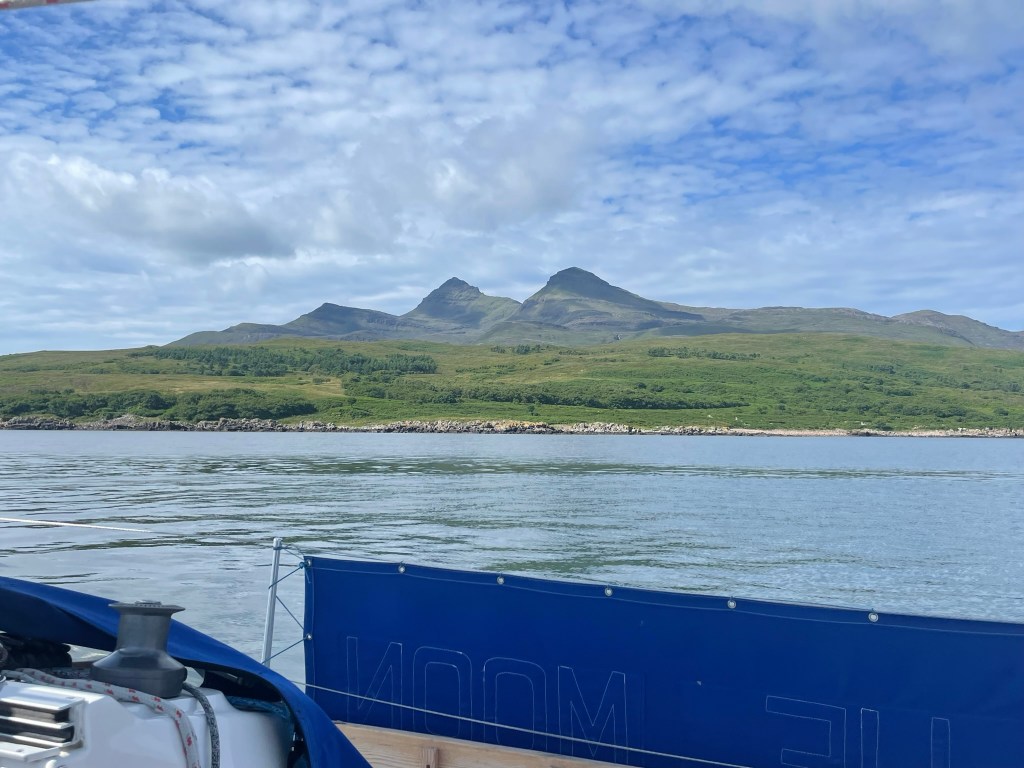
Stupidly, we hadn’t learned our weather forecast lesson and trusted it when it said there would be little or no wind the next day, and instead of sailing to Skye and back for fun went straight to the next Small Isle on the list, Canna, where we had read about the Canna Café and I had booked a table for dinner. They ask you to order seafood before 1pm as that’s when Craig the fisherman goes out to catch what’s been ordered, and this sounded like something that had to be tried. Although there was plenty enough wind to have gone to Skye and be back in time for tea, it turned out we had made the right decision as a few other people had read about the café too: we picked up the last mooring at lunchtime and by teatime there wasn’t enough room left to anchor. This didn’t deter an esteemed member of the Royal Cruising Club who came and anchored right on top of us in spite of him and his crew wearing the kind of yachting caps and canvas trousers that suggested he should have known better; after the wind changed overnight we woke up in the morning and he was so close we could have scribbled ‘tosser’ on his transom with a marker pen, had we been the kind of oiks that would never be invited to join the RCC.
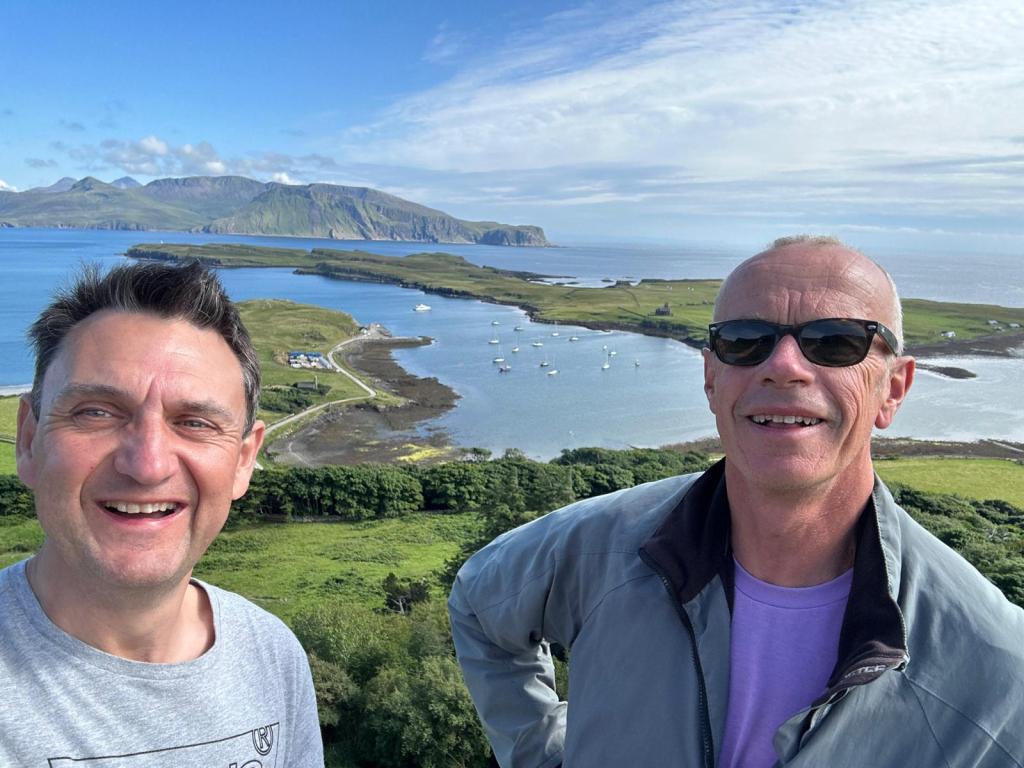
Arriving early meant we could go ashore and enjoy the full Canna experience, and it was very well worth it. Apparently there are only 21 people on the island but I reckon we saw them all as it was buzzing. Although it too – like all these islands – had been cleared, it ended up being owned by a Gaelic scholar who built a much more appropriate house with no alligators in the rather nice garden, and was universally described as ‘our island custodian’ in a rather touching way. His widow left the island to the National Trust of Scotland who are doing a rather better job of looking after it, apparently in consultation with the (mainly permanent) islanders: everything was well kept, there were welcome leaflets and signs and trails and things to see and do, they’re building new houses and restoring the main house, and there was a very smart farm and a dozen or so modern houses dotted around. We did my first proper Scottish ‘right to roam’ no-footpath walk and it started well with views of the boat but inevitably ended up in a field of ferns surrounded by barbed wire.
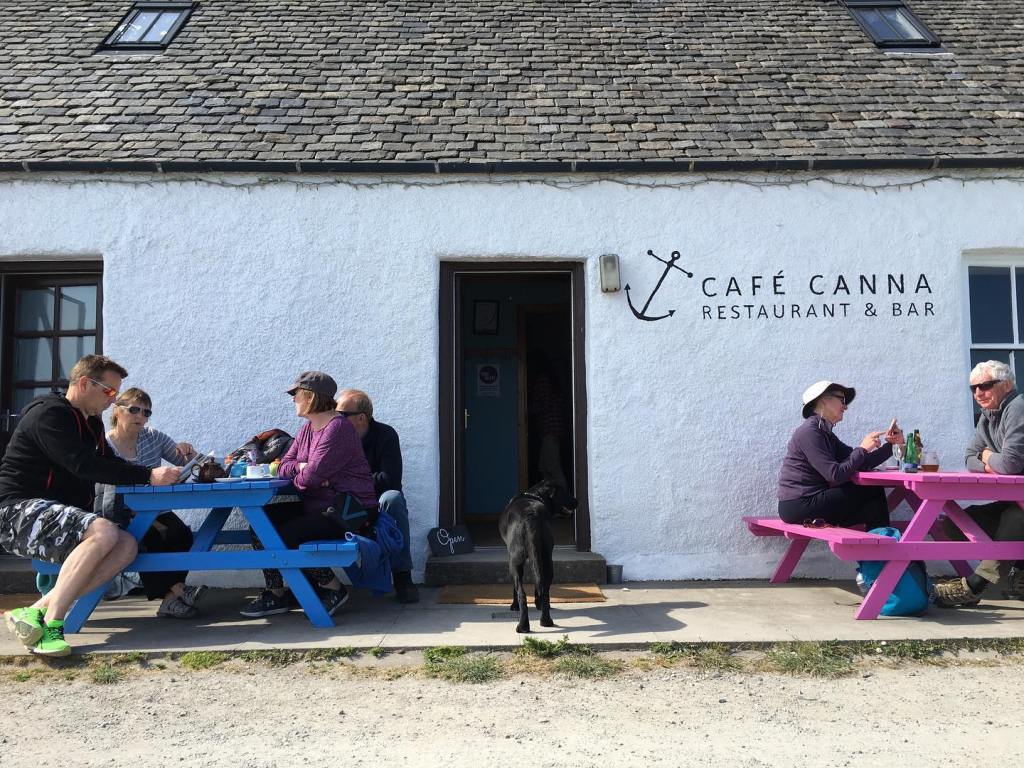
A few detours later we made it back to the harbour where there were locals and tourists enjoying tea, cake, beer, wine and crisps (Café Canna serves it all) in the sunshine, and the community shop had Magnums and Bountys alongside island venison, salad from the Canna House garden and a deli fridge that would do Waitrose proud, with enough staples to last a good week or three between trips to the mainland. It was open all day through the simple expedient of not having any staff, instead a cash tin and a rather detailed explanation of how to use the SumUp machine. There was even a red phone box which actually makes calls, although there was a sign inside explaining that as there was only the one line to the mainland it was considered polite to wrap up your conversation if you heard three beeps as it meant someone else on the island would like a go with their home phone.
The café was packed inside and out, and we sat down to island-brewed beer, island-baked bread and a menu that would have kept Islington happy. Everything on it came from Canna, if you included the seas around it, as Craig had done his stuff and Gareth the chef, owner, maitre d’ and chief washer-upper produced plate after plate of crabs, lobsters and langoustines alongside a range of foraged things as well as island beef, lamb and venison which they also send to the mainland. Neil and I are no strangers to decent seafood but we had never eaten things that had been swimming that afternoon (in spite of a lifetime conviction to the contrary, I have recently reluctantly accepted that lobsters can swim). As we rowed rather gingerly back to the boat we were delighted to see that our posh in-our-faces neighbours had failed to secure a table, as it was quite the best seafood we had eaten for a very long time. How on earth 21 people manage to make all this happen we were completely mystified, but we reckon the folk of Rum should pay their neighbours a visit and see how it’s done with one fewer islander.
We ended Neil’s little trip in Arisaig, a village even smaller than Mallaig but proudly boasting the westernmost railway station in the UK (can you name the other three points of the railway compass without the internet?) where the boat will sit on a mooring for a few days while I pop home and hopefully the boatyard fix the outboard. Here too there was a pub and a café and a rather strange little restaurant and a visitor centre and a shop, but the shop was a Spar with a lad behind the till, and there were roads in and out and playing fields and a petrol station and street lights, and whilst I’m sure the locals are just as resourceful and hard working as the people of Canna they are on the mainland, so it all felt just a little but more, well, predictable.
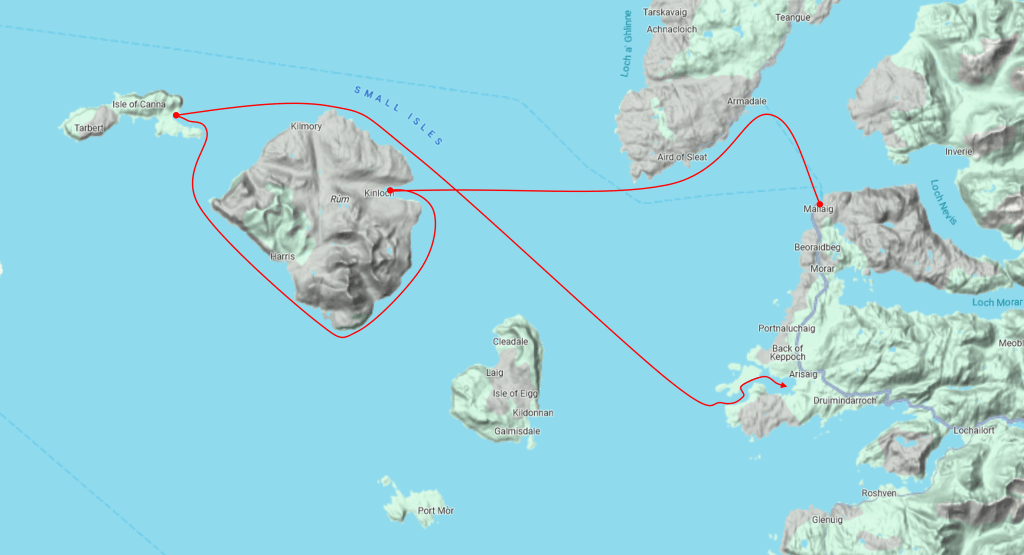


 Blue Moon's trip around the UK
Leave a reply to Owen Cancel reply