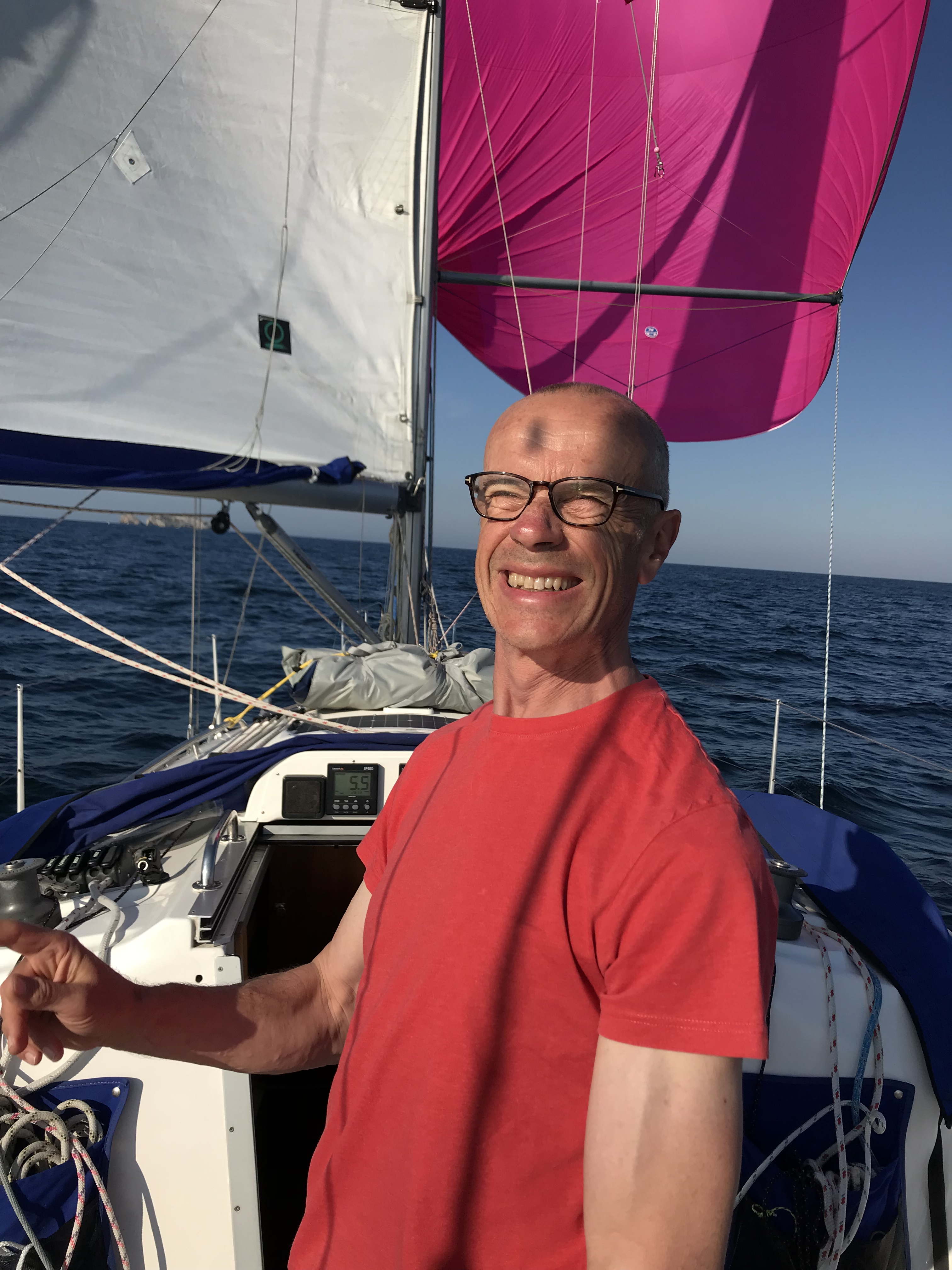
I do need to get over the desire for snappy headlines, this one is almost untrue – we did see both, but very much in the distance, and I have no photographic evidence. Still, that’s two things you don’t see on an average weekend in Chichester Harbour, and this trip is all about broadening my sailing horizons.
There’s not a lot to write about seeing a whale, except that I haven’t seen one before. Some readers will I suspect have gone on whale-watching holidays (oh yes, I know my readership) and been treated to epic cetacean experiences. We were just motoring flat out up Loch Fyne to get to the canal (see previous post) when I saw something that looked like a whale tail doing that up-in-the-air thing they do in cartoons. “Good Lord”, I said to Peter, “I think I just saw a whale”. We both looked in its direction and it kindly repeated the trick so I know I wasn’t dreaming. That’s it really, nothing more to be said except that for a Scottish sailor this is presumably an everyday experience, whereas for me it brought home just how totally different things are around our coastline. I doubt whether the average Scot doing this trip the other way would write so enthusiastically about a lilo blown off West Wittering beach, or Southern Water’s latest sewage overflow, or any of the other things that make my home waters so distinctive.
Whirlpools, however, are another matter, and something I doubt I will get used to. Many sailors will have heard of the Corryvreckan, which I read somewhere is the third largest whirpool in the world. What a bizarre statistic – should we be reassured that it’s not bigger, in the way that being eaten by one of the world’s smaller tigers might provide some comfort? So it was with a little start that I realised that we were having lunch next to it, rather like the time Sarah and I stopped for a picnic in the Everglades and it was only when we got on our bikes to leave that the log next to us opened its jaws. Yes, really.
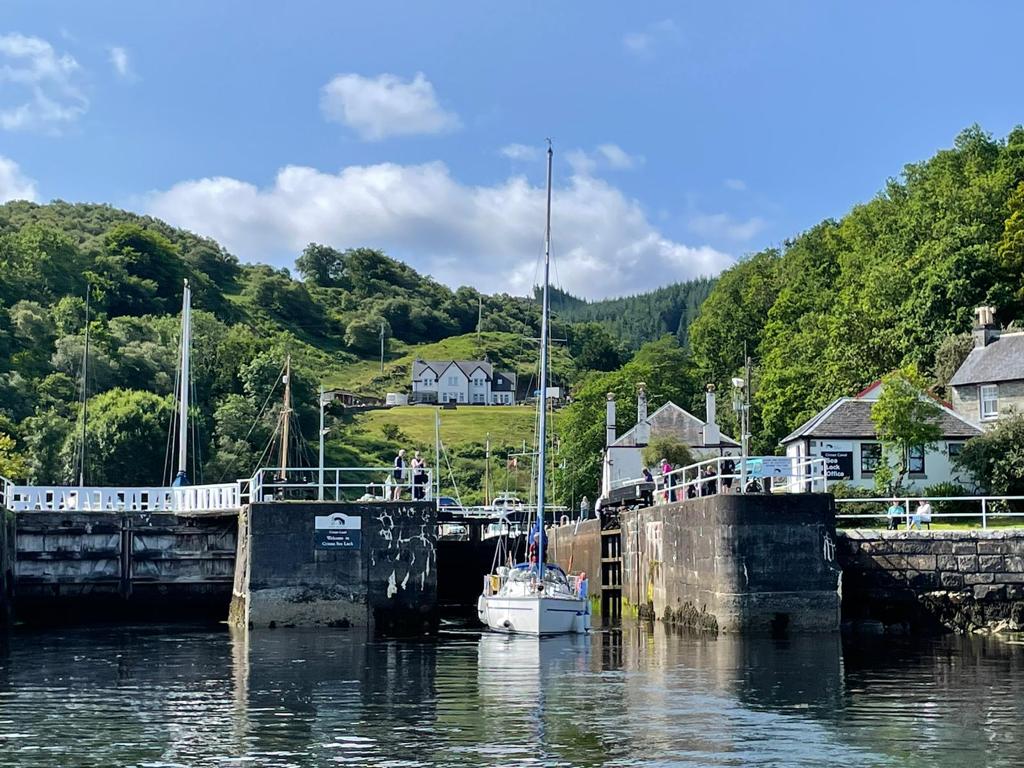
This came about as a result of my previously-described kid-in-a-toyshop state of mind on leaving the Crinan Canal basin. I had trotted up to the chandlery because if you own a boat it is illegal to walk past one, and to my disappointment found it sold both the heavy books I had carted up from Euston. It also sold eggs laid by the ,morning’s lock-keepers’ mum’s friend, so I bought some and the lad on the till asked my plans for this fine sunny day. I explained that I really wanted to go to Jura but it would have to be a there-and-back lunch stop as I had a Zoom meeting at 2pm and I doubted there’d be a mobile signal on a huge remote island with only 200 inhabitants, all at the other end. Luckily, addressing this comment to a twenty-something was the right strategy: rather than reporting me to the yachting authorities for the wrong attitude he assured me that if I was on EE I’d be OK most places, and recommended the more northerly of the two bays I had spotted on the chart, because we might see a sea eagle nest. “Just watch the tides when you’re leaving” he added.
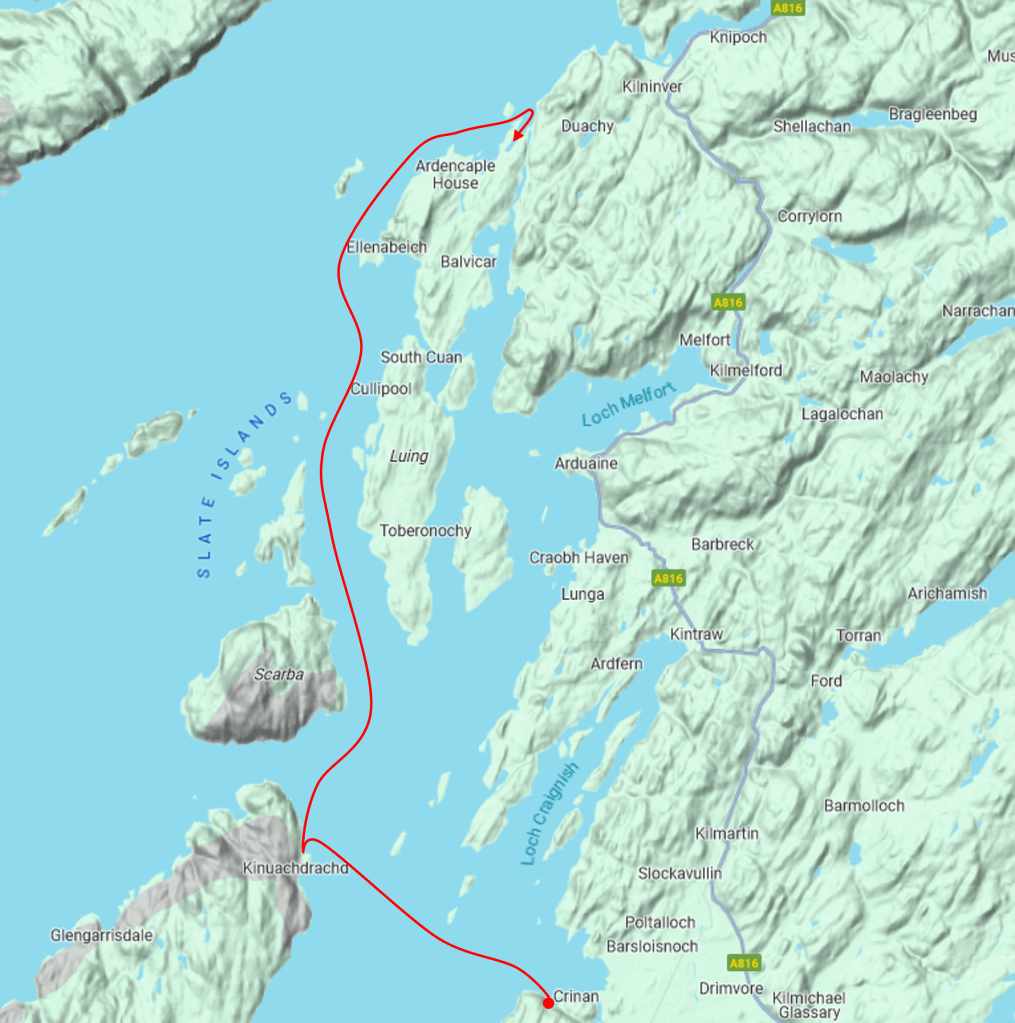
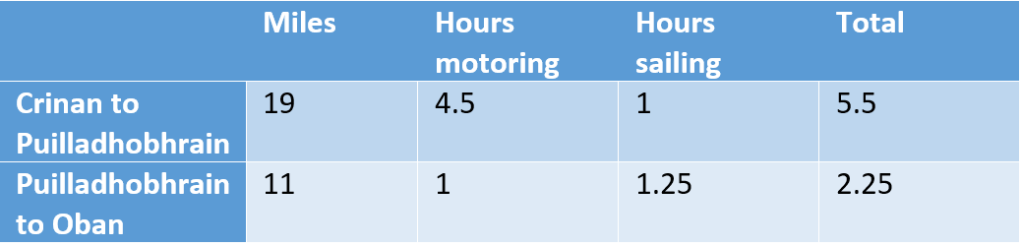
Plan hatched, we sprang out of the lock gates and made a beeline for the bay, about an hour’s motoring in a glassy calm.
I should reassure nautically-inclined readers that I had looked at the chart before leaving, and noticed that the Corryvreckan was around the corner, and not-entirely-seriously mentioned to Peter that we should keep well clear. We did notice a few tide rips as we crossed the sound, and did quite a few bits of course-changing as we closed the lunch bay, but made it fine and dropped the anchor for lunch. To my astonishment, here at the north corner of Jura, I found I had the best broadband signal for days (35Mbps if any geeks are reading), so I had a serious meeting while all around sea eagles hid their nests from binocular view, seals frolicked about and Peter snoozed in the sun. We gathered later that George Orwell rented the only house on this part of the island to write 1984, presumably so he could upload drafts to his publisher in real time.
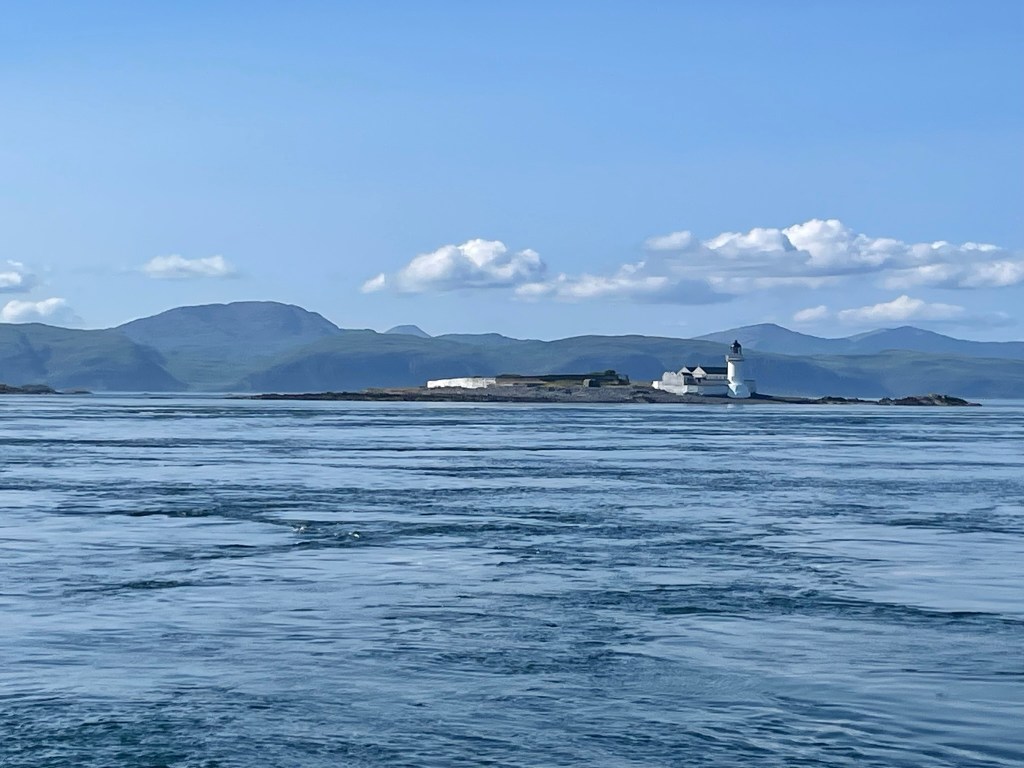
By the time we’d all done that silly post-pandemic wave thing at the end of the Zoom call, the tide had turned so off we zoomed. And zoom it was: the tide was now hurling itself into the gap between Jura and Scarba, the island to the north, where it was creating the world’s third largest you-know-what. Thoroughly spooked we motored at right angles to our destination and still the tide halved the difference from our course. At this point the new engine seemed like a sound investment: we could see waves in the channel even though it was still flat calm, and only when we were past could I face putting the kettle on to celebrate our survival. Past Scarba a passage called Grey Dogs had standing waves visible from a mile off, again in a flat calm. Meanwhile we were now in a different tidal conveyor which was speeding us down the Sound of Luing towards a ring of rocks and lighthouses and what-not: motoring at five knots we were doing as much as nine over the ground, and all around were little mini-whirlpools and waves just to stop us relaxing.
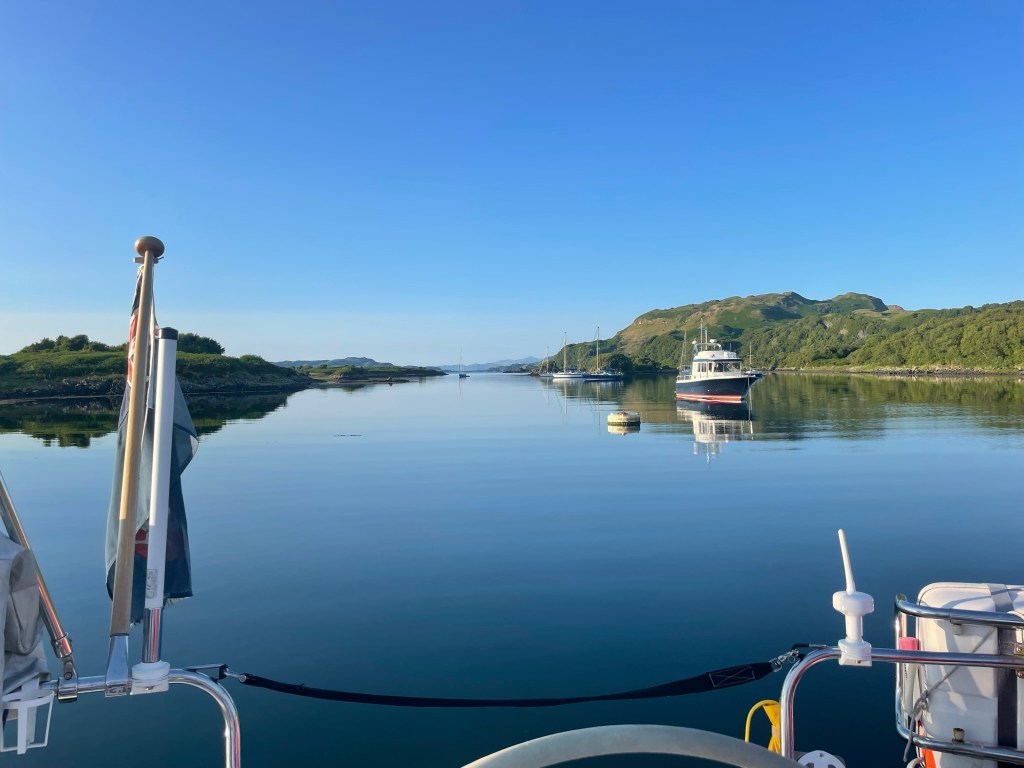
Finally we were through, and into a more benign rock-scape where the water vaguely resembled something we recognised, and we could point at where we were going. This being Peter’s last chance on this trip for the full Scottish sailing experience we headed for the famous anchorage at Puilladhobhrain, about which I had been reading in Yachting Monthly for years. What I knew about it was:
- It is one of the most beautiful and famous West Coast anchorages
- Consequently it is always crowded
- Consequently no self-respecting Scottish sailor ever goes there, it is full of Yachting Monthly readers from the Solent
Well I don’t care. I am from the Solent and I read Yachting Monthly, and whilst I would avoid East Head in Chichester Harbour for the same reasons, it is nowhere near as beautiful as Puilladhobhrain, nor does it have such a great name (Gaelic for ‘pool of the otter’, don’t you know?). And at East Head you only moan if there are more than 50 boats there. We shared Puilladhobhrain with eight others.
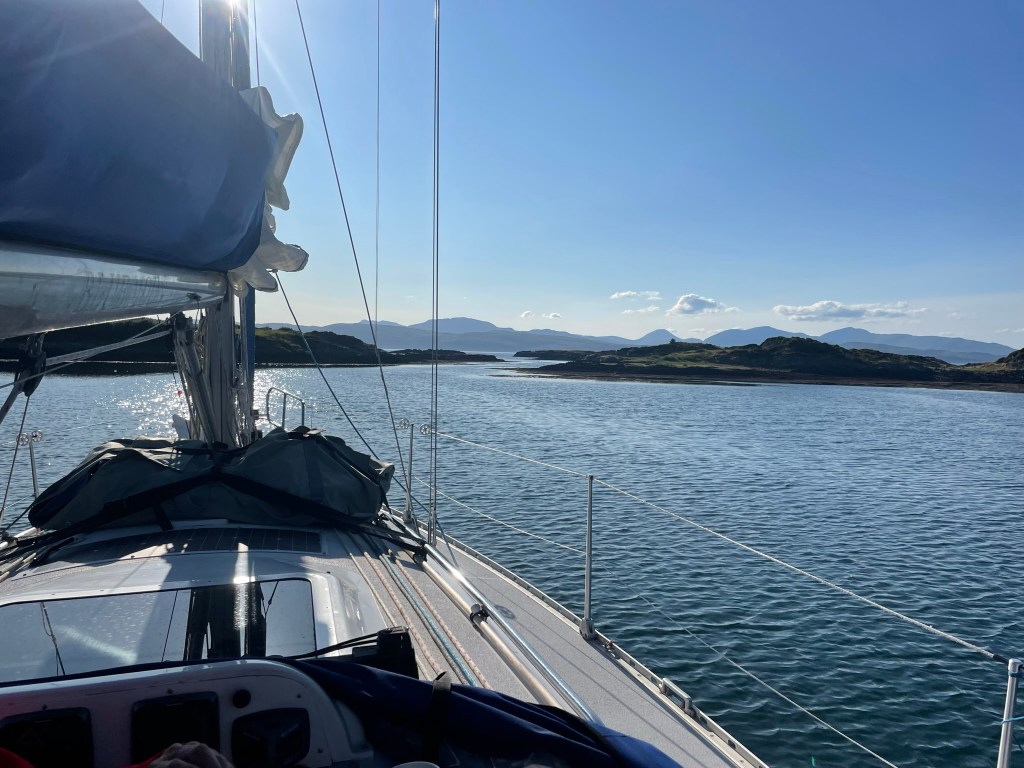
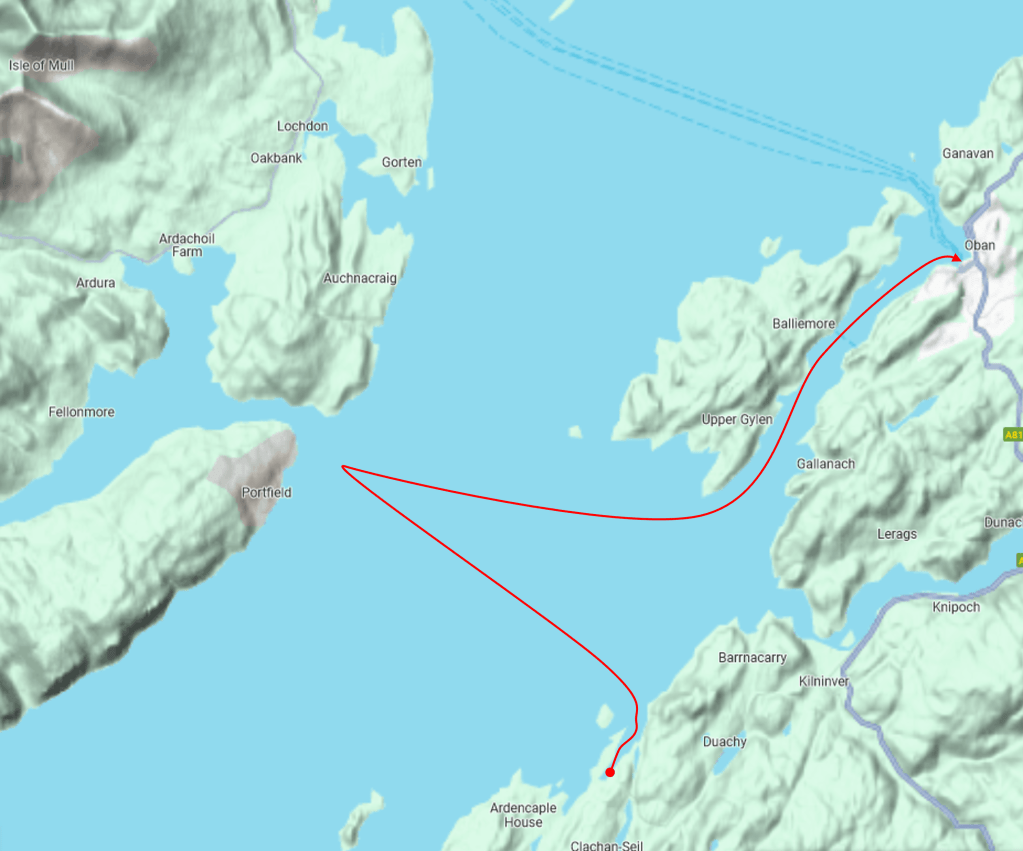
Sadly this was the end of summer as far as I can see, at least as the English know it. We woke up to wind and rain and a rather more Scottish sail up to Oban. At least Peter actually got to sail for a bit, with no engine, and there were of course rocks and tiny islands to avoid, and wind from all quarters, so all Scottish boxes ticked. Tied up in Oban it rained the kind of rain that gets animals queuing in pairs, and that finds every midly leaky window on a boat (don’t panic, just a little drip but it is driving me mad after three days). Luckily we had booked the restaurant at the end of the pontoon for our last night supper, so we could watch the boat getting drenched while tucking in, and then run like hell.
It has rained every day since, and I am writing this at 4pm watching the rain that has been pelting down since 5am. I think I have now arrived in the real Scotland.


 Blue Moon's trip around the UK
Leave a reply to phwatisyernam Cancel reply