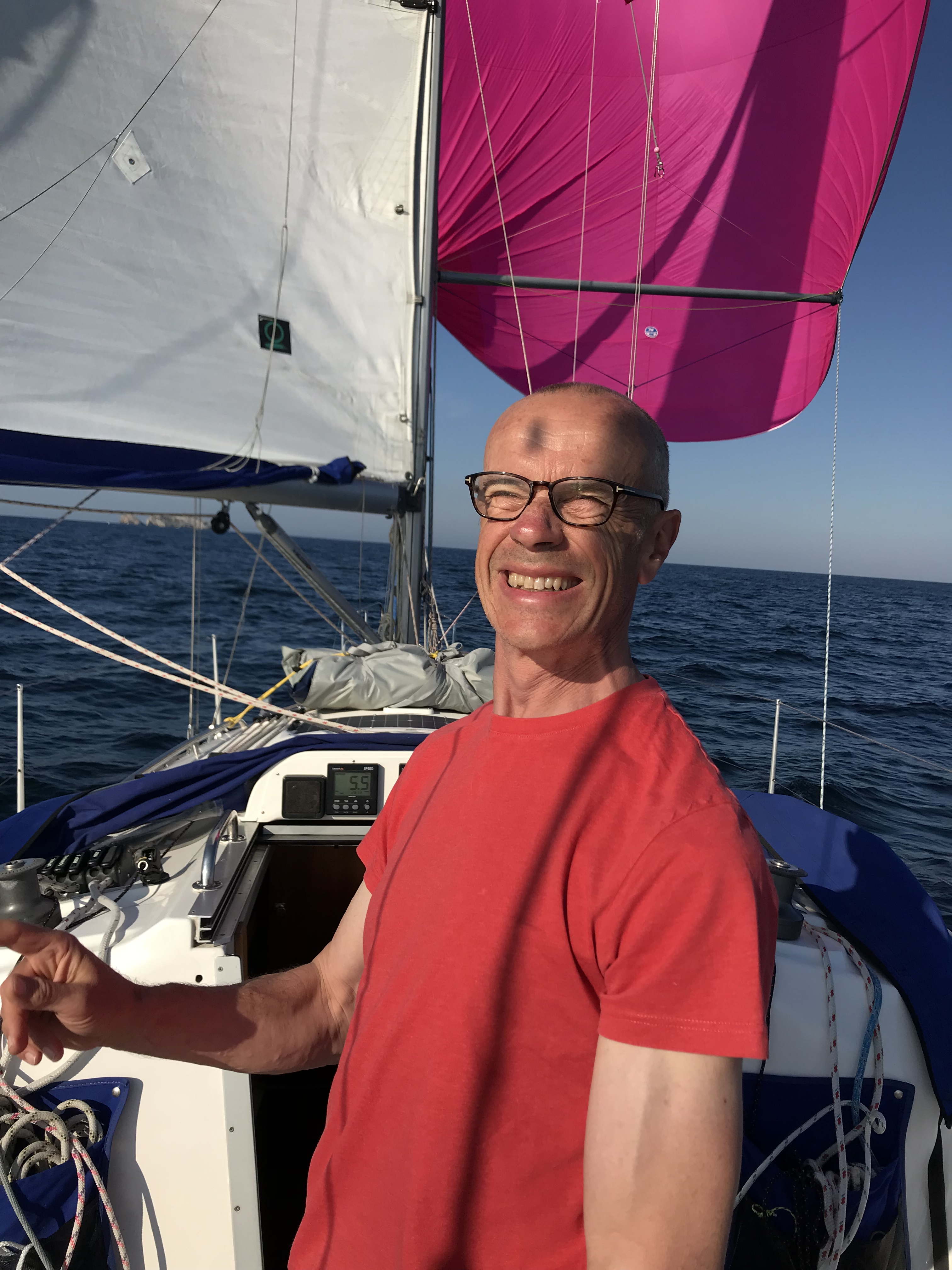
It’s been mentioned that I have developed a tendency to find fault with places I write about. I think of myself as a largely positive person (cue muffled laughter) so take comfort from the accompanying observation that it is hard to write a vaguely amusing blog whilst being positive about things. The last few days have proved the truth of that statement, and this makes me admire Mark Steel all the more, since – as discussed earlier with reference to Mark Steel’s in Town – he manages to find affectionate and positive observations even while pointing out the town in question’s quirks and usually its downsides. I’d challenge him to do an episode on Strangford Lough though, not just because there really aren’t any towns (unless you count Newtonards, which doesn’t really count as it’s at the top of a really muddy bit with water only five minutes a day) but beacause there don’t seem to be any negatives that even he could turn into positives. Consequently I am really struggling with this post, which will be short and probably humourless, even though it accounts for three days.
For a start, Strangford Lough is very beautiful. Less so in drizzle, but when the sun is out the shores all around are every shade of green with rolling egg-shaped hills and rocky inlets all around the edges which provide shelter for dozens of sailing and rowing clubs and moorings. In a trivia challenge Roger and I pat ourselves on the back having correctly identified it as an ice-age relic with moraines creating the shallow bits and the hills being actual real-life drumlins, which I thought only existed in O-level geography books. Roger’s trivia engine also produced the assertion that it is about the size of the Solent. Unlike the Solent the navigational challenges are provided not by ferries and people from Southampton in motor boats but by interesting rocky plateaus with sticks on them (or ‘pladdies’ as they’re called here). Interesting because the sticks and indeed most of the pladdies are largely invisible and completely random – even the chart warns that ‘markings may or may not be present’. We found using two different chartplotters plus a paper chart (for the first time) allowed us to identify where the sticks should be so that we could then find them and the pladdies lurking beneath; this at least reduced our heart rates to double digits.
But the memorable thing which makes it so hard to write a blog about was just how absurdly friendly everyone was, although we had a good go at provoking them.
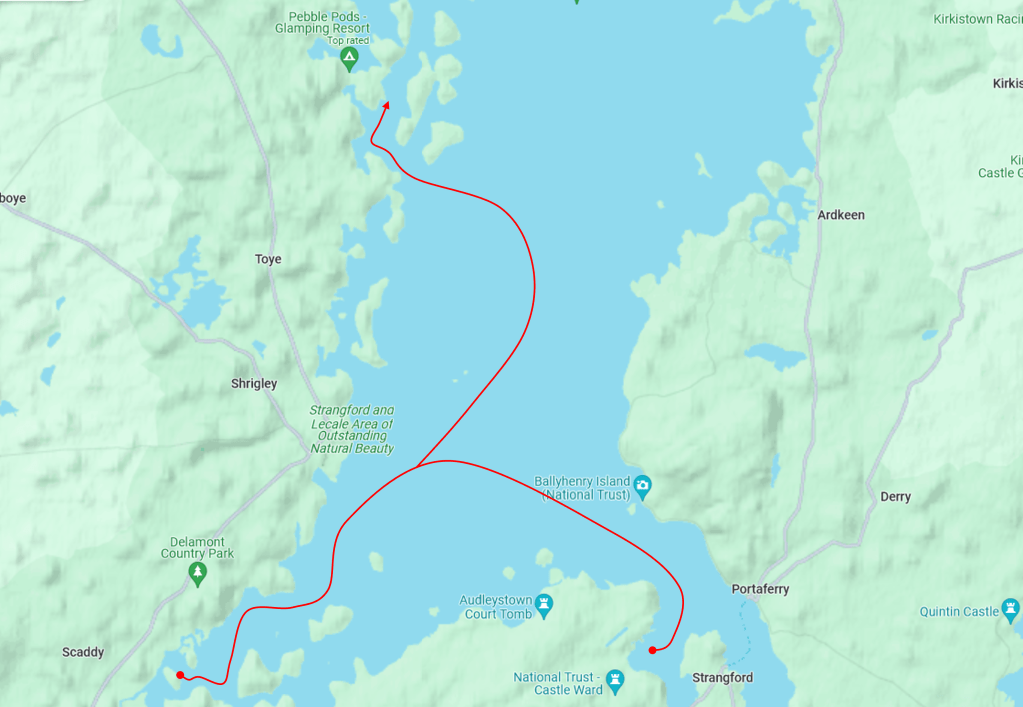
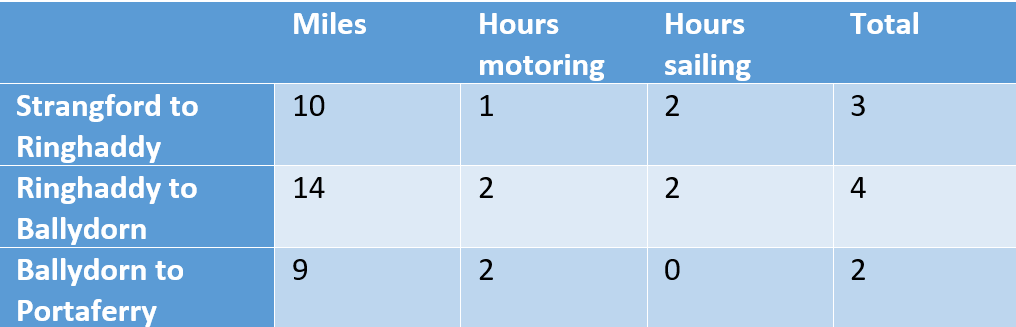
Take, for instance, our second night in the Lough. I’d been worried there wasn’t enough sailing to do just in one landlocked piece of water but needn’t have done: Roger enjoyed short tacking up the Quoyle river while I gave the winches a good workout and we picked up a mooring off the yacht club for lunch. The pilot book insisted that it was better to pick up moorings than try to anchor in most parts of the Lough, it being full of shellfish beds and narrow bays full of moorings. We’d done this the night before, and been assured by someone else there was no need to pay anyone, and indeed we couldn’t. Then we sailed up to the wonderfully-named Ringhaddy Quay where the Cruising Club has a pontoon. As soon as we approached someone leapt off the next boat, sprinted around to us to take our lines. “Welcome, welcome”, he said, “you’re very welcome. Now you can plug into the electric here, there’s water there, and there’s showers in the club you’re welcome to use”. We asked who to pay for this luxury. “Oh no,” he replied, “we don’t charge for anything. You’re very welcome.” It turned out that the electricity was off and the shower was cold, but we couldn’t fault the welcome. “You might have to move in the morning”, he added, “this is our busy time as we’re launching several boats a day and we need all the space”. No such thing. Instead, people coming down to their boats came by to say hello and chat and ask where we were from. One had read the review of the 325 in Yachting Monthly and was thinking of getting one so we showed him around.
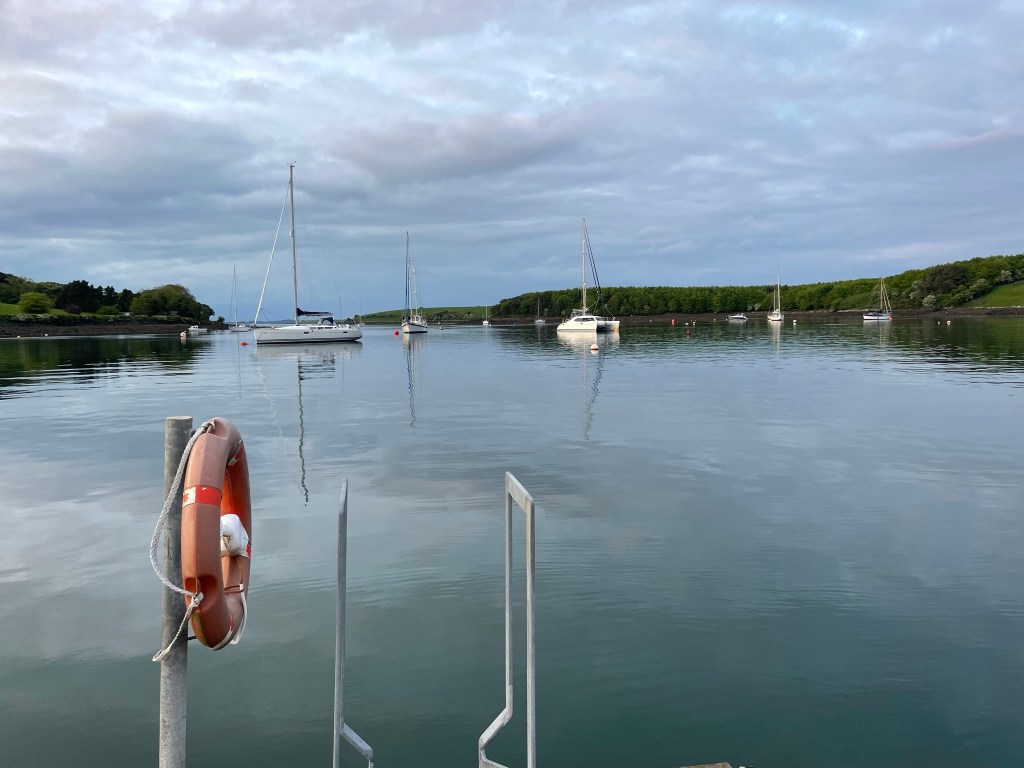
We’d identified an interesting walk to a ruined castle and church on the neighbouring island, so set off to explore. Around the corner was a sign saying Private Road so we stopped to check if this meant no footpath. We were just about to carry on when a car came round the corner. Caught trespassing! The window came down and a very cut glass English accent said “Can I help you?” in that way that suggests it really means “Get off my land!”. We explained that we’d hoped to see the ruins and asked if there was a footpath. “No, it’s private land, and viewing’s by appointment” she said, but then added “have you come far?” “Chichester?” ventured Roger, “by boat?”. “That’ll do”, she said. “Come on through and have a look around. Tell them Alison sent you”. As we went on, every generation of her (rather famous in NI, according to further internet detective work) extended family came out to challenge us but immediately dissolved into welcomes. We got a (rather aristocratically vague) history of the castle, a description of the island, further questions about my trip and some discussion of the Outer Hebrides (one of them appeared to own one) and were encouraged to wander around their land to our heart’s content.
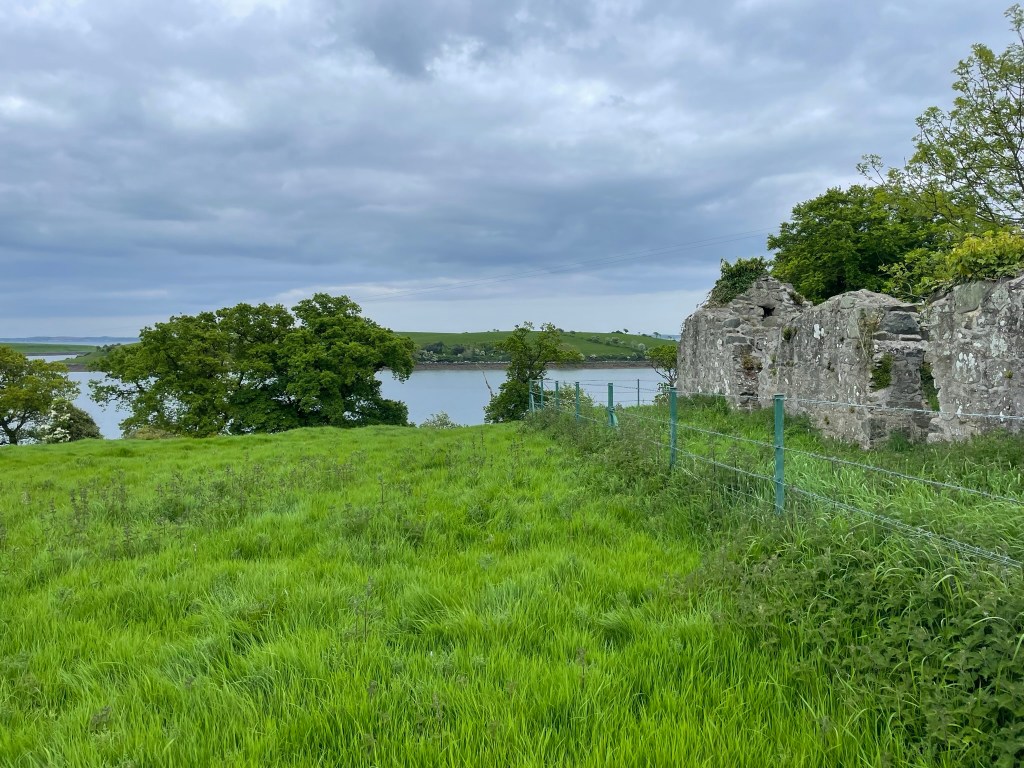
It was the same the next night at Down Cruising Club. which is based in a restored lightship. This time three people jumped off their boats to take our lines and welcome us in. We did pay £20 but the showers worked this time, and a constant stream of people stopped to chat, such that we barely had time to use their lovely if tiny shower before dinner on Sketrick Island around the corner.
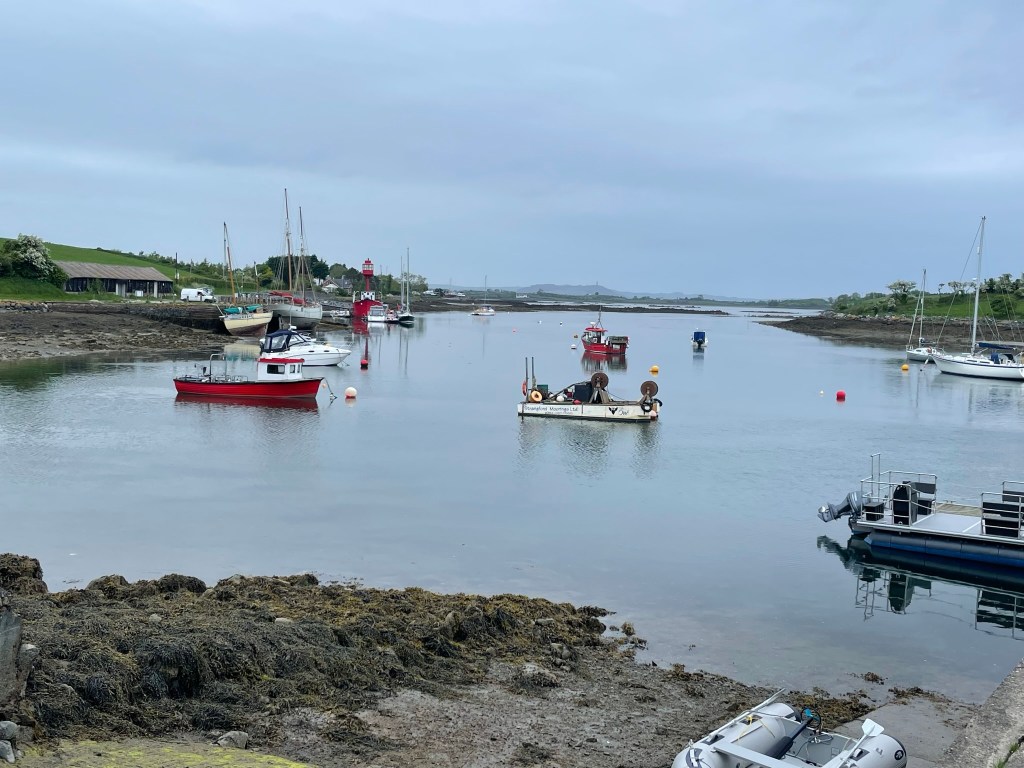
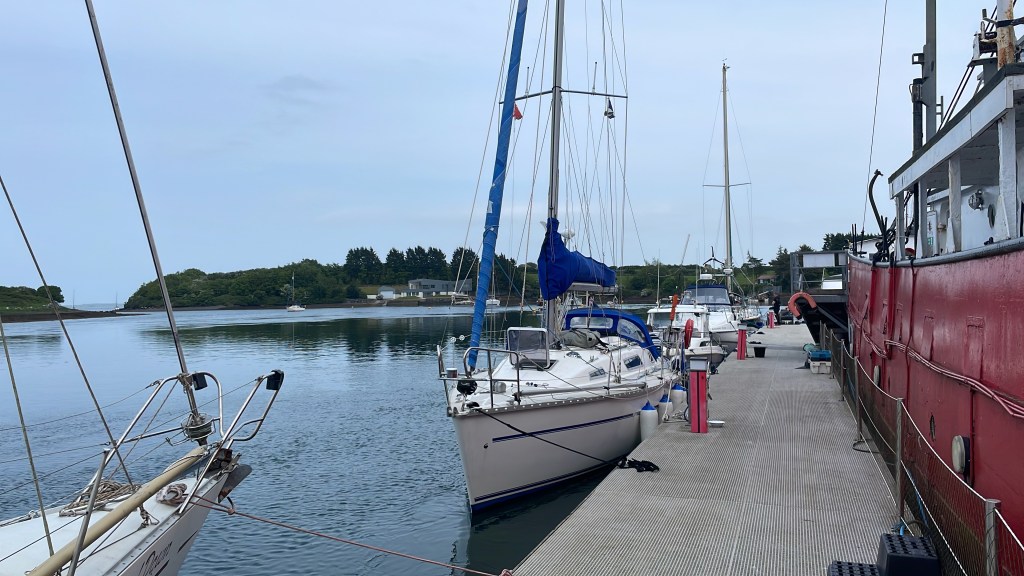
Next morning the pontoon was full of people loading and unloading boats. I kept offering to move as I was taking up space but they wouldn’t hear of it. Instead I was treated to a morning of advice on when and how to leave, where to go next and how to get there.
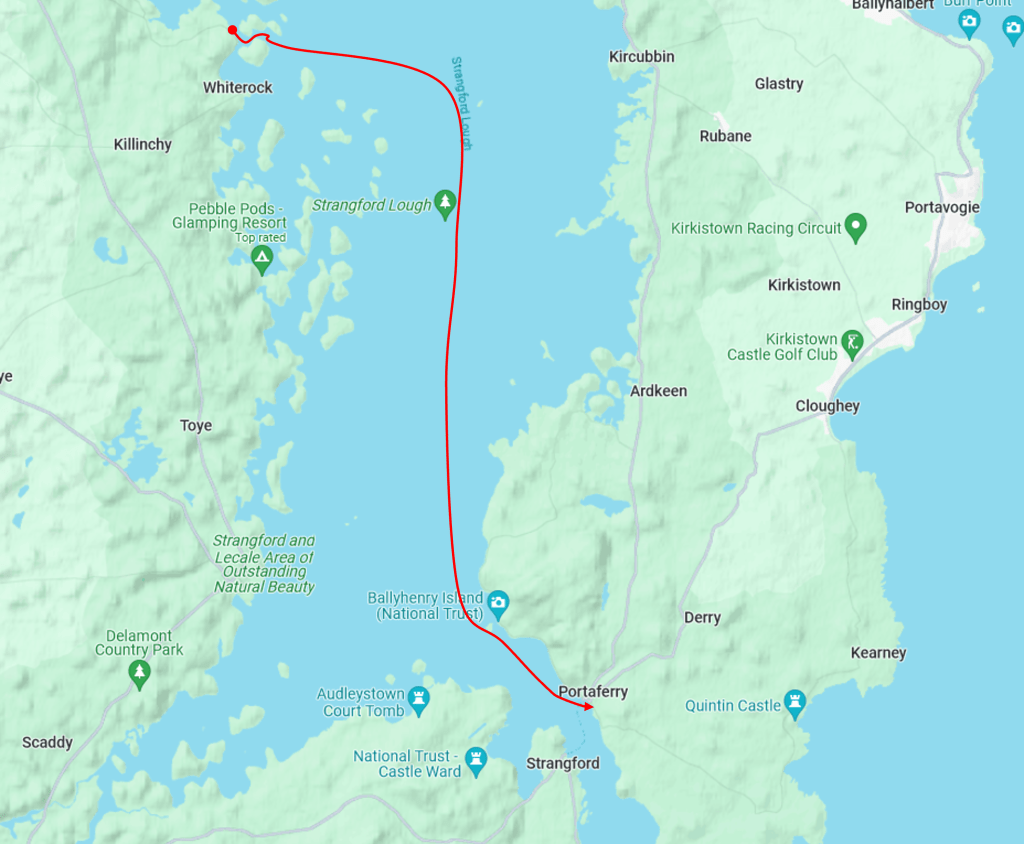
We went up to the top of the Lough mainly to see what was there but also so Roger could see if my winch-winding had improved. We’d planned to anchor to one side of the marine conservation zone but when we got there we found some moorings off Newtownards Sailing Club so, getting used to this now, picked one up for a lunch stop. It was downwind of a pig farm but the lunch was nice and the mooring sheltered. After a leisurely coffee we hoisted sail, dropped the mooring and started to head back. As we did, we saw a RIB hurtling towards us with three people and what looked like the mooring we’d just used in it. Uh oh. Now we’ve outstayed our welcome, perhaps even broken the mooring. “Sorry,” we began, “should we have paid?” “Not a bit of it” they replied, “we’ve come out to say hello. We don’t get many visitors this end of the Lough. We’d opened the bar for you!”
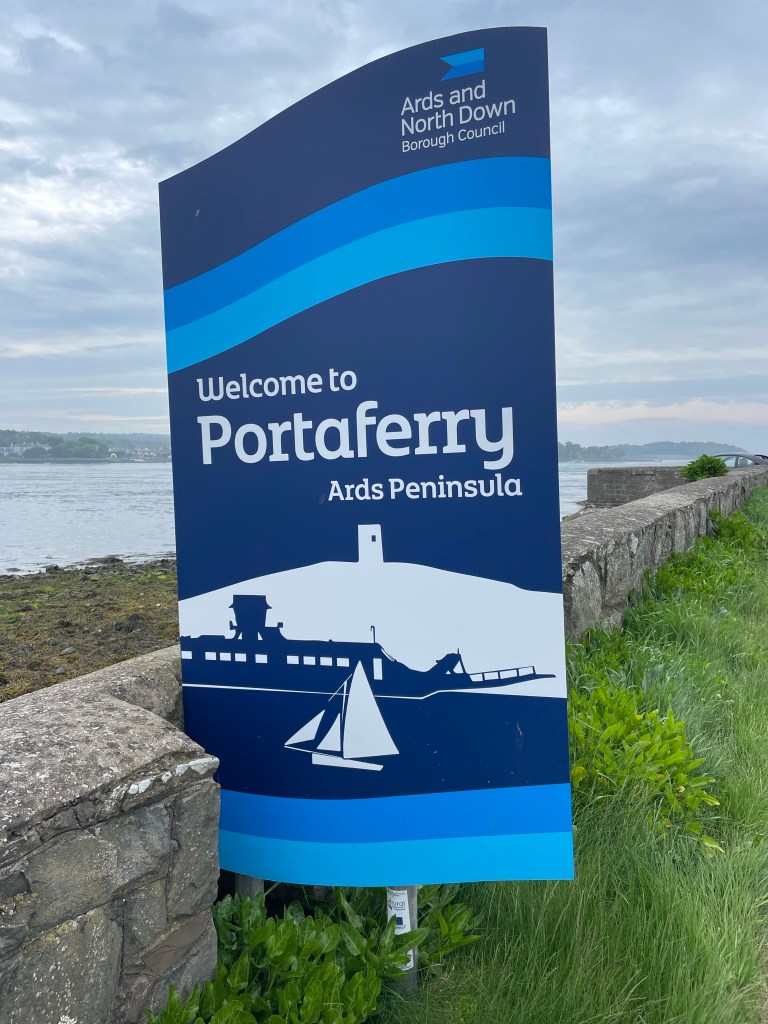
Finally, with Roger on the plane home, I pottered down to Portaferry at the top of The Narrows from where it would be easy to judge the safest moment to leave the next morning, and where the Pilot promised the best fish and chips. It’s not really a marina as such, more some pontoons off the village paid for by the local development board. Various forums warned of narrow pontoons, terrifying tides and basic facilities. I’d called ahead and been answered by a man with a speech impediment which combined with his thick Ards peninsula accent to render him unintelligible to anyone not from Portaferry. So it was with some tredpidation that I nosed in (got my tides right this time, no dramas), but there was someone waving at me. It was my correspondent the berthing master and sole employee of the ‘marina’, who had lined up a local from another boat to help take my lines even though the tide was slack and my parking considerably improved after weeks of practice.
“You’re welcome, you’re welcome, you’re welcome, you’re very welcome here to Portaferry” he began, as if I was his first ever visitor. “Now the electric is here, the water is here, the shower is there, and the best pint in Portaferry is at the pub there, I had me lunch there and they’re doing a grand burger today but it could have fed a family. Now my name is Padraig (that is how you spell Porrick, isn’t it? – Ed) and if you want anything at all I’m here until five but after that you can call me any time.” That is a very abridged version of the welcome, much of which I had to guess at because of the accent, and which he repeated every time I went past him during the afternoon.
The chip shop was closed so – purely in the interests of the blog you understand – I went to the pub instead, where they not only had the best fish and chips since Padstow but Guinness too, and there was Padraig at the bar. “Peter!” he exclaimed at once, addressing the whole bar as if I was his long lost brother, “you’ve come to the right place. You’ll always be very welcome in Portaferry.” The bar staff, the waiters and the sticky toffee pudding were all as lovely as Padraig and the fish and chips, and they refused to charge for the Guinness as the fire alarm had gone off and could only be silenced by hitting it loudly with a hammer.
So it was with a heavy heart that I set off into the cold grey murk and the relatively mild four knots of ebb tide and whirlpools on Sunday morning. I was genuinely sad to be leaving Strangford Lough, but sadder still that I had absolutely no idea at all what I could possibly write three days’ worth of blog about.



 Blue Moon's trip around the UK
Leave a reply to phwatisyernam Cancel reply