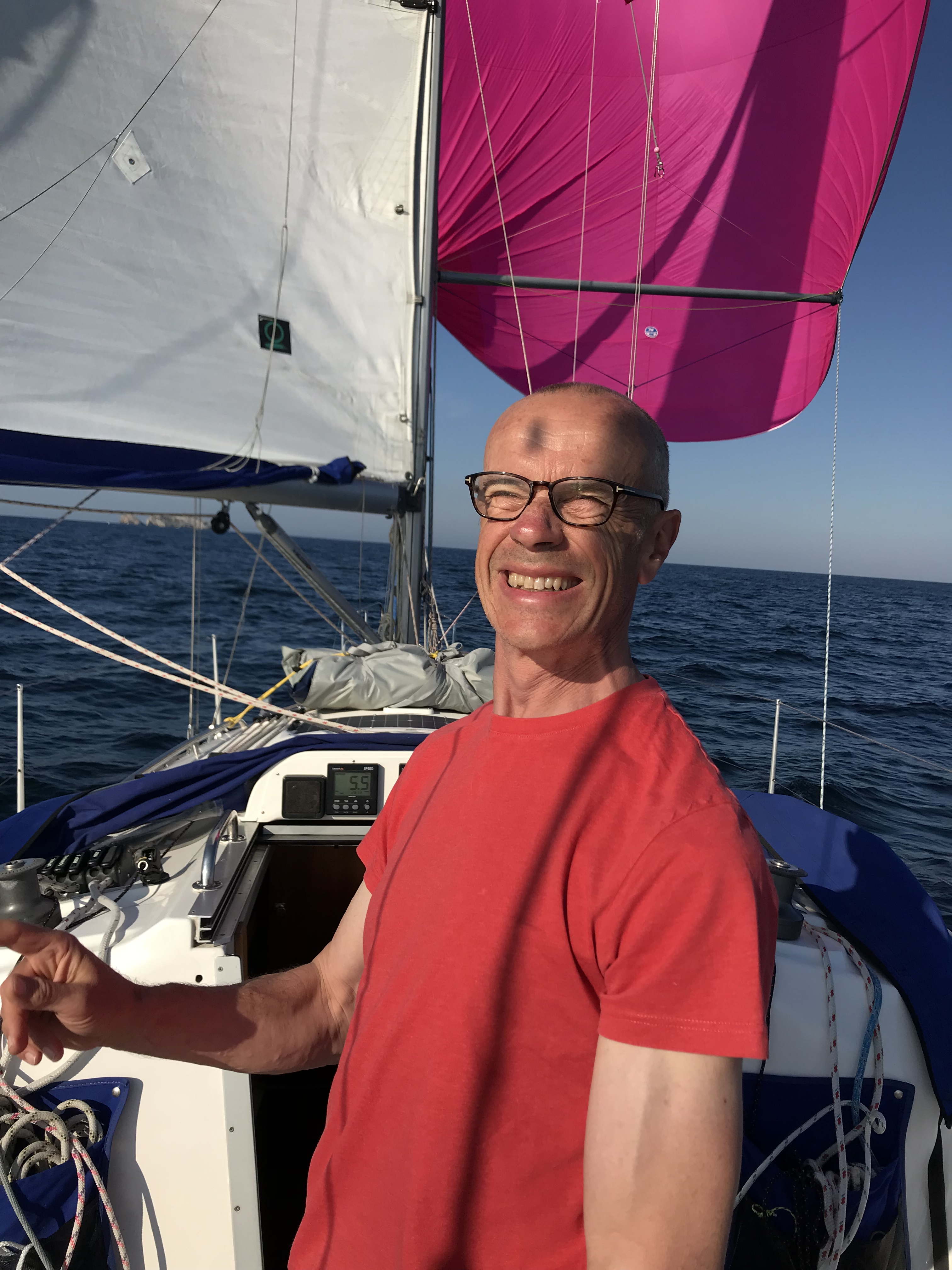
(and an unexpected homecoming of sorts)
I know, I have waxed long and lyrical about Scotland, and bemoaned the increasing lack of adventure as I headed further South. Indeed, one of the reasons I chose to go round clockwise was so that I would finish up with what we Southern sailors call the East Coast, but is in reality only that small bit of the East Coast that is Suffolk, Essex and Kent, because that’s where I grew up sailng and so there would be no magic or adventure in it, let alone find adventures that would guarantee further awards to add to the blog’s haul. I would simply whizz past, with a brief detour up the Thames being the only bit I don’t already know pretty well.
I’m afraid that I did whizz past, but only because the weather yet again forced a degree of urgency on the week as the whole experience was far more enjoyable than I expected. There may not have been much magic to speak of, and certainly precious little adventure, but after over 6,000 miles of what can only very loosely be termed adventure I am ready for home, and there is, as the saying goes, no place like it. Not even Scotland, if you are as lucky as I am to have grown up cruising the rivers that God designed for that very purpose. The tour was brief, and so will this post be, but it’s only confirmed my resolve to come back one summer very soon and do some proper pottering around the muddy creeks of my childhood.
There’s little joy in sharing these happy memories with yourself, so I had the good fortune to have two guests for the week who are so foreign to the area that their only known geographical reference point appeared to be Southend, which generally doesn’t appear on most East Coast yachtsmen’s cruising itineraries. Andrew and Jamie can I suppose be forgiven: having migrated from Scotland to Sussex in an apparently straight line they were cruelly denied the knowledge that sailing on the East Coast is a thing, let alone one of life’s great pleasures, so here was my chance to return the favour Andrew did of introducing me to Chichester Harbour and boats built out of carbon fibre rather than wood and tar. And they were both very patient in putting up with my interminable dewy-eyed reminiscing about creeks crawled, barges anchored, regattas won and lost and countless jolly japes involving beer and mud.
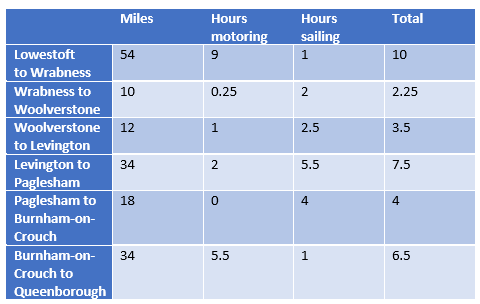
Andrew got the gentle introduction on account of not having a job to go to and being free on Monday to catch the train up to Lowestoft to enjoy the last of the gentle breeze before it all got rather windy. Lowestoft was one of the few places East of Itchenor he has sailed from, in a rather windy Edinburgh Cup, and one thing everyone knows about Lowestoft is Waves. Big Waves. Even in a flat calm the civilised Royal Norfolk and Suffolk marina resembles one of those tanks they test models in at Southampton, so it was a bleary pair that motored out soon after dawn to catch the tide south.
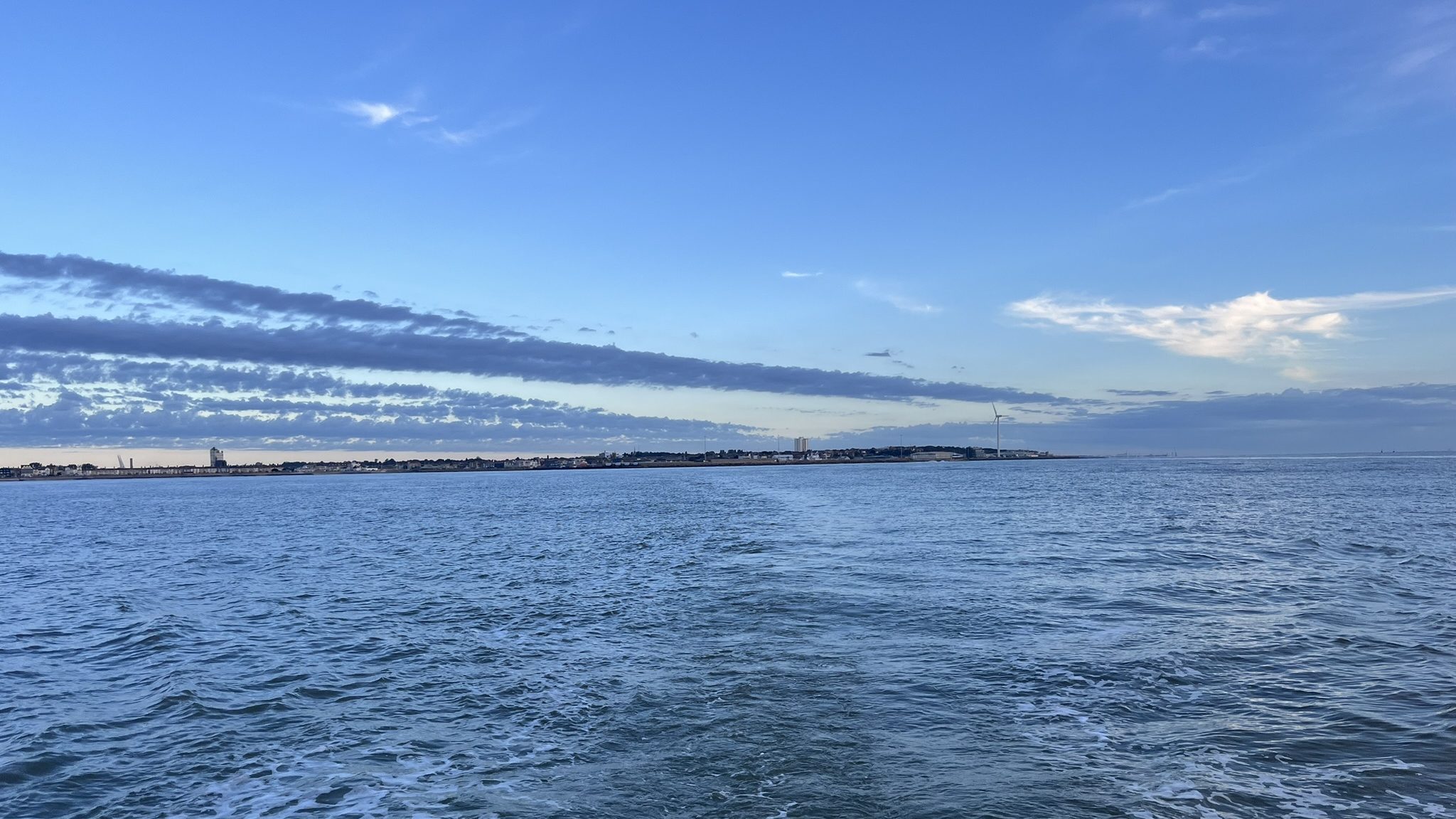
It was worth the early start because that tide really does work around here: we were whisked past Southwold and Aldeburgh, and before we knew it the fateful moment had arrived. Off the entrance to the River Deben we passed the point which was until now the northernmost limit of my cruising: from here on I had already been there, probably often enough to know my way home without a chart without hitting anything. I have now sailed around the entire coast of the UK, albeit over a period of fifty years and not in the one boat. Not just yet.
Connoisseurs of East Coast yachting will already be wondering why I had missed out two of the best rivers, but they may already also have guessed the answer: it is September, and it is going to blow quite hard from the Southwest all week. We are heading Southwest, so faced with at least one day not involving a long beat to windward through mudbanks Andrew and I took it, and hoped that when Jamie arrived he would forgive us a day of glorious sunshine and light winds. At least he can look at the photos.
Our cunning tide strategy paid immediate dividends: we arrived off Harwich sufficiently early that we could put the sails up and drift on the tide all the way up the Stour to Mistley and Manningtree, then drift back again. I had forgotten that I had been to Mistley before and only remembered when we got there. I suspect that this sort of experience will only become more frequent now…
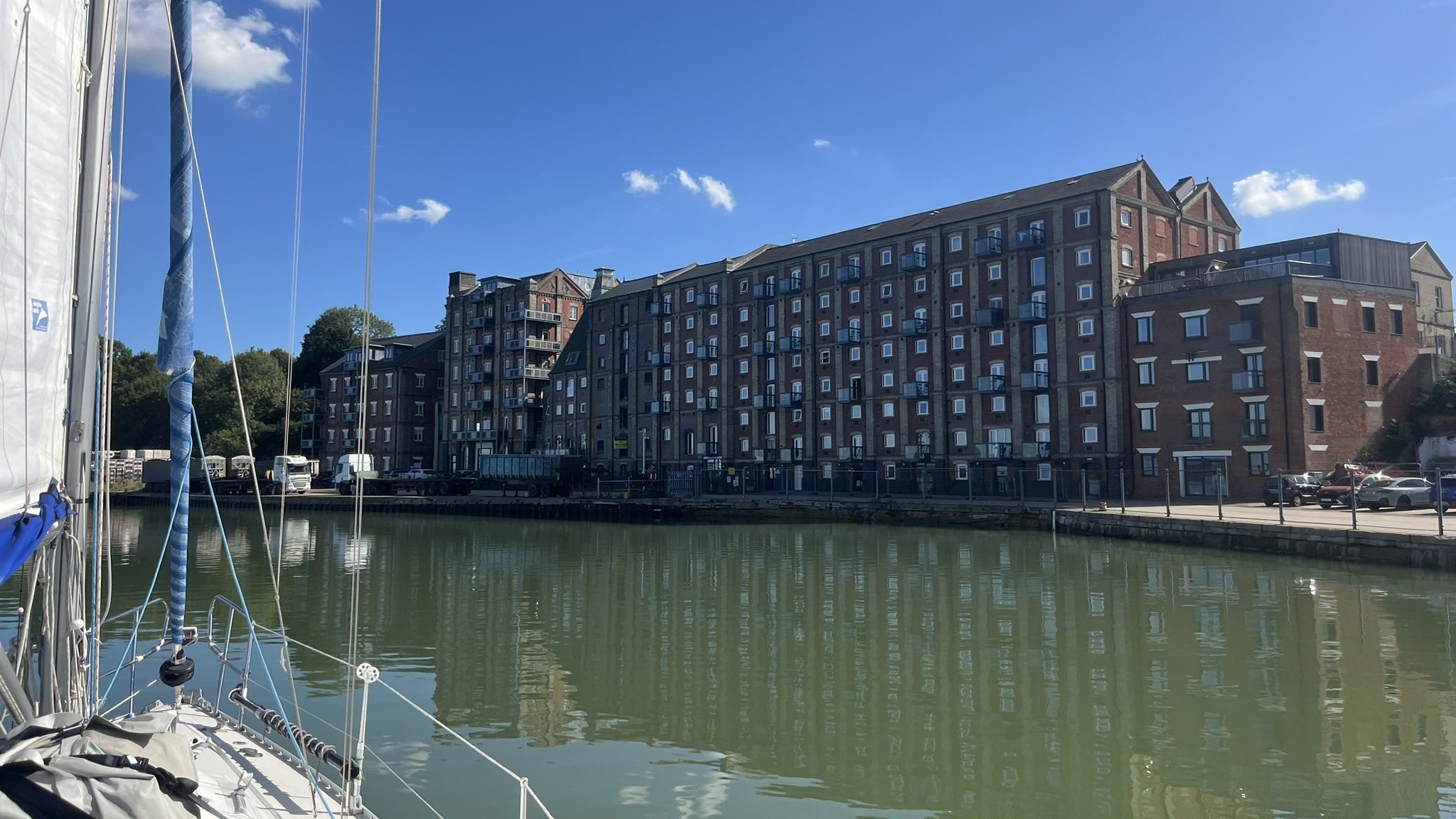
I had only ever glimpsed Manningtree through the windows of the train, so this felt as close to adventure as we were going to get.
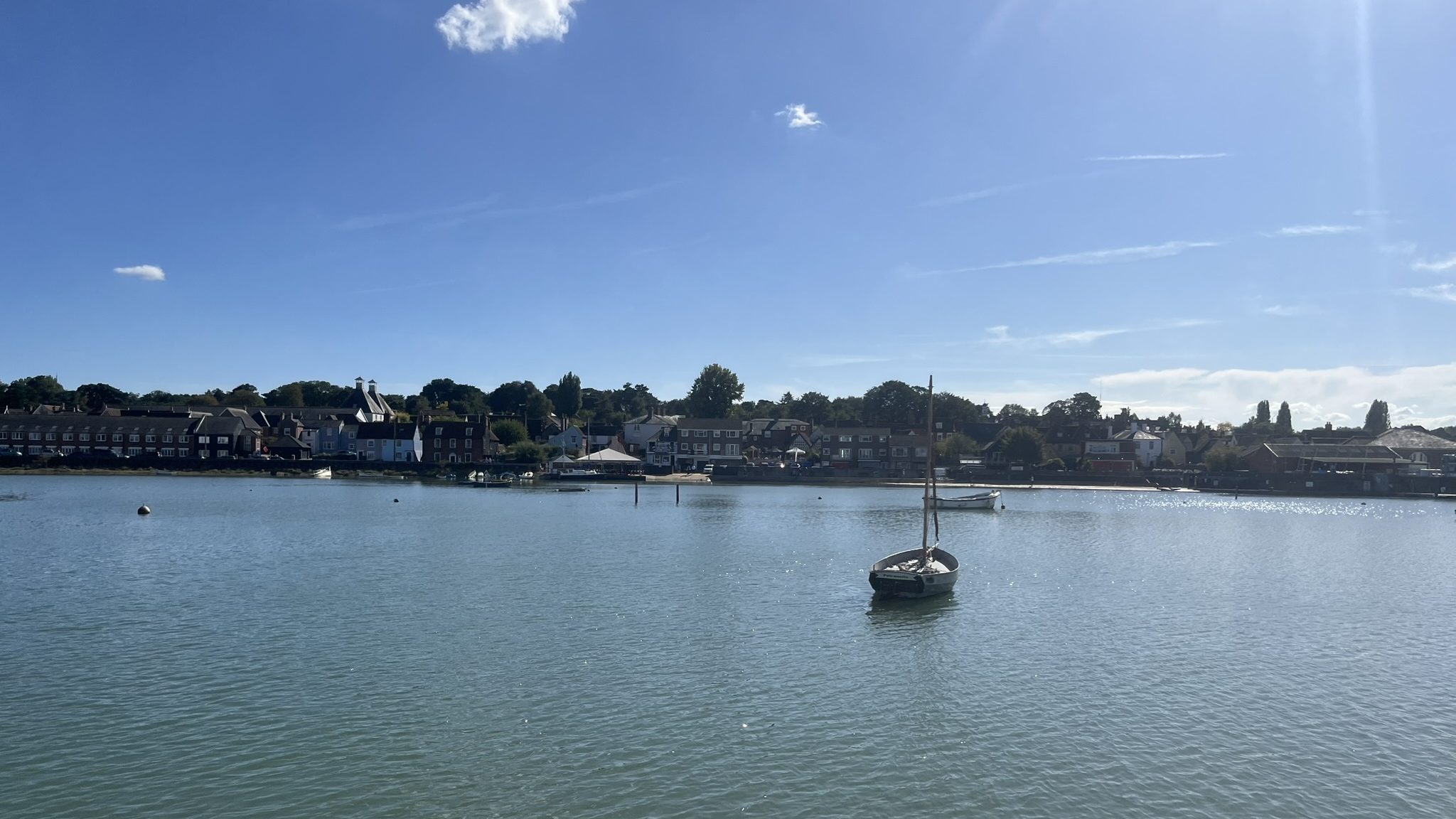
I’d had the frightfully bright idea of copying the Thames Barges who used to park on a bit of the river called Ballast Hill, wait for the tide to go out and then fill their holds with shingle to sell as, well, ballast. Rather than selling the shingle I would walk around on it to scrub off the weed that had grown around Blue Moon after her lengthy stay in Lowestoft. At this point Andrew played what may have been his finest card by suggesting that before commtting to Ballast Hill we pull a bit of it up on the anchor to check that it was still shingle. We did, and it wasn’t. In amongst the blackest mud I had seen, even on the Medway, were one or two shells and a few bits of gravel. It turns out the barges had done a good job, and I would have had a miserable evening sinking into evil mud. We washed off as much as we could and headed down to the much more picturesque Wrabness to anchor off a big wood that would shelter us as the weather gods pressed the button marked ‘Autumn’ and the beefy south-westerlies began.
It had been a good idea to get into the Stour early: as I had patiently explained to Andrew, part of God’s clever plan for cruising heaven was to arrange the rivers in pairs so that you can cruise up and down a selection of them without ever really going to sea. This was a perfect opportunity to demonstrate His Purpose: faced with gusts up to 30 knots we simply cruised down the Stour in flat water, looked at the waves off Harwich and bore away up the Orwell. Today’s fact: I had absolutely no idea that Eric Blair so loved the river that he chose it for his pen surname. Perhaps his first pet was called George.
Our destination was the very friendly Royal Harwich Yacht Club where they have built a small marina since I was last there, and it was made even friendlier by seeing fellow Parker 325 owners Anne and Dennis standing on the marina waiting to take our lines. Owners of similar boats can spend days on end discussing and comparing their prides and joy, as Andrew should know full well after a lifetime of shooting the breeze in the dinghy parks of the world comparing rockers and foils and rises of floors and mast rakes, so he should count himself lucky that the three of us only needed coffee, lunch and the time in between to cover just some of the grounds of mutual interest. We can pick up the conversation next time.
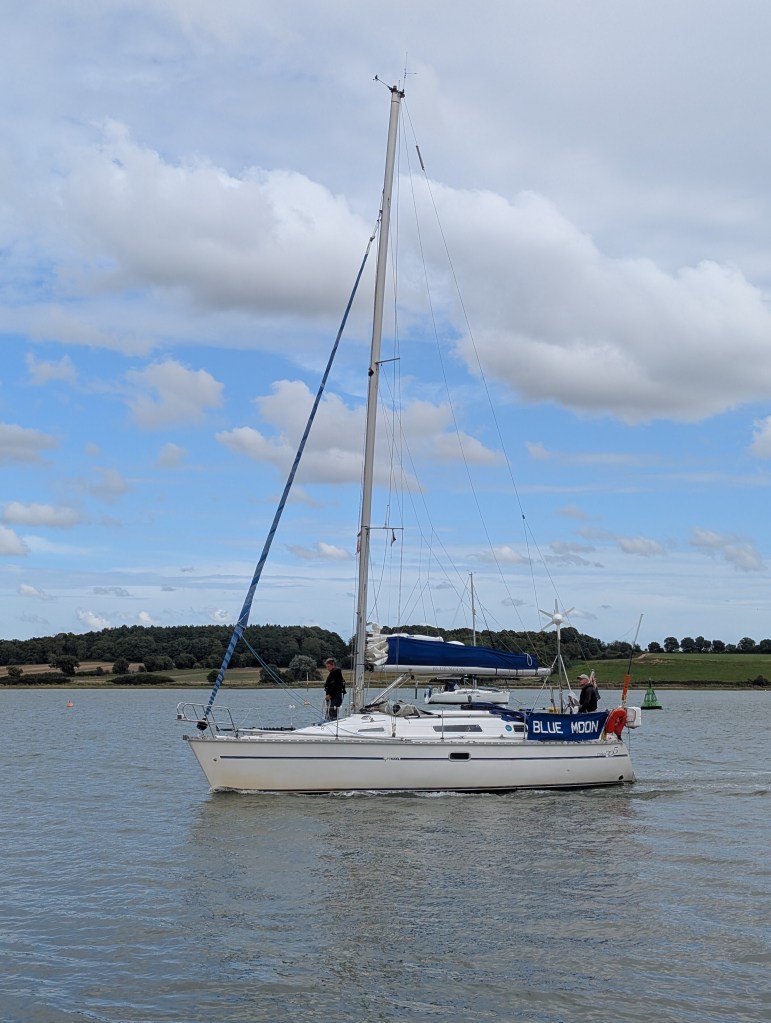
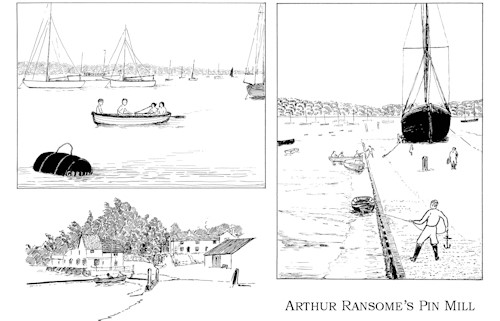
One of the Royal Harwich’s many assets is its proximity to the legend that is Pin Mill, a place which even Scottish sailors have heard of. So should everybody, as everybody should have read their Arthur Ransome and specifically We Didn’t Mean To Go To Sea, which begins there. I am proud to say I had only every been there in a Thames Barge, which is the correct way to approach the village, but that is harder to do these days so walking through the woods from Woolverstone was the next best thing.
We even came across some actual shipwrights actually banging actual caulking cotton into actual seams on an actual smack, which is exactly what you should come across on your first visit to Pin Mill.

It was handy that Andrew had enjoyed his first visit as a few hours later we arranged his second: Jamie had arrived off the London Train, just as Arthur Ransome or Captain Walker might have done, but without the hat and briefcase, and we headed back to the Butt and Oyster for the definitive East Coast pub experience.
Far from dragging our anchor and being swept to Flushing (if you are confused by now, you need to go and buy a copy of the book and read it immediately) we were firmly stuck to the Orwell: it was blowing even harder than before so in an attempt to make Jamie’s first day worthwhile we put up some reefed sails and sailed first under the bridge to Ipswich, then all the way down the river to Felixtowe where we watched the largest container ship we had ever seen being pulled sideways off the dock into a stiff breeze by two tugs.

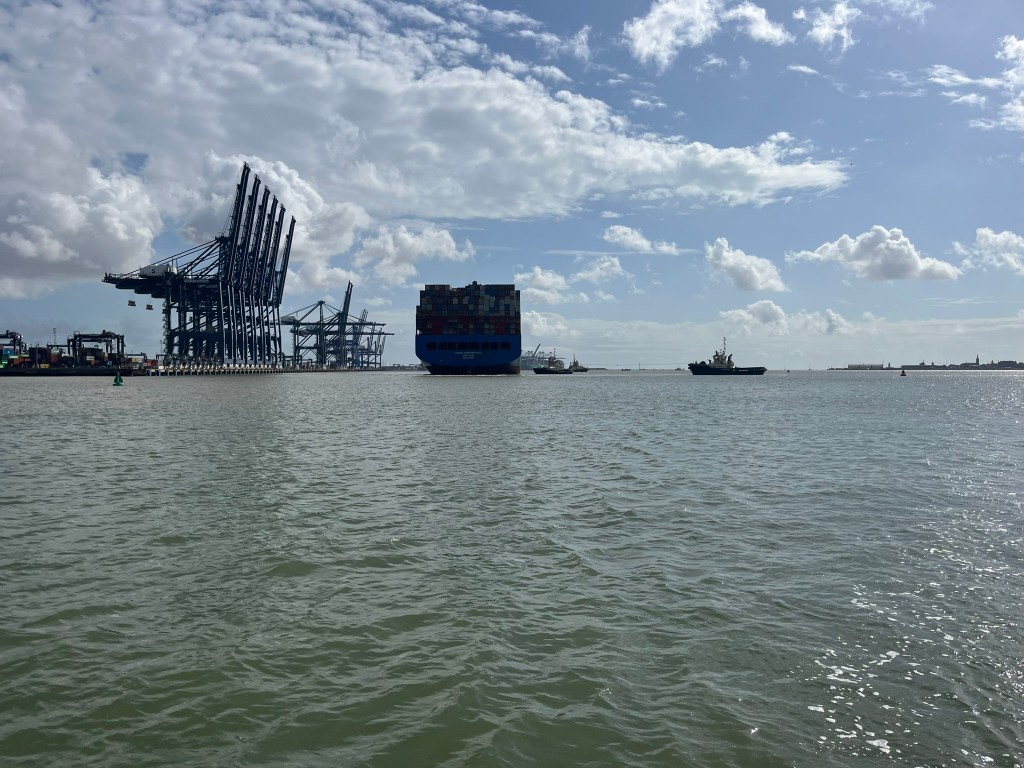
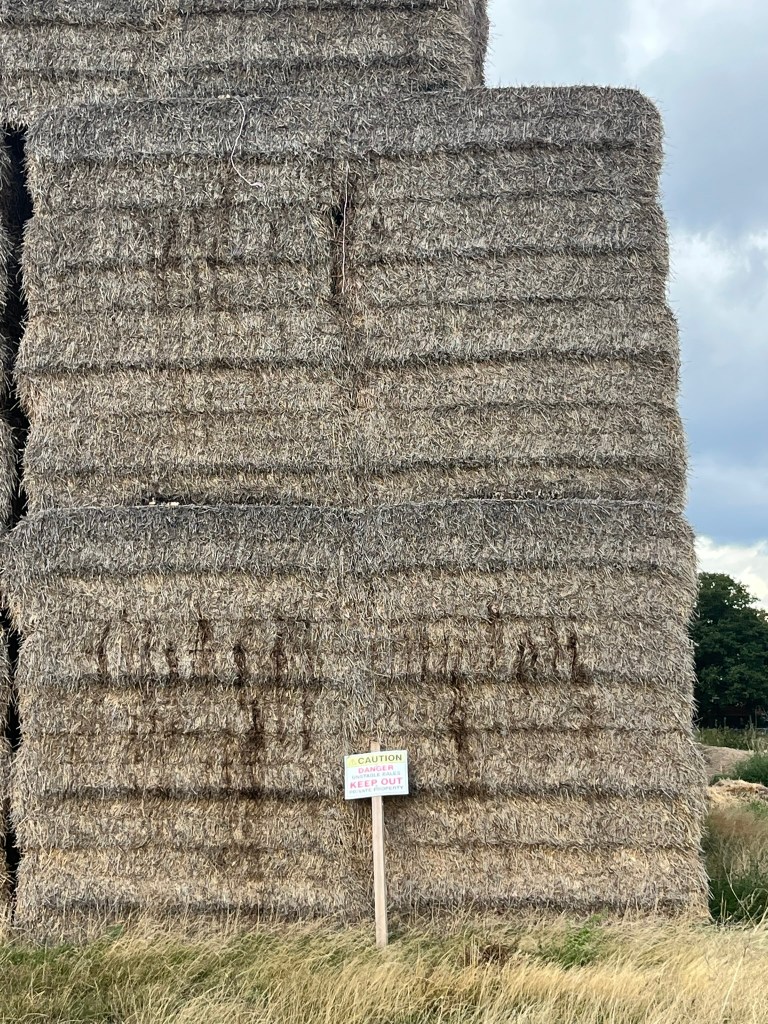
After these excitements it was time for a stiff walk in the stiff breeze to build up an appetite for a near-identical East Coast pub experience at The Ship in Levington, made all the more near-identical by both pubs now being owned by East Suffolk’s super-pub-group. The walk was definitely worth it for a late entry into the blog’s own award-within-an-award competition for daft signs, this one on a haystack only marginally smaller than the container ship:
Finally we had a day where it was going to be only quite windy rather than very windy, so we sprang out of the Orwell with the small jib and lots of reefs, past Harwich and Walton-on-the-Naze to Clacton, which is of course more famous than ever thanks to Nigel. We strained through the binoculars but couldn’t see the house, or even the large price tag floating over it.
What we did see was the latest forecast. We’d been heading to Pyefleet Creek for another proper East Coast experience and then down to the River Crouch the next day, but next day yet again looked to be windy enough to be ‘in river’ only, so it was with a heavy heart that we tacked out from Clacton Pier and made for the entrance to the Crouch. This did have the benefit of introducing the deep-water Scots to the joys of threading your way through a tiny gap between invisible sandbanks miles off shore with only a metre or two of water under your keel, then of short-tacking up an invisible river marked only by buoys in its estuary. This was all good fun until we got into the river entrance proper (imaginatively named ‘Shore Ends’ by the way) where we encountered 30 knot gusts right on the nose. This risked exploding the myth that everywhere on the East Coast is perfect so we had to take the sails down and motor hard to find shelter. Unfortunately even the Roach, the river off the Crouch with right-angled bends to provide protection in any wind, failed to deliver here: we picked up a mooring off Paglesham, further up than I had ever been, opposite what should have been barge yards but turned out to be completely rebuilt large sheds.
I thought Andrew would be excited by the opportunity to see the tower blocks of Southend as he would know where he was at last, but apparently the view was rather spoiled by the moorings being very exposed in a 30-knot south-westerly, so the trip ashore to see Essex’s answer to the Butt and Oyster, the Plough and Sail, was postponed until next year when there might be fewer waves. We cheered him up with steak and red wine on board while both tide and wind dropped to leave us in a properly sheltered, silent and remote East Coast anchorage: all we could hear was the occasional oystercatcher and all we could see was mud.
Luckily the Crouch redeemed the Roach’s failings the next day: it was as windy as promised, so another in-river day beckoned, and although I had raced around the lower reaches of the river for long enough, albeit it long ago enough, to remember the names of the racing marks without a course card, I had rarely been far upriver, so we set off to explore. Just as well I didn’t remember it too well as it has in any case changed after they dumped the contents of the tunnels that make the Elizabeth Line here and created whole new islands, with new racing marks with giveaway names like Crossrail. The sun shone, locals in yachts waved, lunch was served, and we got to Burnham Yacht Harbour, the ‘new’ marina upstream built in 1987, just before the heavens opened and washed Burnham-on-Crouch clean, physically if not in any other sense. Strange, really, for such a genteel place: coming round from the dour old Medway for Burnham Week and various sailing events, combined with Ian Dury’s then-contemporary “a nice bit of posh”, Burnham has always seemed like Babylon if not quite Sodom and Gomorrah, so it was probably a good thing to see it on a quiet September Saturday after the rain, with no parties in sight at all.
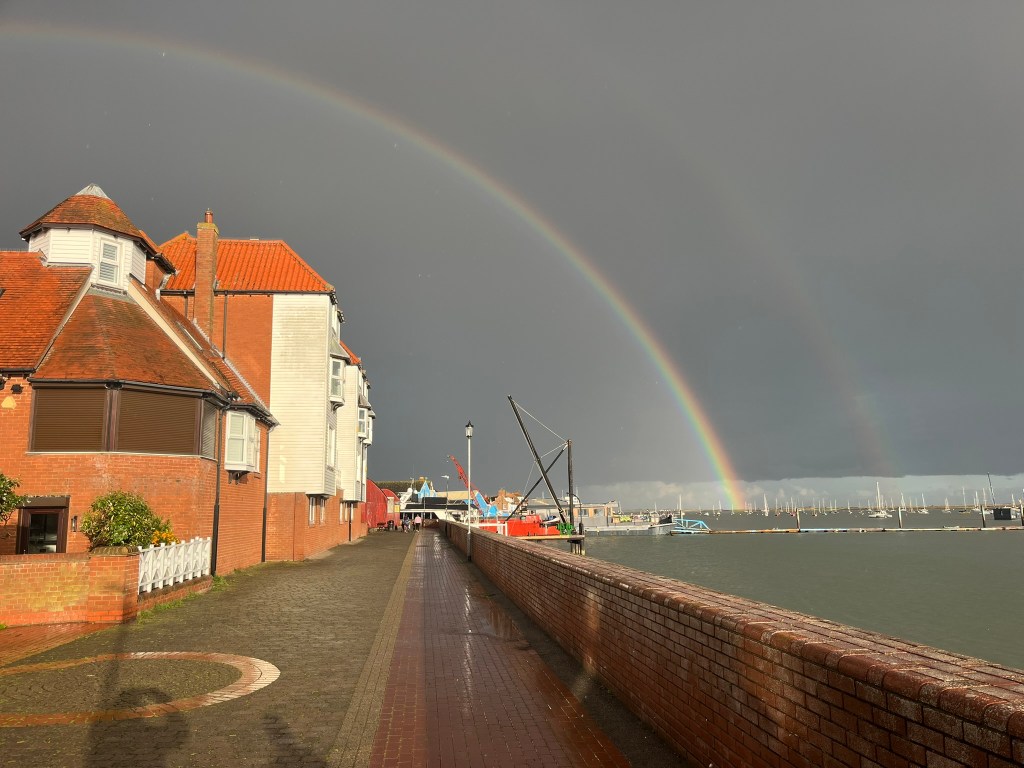
A quick trip down memory lane in the form of a pint in the Royal Corinthian bar revealed another facet of ageing – yet another friend who is now a Flag Officer of a recognised yacht club that should have known better. I’ve noticed that policemen are getting younger too, and that things in general aren’t what they used to be.
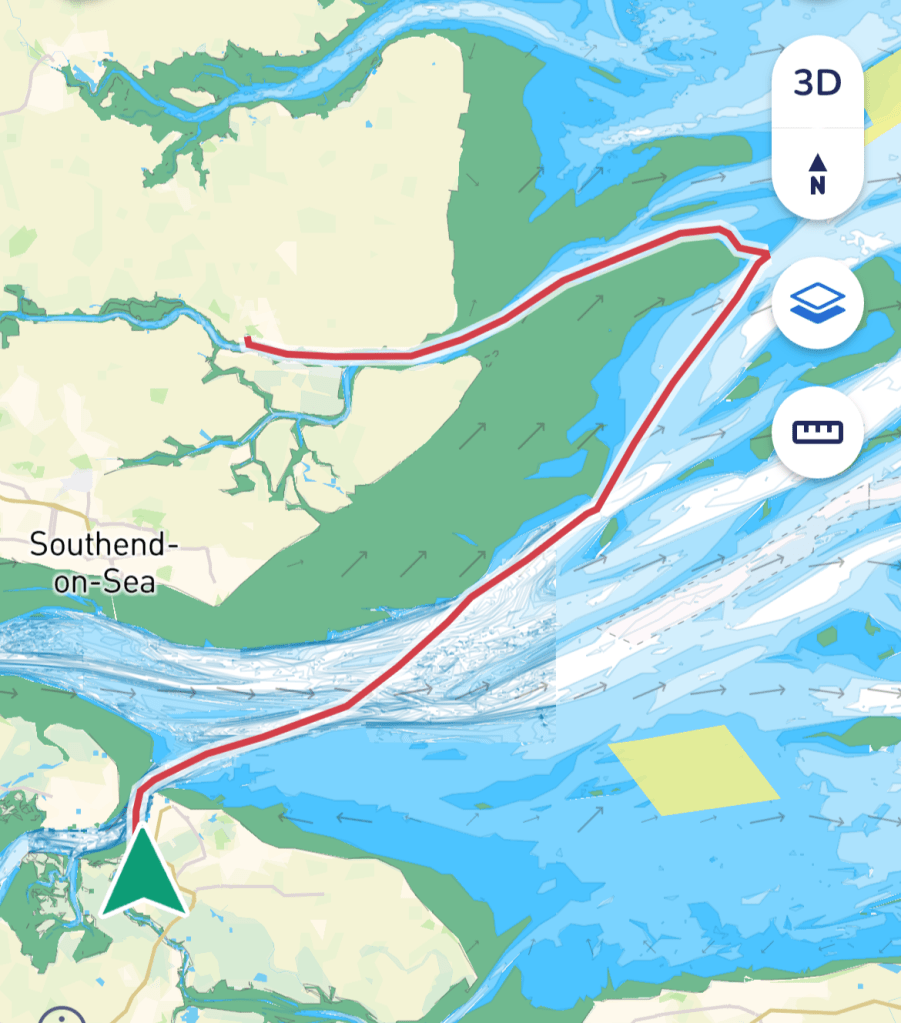
Andrew had sensibly decided to catch the train home before I disappeared down a well of nostalgia, but Jamie bravely elected to stay on for the final piece of semi-homecoming. I had planned to go from Burnham direct to Gravesend ready for the trip up to London, but the impending gale that is even now causing typos by making the computer keyboard jump up and down meant that I needed to get closer, so the landfall in Kent was brought forward with a trip to Queenborough at the mouth of the Medway. If there is one technically open sea passage that I can do without a chart then Burnham to the Medway is it, having done it many times in an open racing keelboat with nothing more than a can of Coke and a packet of Silk Cut. Unfortunately they have moved all the buoys and changed many of their names since then, so Jamie was spared at least some of the reminiscences as we squeaked in one final gale-free day with even a bit of sailing thrown in, as I had to spend more time than I expected looking at the chartplotter. Blowing up the power station chimneys hasn’t helped find the Medway, either.
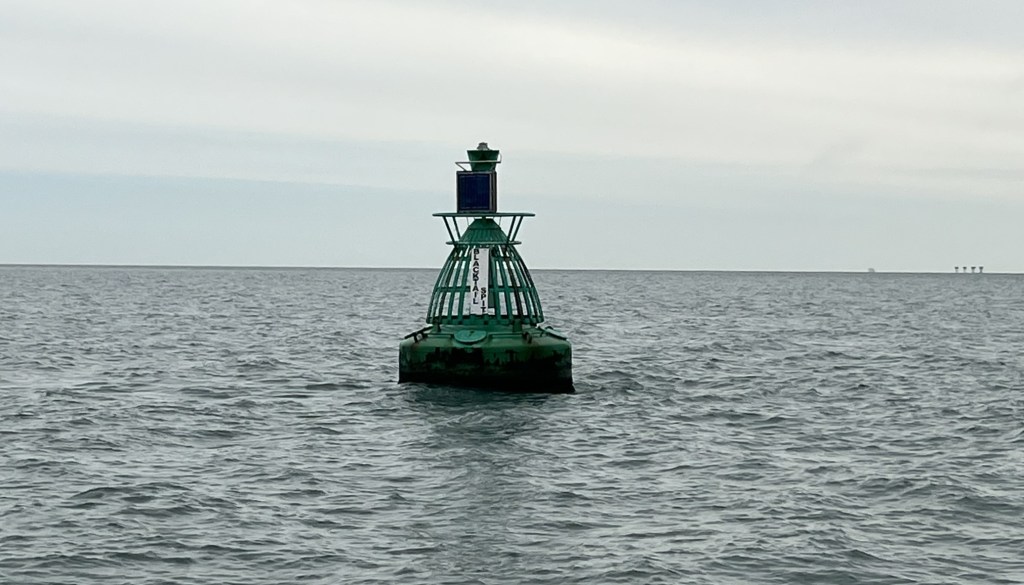
All too soon we were across the Thames Sea Reach buoys and into the channel for the Medway. This began to feel odd: I was supposed to be heading up the Thames ready for the ‘homecoming’ to the Medway that I’d planned for the following weekend. But the storm clouds were, for once quite literally, gathering and it was the safer and closer place to start the journey to London. We managed to sail as far as the beach off Grain which we used to cycle to as it was the closest we could get to Santa Monica, dropped the sails and motored in to Queenborough.
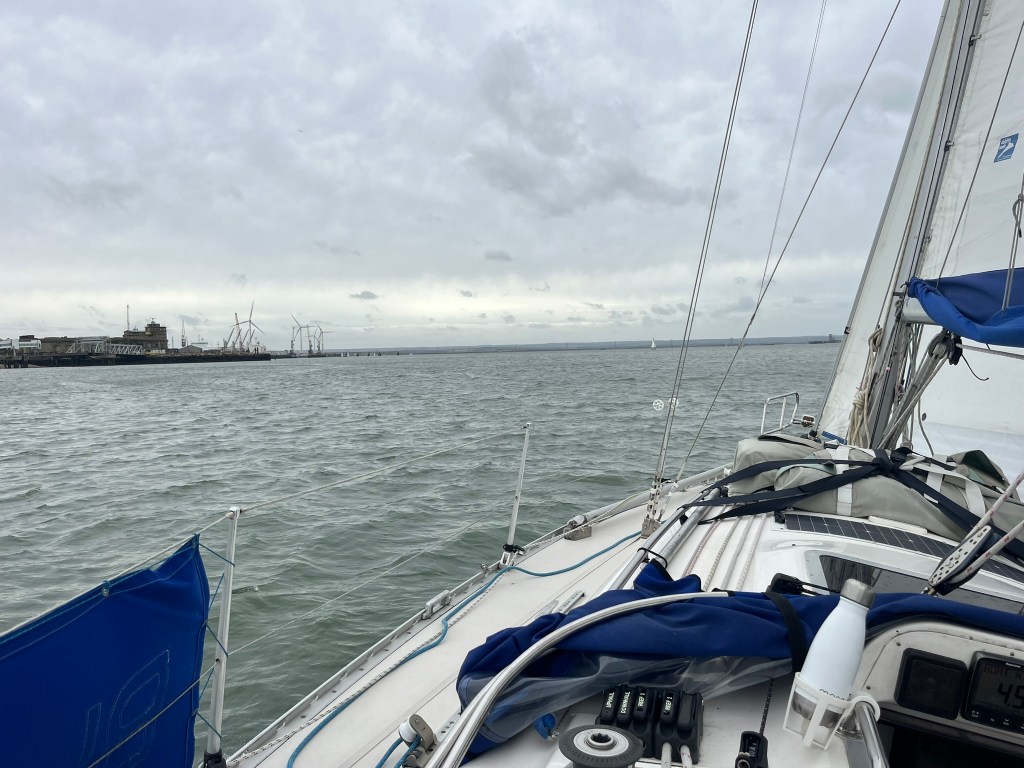
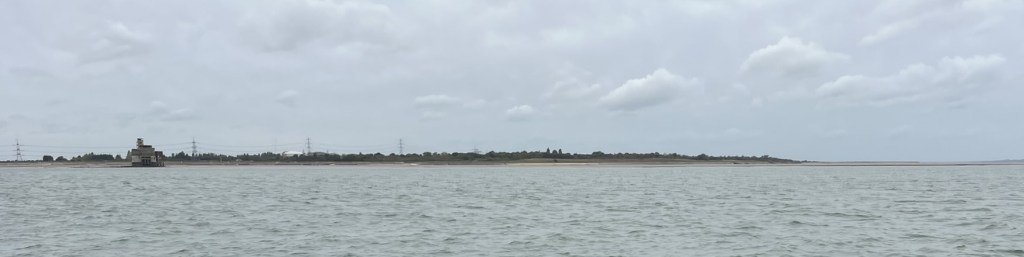
We picked up a buoy off the harbour pontoon as it was full of historic ships for the Queenborough festival. The harbourmaster came to get us in his launch and he looked and sounded somehow familiar, perhaps it was just because he was so very obviously from North Kent, and so were the lifeboat crew who showed us around (our first time inside a lifeboat!) and the tug enthusiasts who showed me around the tug that used to be moored upriver on the way to school (my first time inside a tug! Jamie had sensibly caught a train by then). The festival ships went home, I tied up alongside and was helping the harbourmaster move another boat along before the storm hit when he showed me his preferred knot for tying ropes onto a single bollard. “That’s the hitch I’d use on a barge’s staysail sheet”, I said. He stopped and stared, and started the interrogation. A few minutes later we had worked out why we had each found the other familiar: he’d been Mate on the Lady Daphne, the unfortunately slow barge we’d chartered a while back for the weekend of the Medway Barge Match. I even had a photo of him 13 years younger on my phone with which I could entertain his younger colleagues. He’s promised to bring one of me into work tomorrow, if I haven’t been blown back out to sea again in this gale.
It’s not the homecoming I’d planned, but I am most definitely home.
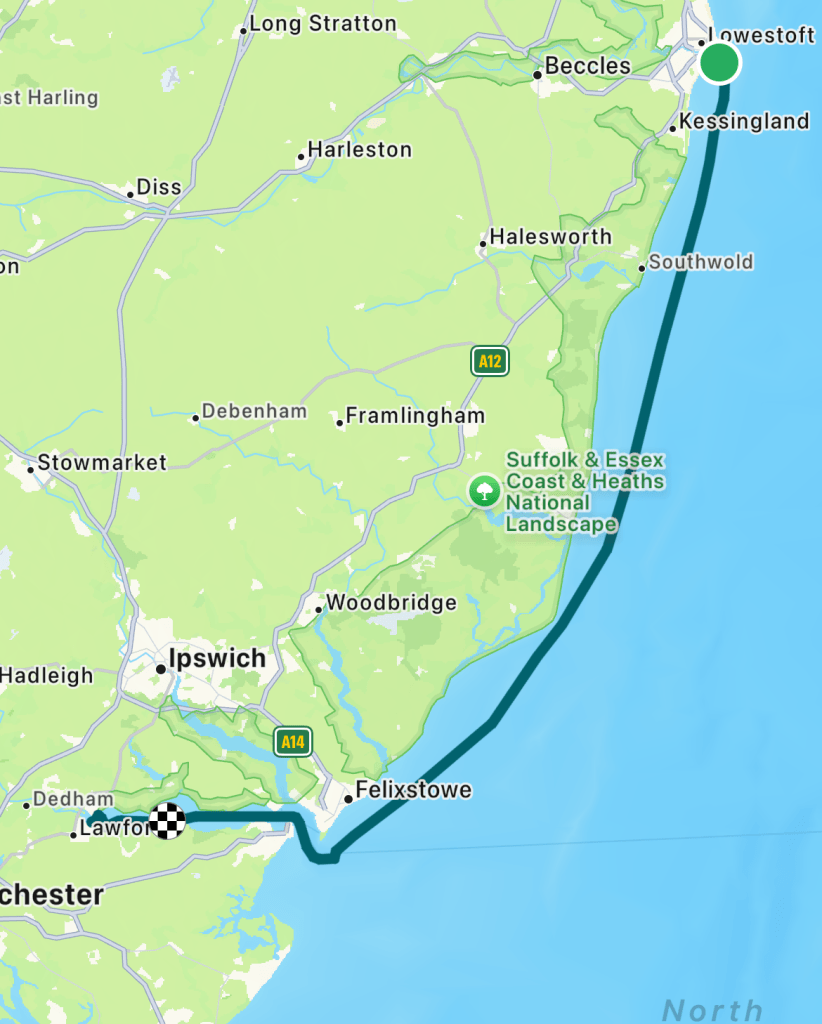
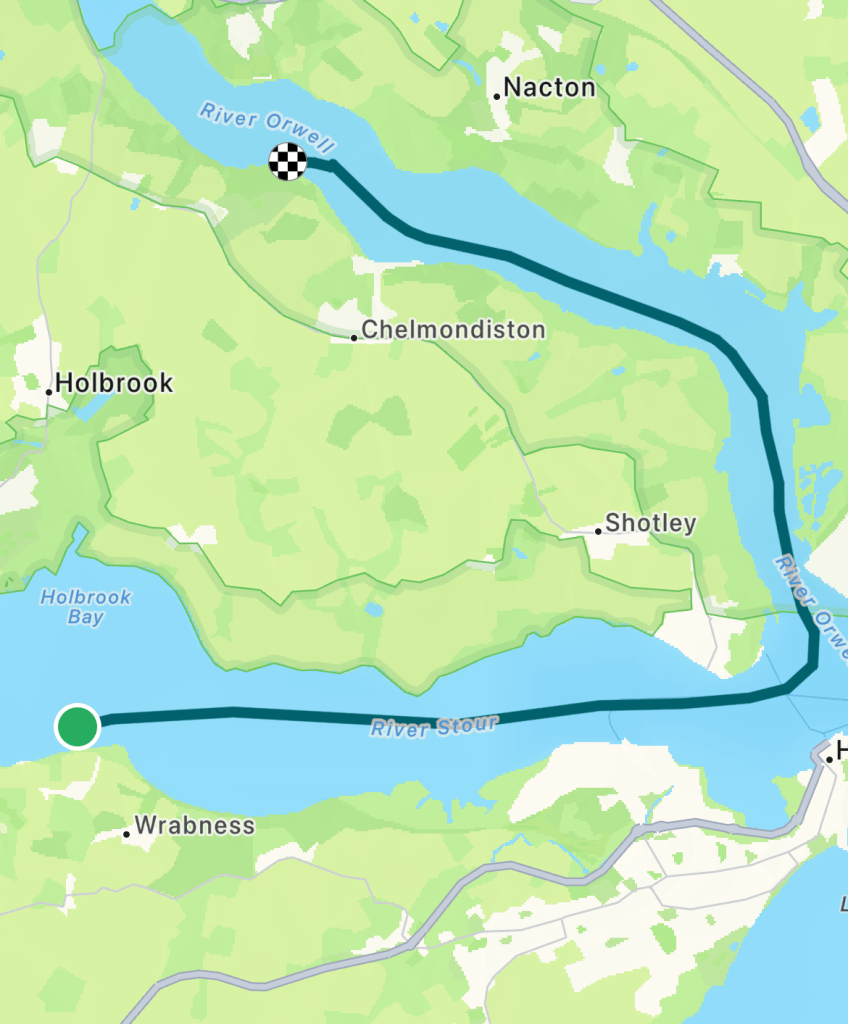
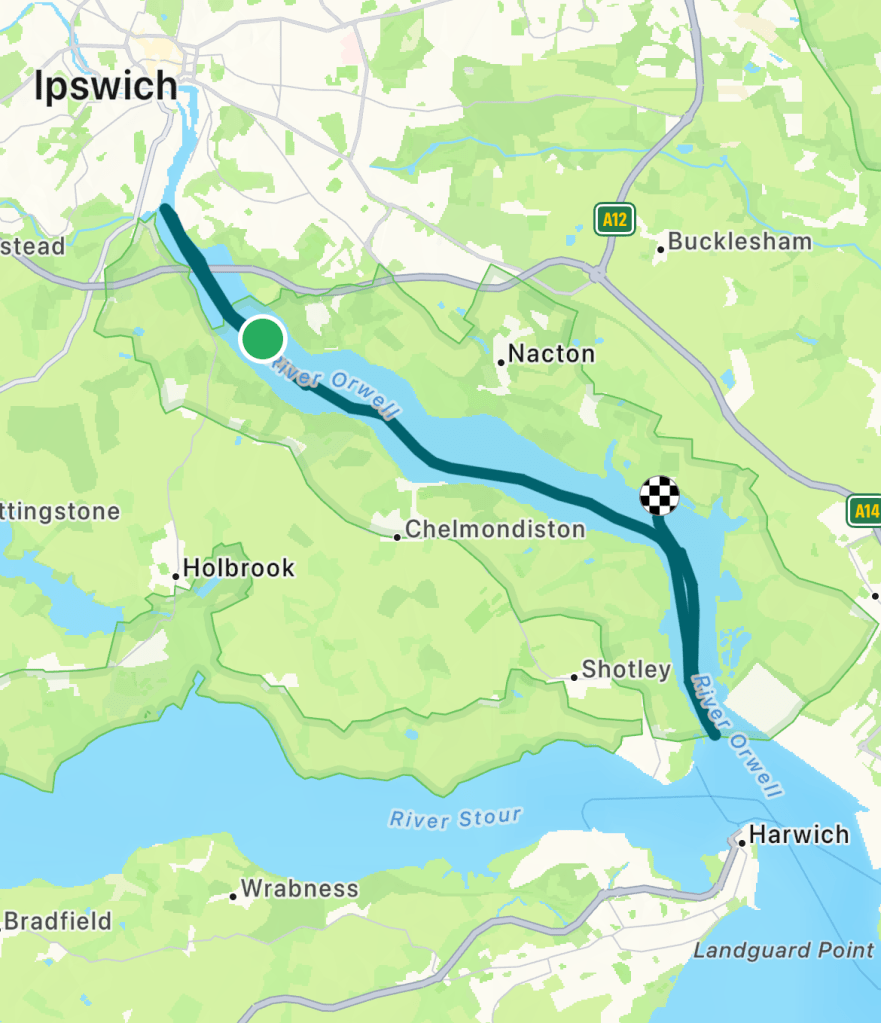
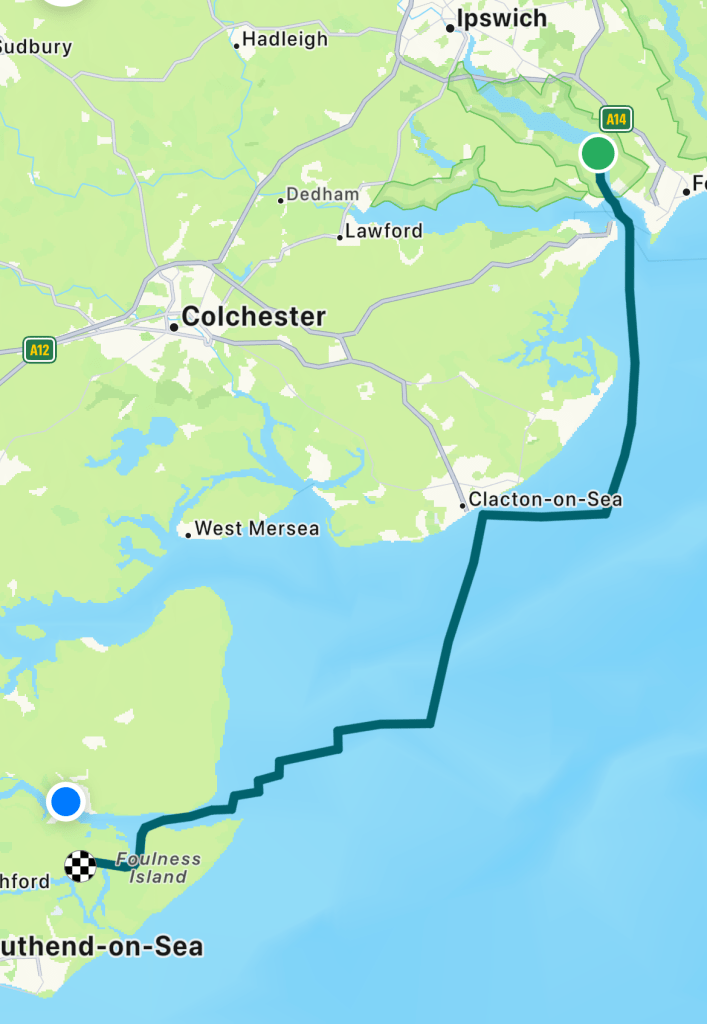
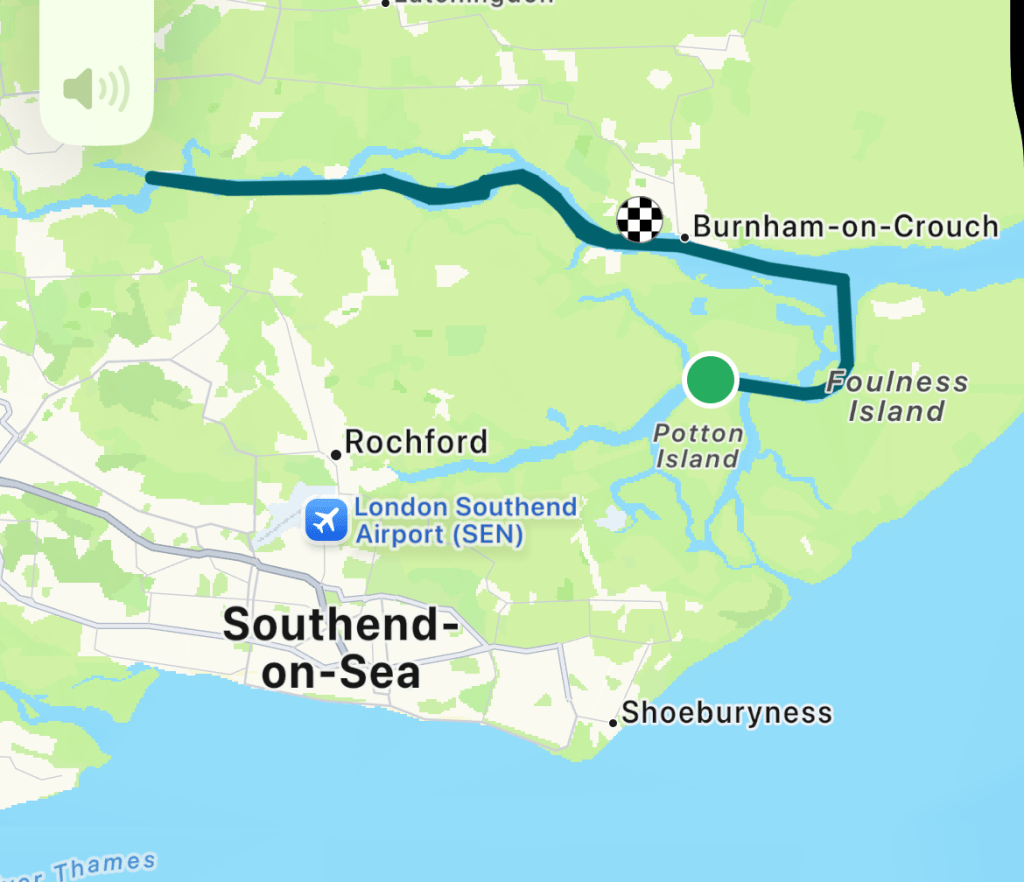
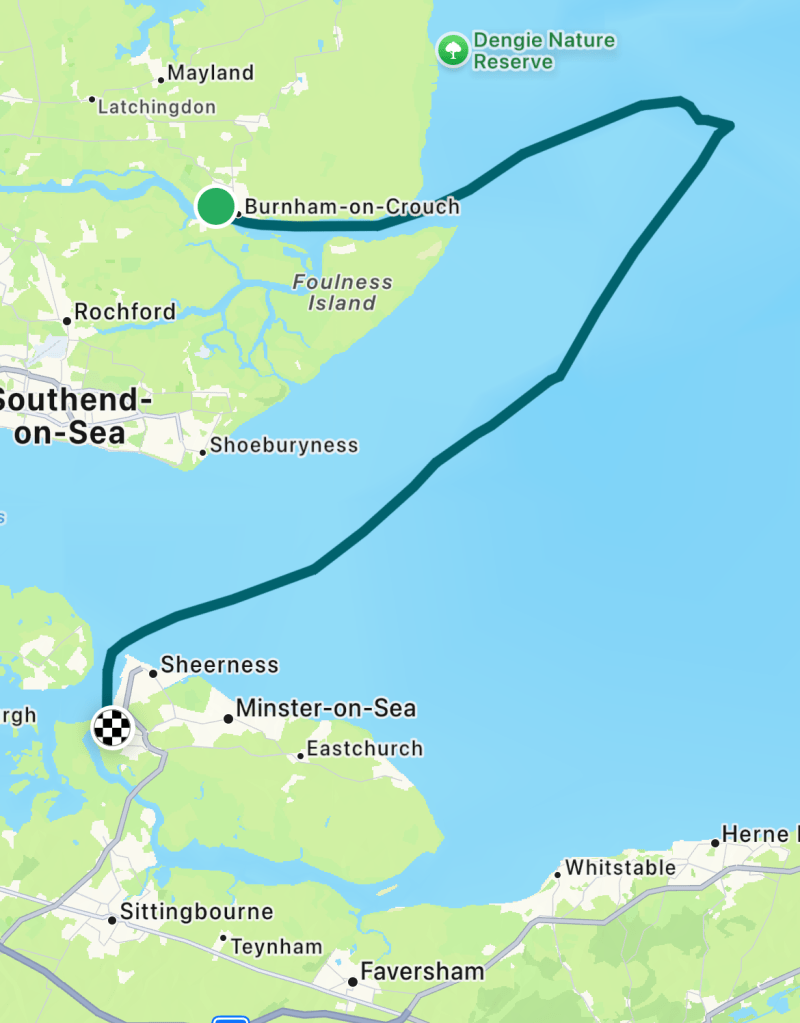
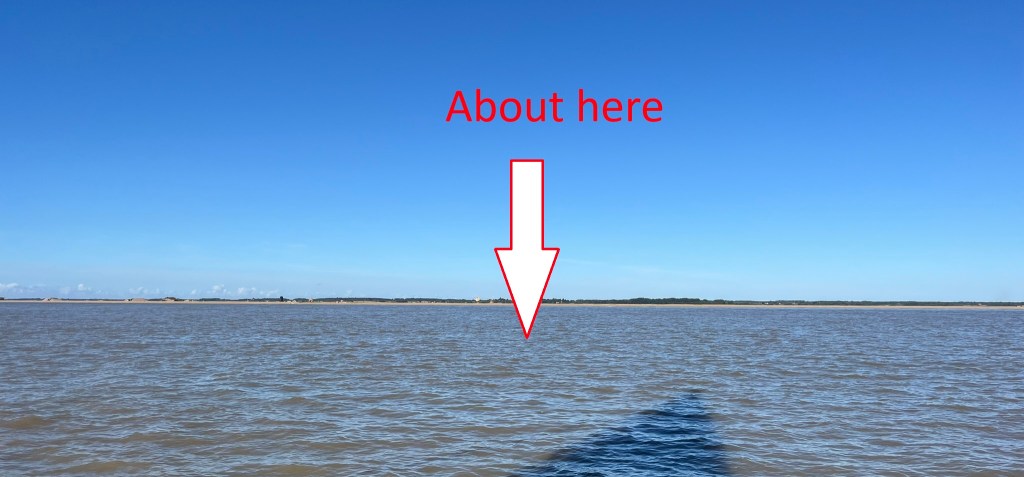
I know people will ask why we sailed so far out before turning around, so here’s the answer. It’s just not very pretty:
PS – the attentive reader may have remembered that I was going to take Blue Moon home to her original launching place, Titchmarsh Marina. That plan was, of course, kyboshed by the wind, along with any thought of venturing up the Ray to Leigh-on-Sea where she lived next, so I’m afraid that this is all my homecoming not hers. Just another reason to come back.
PPS – anyone still reading deserves a beer. The wind is forecast to moderate on Tuesday and only be mildly brutal on Wednesday, so with a little help from my friends I am still hoping to make St Katharine’s Dock by midday Wednesday. Do come and say hello if you would like to, but please drop me a message first before you set out in case of weather disappointments or bad seamanship leaving me stranded somewhere off, say, Dagenham.


 Blue Moon's trip around the UK
Leave a comment