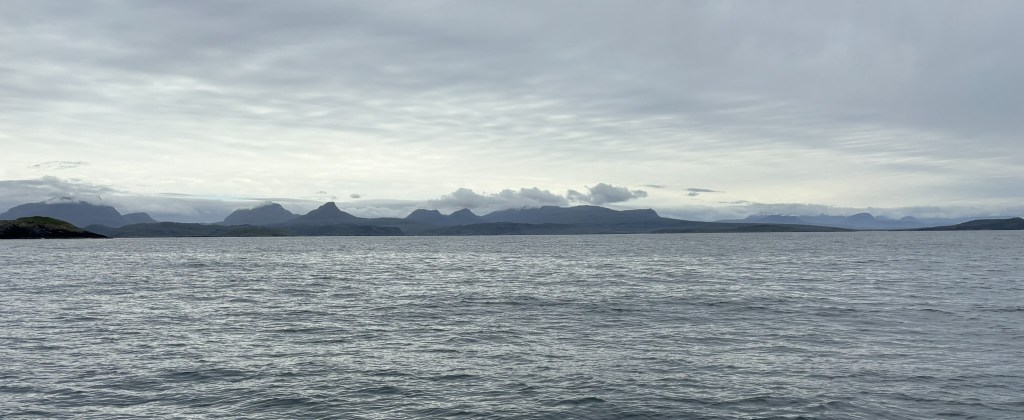
I’ve always loved the idea of Wester Ross, it sounds like an enchanted place and I was slightly surprised to discover that it is actually real, and I bet the locals are really annoyed about Game of Thrones nicking their name. They, along with their neighbours in Sutherland must be as pissed off as the folk of Cumberland and Westmorland at losing their lovely county names as well because it’s all just ‘Highland’ now. Last year I looked at the weird mountains across The Minch from Lewis and Harris and thought it looked even wilder and more remote than the Outer Hebrides where I was, and in most places it is.
To be honest, I was a bit apprehensive about going there: I had once gone on a CCF course in Loch Ewe and one of the supposed highlights was a Royal Marine-style expedition which involved climbing the incredibly remote Munroe Sgurr Mor and then spending the night sleeping in a plastic bag on the side of the mountain being eaten by midges before trekking what felt like 20 miles back including wading across a freezing river, all with a Naval issue ‘backpack’ which appeared to made out of angle iron.
Needless to say, this confirmed that a career in the Marines was never going to be for me, and even today the idea of willingly sailing into such a wilderness was frankly daunting. The mountains here seem a lot more sinister than the ones on Skye and around Knoydart and Loch Linnhe: they rear up out of the landscape with impossibly steep sharp peaks and jagged backs like dinosaurs, and the lochs that lead up to them are longer and deeper and full of jagged-looking islands. There are even fewer villages, next to no facilities bar the odd pub or hotel, and very few yachts indeed, as few of the Oban- and Clyde-based sailors make it this far north on their summer holidays.
What there are, however, are campervans whose occupants are all terribly excited about driving the North Coast 500, and having spent the last few days in their company I can see why the residents of Wester Ross, Sutherland and all the rest consider this clever tourist-attracting wheeze a bit of a mixed blessing.
Loch Torridon was my first port of call, but I use the word ‘port’ advisedly: it is famously empty and only has two tiny villages: one called Torridon, which seems fair enough, and the other called Shieldaig, which is a bit confusing as the next loch up also has a village called Shieldaig, and I kept reading the wrong page in the pilot book and getting confused. I was particularly and irrationally nervous about Loch Torridon – the word Torridon has always felt very dark and foreboding, perhaps because of my night on the mountain which is part of the Torridon range and I remember the word on the map, and perhaps also because it just looks very bleak and rather lonely. Shieldaig suggested a less torrid time, so that’s where I headed.

My arrival did nothing to calm my anxieties about the place: after a gentle morning sailing up the Inner Sound from Portree with the spinnaker up, enjoying overtaking someone taking life even more leisurely, I was full of the joy that can only come with spending Saturday wafting along in 5-10 knots. The wind began to build a bit so I took the spinnaker down, then as we headed up into the shelter of the loch I made some lunch and put Raymond to work as I enjoyed the view. I noticed a patch of breeze coming down the loch but Bam! before I could say ‘not fair!’ the boat was knocked almost flat. I know this because the top of the cockpit dodger was under water, never mind the toerail. In 15 knots of breeze, with full sail up, we’d just been hit beam on by a gust of 34 knots. The boat bounced back upright and the squall disappeared, but I was distinctly shaken, and not helped by the discovery that in all the fuss my leaky window that I thought I’d fixed had leaked again, the lifebelt holder had been bent by hitting a loch head-on, and the dodger had torn: the first wind- or wave-induced damage of the trip.
I quickly took in one reef and then another as we sailed up the loch and more and more gusts hurtled down at us – none quite as bad as the first but all in the high 20s. This spoiled the afternoon considerably as Loch Torridon is a very big loch and it took quite a while to get to Shieldaig. I was pleased to find a free visitors’ mooring off the village, knowing I would sleep a lot better moored than anchored with gusts coming from every direction all night.
However, the mooring turned out to be right next to a designated campervan spot, and I watched appalled as one after another six vans turned up, parked, got out their tables and stripey chairs and sat yards away from me. I went ashore to get away from them, and found the village full of campervans as well, and on the campsite up above. There was one tiny pub and a tinier community shop, but probably 50 or 60 campervans and large 4x4s, disgorging their occupants to drink beer outisde the pub or brew tea outside their campers.
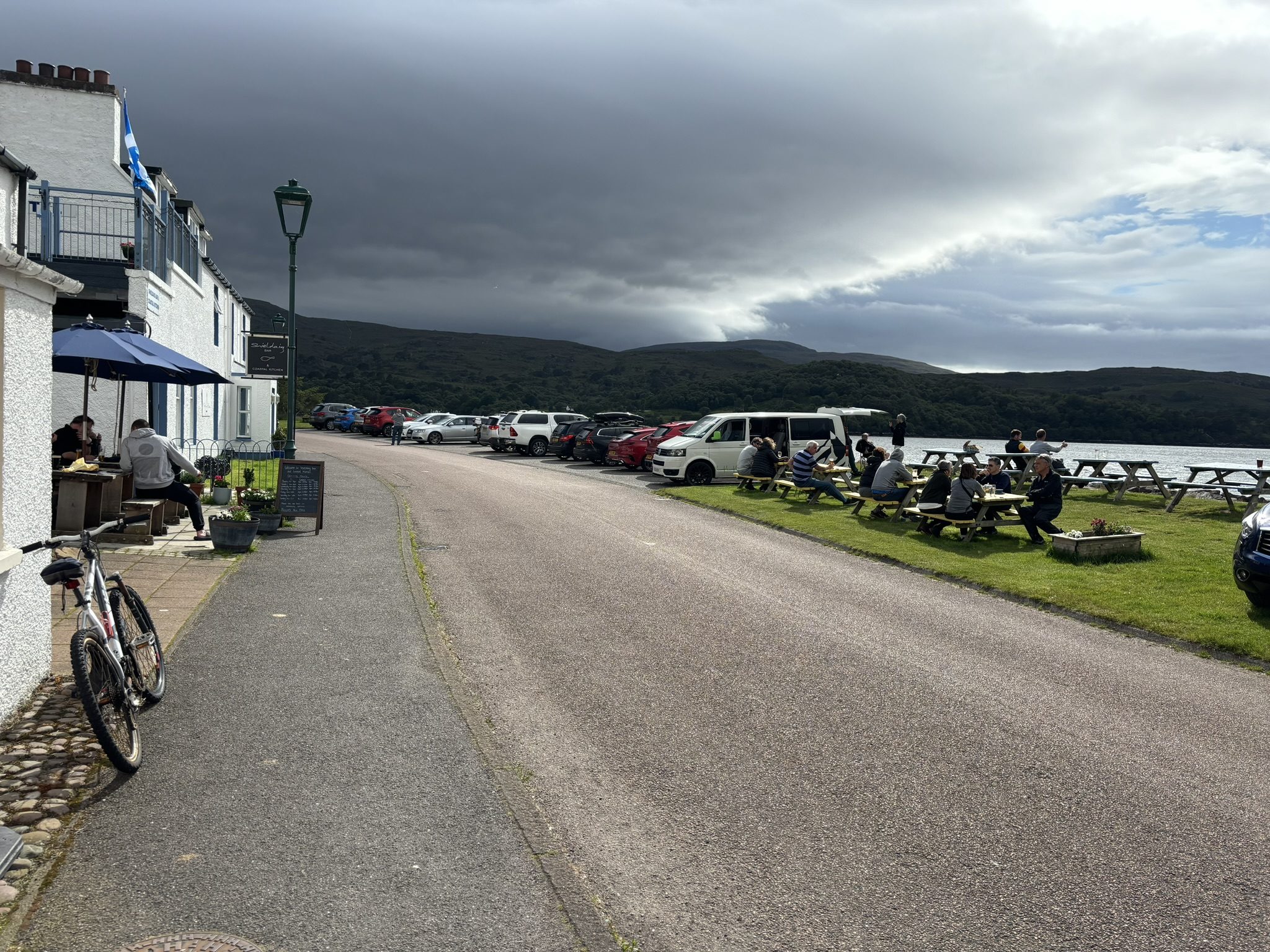
It turns out that the North Coast 500 meets the coast here, so I suppose everyone just stops and drinks in the view, and the tea, and the beer. I withdrew to the boat and hid below. If I looked out of the windows on the other side all I could see was trees and mountains and gusts of wind hurtling away from me down the loch. I wasn’t sure which view was better.
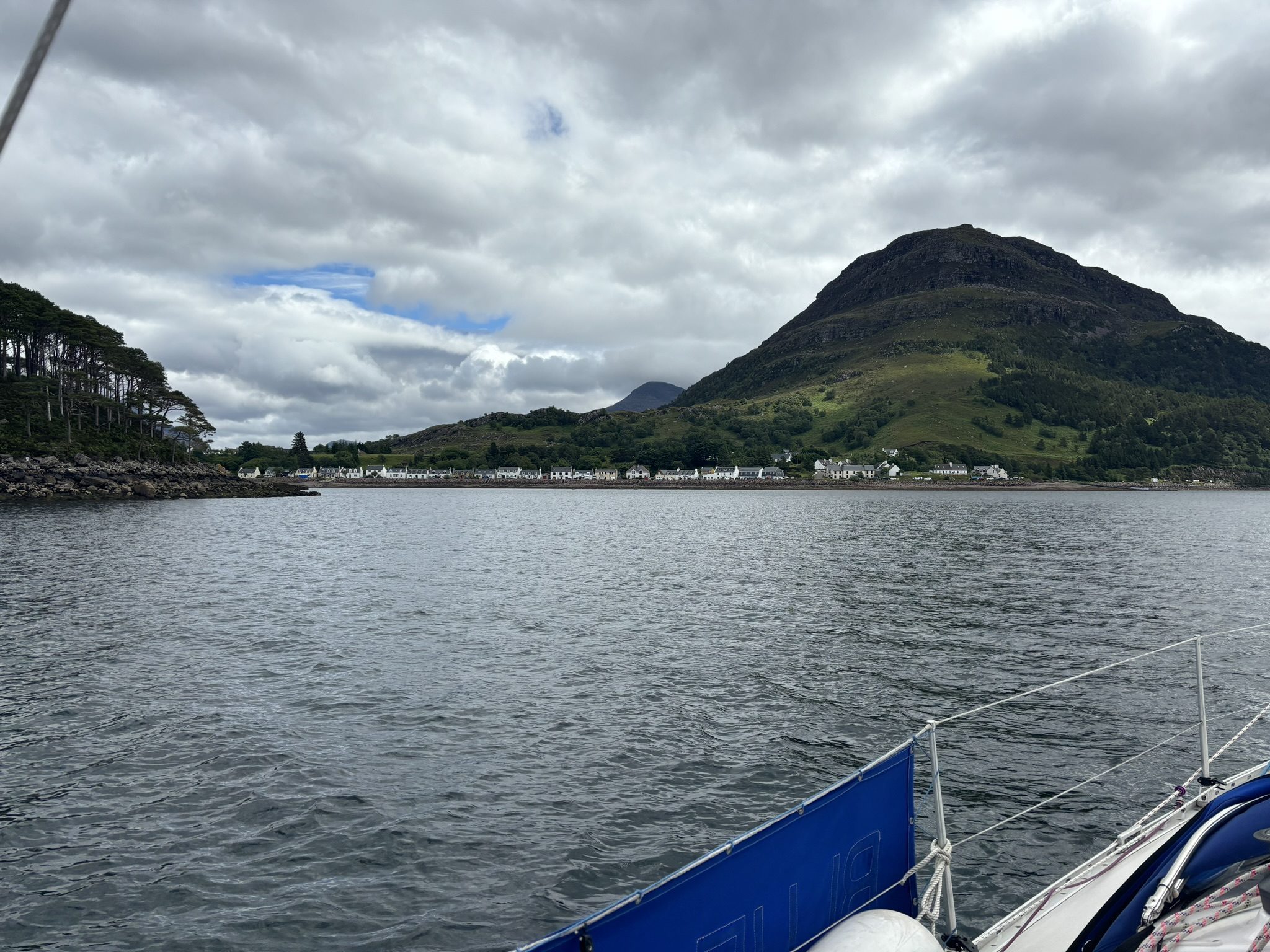
Next morning the wind had died and the sun had come out. I’d forgotten about the gusts and the mountains, and the campervans slowly packed up and went on their way, albeit after unnecessarily noisy al fresco breakfasts. Another boat from Itchenor had been in the area for a while with some people I sort of knew on it, and we finally found ourselves in the same loch so they came alongside for coffee, which seemed a very usual thing to do on a Sunday morning in a very unusual place.
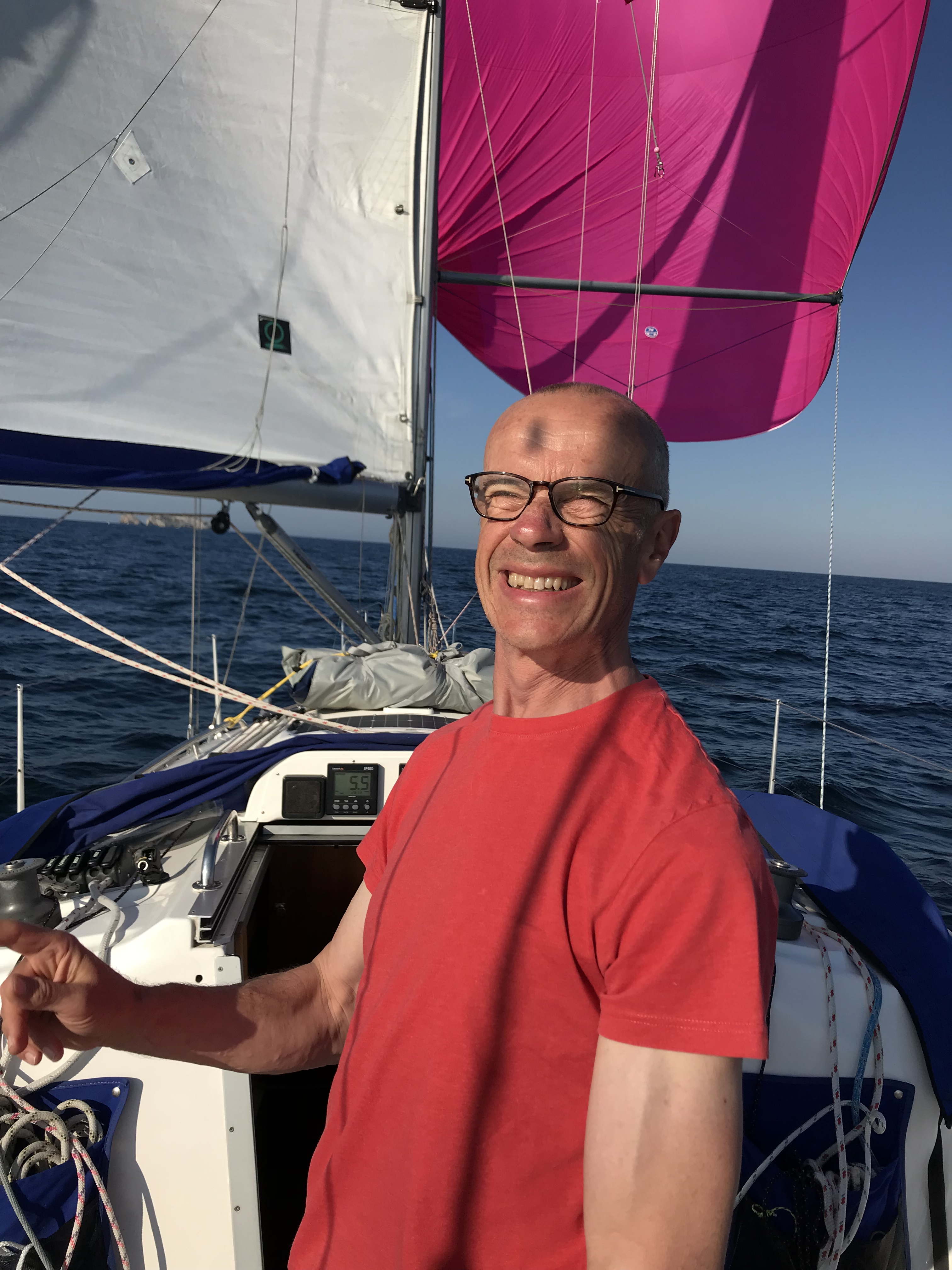
We headed off on our separate ways, and Sunday seemed even nicer than Saturday. I put up the spinnaker again (mainly because I didn’t want anyone from Itchenor Sailing Club thinking I hadn’t) and headed the few miles north to Loch Ewe, past another famously dangerous headland-with-lighthouse Rubha Reidh.
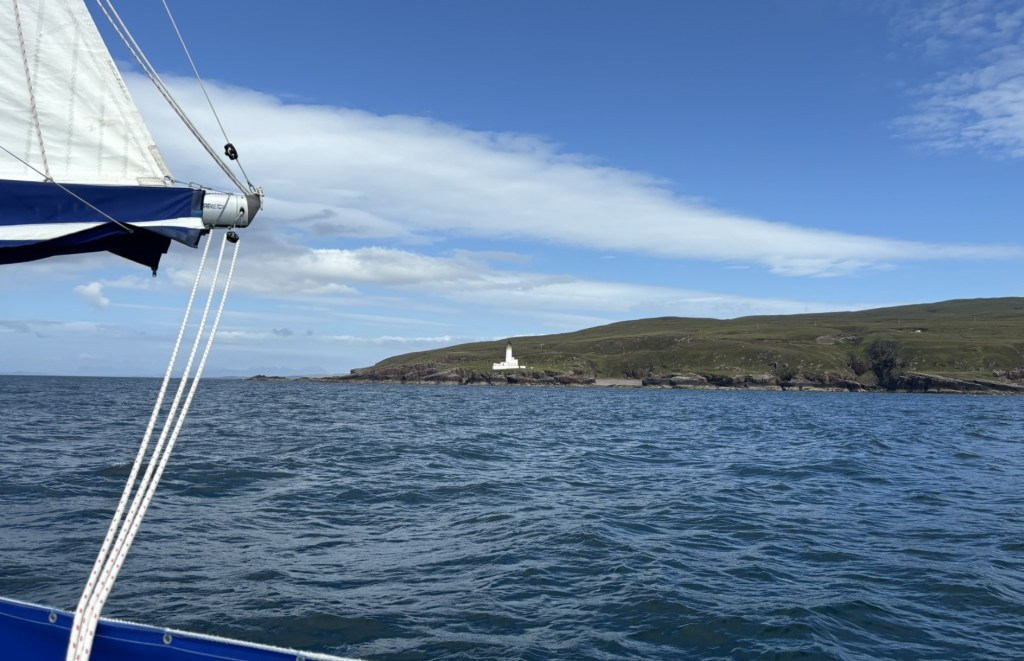
As you can see, it too had fallen for the ‘nothing to see here’ dangerous headland trick of 10 knots of breeze and sunshine. Not to be fooled this time, I took the spinnaker down early and put a reef in before even rounding it and heading up to Loch Ewe. Not enough! As we got to the loch entrance, sure enough, howling gusts of wind, a second reef. At least this time I was ready, but rather than heading up to where I’d had such fun with the Navy many years ago, which was on the main road so guaranteed to be full of campervans, I opted to anchor in the lee of the properly remote Isle of Ewe.
For once I bagged the best spot since there was no competition and settled down to some sheltered peace and quiet. This worked well until a barking noise revealed that rather than campervans I would be sharing the bay with more seals than I had ever seen at once. At one point I counted 12 heads bobbing around in the bay, all completely ignoring me until I got into the dinghy and decided to row ashore so as not to annoy them with the outboard. Not a bit of it – as soon as I started to move all 12 stopped whatever they were doing and stared at me intently. Some even swam up to the dinghy to get a better look. I like seals and the way they come up to look at you, but with this number I found it a bit sinister. When I got ashore they went back to whatever it was they should have been doing, but seemed to keep an eye on me:
And sure enough when I got back into the dinghy I had to run the gauntlet again. Luckily after a while they all disappeared, leaving me in peace.
No balmy morning for day three of this bit of adventure, this time I knew it would be windy. The Met Office reckoned Force 4-6, but none of the wind models said anything like that, and I really wanted to get to Lochinver as there are pontoons and showers, the first since Isle Ornsay so I had resorted to the less than perfect boat shower. Since I was heading north and the wind was from the south I reckoned Blue Moon would be happier with 25 knots behind than 30 from the side. Even so, I thought I should learn my lesson and put in a reef just to be sure.
I felt a bit of a fool as we set out of the loch: it was blowing 12 knots and we were going very slowly. I kept looking behind for more wind but no sign, then out of nowhere it picked up and in under a minute had gone from 12 knots to 31. This time it wasn’t a gust, I was out at sea and surfing down waves in a steady Force 7. Worse still it was a dead run – non-sailors: big wind right behind you is quite dangerous, it could get behind the mainsail and fling it and the boom across the cockpit taking you with it if you’re not careful. I grabbed the wheel off Raymond and steered very carefully until it had eased a bit, then did the prudent thing and took the mainsail down completely, thinking I would carry on like a proper cruiser with just the genoa, just in case.
This worked fine for a while, wind steadily 25 knots plus but with no mainsail it was easy going and we were doing 5-6 knots. An hour later, and the wind began to drop. 20 knots, then 15, and we slowed down a lot. Never mind, I had all day. 8 knots, 6. We stopped. Only one thing for it: back up with the mainsail, and no reefs this time, not in 6 knots downwind: even with the full main I had to put the engine on to keep us going through the waves left by the near-gale. So quiet I made a bacon roll. Fatal mistake: just as we got to the point where we’d turn right into the bay with Lochinver at the head, guess what? 30 knots again, this time with full sail and a bacon roll in one hand and a cup of coffee in the other. By now my reefing was quicker than a Ferrrari pitstop, and we flew into the bay with two reefs and a half-rolled genoa. Within minutes we were up the loch, past the rocks, sails down, fenders out and tied up on a very snug pontoon in a very busy fishing harbour, with the first yachts I had seen for a couple of days. All six of them, all apparently living there. I could see campervans but they were on the other side of the harbour at least.
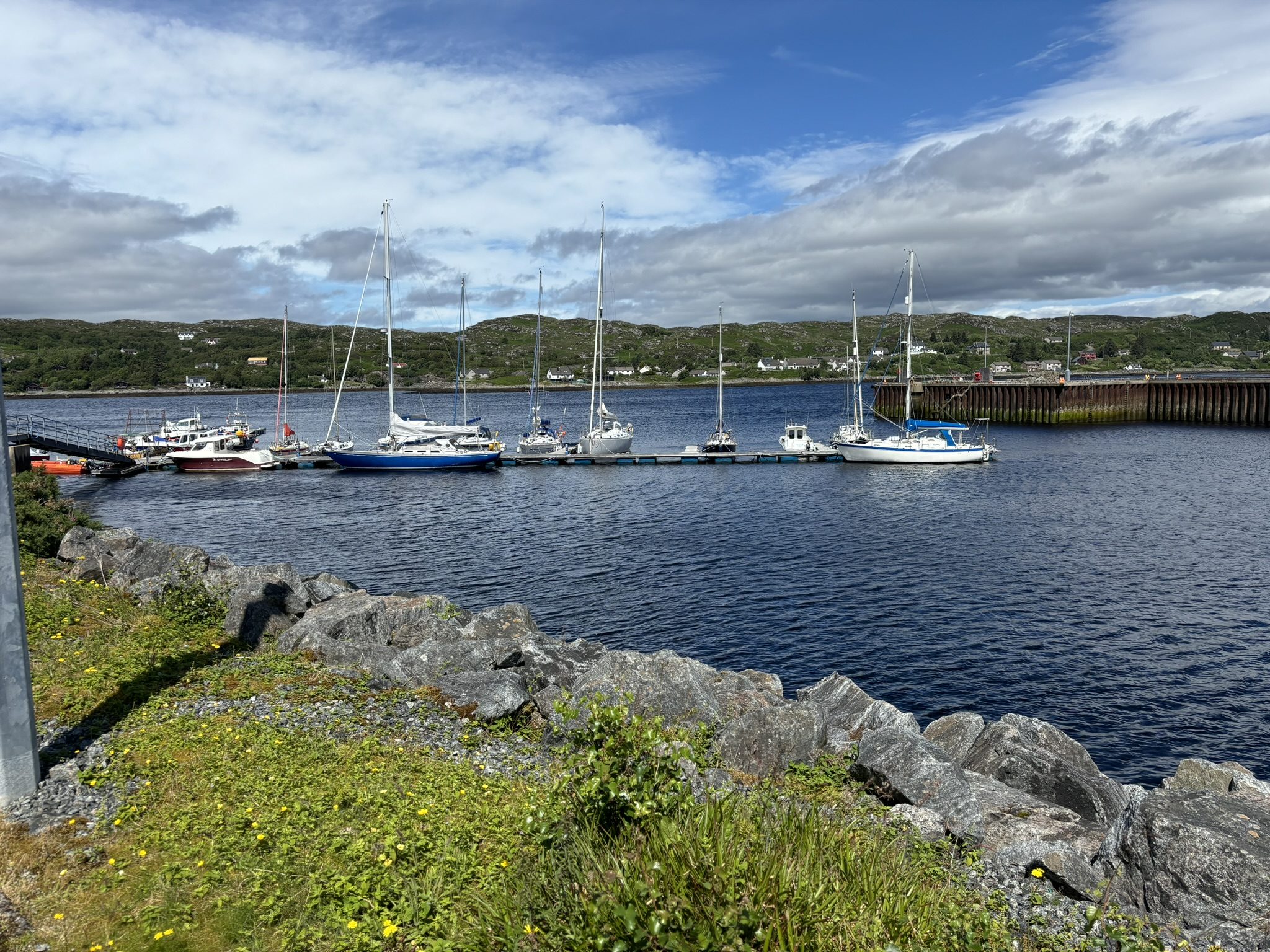
An older couple stopped by to say hello, and announced that they were about to spend six weeks’ holiday pottering up and down the coast of their native Wester Ross and Sutherland. “We never leave,” he said, “it’s the best sailing in the world”. “We saw you coming in on the AIS” he carried on, “now that’s more wind than we go out in.” I explained that it was more than I chose to as well, but being new to these parts I was a bit flummoxed about the range of wind strengths regardless of forecasts. “Aha!” said she, cheerfully, “there’s no shelter in the lochs, it’s worse! If the wind’s South or East we double the forecast!”. As I looked a bit bemused, she explained. “It’s the mountains you see. The wind backs up behind them until they can’t hold it back, then the whole lot comes charging down the loch right onto you”.
Meteorology is not my strong point, as you’ll have gathered, but even I found this explanation both unscientific yet somehow totally plausible given my experience of the last few days. What really bothered me though was that if this was the best sailing in the world, how would they find it if – for instance – they ventured south of Skye, where the wind tends to blow the same strength and in the same direction for up to two hours at a time? And where most harbours have shops and showers? I decided as a visitor to their waters to smile and nod, but I’ve retained the caution about doubling the forecast until I get back to a country a bit less wild and windy.
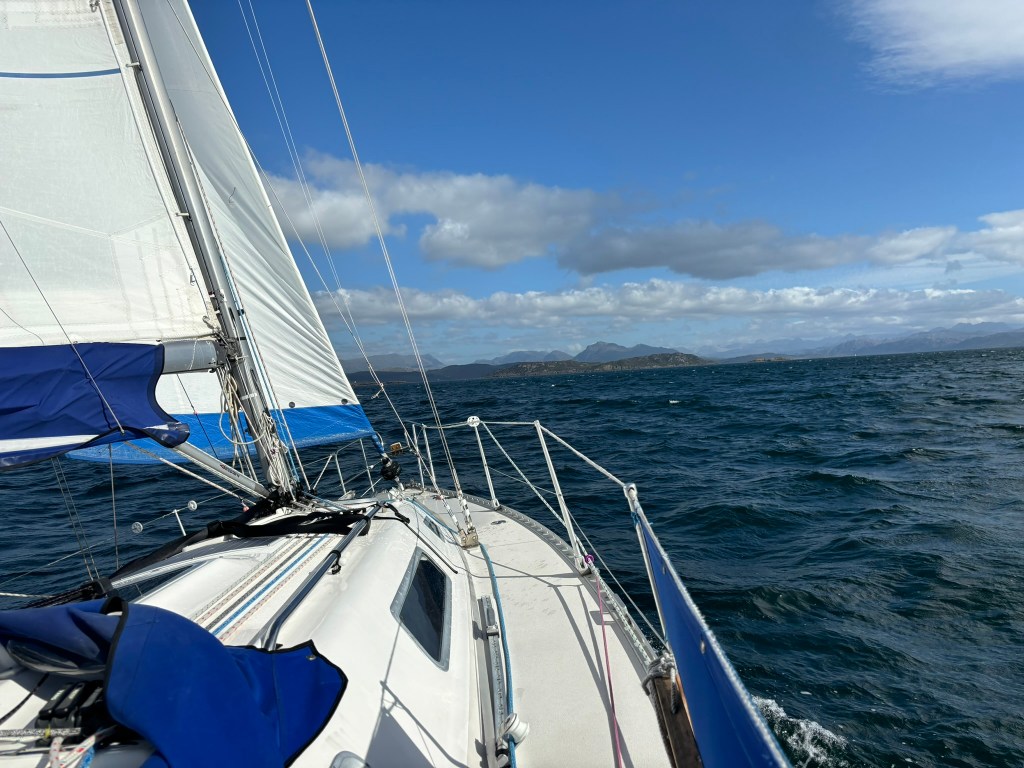
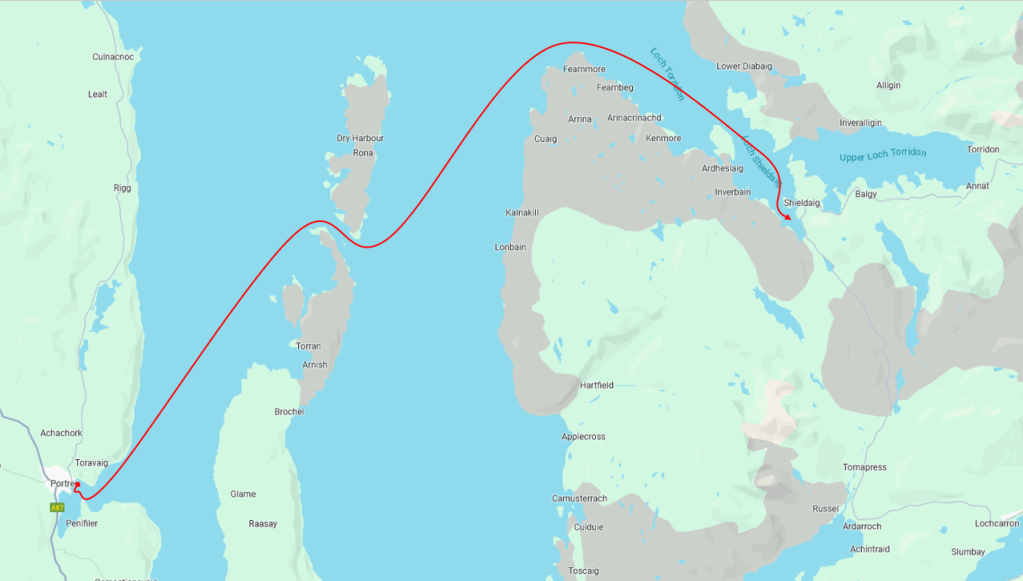
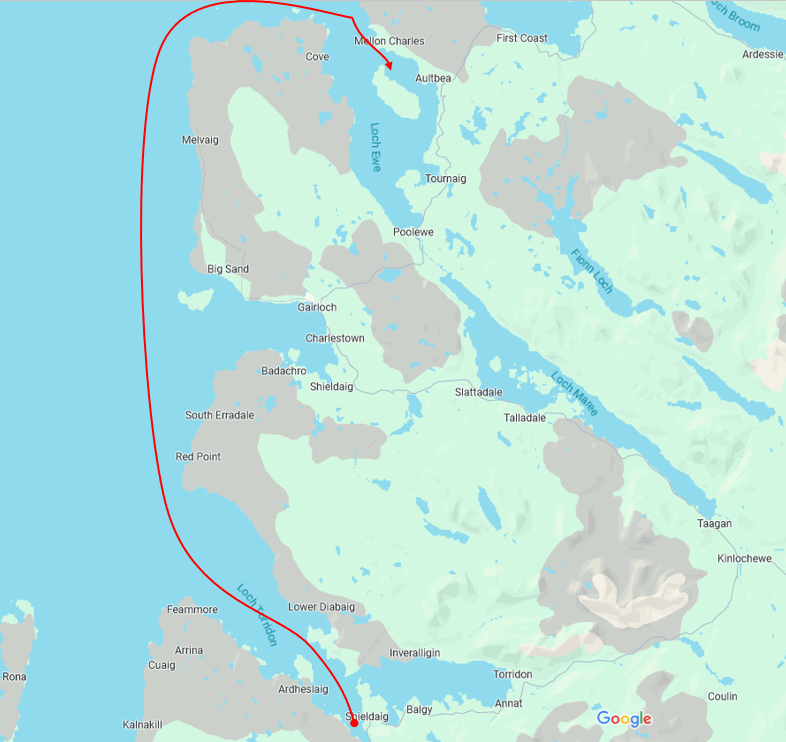
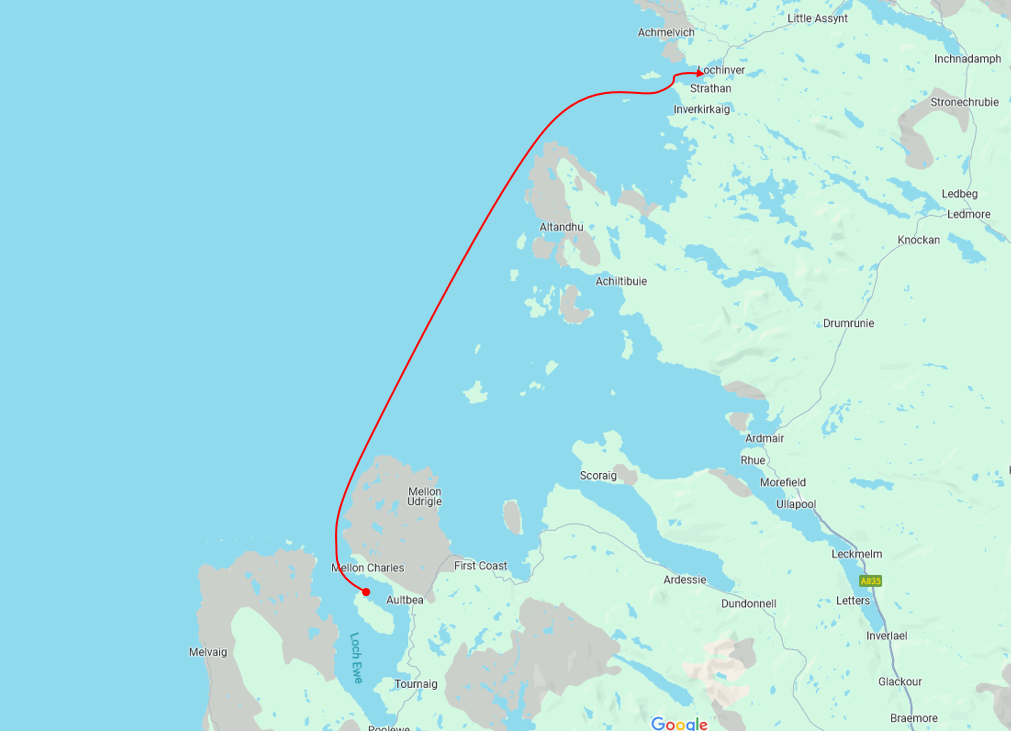
Sorry, I’ve given up on the video tracks, they’re just not recording up here.
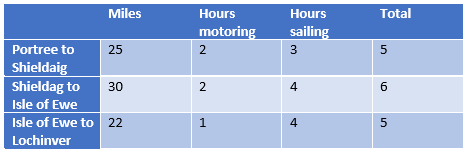

 Blue Moon's trip around the UK
Leave a comment