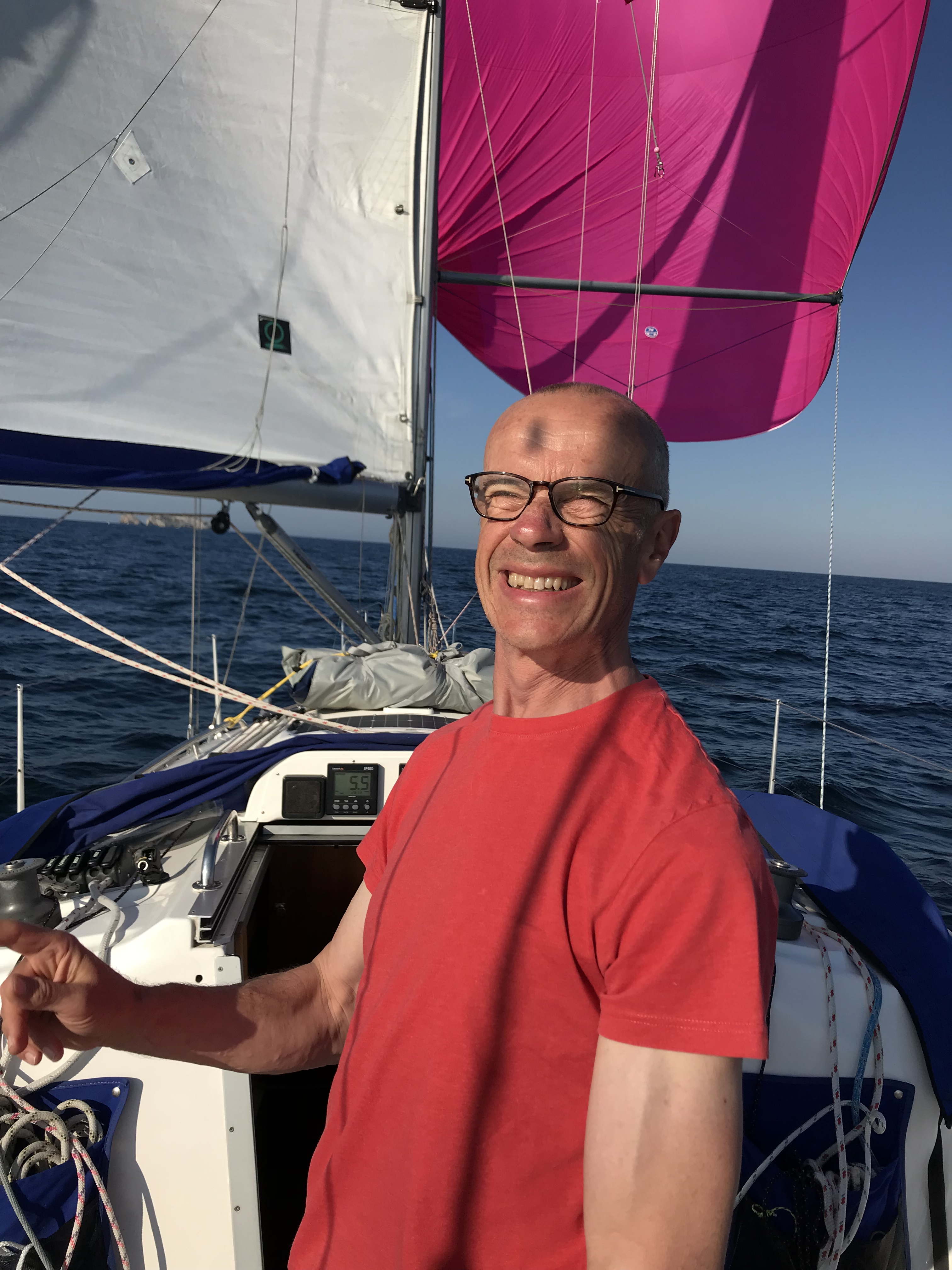
Well, of course there is, and I’d be in trouble if there wasn’t, what with being on a boat. But I often marvel at how a spot of rain can change the experience even when sailing and surrounded by the stuff. Oban being one of the UK’s more westerly towns, and in Scotland to boot, the rain is no surprise, but I had quite forgotten the sheer volume of water that Scottish skies can dish up in such a short space of time, apparently with pure disregard for the weather forecast.
Saturday morning was a good case in point. Not a drop on the Met Office app, so I sociably agreed to walk with Peter as far as the station as it was on the way to Tesco. We hadn’t gone beyond the end of the pontoon before a little of what’s laughingly called Scotch Mist had blown in across the bay. My damp walk to Tesco was lengthened by the discovery that it was also en route to West Coat Machinery, who stocked the new kind of petrol that Peter had recommended via his lawn mower dealer. I didn’t know I knew anyone with a lawn mower dealer, but that’s living in West Kent for you, and I am very grateful for the recommendation. It turns out I am not alone with my biofuel-related outboard problems, as owners of chainsaws and motor mowers up and down the land are also up in arms about being forced to buy petrol that actively absorbs moisture and so bungs up any internal combustion engine not used every week or two. Hurrah for those clever Scandinavians who have invented an entirely eco fuel which actually runs better than petrol and lasts for years. Judging by the price it is made of mermaids’ tears but the outboard has started within the first five pulls for the first time in my ownership, so I’m not complaining, but I was by the time I got back to the boat weighed down with miracle fuel and groceries and wet through.
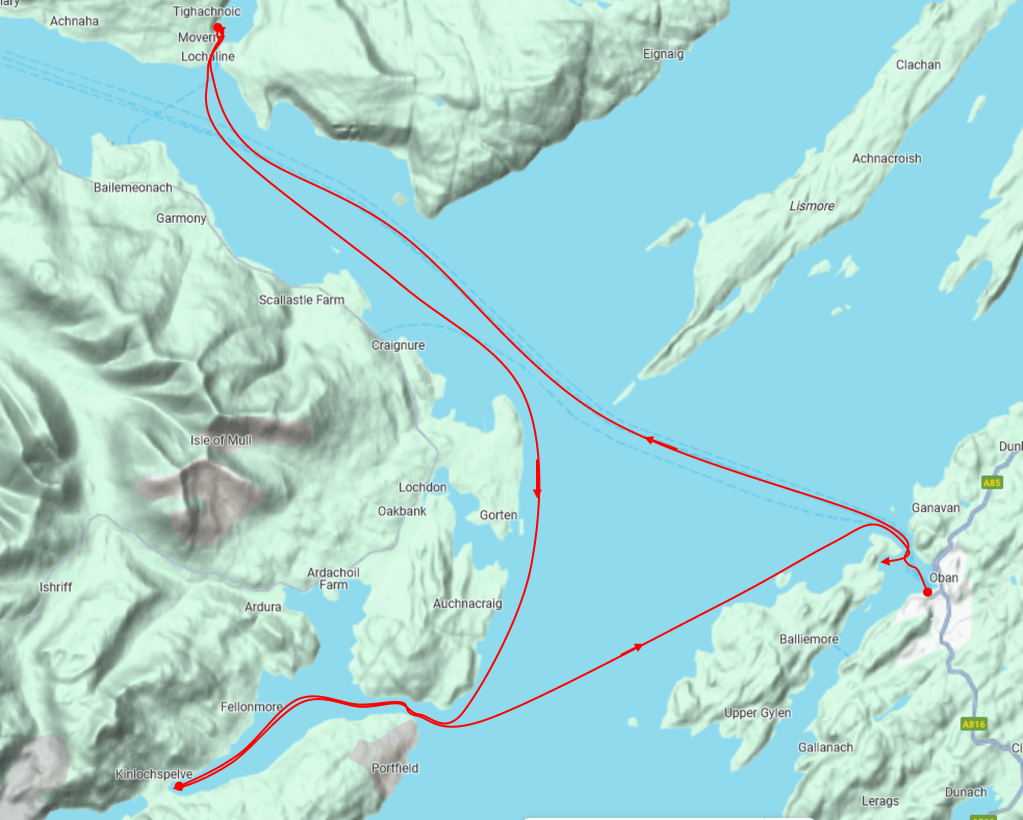
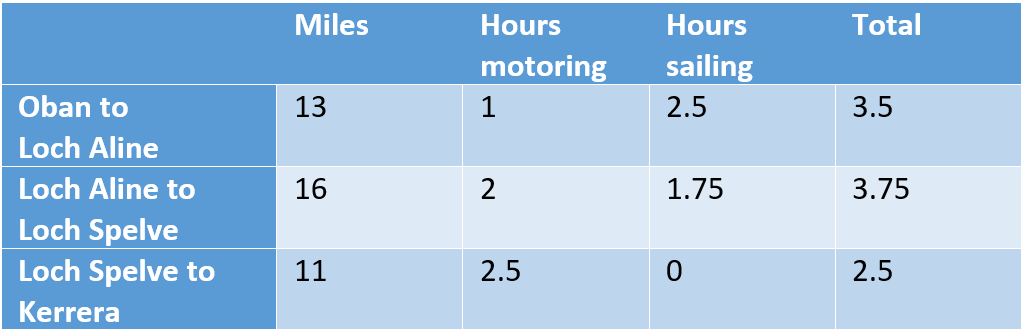
Needless to say the sun came out as soon as I got back and it became surprisingly hot. The forecast promised wind overnight so I had planned to stay put and lounge around Oban all day, but a couple of locals had read my blog about Bangor and decided to show me what bad busking really sounds like, with the aid of bagpipes and the encourgement of tourists who had escape routes in the form of cars and buses. The esplanade was so thick with trippers that my prawn sandwich got squashed flat before I could eat it, and I was downwind of both the chip shop and the announcements from the ferry terminal. By 3pm my lounge plan had evaporated, and on a whim I headed off to the attractive-sounding Loch Aline which is billed as beautiful, peaceful and totally sheltered.
Creeping in that evening with the first of the flood tide it certainly looked the part, and I picked up a mooring in what appeared to be a totally quiet location: all I could hear was what I thought was the wind in the trees, of which there was a fair amount – both wind and trees.
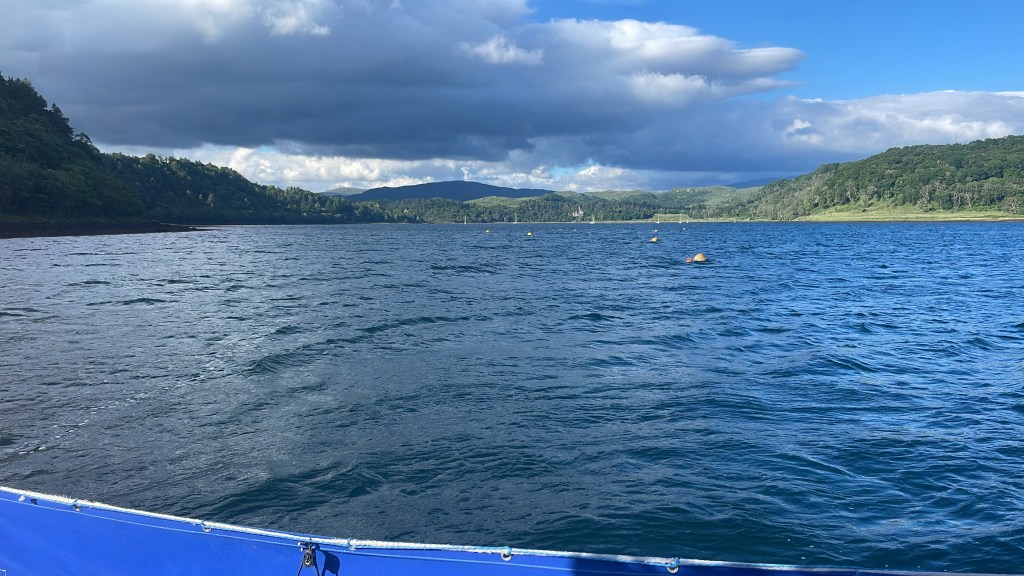
Strangely, once I had settled down for the night and the wind had died a little, the sound didn’t seem to reduce any. Perplexed, I got out the Ordnance Survey app instead of the navigation ones, and discovered that I had picked up the mooring next to the hydro-electric power house. The other moorings were completely empty, but since it was now as dark as it ever gets in these parts in June (mildly grey in other words), I resolved to move in the morning.
The morning was as windy as promised, and the wind brought rain clouds that had crept under the Met Office’s radar by hiding behind the mountains on Mull and then leaping on me as soon as I went into the cockpit, so I stayed put. One by one a procession of yachts appeared through the entrance and picked up the nice, sheltered, silent moorings until they were all full. Luckily the wind drowned out the sound of sustainability, and it was in any event better than pipers and ferries.
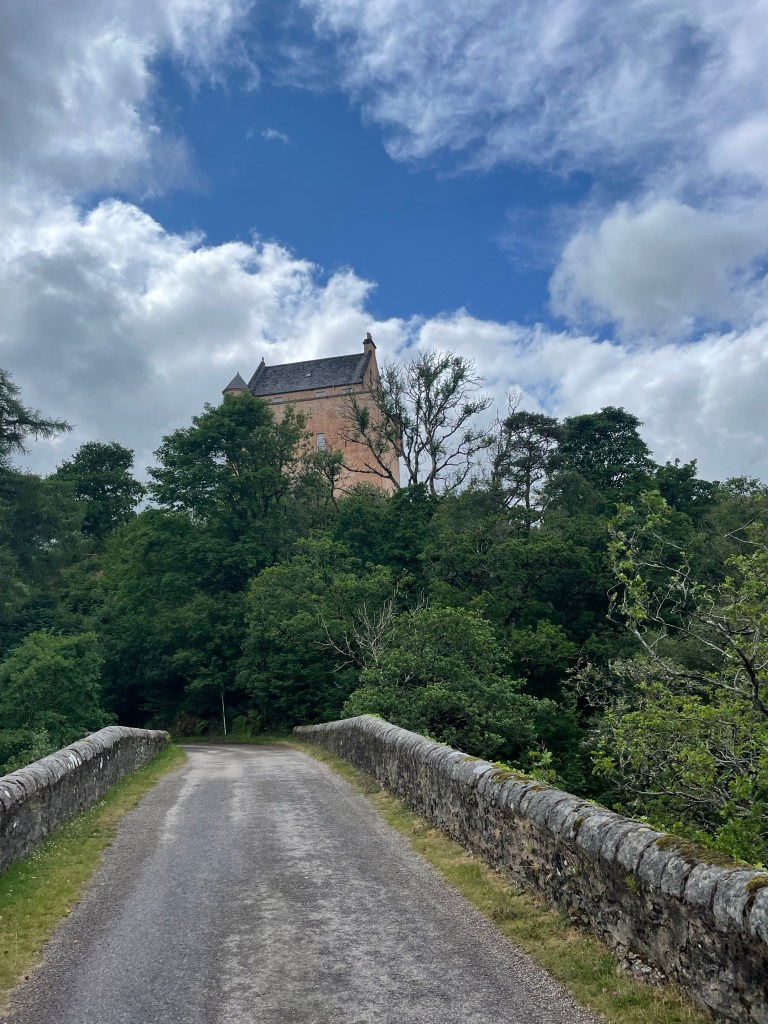
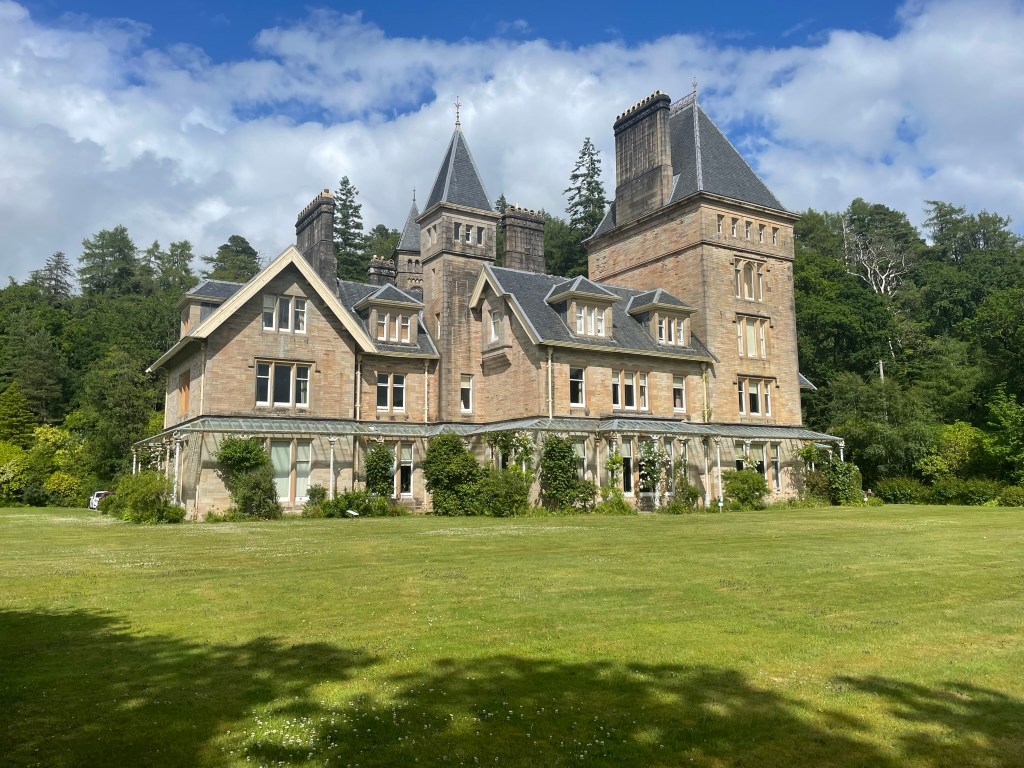
I had planned to sail to Loch Drumbuie that afternoon, partly because it was billed as even more remote than Loch Aline, but mainly because the name tickled my fancy, and I had fallen to wondering whether there was also a Loch Babychum and a Loch Mulibu. Luckily you are spared any more such nonsense as I worked out that with this wind I would have to beat there against the tide, then beat back the next day as the wind performed its usual 180-degree Dann taunt, so I decided to double bluff it by staying put and going ashore instead when the rain stopped. This turned out to be a good move: Loch Aline is even nicer from the shore than from the sea, and I found myself walking all the way to the head of it where I had spotted not one but two castles, with gardens and the inevitable tea shop. These castles between them ticked all the Scottish castle boxes: one of them had been the scene of some brutal clan feud where one clan had invited another to dinner or Mother’s Day or something and then massacred them all, the other had fallen down and been replaced by a giant Victorian fantasy like a super-sized vicarge with Loire-esque turrets. This one, of course, had the tea shop, along with the vast estate, the award-winning gardens, the rare breed farm shop, the hand made candles and the hand churned ice cream, which was the draw for me. Sadly it also ticked the Scottish castle box of shutting as soon as the sun came out, although the walk was worth it for the views of the boat three miles away.
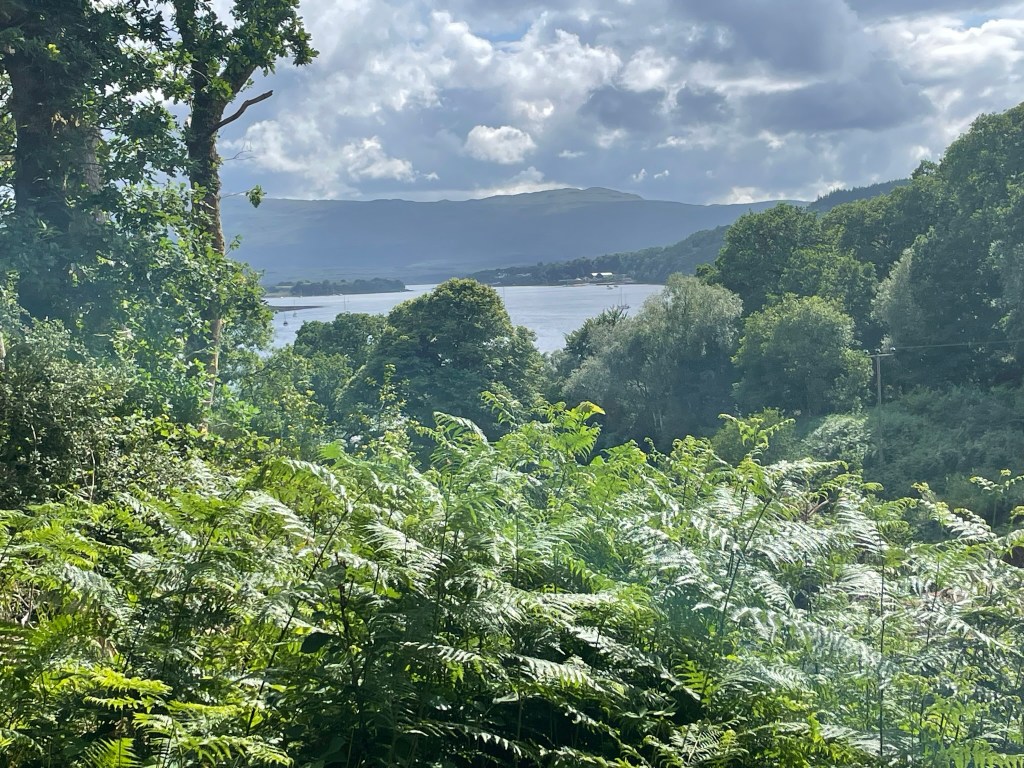
Which castle would you accept an invitation to dinner in?
It was whilst wandering the estate that I came across this bizarre structure:
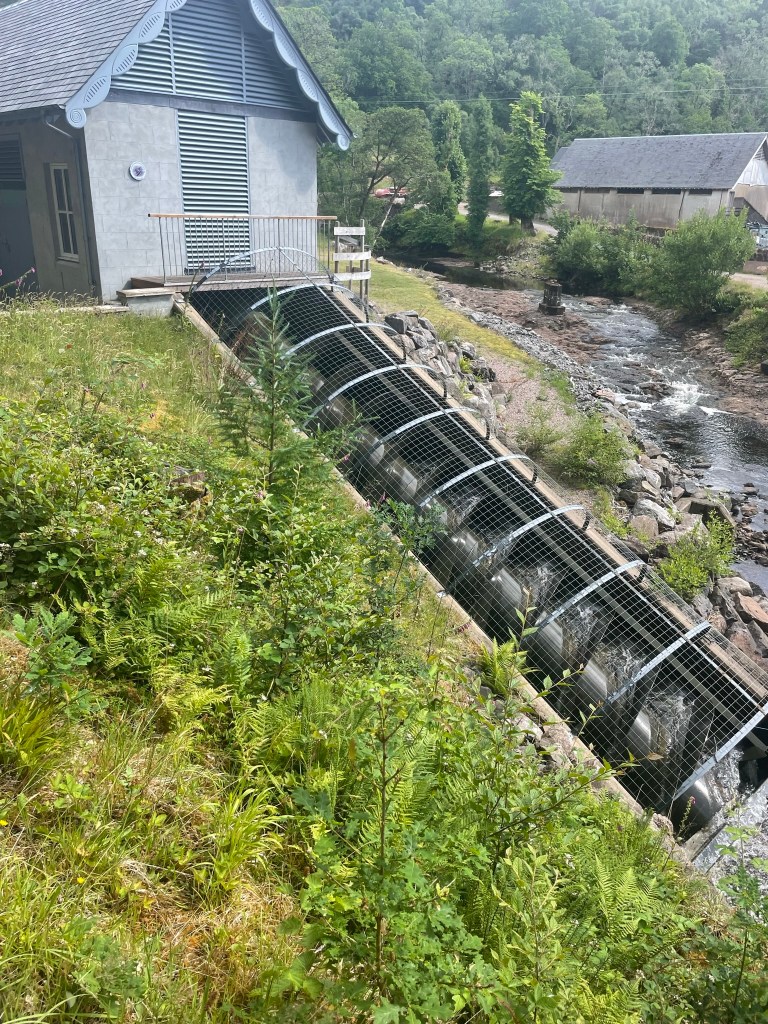
I learned to row near something like this, which appeared to draw sewage out of the River Medway only to return it further downstream, so I approached with caution. This one turned out to be a lot more benign and is one of many in the environs: the nearby information board explained that the Ardtornish Estate was a pioneer in hydro-electric power, and the castle was the first lit by hydro-electricity as long ago as the 1920s. I was impressed, but it was the opening sentence that resonated most powerfully: ‘owing to the exceptionally high levels of rainfall in the area, the Morven Peninsula is one of the best places in the UK for hydro electric power’. Talk about silver linings.
As if to prove the point, the next two days had rain all over the forecast, and whilst Loch Aline was as lovely and sheltered as advertised it still felt a bit soft, and I had fancied the proper remoteness that Loch Droma Na Buidh (Gaelic so much less silly in this case) had promised, so resolved to head back around the corner of Mull to Loch Spelve, which looked suitably remote. It is a huge, almost entirely landlocked loch with a tricky entrance, lots of mussel farms and about six houses. I picked the remotest corner for the full isolation experience, and certainly got it. No moorings here, just me and my anchor, and one house that showed no signs of human habitation. Two or three times a day a 4 x 4 would come by on its way to one of the mussel farms, and that was it. I ventured ashore in the dinghy just to show off the working outboard to myself, and walked around to take pictures. This time, the silence was total. Rather disappointingly, around a small headland I did come across a house but I couldn’t see it from the boat so I pretended it wasn’t there.
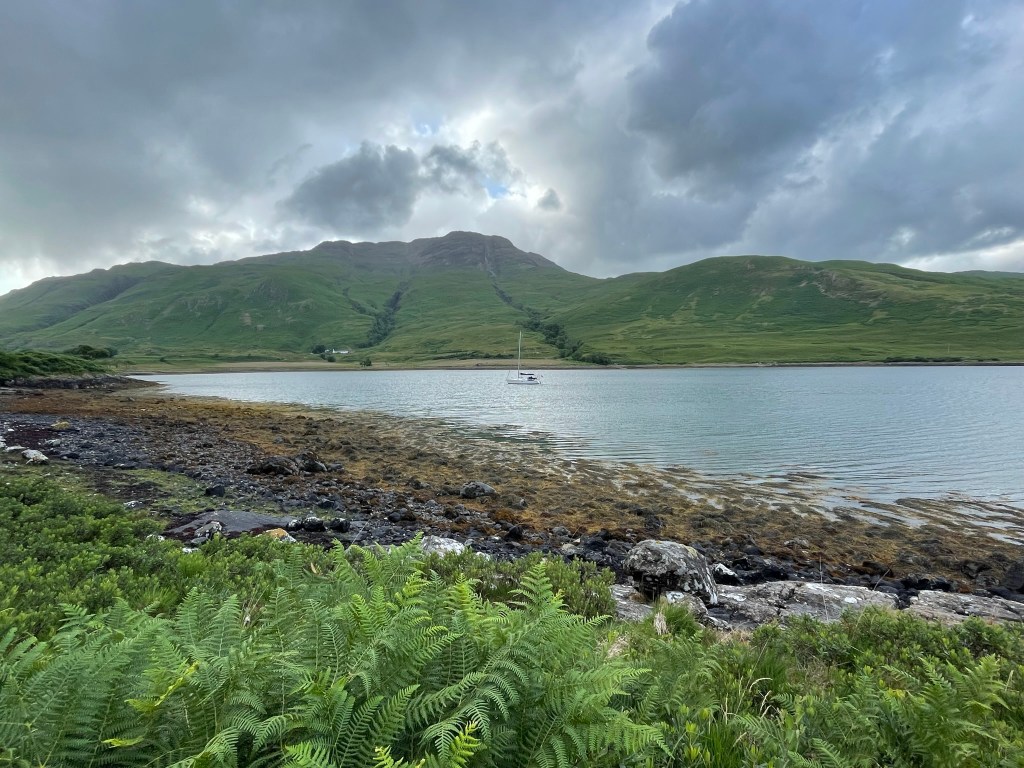
Then of course it began to rain, and this time there really was a silver lining (or gold I suppose, if I had been on the boat at the time)
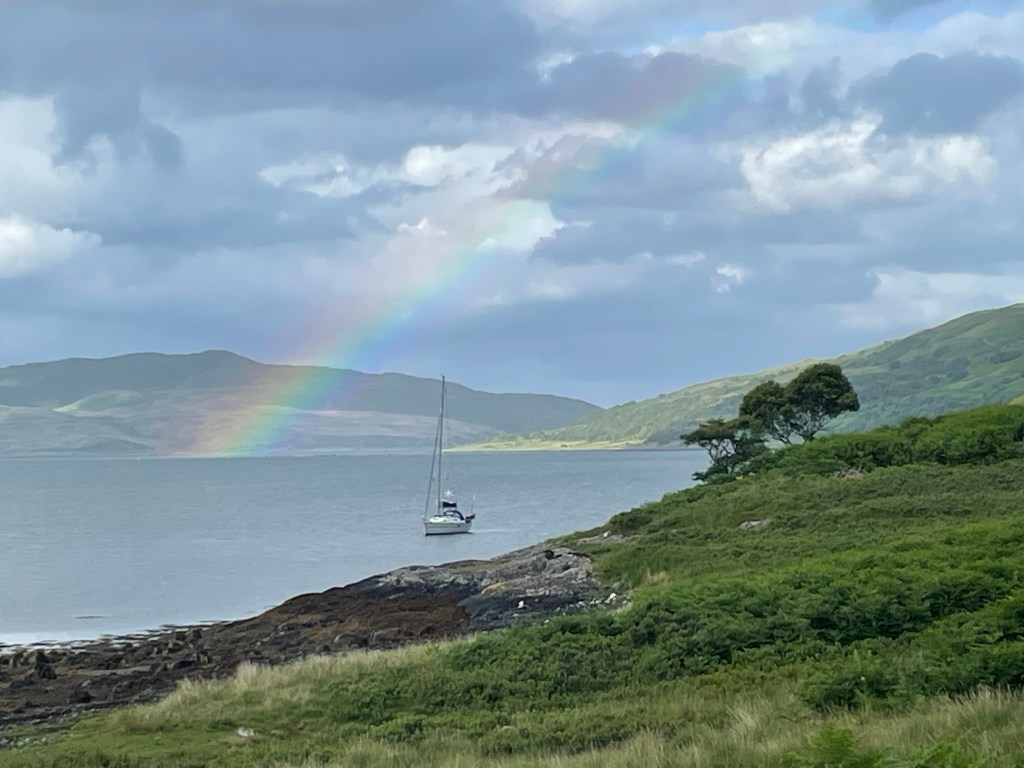
I had now been in Scotland long enough to know that since the sun had shone for a couple of hours it would now rain for a couple of days, so I scurried back to the boat to put up my specially-commissioned-for-Scotland cockpit tent. Sure enough, it began to rain hard overnight and carried on raining solidly, without interruption, for 18 hours. At least this time it had been advertised on the forecast, but I assumed there would be the odd let-up when I could poke my head out without getting drenched, but no, I tried, and was instantly soaked. I didn’t mind this so much, as I had jobs to do and lots of admin to catch up on, and it was very rewarding to replace Raymond’s drive belt in the cockpit in the dry (and not a day too soon, the cheeky sod had worn it down to a couple of millimetres), but silent it absolutely wasn’t. The rain drummed down on the canvas and all around the loch what had yesterday been either charming little streams or even apparently dry hillsides were now foaming torrents and waterfalls, crashing onto the beach and pouring into the loch. The noise was something else, and I could appreciate why not many people decided to live here. Then the mobile signal suddenly disappeared, along with the FM radio, so I couldn’t even listen to the news, let alone phone anyone or check the weather forecast – but in the absence of sailing, all I really needed to know was whether it was going to rain some more, and I have got pretty good at guessing the answer to that one. But I did feel as cut off as I ever have done on a boat, so at least the remote box had been ticked.
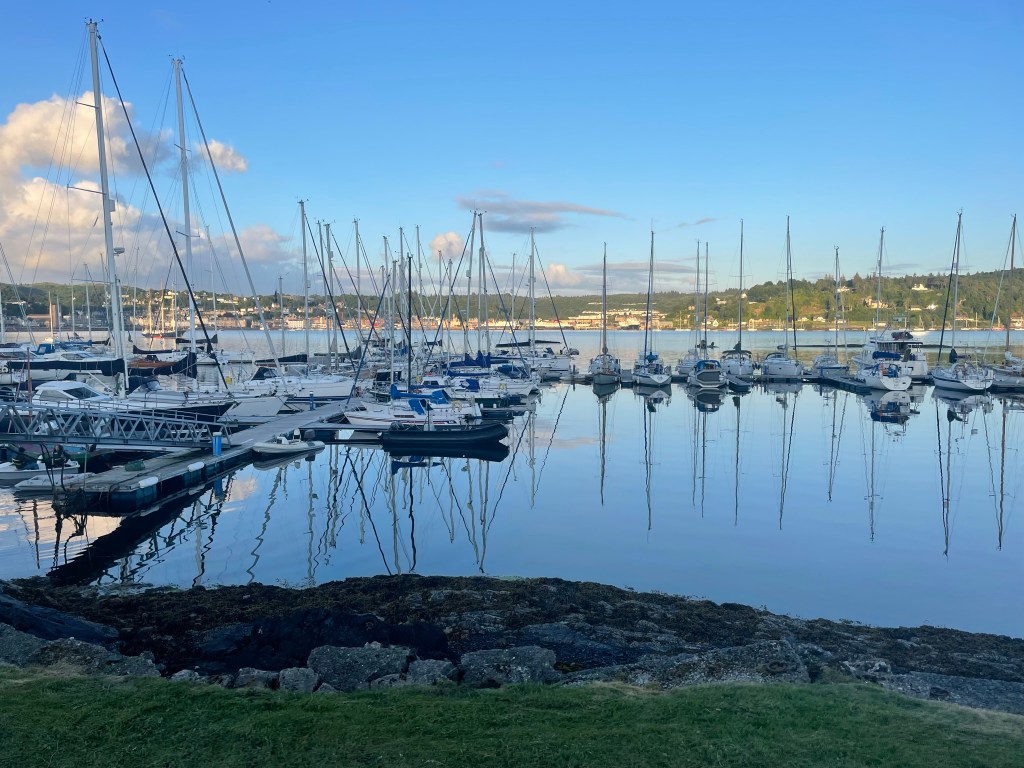
A damp sail back to Oban, this time for a few days home for a significant birthday (not mine), so I am berthed in the longer stay marina on the island of Kerrera, which is across the bay from Oban so you can look at the town but not hear the pipers. This is superior in many ways: there are people to speak to, they are helpful and friendly, they sell mussels from Loch Spelve so you don’t have to get wet going there to buy them, and the farm shop is open 24 hours a day so you just take the ice cream and put money in the honesty box. Perhaps that’s where Amazon got the idea for their shops from, but it seems to work better here.


 Blue Moon's trip around the UK
Leave a comment